View Sidebar
Click on any book icon to see Table of Contents and/or to purchase a copy.

Articles by: Joan Wink

Comprehensible and Compelling by Krashen, Lee, Lao (2018): My Review

Comprehensible and Compelling by Krashen, Lee, Lao (2018): My Review

Dear WinkWorld Readers,

Teachers, family members with kids in schools, and all people interested in literacy and learning: This one is for you. 

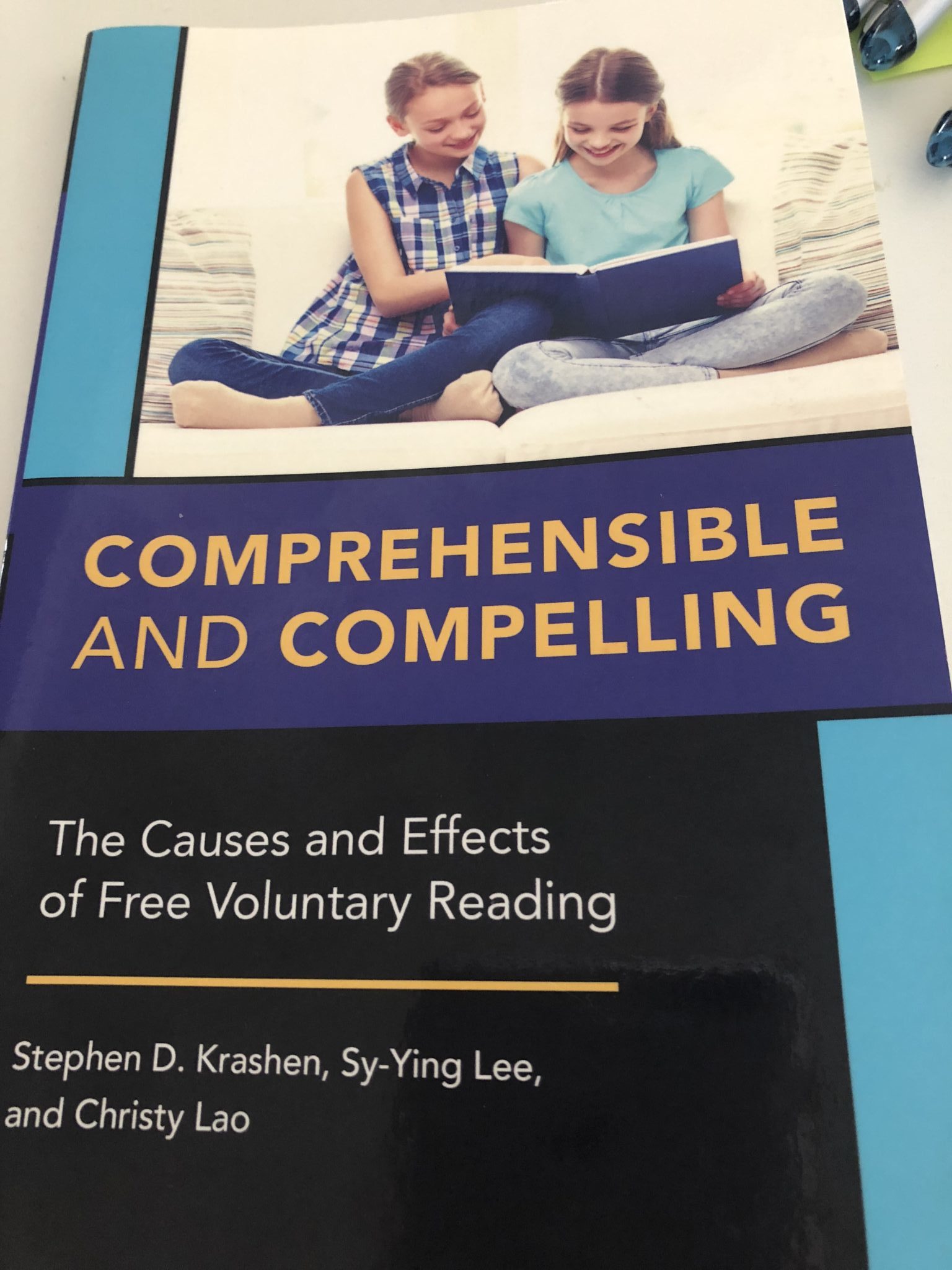
Krashen, Stephen D., Lee, Sy-Ying, & Lao, Christy. (2018).

Comprehensible and Compelling: The Causes and Effects of Free Voluntary Reading

Libraries Unlimited/ABC-CLIO

Teachers, many of you know about Krashen’s comprehensible input (CI) for language acquisition. The idea is that if we make our teaching MEANINGFUL, people will acquire language. Well, CI just got a lot bigger, with the advent of compelling comprehensible (CCI), which deepens CI from language acquisition, to literacy, to motivation, to teaching and learning for a future, which is, of course, unknown.

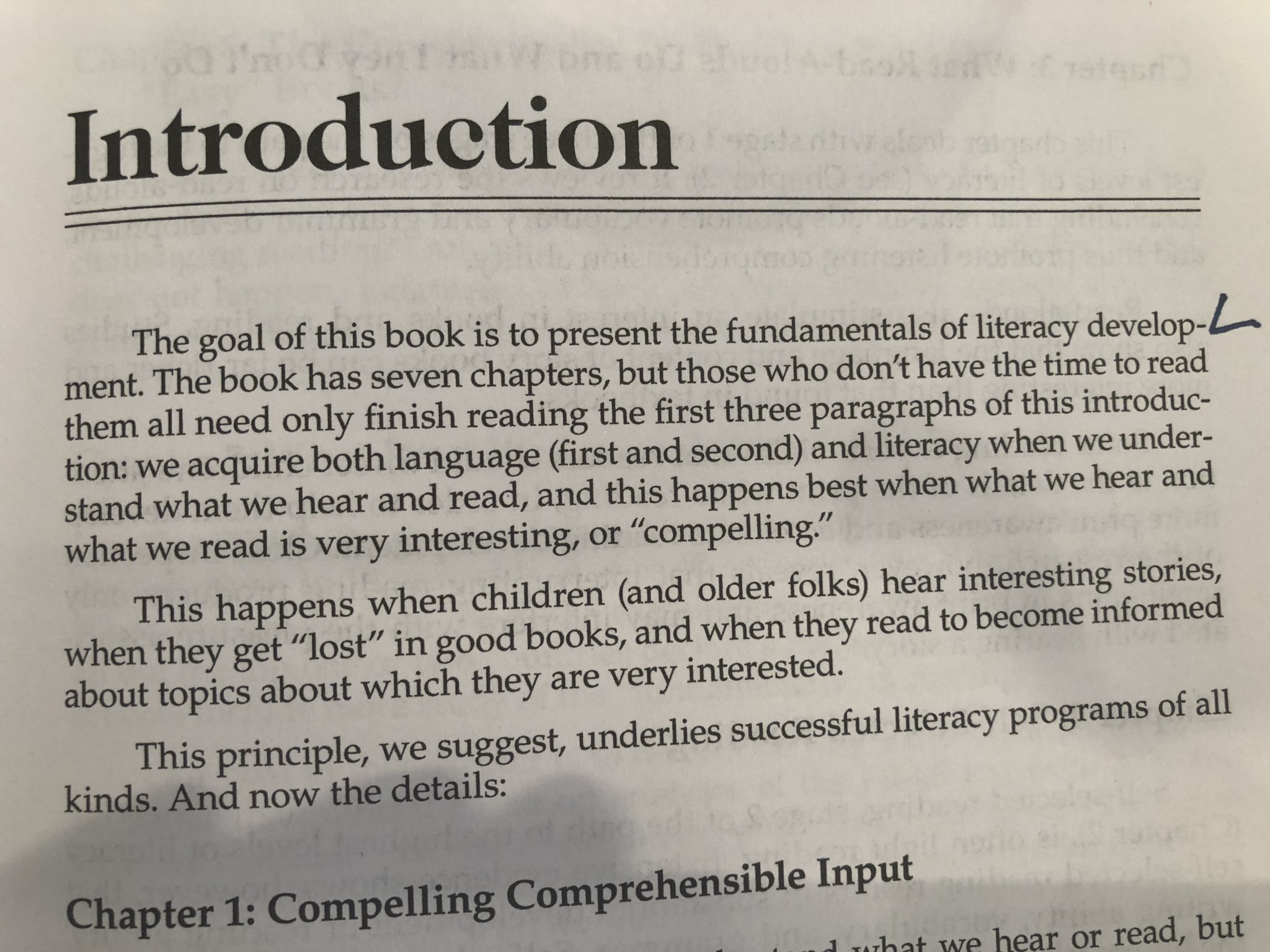
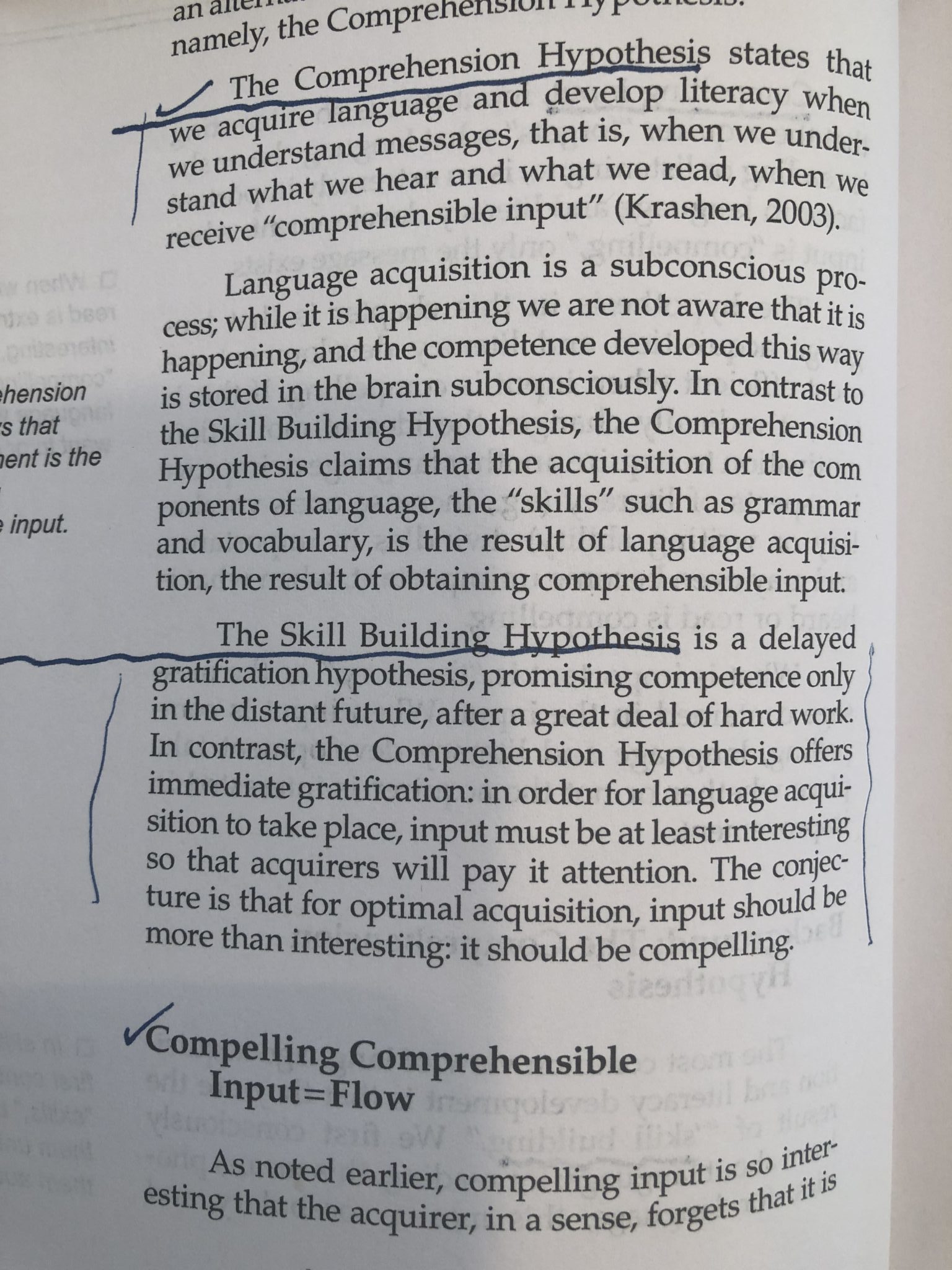
At the very beginning of the book, the authors write that if we happened to be too busy to read the entire little 7 chapter, 87 page book, we really only need to read the first 3 tiny paragraphs–here they are.


I disagree with the authors. You also really need to find time to read the Conclusion where the authors share tight little summaries and implications of the new knowledge for literacy, language acquisition, motivation, and well, the future of education.

However, you must read to the end of my review so you can find the story of the people I met on the plane while I was writing this review.  Or, you really could skip my review and jump down to the bottom and read the story of The HORSE and HIS BOY (1954) by C.S. Lewis.

Before we begin, you need to know that I have been a Krashen fan since the late 1970s, when I went to hear him speak at a conference in Phoenix.  He turned my grammar-loving, memory-centered teaching up-side-down. Before his presentation, I really believed that “I will teach, and they will learn” the conjugations, the past perfect tense, the little direct and indirect pronouns, and the simbolismo de Don Quijote.  Turns out that those teenagers in AZ needed to use real language in real contexts to acquire Spanish. In addition, most of the students had been using Spanish at home, since they were born, so I am forever grateful to them for helping me acquire Spanish, too.  Soon after this great discovery about the use of real Spanish, the principal moved our classes way out on the edge of the campus in a room, which had previously been used for shop classes.  The band was moved into the only room near us.  Worked perfectly.  Our lively classes didn’t bother any of the quieter classes. I think I thank you, Steve. 

Previously, I have published on this experience with The Benson Kids, and I will post a link at the bottom of this post.

My only problem in reading and writing the review of this book is that I kept getting lost in the flow (Thank you, Csikszentmihalyi, 1990) as I forget all else and relished the memories of my teaching experiences which kept flooding back. I cannot promise you an archetypal book review, but rather I will share HOW I read it and WHAT I thought, as I read.

First, I did a fast scan of the book, as I know most of the research and implications in the book, and I wanted to know what’s new?  A-ha: Something very new indeed, as comprehensible input (CI) just grew and deepen to include compelling comprehensible input (CCI). I promise to explain, as we go. Or as the authors say early in their book: “We will do our best” (p. ix). 

Second, after scanning the book, I went immediately to the References, to find our ‘ol literacy friends: Our Keeper of the Numbers and Knowledge, Berliner; The Book Whisperer, Donalyn Miller; Our Intellectual Hero, Chomsky;  Mr. Flow Himself, Csikszentmihalyi;  Phonics Only Helps Kids Do Better On Tests Of Words In Isolation and Not Comprehension, Garan;  Story-telling Guru, Mason; Words In Context Matter, Nagy; Ever The Researcher, McQuillan, Dear Friend, Fay Shin; Beloved, Frank Smith; Mr. Read Aloud, Jim Trelease, and many other highly-esteemed literacy scholars.

But, Bean (1879):  Who the heck was she, and why should we care? And, yes, that is 1879.  I stopped reading the References immediately and went searching for her in the text: FOUND on p. 37. Turns out that Bean, a librarian, wrote something dreadful entitled, The Evil of Unlimited Freedom in the Use of Juvenile Fiction. She was concerned that this “craze for books” among kids would rot their brains.  So, this is where that silly notion came from, as the myth has lived on with others through the years.  If you are a reader of novels, you certainly know that dismissive comment, when someone rolls their eyes and sighs, “Oh, I only read non-fiction.” 

To Bean and her buddies, I say: “Not to worry.”  Indeed, the Krashen, Lee, Lao book provide the evidence (Chapter Six) that “readers, when allowed and enabled to select their own reading, do not stick to substandard texts, but rather select more demanding reading material as they mature” (p. 83). 

Third, after the References, I went right to the Index.  I checked Comprehensible Input (Krashen, 2003), p. 2: We acquire language and develop literacy when we understand messages.  This is now (2018) referred to as the Comprehension Hypothesis. The opposite is the Skill Building Hypothesis (p. 2) which posits that  competence is in the distance future after a whole lot of hard work. 
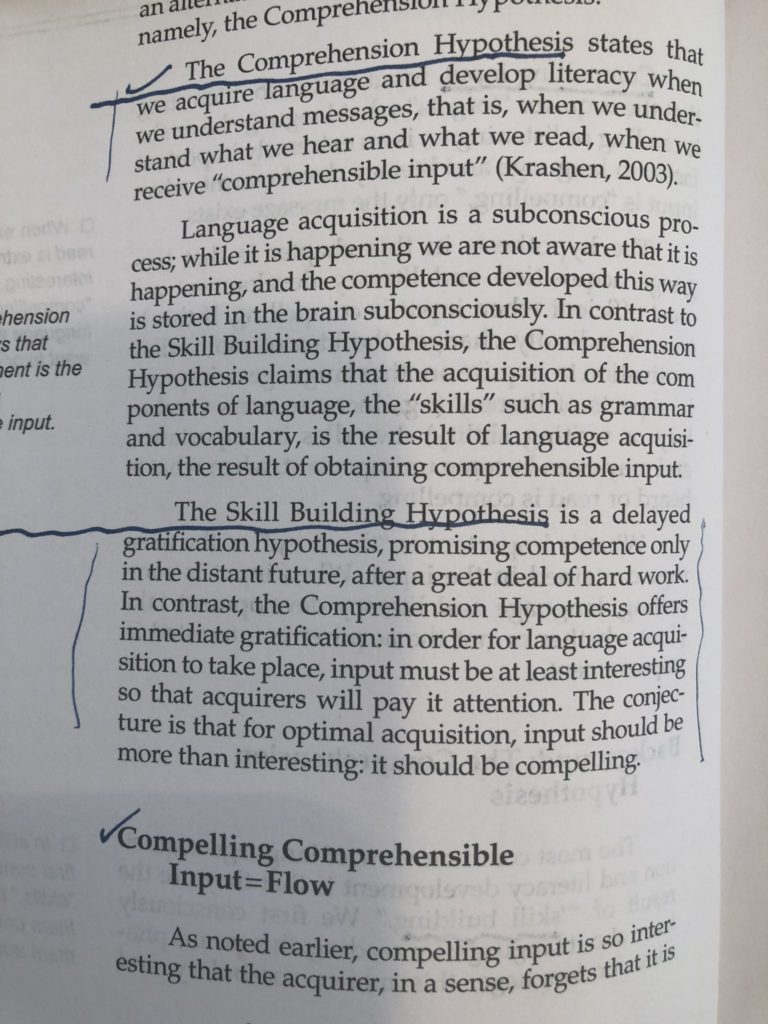
It is like the difference between intrinsic and extrinsic learning; between meaning-centered and memory-centered;  between incidental and intentional learning; between comprehension and reading skills.  Can you see that I am now in the flow (Csikszentmihalyi, 1990), and nothing but this activity matters to me.  The concerns of today disappear, and I am lost in this writing.  Tonight when I read my novel, I will be lost in that world.

Now, the new stuff: compelling comprehensible input(p. 2): 

Compelling Comprehensible Input = FLOW, which is where I am right now.  We all love to understand, and we all love when something is really, really interesting (OK, compelling) for us, and we all love to get lost in a project (flow).

A glance into these 7 short chapters, which Krashen, Lee, and Lao say (with tongue firmly placed in cheek, I hope) we can skip.  I found them worth my time.

Chapter One Compelling Comprehensible Input–Compelling comprehensible input has primacy in language and literacy development: This is a game changer for education. Read it.

Chapter Two, The Three Stages of Reading–If you are skipping any chapters as you read, do not skip this one. Krashen uses his own experience as a case history. Read it.  My story is very different, but that is for another WinkWorld.  I suspect that I am on out-lier. 

Chapter Three, What Read-Alouds Do and What They Don’t Do–Read-Alouds are not the be-all-and-end-all for literacy development, but they are highly effective. It is not helpful to focus on print awareness, while reading to kids; it just interrupts their connection with the story…and, it can be very annoying for them. Read it.

Chapter Four, Self-selected Reading–Apparently, I will not be going to hell-in-a-handbasket because I sometimes choose light reading, which is often held in distain.  Last night, I read Ghosted by Rosie Walsh, and apparently I will still be okay. I read hard stuff, too.  You and I both like to choose our own reading–kids, too. Read it.

Chapter Five, Will They Only Read Junk? Answer: Not to worry. Read it.

Chapter Six, The Complexity Study: Do They Only Read “Easy” Books?  Here is the evidence.  The data demonstrate that children in a print-rich environment, in which they can choose their own books, do not stay with only easy books.  In fact, they will begin to choose harder books. I am always reminded of one of my 1970s students, José. I told the class they could choose their own reading and their own writing, and after a little quiet time, 8th grader José, issued the challenge.  “Even the Tucson phone book?” Sure.  He did not get beyond the A’s, when he moved on to much harder materials.  More of this story is found in The Benson Kids, posted at the bottom.  Read it and read Krashen, Lee, and Lao’s Chapter Six, too.

Chapter Seven, What Have We Learned from PIRLS ? (an international test of reading)–Access to compelling comprehensible input matters.  Poverty is the problem. Libraries are the answer. Read it.
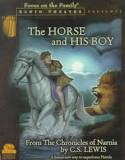
 

Now, that story about The HORSE and HIS BOY by C.S. Lewis, a couple of teenagers and a mom on a plane:

As I was writing this review on a flight from Chicago to Philadelphia, I suddenly realized that I heard the voice of someone reading aloud. I started searching and found a mom in the middle seat directly in front of me. She was leaning over closer to her teeny-bopper daughter in the window seat, who was leaning into her mom. The mom read aloud the entire trip. When we landed, I immediately asked the mom and daughter what they were reading: The HORSE and HIS BOY.

While waiting for our luggage at the carrosel, the mom, daughter, son (age 17), and I continued talking about the value of reading. When we parted, the son asked me if I knew of the “Warrior” series. Yes, indeedy, thanks to my 2 avid reader grandsons. Finally, a little street “cred.” 


The Benson Kids.

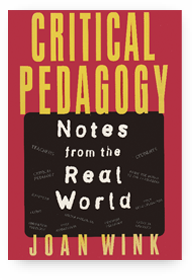
Various versions of this story have been printed in the 4 different edition of Critical Pedagogy: Notes from the Real World.  The following story is taken from the 3rd edition (2004). 

Critical Pedagogy 3rd Ed – The Benson Kids


August 18, 2018Read More
Those People

Those People

Dear WinkWord Readers,

A group of graduate students and I wrote and published this piece, Those People, in 1997.  Sadly, it seems more relevant today.  It is rather long, but I so wanted to capture the oral history and graphic drawings of  Mimi, and of course, this is not her real name. 

Teacher educators, I know that some of you are using my materials as you create your syllabi. This is one for lots of different classes.  Of course, a reference is always appreciated.

It all began so simply. . .  


Those-People-WinkWorld-3.29.2017-

The next issue of WinkWorld will be my review of Comprehensible and  Compelling: The Causes and Effects of Free Voluntary Reading (2018) by Stephen D. Krashen, Sy-Ying Lee, and Christy Lao, published by Libraries Unlimited/ABC-CLIO.


August 15, 2018Read More
State Mandated Tests: Which Do You Choose?

State Mandated Tests: Which Do You Choose?

Hey Teacher Friends and Families with Kids in Schools,

This WinkWorld is for you.  

IF you could choose which test to use for your state’s mandated testing, what would your choice be?  Please think in terms of (a) the process and (b) the product.  For example, do you prefer once per year, twice per year, three times per year?  And/or, is there a specific test which you believe has more value for kids than other tests?  I am aware that some districts have very good district-mandated tests, in addition to the state’s tests.  

I will compile the results and share the results.  I will double-post this WinkWorld to Facebook and Twitter, so all of the responses will not be visible to some of you immediately.  In addition, I know that some of you simply prefer to respond to me on email (joan@joanwink.com).  Whatever works best for you.

Yes, someone, who can make a difference, really did ask me that question.  I told that person that I would ask all of you and get back to her/him.

Thanks!

Here is a visual overview of my recent chapter on testing, High-Stakes Stories, which is in The Power of Story.  Thank you to my dear friend and cousin, Missy Urbaniak, for drawing the following visual Table of Contents.

The Power of Story Chapter Four


August 2, 2018Read More

Dear WinkWorld Readers,

Dawn, our daughter, just wrote on her blog, DewDrops, about our branding in late May.  These memories make me so happy, and I wanted to share with all of you.  Thanks, Dawn!

Click HERE to enjoy.

Please turn up your volume on her video clip.


July 23, 2018Read More
Literacy, Part 3: Reading the Word and the World.

Literacy, Part 3: Reading the Word and the World.


Dear WinkWorld Readers,

In the previous two posts on literacy*, I wrote about newer perspectives on literacy.  We used to think that literacy was reading and writing (and, it is), yet we now understand that literacy can also have deeper meanings. 

I first encountered these expanding definitions of literacy in the mid to late 1980’s, and yes, it was a challenge: Relearning and unlearning often is very annoying.  However, there were a few specific steps along the path, that helped me move forward.

First, I encountered Jim Moffett’s definition of literacy, which initially jarred me; then haunted me; and finally appealed to me.  Now, I’ve lived long enough to know that this is true.

Literacy is dangerous and has always been so regarded.  It naturally breaks down barriers of time, space, and culture. It threatens one’s original identity by broadening it through vicarious experiencing and the incorporation of somebody else’s heart and ethos.  So we feel profoundly ambiguous about literacy.  Looking at it as a means of transmitting our culture to our children, we give it priority in education, but recognizing the threat of its backfiring, we make it so tiresome and personally unrewarding that youngsters won’t want to do it on their own, which is, of course, when it becomes dangerous. . . .  The net effect of this ambivalence is to give literacy with one hand and take it back with the other, in keeping with our contradictory wish for youngsters to learn to think but only about what we already have in mind for them (Moffett, 1989, p. 85, as cited in Critical Pedagogy: Notes from the Real World, Wink, 2011, p. 71).

Ouch! 

James Moffett was ahead of his time.  

The second step for me in understanding more deeply about literacy was when I learned in the mid to late 1980’s of the work of Paulo Freire.  The Moffett quote seemed to come true in Freire’s life.

Freire lived in Brazil, and he discovered that he could teach the peasants to read in a relatively short period of time, by encouraging them to write of their own experiences in their own language.  Eventually, he was exiled from his home country: “Literacy is dangerous.”

Freire went on to be a highly respected and much loved literacy and critical pedagogy scholar throughout the world; he was invited to Harvard. Eventually, he was welcomed home, where he became Secretary of Education in Sao Paulo, Brazil. 

Reading the Word and the World.

One of Freire’s many contributions, which really influenced me was his notion that literacy was reading the word, and it was also reading the world.

In my book Critical Pedagogy: Notes from the Real World, 2011, p. 71, I describe these two concepts in the following manner.

Reading the Word means:

To decode/encode those words

To bring ourselves to those pages

To make meaning of those pages as they relate to our experiences, our possibilities, our cultures, and our knowledges.

Reading the World means:

To decode/encode the people around us

To decode/encode the community that surrounds us

To decode/encode the visible and invisible messages of the world.

Freire’s definition of literacy rang very true for me at that time.  I grew up in a violent home, and I learned very, very early in life to read the world before I was able to read the word.  And, today I think of those immigrant children who have been taken from their families–they may be too young to read the word, but I know from experience, they they are reading the world

Paulo Freire’s books are readily available online. My Critical Pedagogy: Notes from the  Real World is available from Pearson.  Amazon has it also, but they often charge a lot more than Pearson. Also, online used books almost always has very inexpensive copies of my book.

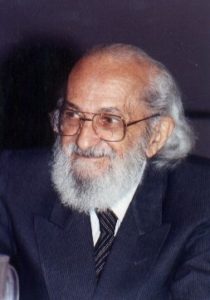
Paulo Freire

Paulo Freire

Photo taken by Dean Wink, 1993, California Association of Bilingual Education (CABE)

*posted below


July 21, 2018Read More
Danger: Slip, sliding into the dreaded Summer Slump

Danger: Slip, sliding into the dreaded Summer Slump

Dear WinkWorld Readers,

Beware the Summer (reading) Slump!  Don’t let it happen to you and yours. Just grab a book, kick back, and read. Problem solved.

I previously posted this WinkWorld, but it is true today, too.  I’m keeping my Little Free Library stocked this summer, in case you are near. If not, check out your own library on these hot, summer days. 


Summer Reading: Get Your Free Book Here

July 14, 2018Read More
Part Two: What is literacy?

Part Two: What is literacy?

Dear WinkWorld Readers,

In my previous short blog post (What is literacy?), I mentioned that 3 different groups had asked me lots of questions about literacy in June.  In this blog post, I will expand on literacy with pages 28-33 of my new book, The Power of Reading, in a section labeled, What is literacy? What are literacies?

In my next post, I plan to expand a bit more with Paulo Freire’s notion of Reading the word and reading the world.

Happy reading and thinking. 


July 8, 2018Read More
What is literacy?

What is literacy?

Dear WinkWorld Readers, 

In the past month, I have been asked by 3 different groups: What is literacy?  I suspect what they are asking is: Is literacy only reading and writing?  

This is a bit tricky, as I really like to keep my WinkWorld posts relatively short. Hmmm.  In the new book, The Power of Story, a whole section (pp. 28 -33) attempts to answer the question, what is literacy?.  Here is a short clip.

Years ago I thought I understood literacy–it was reading and writing.  Remember when we thought it was that simple?Turns out that we were wrong.  Perhaps our traditional assumptions of literacy were not just simple, but maybe even simplistic. 

The world has changed. Schools have changed. Students have changed.  Technologies and media have revolutionized our understandings of literacy, and students may even wonder about old technologies and find them to be quaint and peculiar. Students of today have never lived in a “books only” world. The academic literature is alive with discussions of the breadth and depth of meanings of the new literacies (Asselin, 2004), but for the students this is not new–it’s the way it has always been….

Previously, I have written about functional literacies, academic literacies, workplace literacies, informational literacies, constructive, emergent, and cultural literacies. (Still with me? There are more.) More recently, we have learned of family literacies, community literacies, reflective literacies, library literacies, and web literacies (Wink, 2018, pp. 28-30).

Of course, critical literacies has held my interest for years.  More recently, Gorski & Swalwell (2015) have expanded this notion with equity literacy.   Road warrior literacy and junk literacy (ok, ok, I made them up) are my present favorites (Wink, 2018, p. 30).  Aliteracy (p. 31) is a disturbing new concept; it describes kids who can read, but who choose not to read in a deep and thoughtful manner; rather, they read in nanoseconds on their devices almost exclusively.

Reading the Word, and Reading the World, a notion from Paulo Freire, explains it best.  We spend a lot of time in schools to get kids to “read the word,” but we need to realize that kids also “read the world” very clearly.  Yes, literacy is reading and writing, but it is informed by the social, cultural, historical, and political world.

At least for me, literacy is much bigger and deeper that simply reading and writing. 

Hope this helps the three groups who happened to ask that question.  I am sure that I will be sharing more on the new, complex understandings of literacy. 


July 4, 2018Read More
Tammy’s Professional Reading: 41 Professional Books this Summer

Tammy’s Professional Reading: 41 Professional Books this Summer

Dear WinkWorld Readers,

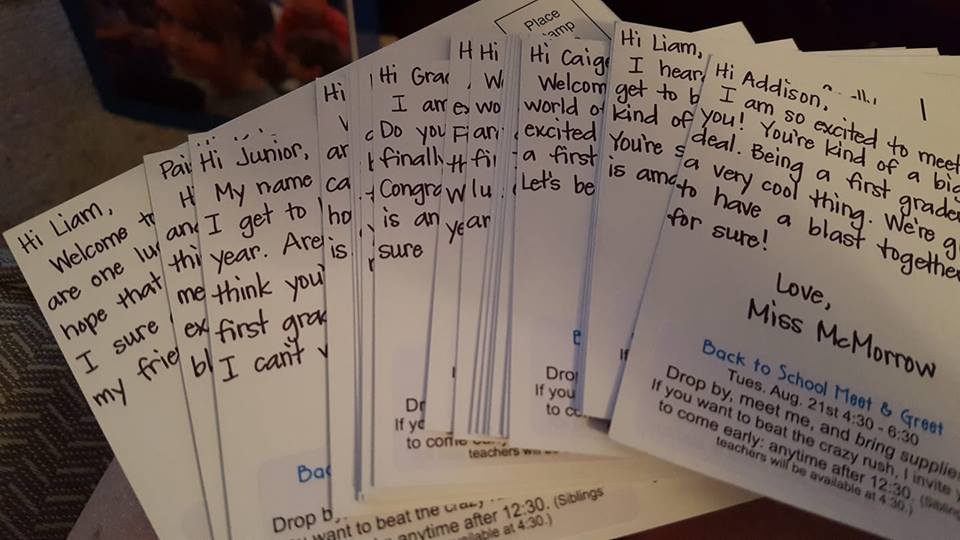
In the last WinkWorld, I wrote about Lisa, who read 2,684 picture books during the last academic year.  In this WinkWorld, I want to highlight my virtual friend and a teacher in Idaho, Tammy McMorrow; her goal is to read more professional books this summer, than she did last summer–she will need to read 41 professional books to meet her goal. This summer, Tammy is being very intentional and reads every morning.

Tammy also writes a terrific blog, Forever in First, and even if you have never taught little kids, I promise you that you will learn from her blog. At least I do.


For example, lately she has been talking about being responsible for her own professional development, so she is reading this summer.

She says that any professional book must do three things for her:

  1. She wants to be validated, and thanks Donalyn Miller’s, The Book Whisperer, for helping her realize this.
  2. She wants to be inspired, and she thanks Regie Routman for never failing her.  Tammy says that she likes to walk away from a book with a spring in her step.
  3. And, Tammy also wants to be challenged. She shares that Mraz and Hertz do this for her.

Forever in First, June 21, 2018

I encourage you to read Tammy’s book, The Gatekeepers, which did leave me with a spring in my step.

  I will be following her blog to see what she is reading.  Maybe you will, too.

Forever in First, June 20, 2018


June 29, 2018Read More
Lisa, You Read 2,648 Picture Books This Year? Tell Us More.

Lisa, You Read 2,648 Picture Books This Year? Tell Us More.

Dear WinkWorld Readers, 

Lisa MacKenzie-Miller of CA, a former graduate student, posted on social media that she had read 2,648 books during the academic school year, August to mid-May. Lisa has been a teacher for 23 years, and suddenly decided to challenge herself to read the entire picture book section of her school library.  In order to do this, she checked out 20 books per day.  When I read her post, I had several questions, which she generously answered for us.  Thank you, Lisa, for sharing, and I very much appreciate all you do to create avid little readers.


In what follows, I have my questions and Lisa’s responses.

What made you decide to read all of the books in the picture book section of your school library?

I have been thinking about this for several years, as my students excitedly tell me about a book they chose during library time. I wanted to challenge myself.  I found I could read 10 picture books during my lunch, and then check out 10 more to take home. I loved going home and looking forward to reading the books.

What was the best part of reading all of these books?

I loved knowing the stories when the students excitedly told me about what they had read.  I was able to ask them questions about the book and tell them what I thought of it. 

What was the most surprising part of reading all of those books?

2 things: First, I was surprised how much I didn’t like some of the books, and second, I relearned that you can never judge a book by its cover.

What was your biggest worry?

I didn’t have my 20 books to read each day during the Christmas 2-week break.  I am a reading addict.

How often did you use ReadAlouds? 

Every day. 

How did you use ReadAlouds?

I always have a book with me during the day.  For example, I did a ReadAloud as the whole class walked for bathroom breaks, or when we had to wait for anything in the classroom, as kids can get restless. I noticed that when I start reading aloud, the students immediately gather around and and quiet down.  I read during transition time, as we changed from one concept/content of the curriculum to a new topic. Basically, I do a ReadAloud anytime there is an unfilled moment during the school day.

How did the students respond to your many ReadAlouds?

This year I noticed that the students were constantly reading independently when they finish with an assignment. They even asked for more DEAR (Drop Everything And Read) time. One child usually had a book in one hand, even while doing math with the other hand.  I also noticed that the students, who were in the process of acquiring English as a new language,  learned English faster. I even heard them discussing the stories with their classmates. 

In fact all of the student read more this year than I have ever seen in my 23 years teaching 2nd grade.

Did you have a favorite author?

Patricia Polacco: I loved her Aunt Chip and the Great Triple Creek Dam Affair.  

Oh, Lisa, this is the perfect place for me to end this WinkWorld, but just wait until you read the last story in The Power of Story.  I just mailed you a copy, and I am sure you will turn to p. 225 first.  Happy reading.

Here we were last year reading Patricia Polacco’s magical book, Aunt Chip and the Great Triple Creek Dam Affair.  This experience inspired the final story in The Power of Story.  Lisa did not know any of this when she answered my questions on reading her 2,648 picture books during the past school year.

Thank you, Jim Trelease, for your 7 editions of the fabulous book, The ReadAloud Handbook.

June 24, 2018Read More