View Sidebar
Click on any book icon to see Table of Contents and/or to purchase a copy.

Archive for category: Latest

Poe and Powtoons

Poe and Powtoons


I love it when teachers and students in various classes find unique ways to solve problems. For example, last semester the teachers in my class had an assignment, in which they, not only had to write about a totally new topic for each of them, but they also had to share their project with software, which was new for each of which them.

The various topics ranged from the five hypotheses to accountability to close reading to culture to poverty to TPRS. The software was also varied: PowerPoint, Prezi, iMovies, and Powtoons.

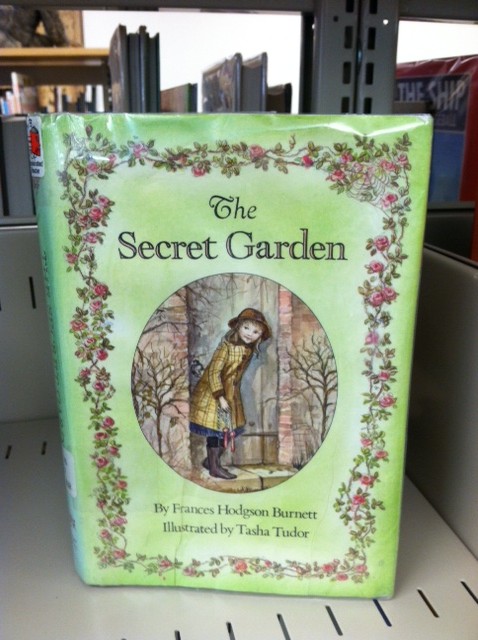
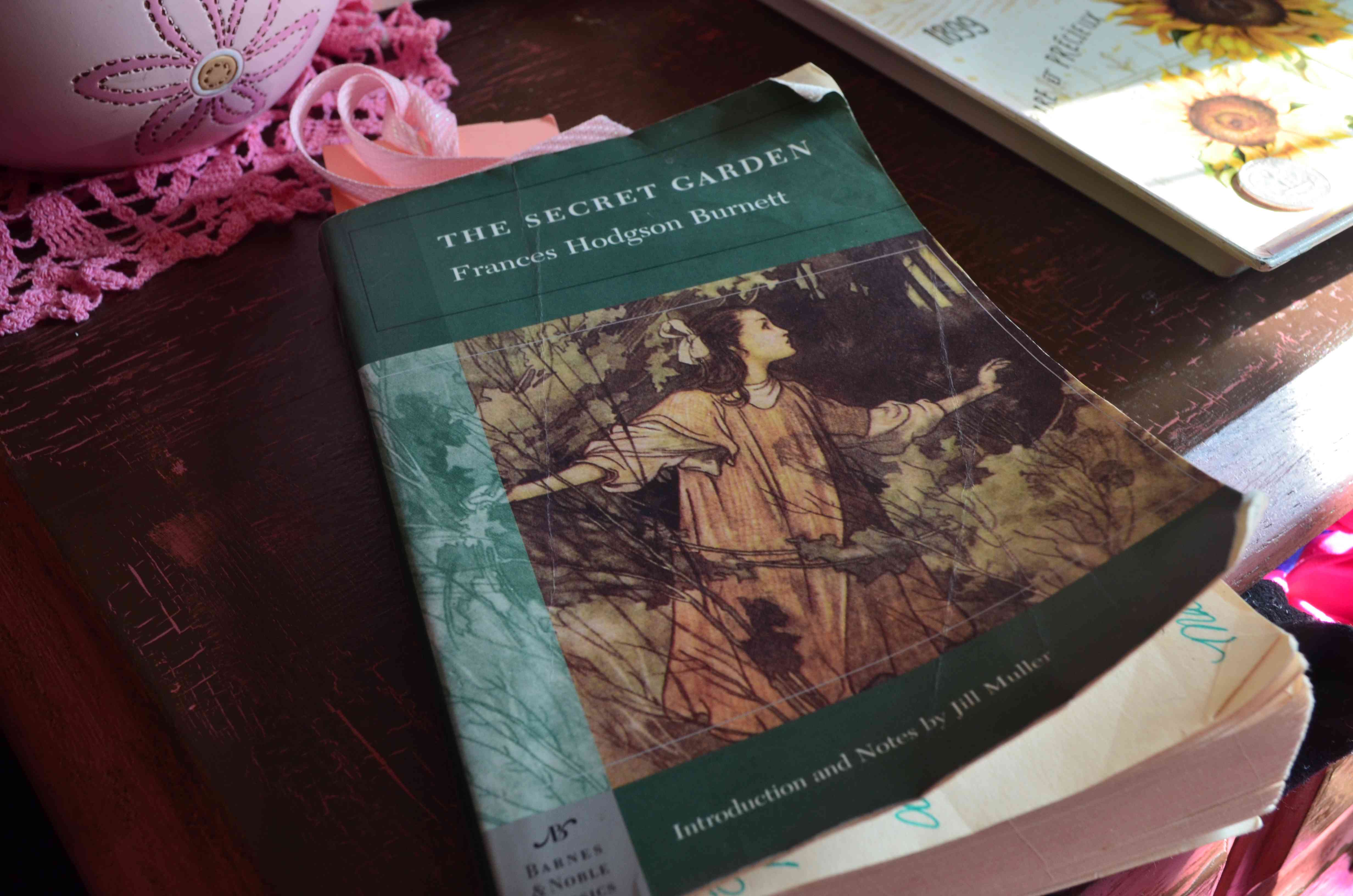
Deb, a secondary teacher in WY, had recently discovered her home run reading book, The Power of Reading by Steve Krashen. A home run reading book is that one book, which turns a reluctant reader into an avid reader. It is the one book, which opens the door to more and more books. A home run book is the first book, you fall head-of-heals in love with. Mine was Secret Garden, but more about that in a later WinkWorld blog.

Read about The Home Run Book

Since I knew that Deb on was on fire with the ideas within The Power of Reading, I suggested that she do something to make these ideas visible for her colleagues in class. She decided to do this with Powtoons, although she had no idea what it was. She solved her problem by enlisting her high school students to use Powtoons to enhance their study of poetry and, also, to help Deb learn how to use this software.   When Deb collaborated with these secondary kids, we all learned a lot about Poe and Powtoons.

With their permission, I am sharing some of the Powtoons.

Deb, a teacher, shares her Powtoons on The Power of Reading

Jake and Katie, 2 high school students, share The Fall of the House of Usher

Emma, another high school student also shares her Powtoons of The Fall of the House of Usher.


February 26, 2015Read More
No Cow Left Behind

No Cow Left Behind

This idea was originally written by Ken Remsen, a school principal from Vermont, and was based on farming and falling milk prices in 2003.

Available at: No Cow Left Behind 2003

Remsen, K. (2003, July 25). No cow left behind. Burlington Free Press, p. 11A.

I adapted Remsen’s original article to fit the context of ranching on the prairies and shared it on the Pine Ridge Reservation in August 2007.

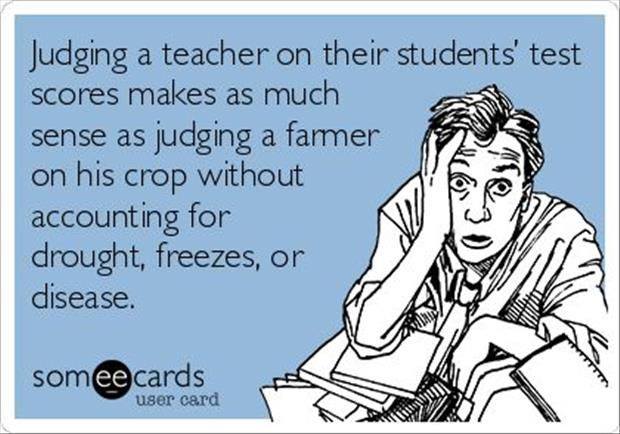
Recently, on Facebook (2.23.15) I posted the following image.

cows teachers test scores

The responses I received made me think of No Cow Left Behind. Please note the dates: 2003 to 2007 to a new update 2015. When this struggle began in the late 1990s, I had no idea that kids and teachers would still be suffering under this top-down, corporate approach to teaching and learning in 2015.

A bit more history: As a nation, we followed the guidelines of ESEA (Elementary and Secondary Education Act) for decades; in the early 1990s, we began operating schools under NCLB (No Child Left Behind), which morphed into RTTT (Race To The Top) in the early 2000s. In my view, RTTT is simply a louder, meaner, tougher, harder version of NCLB. And, now, as a nation, we are crazed with measuring and blaming kids and teachers.

NO COW LEFT BEHIND, 2015

Since many assume that testing is the cornerstone to improving student and teacher performance, I do not understand why this principle isn’t applied to other businesses. For example, if we test cows and ranchers, wouldn’t this be effective in improving their performance, too?

Therefore, I propose that the government mandate testing all cows and ranchers. I know that it will take time and cost money, but that should not detract us from what must be done.

There are plenty of statistics to show what good cattle performance looks like. It should, therefore, be easy to figure out the characteristics necessary to meet these standards. The testing will begin by finding out which cows (a) exceed the standard; (b) meet the standard, (c) almost meet the standard, or (d) fail to meet the standard. Points will be assigned in each category, and it will be necessary to achieve a certain mandated score. If this score is not achieved, the government will send in experts to give advice for improvement–never mind that these experts have never been to a ranch. If improvements do not occur, punitive measures will begin immediately. The state will take over your herd and your ranch, as they know more about ranching than ranchers.

One Size Fits All (Cows)

Ranchers believe in hybrid vigor, but it is important to remember that every cow must meet the same standard. Black Baldies have to be just like Texas Longhorns; Herefords have to be just like Angus; Beefmasters have to be like Charolais. All Brown Swiss, Guernseys, and Holsteins must also measure up and be held accountable for producing good beef, even though their family cultural patterns have stressed only milk production. One-size-fits-all is our goal for all cows in the United States. In addition, No Cow Left Behind will not make allowances for new cattle, which the rancher just bought at the sale barn: Just because the previous rancher did not provide the proper nutrition or a proper environment, accountability must be maintained.

One Size Fits All (Ranchers)

Another key factor will be the placement of a highly qualified rancher on each ranch. It doesn’t matter that some ranchers have more money and experience than others, it will be necessary for all ranchers to become certified by the same test. It is irrelevant what the ranchers knew before or where they learned it, No Cow Left Behind has new standards for ranching on the prairies. Ranchers will need to begin taking classes at night and during their summers. There will be a bit more paperwork: Accountability, you know.

Choice

It will also be necessary to allow “choice” for the cows. If cows are not meeting the standard on a certain ranch, they will be allowed to go to the ranch of their choice. Transportation may become an issue, but it is critical that cows be allowed to leave their low performing ranches. This will force low performing ranchers to leave their home ranches and look for minimum pay work in town. This is simply good business!

A few cows may become so discouraged that they simply wander off and drop out. This is not a problem, as the remaining cows will bring up the test scores for the nation. A few ranchers may also become too discouraged to stay in the business. This is an opportunity to bring in other, more compliant ranchers.

However, the government officials who mandate No Cow Left Behind know better, as they eat beef.

No Cow Left Behind is not good for the ranching industry, nor ranchers, and it sure is not good for cows.

February 24, 2015Read More
The Passing of Richard Ruíz of the University of Arizona

The Passing of Richard Ruíz of the University of Arizona

February 10, 2015

We are saddened to learn of the unexpected passing of Dr. Richard Ruíz, who had a long and beautiful career at the University of Arizona. His thinking has influenced many students, teachers, and me.

When kids, who speak other languages, come to your school or community, what is your perspective, your orientation, your approach?   For example, if a French-speaking student comes to your class and still needs to learn English as a new language, what is your perspective? Or what if that student speaks Spanish, what is your perspective? Do you approach the students as if their language is a problem, a right, or a resource? Turns out that we are in the classroom with them. Our own perspective/orientation matters.

Ruíz argued that there are three social orientations toward languages and their role in society:

 Language-as-problem

Language-as-right

Language-as-resource

As a nation, we have a long history of the language-as-a-problem. However, much of the world approaches other languages as a right and/or resource. Today in our little Howes, SD (Pop. 2) grocery store/gas station/post office, I heard a wonderful conversation in Lakota. And, I’m happy to report that I saw no evidence of anyone carrying around the baggage of language-as-a-problem.

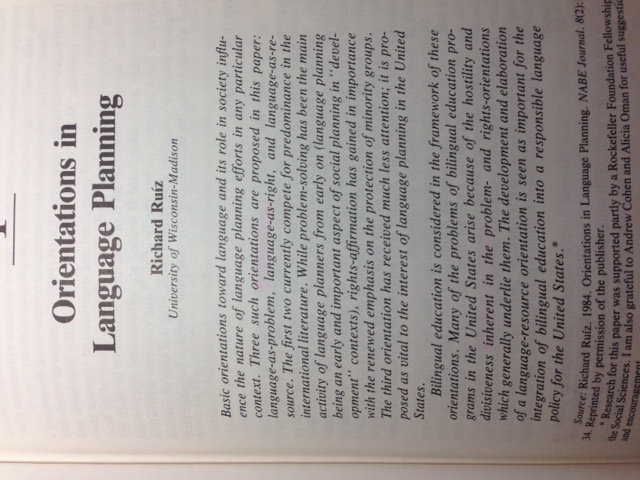
In 1988 Ruíz argued that the language-as-resource orientation offered the most social, economic, and political benefits.  Many in the world now assume that language is a human right.

Ruiz, R. (1988). Orientations in language planning. In S. L. McKay and S. C. Wong (Eds.), Language diversity problem or resource: A social and educational perspective on language minorities in the United States (pp. 1-25). New York: Newbury House Publishers.

Richard Ruíz Remembered for his Passion and Humor

Read the UofA’s Tribute

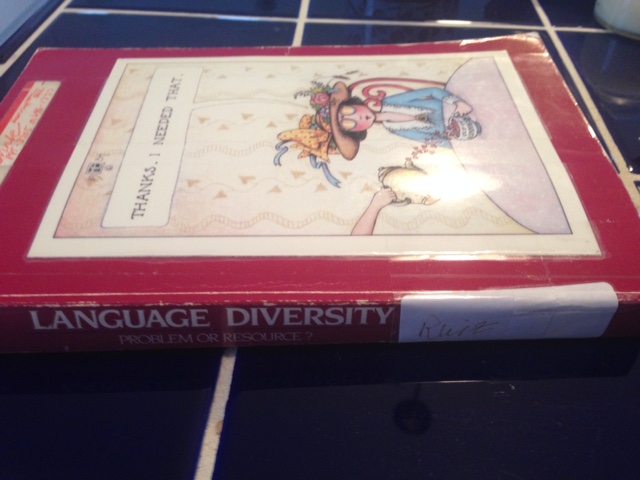
Happy Memories to all of you who have borrowed my treasured book.

Ruíz book

Ruíz Orientations in Language Planning

February 11, 2015Read More
Joan’s YouTube Videos, Language Acquisition

Joan’s YouTube Videos, Language Acquisition

The following videos were created between 2011 and 2014 for specific graduate classes with the support of Cal State Stanislaus and Black Hills State University.  If any of you can use any of this content for your own classes, help yourself.  The teachers I have worked with seem to like it as a pre-reading or post-reading process. Citations are provided at the end of each video.

Krashen’s 5 Hypotheses: or, Mamas, Meaning, and Motivation: 11 minutes
Watch Now

3 Perspectives on Teaching and Learning: 7 minutes
Watch Now

Principles of Bilingual Education: 11 minutes
Watch Now

The Ebb and Flow of the Big Ideas of Education: 15 minutes
Watch Now

Bilingual Basics Part One: 50 seconds
Watch Now

Bilingual Basics Part Two: Images:
Watch Now

Spiral of Literacy: 11 minutes
Watch Now

February 3, 2015Read More
Oh Fudge

Oh Fudge

WinkWorld

“I love your fudge recipe,” Josie said to me. “May I have it?”

“Sure, I’ve got the recipe in my head,” I replied. “Let’s sit down, and you can write it on that scrap of paper. It’s fast and easy.”

“Oh, just send it to me on an email,” she responded.

I spent the next several hours feeling really bad. “What’s up with my feelings about this fudge recipe?” I mused to myself when I went on a long walk later in the day. Writing a recipe with my computer really does make sense. Why am I feeling dismissed? Suddenly, I knew: This was not about chocolate; this was about a story.

I wanted to tell Josie that this fudge recipe came from dear Grandma Mary, who moved into my life when was I was 17 years old. She was my dad’s 4th of 5 wives, and I wanted Josie to know who Mary was for me.

She was the first person who told me that I didn’t have to finish eating everything on my plate. I cringed at a Sunday noon fried chicken dinner, when she looked at my dad and said, “Oh, Billy, she doesn’t have to eat that strawberry shortcake if she is full.” I put my head down and waited for the explosion. This time, none came, and I quickly excused myself and hurried to the safety of my basement bedroom. I marveled at Mary speaking the simple truth to the power in that house.

Mary brought elegance and beauty to my life, too. I loved to look at her as she rode her bike, as she worked about the house, as she sanded and finished furniture, which she rubbed with real walnuts. I could barely believe the meals: So many colors. I remember feeling that she brought a hint of safety to my life: Dare I hope?

I wanted Josie to know how much I loved Mary; how I day-dreamed about her growing old with me; how I wanted her navy blue polka-dot silk shirtwaist dress; how I wanted to look like Mary in that dress.

I wanted Josie to know that Mary flew to Philadelphia, when our first baby was born and helped us. In my wildest imagination I never thought I’d ever have anyone who would do that for me.

I wanted Josie to know that Mary left us far too soon, after a wild fire of cancer took her in a few months; I wanted to tell Josie how gorgeous Mary looked in her bright fuchsia blouse and her striking silver hair on the weekend after her diagnosis. I wanted to tell Josie how two months later when I flew to be with Mary, I didn’t recognize her at first, as cancer had consumed her: her passion, her fire, her gorgeous hair. I wanted Josie to know how my friend, MJ, had arranged a first class airplane ticket for me to come see Mary in the hospital, and how I drank too much wine on that flight on the way home, when I knew I would never see Mary again.

And, did I tell you that Mary read books? Lots of books. Every time she had a free moment. I had never seen anything like this, and I was intrigued. As a senior in high school, I read, but only what was assigned–it had never occurred to me to read for pleasure. Suddenly today, decades after Mary died, it dawned on me that I may have received, not only the fudge recipe, but also my love of books from Mary.

I wanted to share that fudge recipe so Josie would know me. Stories are like a super highway that run right into our hearts. Here is the fudge recipe:


Grandma Mary’s Fudge Recipe


Place three 6 oz. pkgs. dark chocolate chips

1/4 lb. butter

2 c. chopped nuts

3 T. vanilla in a large mixing bowl.


Place 4 ½ c. sugar and

One tall can evaporated milk in a large saucepan.

Bring to a boil and boil 8 minutes.

(use low to medium heat and stir ever-so reluctantly)


Pour boiling hot milk/sugar mixed over chocolate mixture in that large mixing bowl. Stir a bit until smooth. Pour onto 9X13 buttered cookie sheet.

January 28, 2015Read More
WinkWorld: Teachers Sharing Diverse Projects

WinkWorld: Teachers Sharing Diverse Projects

One of my great joys of retirement is that I get to work with local teachers in various contexts. In this issue of WinkWorld, I’d like to highlight the work of some of the teachers, who are enrolled in the English as a New Language (ENL) endorsement programs at Black Hills State University (BHSU), which is a collaborative program supported by Technology and Innovation in Education (TIE).

Each teacher chose his/her own topic; they each wrote a short paper and presented their ideas with any software, which was new for them. We all learned a lot from the process. Below, you will see the language acquisition concepts shared with Powtoons, Easel.ly, Emaze, and Prezi. Enjoy.

Deb may have discovered her favorite book in this process, and she and her high school students had great fun making other Powtoons.

Deb Harrison
Topic: The Power of Reading by Steve Krashen, a book review
Software: PowToons
http://www.powtoon.com/show/d5r7ZVuYbik/the-power-of-reading/
Krashen on “The Power of Reading”
https://www.youtube.com/watch?v=DSW7gmvDLag

None of us knew about Essel.ly until Julia created this presentation. Many of us found it to be software, which we might use in the future.

Julia P. Henkes
Topic: Culture in the Classroom
Software: Easel.ly
http://www.easel.ly/create/?id=https://s3.amazonaws.com/easel.ly/all_easels/643503/FInalWink&key=pri#

We often follow the many generous contributions from Larry Ferlazzo. As Jenise’s computer was being repaired, she first demonstrated her learning with a PinWheel, which she drew. When she got her computer back, she created an Emaze, an appealing software for teachers.

Jenise Higaski
Topic: Larry Ferlazzo PinWheel
Software: Emaze and the symbol of the Pinwheel
http://app.emaze.com/1323343/ci-final-ferlazzo-pinwheel

Connie is a German and Piano instructor at BHSU, and I was particularly happy that her topic was TPRS. I predict we might get to see some German TPRS examples this spring.

Connie Hubbard
Topic: Teaching Proficiency in Reading Through Storytelling (TPRS)
Software: Powtoons
http://www.powtoon.com/show/bGjETWMK6Xr/tprs/#/

Lindy was attracted to the sharing of Diane Ravitch, who calls us to a new paradigm for accountability. Lindy envisions a rubric, which might work to support the ideas of Ravitch.

Lindy Latham
Accountability of kids, teachers, and school: A rubric to assess the whole, Inspired by Diane Ravitch, A New Paradigm for Accountability,
http://www.huffingtonpost.com/diane-ravitch/a-new-paradigm-for-accoun_b_6145446.html

In our class last fall, we looked at various examples of close reading, and we read the pros and cons of the process. Courtney continued her learning by also creating an Easel.ly to support her ideas.

Courtney K. Oelke
Topic: Close Reading and ELLs
Software: Easel.ly
http://www.easel.ly/create/?id=https://s3.amazonaws.com/easel.ly/all_easels/663442/CloseReading&key=pri

Courtney wants to improve her skills in teaching writing to emergent bilinguals. Her Emaze captures her thoughts.

Courtney Prosenick
Topic: Writers’ Workshop with First Grade Emergent Bilingual Students
Software used: Emaze
http://app.emaze.com/1201914/ed-692-final-project

In Jill’s district, many of the teachers are reading about close reading, so Jill created a Prezi to capture her new learning.

Jill Soto
Topic: Close Reading
Software: Prezi
http://prezi.com/unv0dmat1myc/?utm_campaign=share&utm_medium=copy&rc=ex0share

Sheila is intrigued with the important role of the families of emergent children, and she shared a Prezi. I’m thinking that this semester, I need to direct her towards Funds of Knowledge, originally conceptualized by Luís Moll.

Sheila Sutter-Rives
Topic: The Power of Bilingual Families and Literacy
Software: Prezi
https://prezi.com/0xgio4xmfgi3/bilingual-families/?utm_campaign=share&utm_medium=copy

Lila is learning about the dreadful effect of poverty on children’s learning. I hope that she continues to study and share this topic. Here she has created a Powtoons to capture her learning.

Lila Scantling
Topic: Poverty
Software: Powtoons
http://www.powtoon.com/show/bMTeVMGObvZ/poverty-and-literacy

Nikki is beginning a new position in a new state and town. She wants to know more about language acquisition and kindergarten children. We hope that you will enjoy her Emaze.

Nikki Williamson
Topic: Language Acquisition in the Kindergarten Classroom
Software: Emaze
http://app.emaze.com/1347192/kindergarten-la-copy1

Thank you, Teachers, for all you do!

January 20, 2015Read More
WinkWorld: Teachers Sharing Diverse Projects

WinkWorld: Teachers Sharing Diverse Projects

January 20, 2015

One of my great joys of retirement is that I get to work with local teachers in various contexts. In this issue of WinkWorld, I’d like to highlight the work of some of the teachers, who are enrolled in the English as a New Language (ENL) endorsement programs at Black Hills State University (BHSU), which is a collaborative program supported by Technology and Innovation in Education (TIE).

Each teacher chose his/her own topic; they each wrote a short paper and presented their ideas with any software, which was new for them. We all learned a lot from the process. Below, you will see the language acquisition concepts shared with Powtoons, Easel.ly, Emaze, and Prezi. Enjoy.

Deb may have discovered her favorite book in this process, and she and her high school students had great fun making other Powtoons.

Deb Harrison
Topic: The Power of Reading by Steve Krashen, a book review
Software: PowToons
http://www.powtoon.com/show/d5r7ZVuYbik/the-power-of-reading/
Krashen on “The Power of Reading”
https://www.youtube.com/watch?v=DSW7gmvDLag

None of us knew about Essel.ly until Julia created this presentation. Many of us found it to be software, which we might use in the future.

Julia P. Henkes
Topic: Culture in the Classroom
Software: Easel.ly
http://www.easel.ly/create/?id=https://s3.amazonaws.com/easel.ly/all_easels/643503/FInalWink&key=pri#

We often follow the many generous contributions from Larry Ferlazzo. As Jenise’s computer was being repaired, she first demonstrated her learning with a PinWheel, which she drew. When she got her computer back, she created an Emaze, an appealing software for teachers.

Jenise Higaski
Topic: Larry Ferlazzo PinWheel
Software: Emaze and the symbol of the Pinwheel
http://app.emaze.com/1323343/ci-final-ferlazzo-pinwheel

Connie is a German and Piano instructor at BHSU, and I was particularly happy that her topic was TPRS. I predict we might get to see some German TPRS examples this spring.

Connie Hubbard
Topic: Teaching Proficiency in Reading Through Storytelling (TPRS)
Software: Powtoons
http://www.powtoon.com/show/bGjETWMK6Xr/tprs/#/

Lindy was attracted to the sharing of Diane Ravitch, who calls us to a new paradigm for accountability. Lindy envisions a rubric, which might work to support the ideas of Ravitch.

Lindy Latham
Accountability of kids, teachers, and school: A rubric to assess the whole, Inspired by Diane Ravitch, A New Paradigm for Accountability,
http://www.huffingtonpost.com/diane-ravitch/a-new-paradigm-for-accoun_b_6145446.html

In our class last fall, we looked at various examples of close reading, and we read the pros and cons of the process. Courtney continued her learning by also creating an Easel.ly to support her ideas.

Courtney K. Oelke
Topic: Close Reading and ELLs
Software: Easel.ly
http://www.easel.ly/create/?id=https://s3.amazonaws.com/easel.ly/all_easels/663442/CloseReading&key=pri

Courtney wants to improve her skills in teaching writing to emergent bilinguals. Her Emaze captures her thoughts.

Courtney Prosenick
Topic: Writers’ Workshop with First Grade Emergent Bilingual Students
Software used: Emaze
http://app.emaze.com/1201914/ed-692-final-project

In Jill’s district, many of the teachers are reading about close reading, so Jill created a Prezi to capture her new learning.

Jill Soto
Topic: Close Reading
Software: Prezi
http://prezi.com/unv0dmat1myc/?utm_campaign=share&utm_medium=copy&rc=ex0share

Sheila is intrigued with the important role of the families of emergent children, and she shared a Prezi. I’m thinking that this semester, I need to direct her towards Funds of Knowledge, originally conceptualized by Luís Moll.

Sheila Sutter-Rives
Topic: The Power of Bilingual Families and Literacy
Software: Prezi
https://prezi.com/0xgio4xmfgi3/bilingual-families/?utm_campaign=share&utm_medium=copy

Lila is learning about the dreadful effect of poverty on children’s learning. I hope that she continues to study and share this topic. Here she has created a Powtoons to capture her learning.

Lila Scantling
Topic: Poverty
Software: Powtoons
http://www.powtoon.com/show/bMTeVMGObvZ/poverty-and-literacy

Nikki is beginning a new position in a new state and town. She wants to know more about language acquisition and kindergarten children. We hope that you will enjoy her Emaze.

Nikki Williamson
Topic: Language Acquisition in the Kindergarten Classroom
Software: Emaze
http://app.emaze.com/1347192/kindergarten-la-copy1

Thank you, Teachers, for all you do!

WinkWorld: Change is hard.

WinkWorld: Change is hard.

The Problem: Change.

In 2014 I changed from the more static electronic newsletter, WinkWorld, to the more interactive blog, The Latest From Joan. Suddenly, I had two electronic missives to send out regularly, and it absolutely shut me down. Not my style, I know.

The Solution: Change.

Recently, the solution popped into my head: WinkWorld will simply morph into my blog.  Yes, it will be different from the original newsletter, but that is the nature of change, as we get to learn again and again.

All of the previous WinkWorld editions will stay online and be available to all, as they serve very much like a library. The Search Function (in the sidebar of this page) works beautifully. Try it!

New Year’s Resolution: I’ve never had one, except some annual, vague notion about trying to do less….

This is beginning to feel like my first-ever New Year’s Resolution: I will share some stories about literacies and libraries, as I am starting on a new project.

And, speaking of New Year’s Resolutions: Let’s all read more in 2015.  What book are you reading right now?  See you in the comment section.

Joan, December 31, 2014

December 31, 2014Read More
The Benson Kids

The Benson Kids

Much of what I know about teaching and learning, I learned from The Benson Kids in the late 1970s and 1980s.  This weekend I have the unbelievable joy of reconnecting with them and their parents for homecoming in Benson, AZ.  Here is one little story about them.  When I think of these students, I am reminded of Paulo Freire’s comment: “Education is radically about love” (Wink, 2011, p. 2)

October 14, 2014Read More
Northern Rocky Mountain Educational Research Association

Northern Rocky Mountain Educational Research Association

NRMERA

Northern Rocky Mountain Educational Research Association

Historic Hotel Alex Johnson

Rapid City, SD

October 1-4, 2014

Theme of Conference: Courage, Challenge, and Opportunity

Joan’s Keynote: The Courage to Share my Pedagogical Principles

8:45 a.m., Thursday, October 10

11:15 – 12:15 a.m. Thursday, October 10, Vygotsky and CARMA, Concurrent

Session with Le Putney

Learn-at-Lunch: 12:30 to 1:30, Thursday and Friday

http://www.nrmera.org/conference_current.html

September 29, 2014Read More