Dear WinkWorld Readers,
Got a couple of minutes? You won’t forget this story. Thank you to Sharon Biegen for sharing this with us.
Dear WinkWorld Readers,
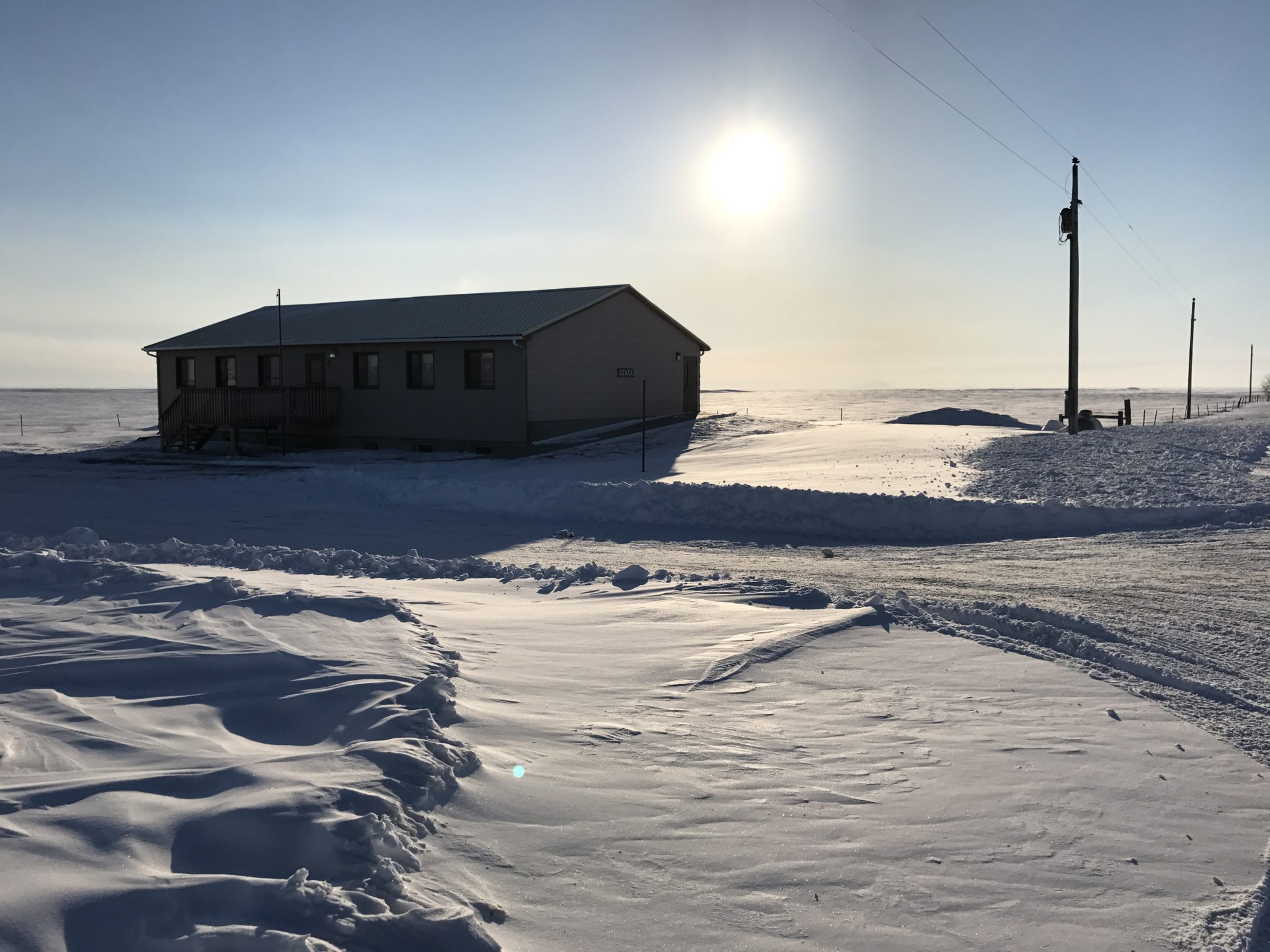
Recently, I was lucky enough to attend Grandparents’ Day Program at Atall School on the isolated prairies.
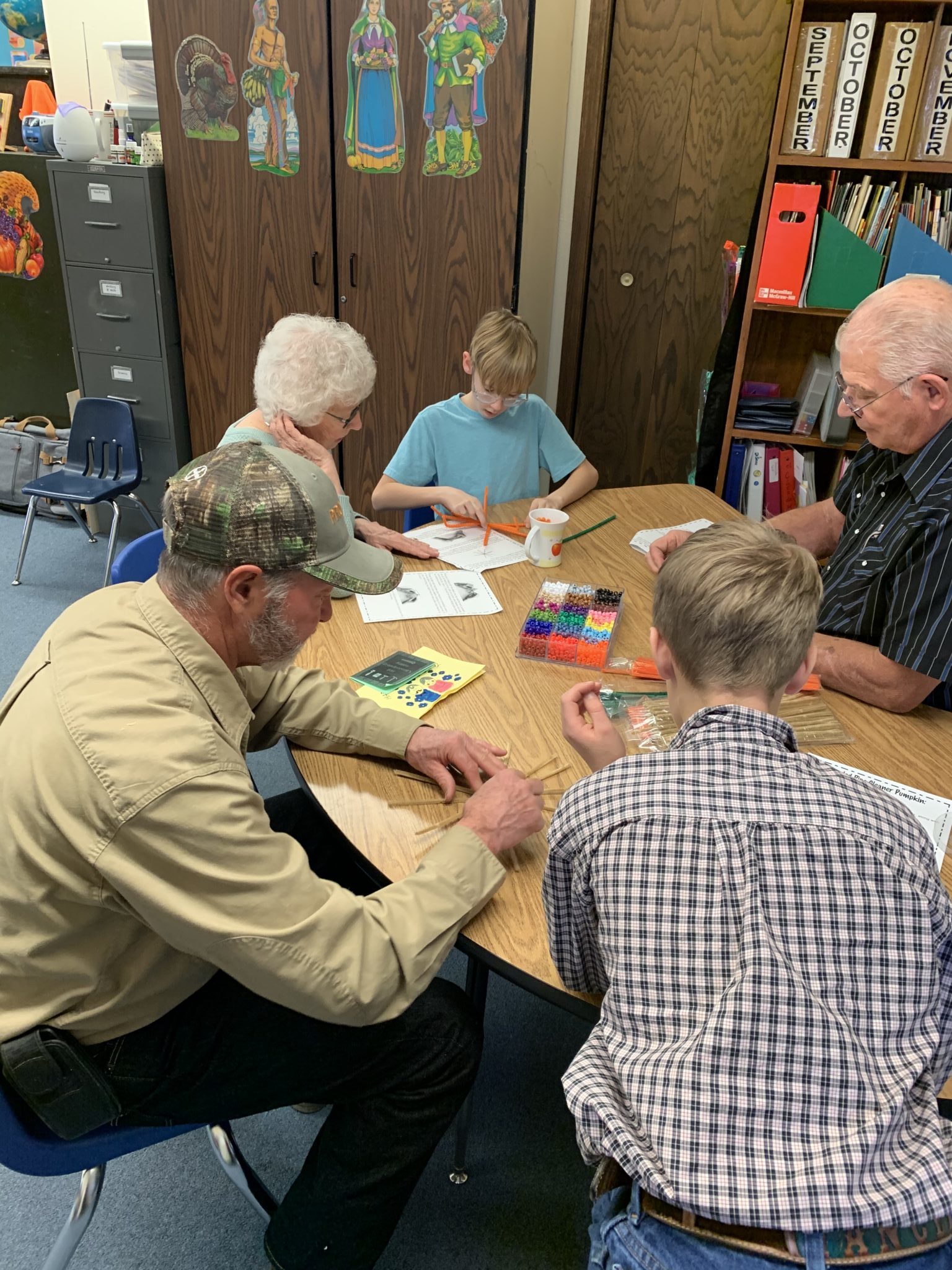
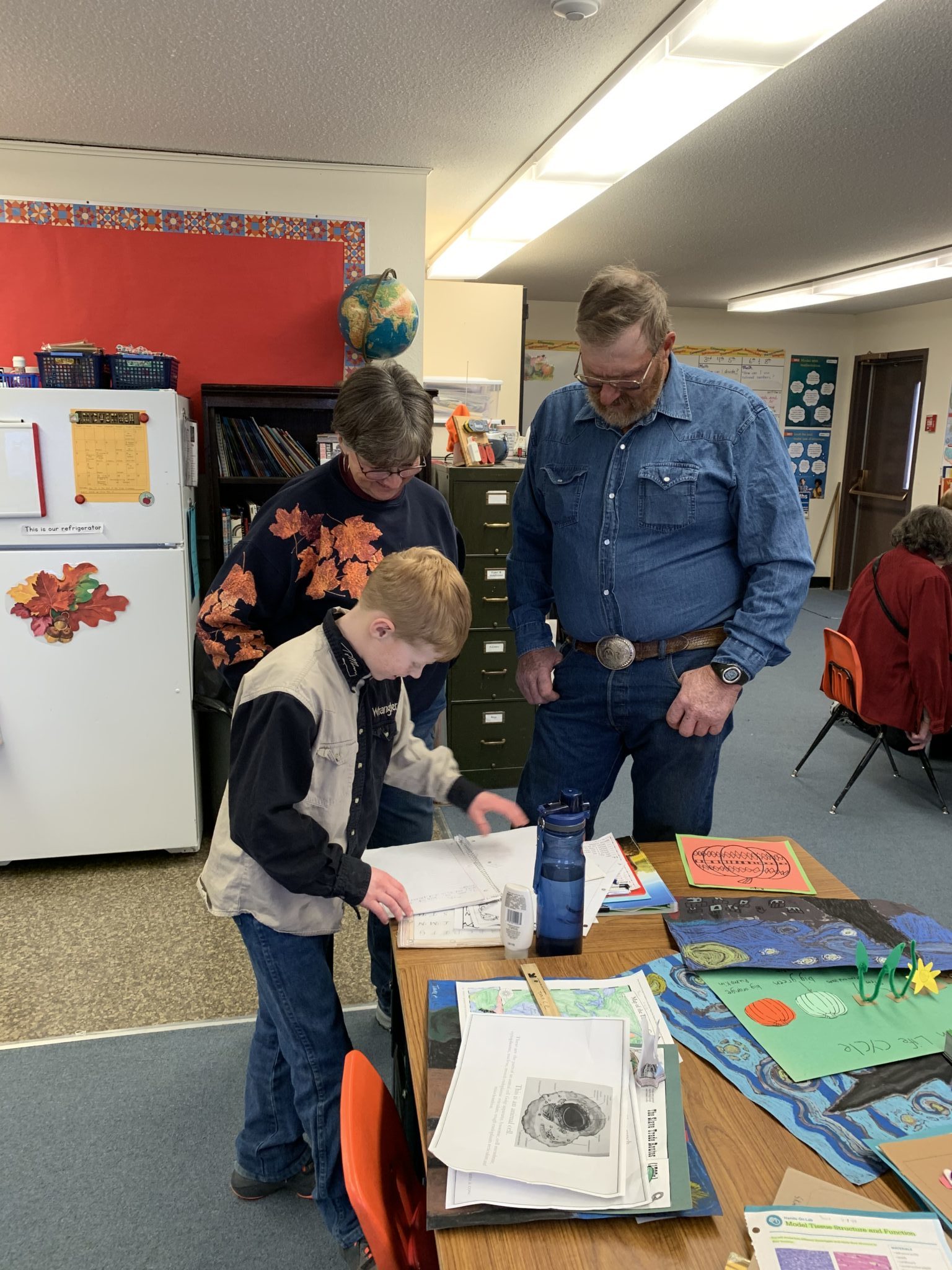
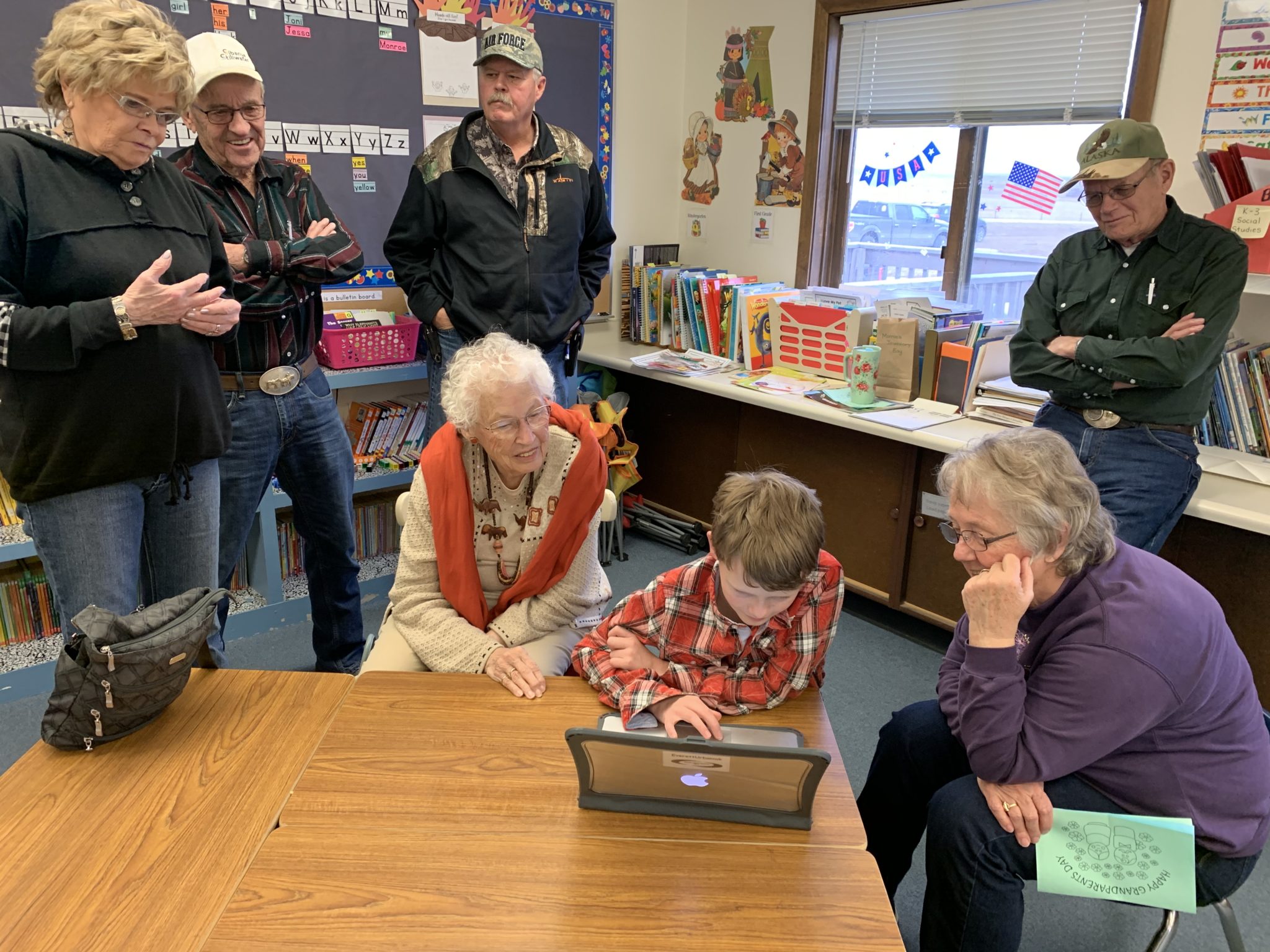
Missy, the teacher, has 10 students; 7 different grades; and each child there seems like a miracle to me. Missy is an amazing teacher. The grandparents walked in, and the children greeted them. I always love to see kids who are comfortable in intergenerational contexts. For 2 full hours, each child regaled his/her own family with stories, homework, an interview, and an art project which they did together. Here is a selection of photos of kids and grandparents.
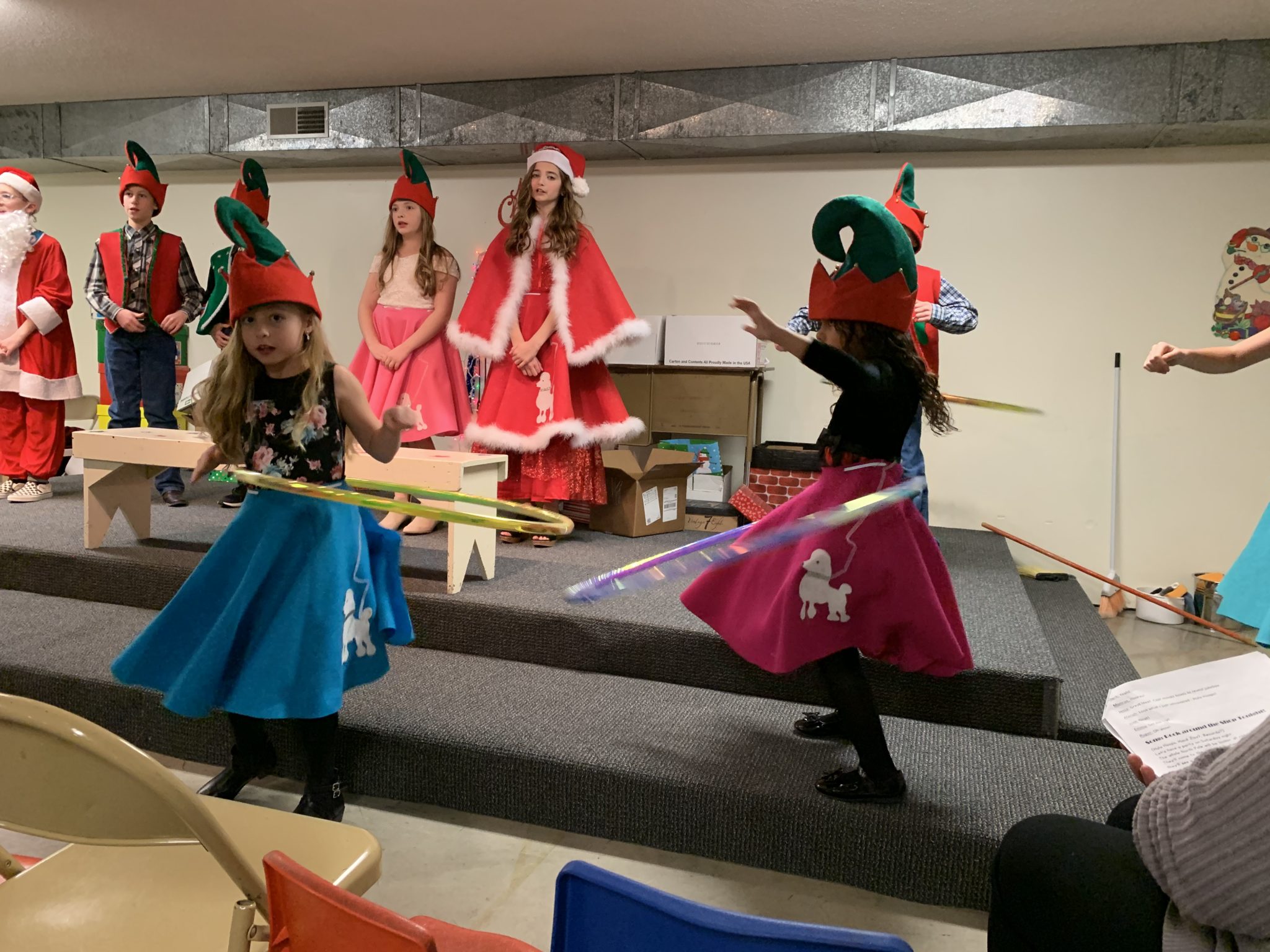
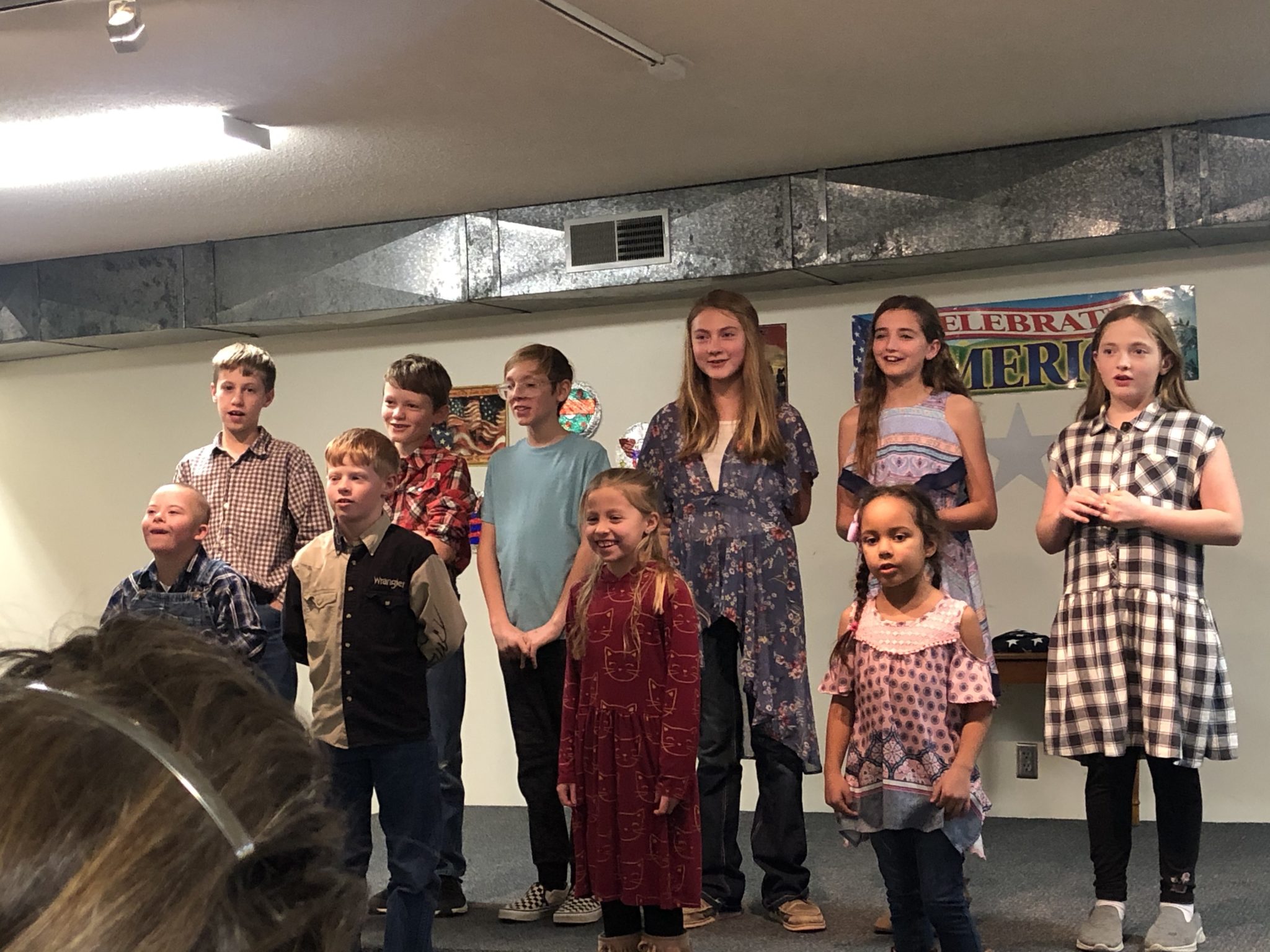
Missy just stood and watched; it takes a very talented teacher to get kids to be that independent and engaging for two full hours. Next, we marched down to the basement for the kids’ program of poems, stories, and music. More magic.
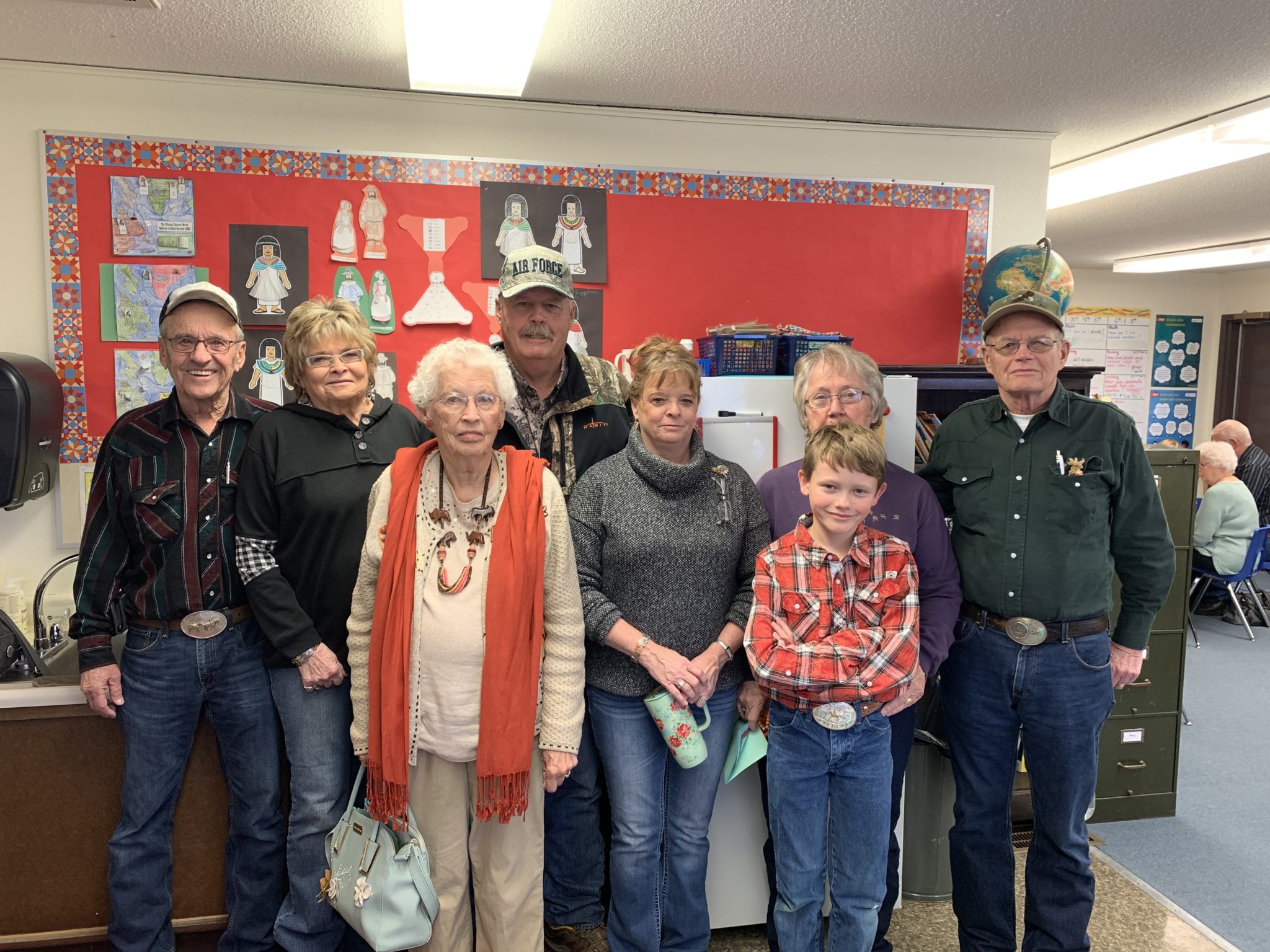
Missy’s son, Ev, had 7 grandparents attending.
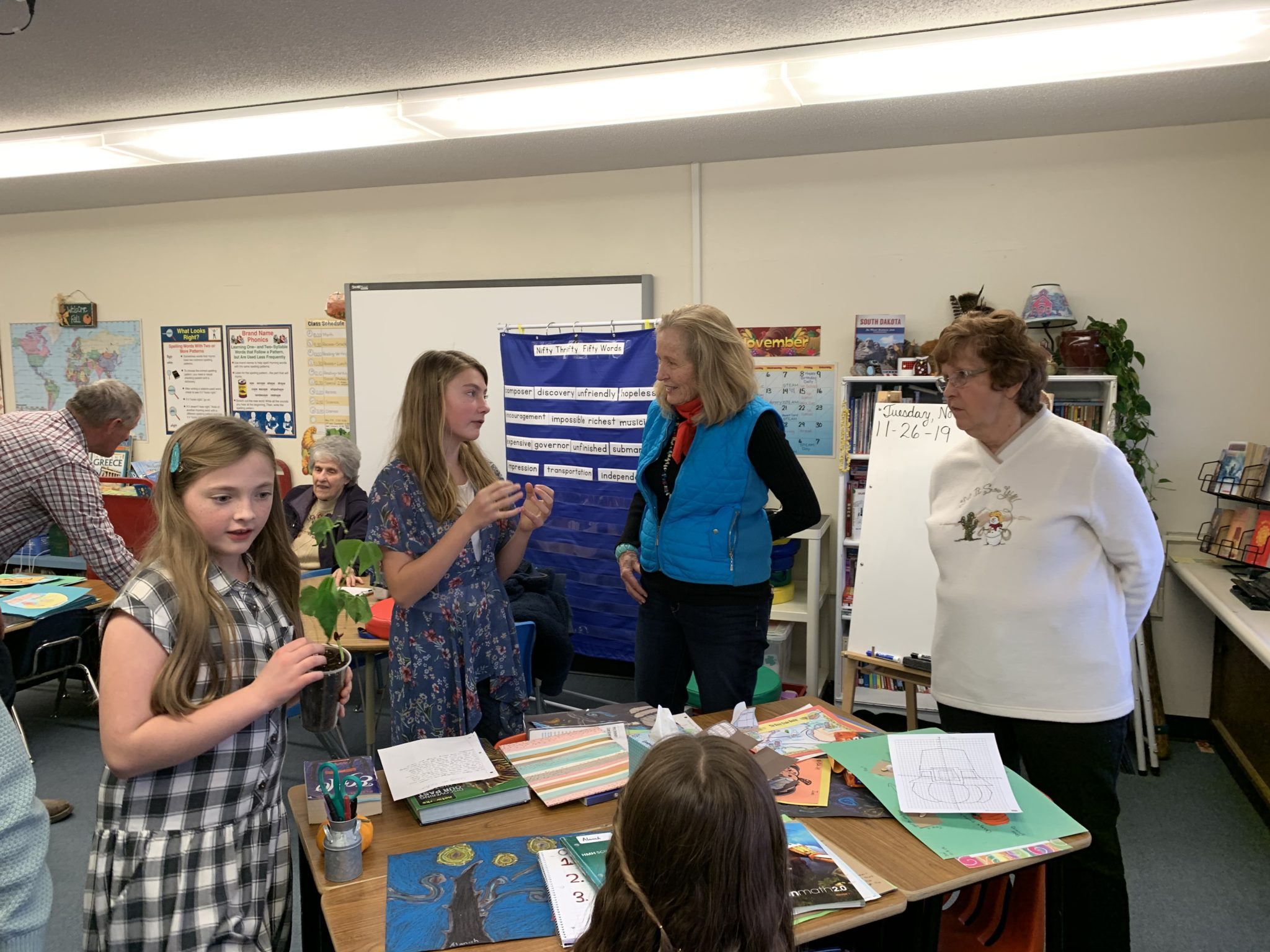
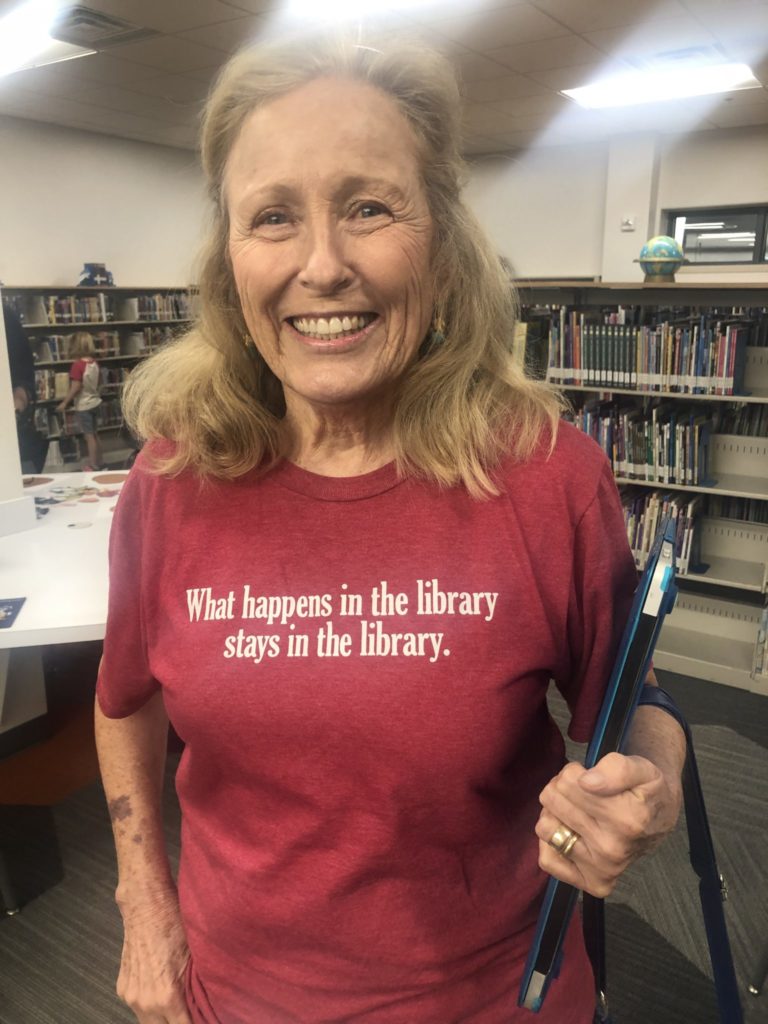
It was a fabulous day, and I was the extra-Grammie, just in case one of the students needed a grandparent. Fortunately, all of the students had grandparents who were able to attend. I loved my day and did get individual time with each student. Here Emma is explaining journaling to me.
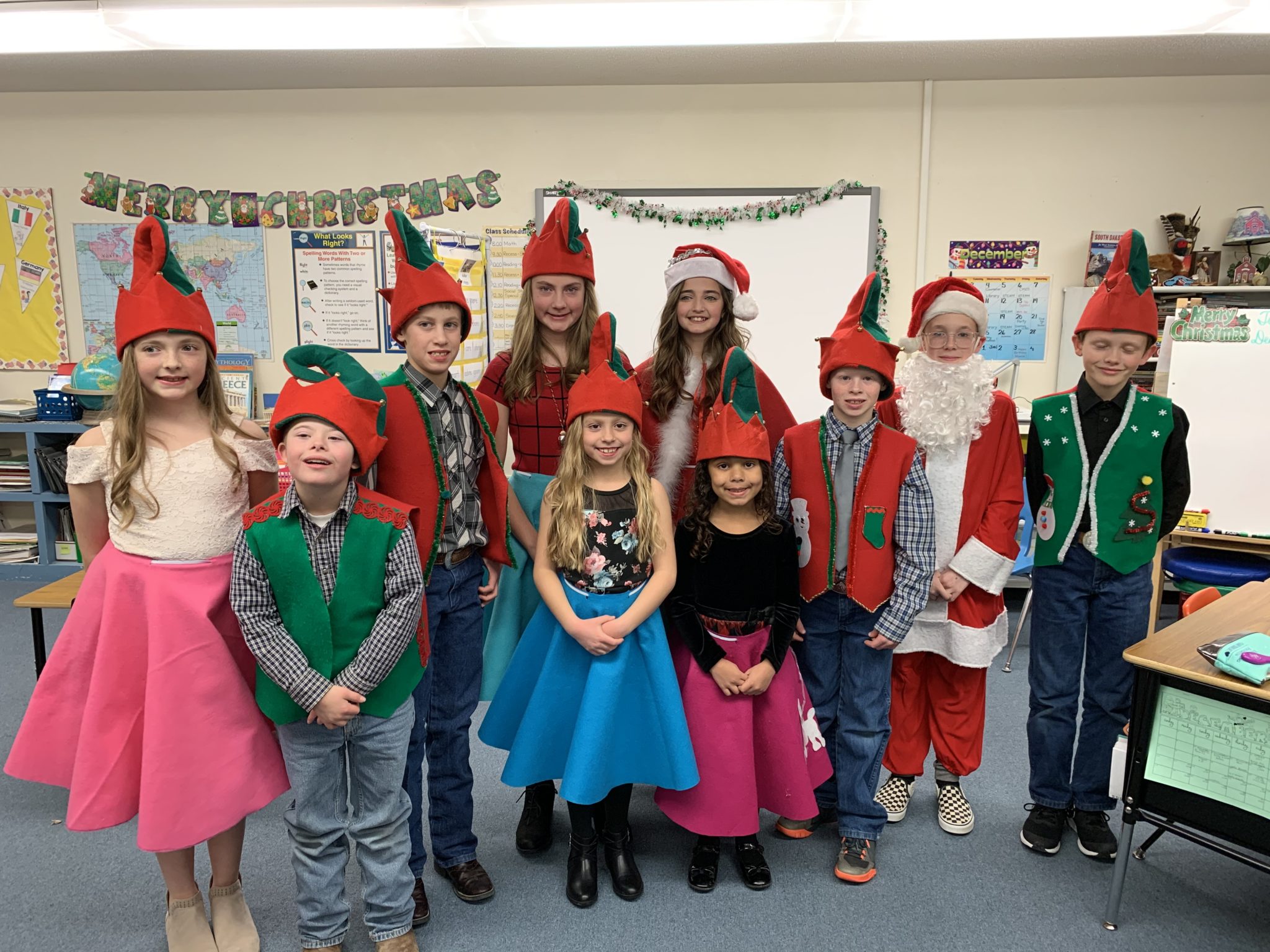
Now, Missy and students are hard at work preparing for the Christmas program for the families and community.
Dear WinkWorld Readers,
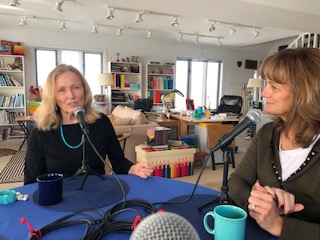
In this issue of WinkWorld, I will introduce you to InfluentialSHE, and tell you the story of when they came to the ranch to interview me recently. I will also post a couple of ranch photos from the snowy prairies.
InfluentialSHE
Well, what’s not to love with a name like that? You can find them at their own website, all forms of social media, video, podcast, and more. Their goal is to enhance women’s influence in the world. As they say,
•they are a fresh voice in an old conversation;
•they are not another leadership thingy for chicks;
•they bring a sassy, dynamic way to being in the world;
•they are the go-to voice for accelerating women’s influence.
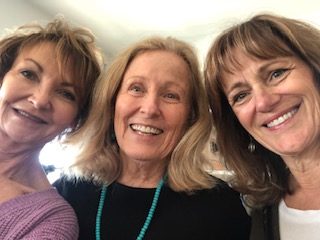
InfluentialSHE and me: Melody Schopp and Deb Soholt
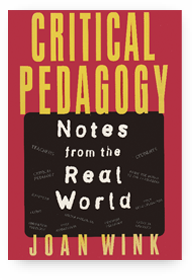
Of course, I studied their webpages carefully before they arrived for the interview. I knew they wanted to ask me questions about the importance of storytelling. I reviewed several of my published stories and worried about which one would be best for them. Finally, I realized that I have the original water painting of “3 Models of Pedagogy” which a teacher credential student, Dayna, gave me as a gift. A-ha, I took the painting off of our bedroom wall and took it upstairs to tell them the story. Dayna was a graduate student in one of my classes, and she had read my book, Critical Pedagogy: Notes from the Real World. Above all, Dayna was an artist.
Click here for the original story.
Or, here is a fast summary.
Pedagogy means the interaction between teaching and learning; it is what happens in schools every day. Dayna was a terrific student who always came to class prepared, and she interacted well with her colleagues. I had no worries about her learning, but in the middle of the semester, I asked her to stay after class for a bit.
“Dayna, you are doing great work in our class,” I told her. “Just one concern: You have not turned in one written assignment yet.”
She looked me straight in the eye, did not miss a beat, and said, “Dr. Wink, you are the person who talks about always having “faith in the learner,” (credit to Bonnie and David Freeman).
Silence.
“Okay, Dayna, I’ll have faith in you,” I responded, hesitantly.
Several more weeks passed, and we were very close to the end of the semester. I was on high alert, as Dayna still had not turned in a written assignment. She continued to be an excellent student and demonstrated her learning in multiple ways every week.
Near the very end of the semester, she walked into class, and calmly asked, “Dr. Wink, do you mind if I talked with the class?”
“Please do,” I replied. She unfurled this large painted image, and said to the class.
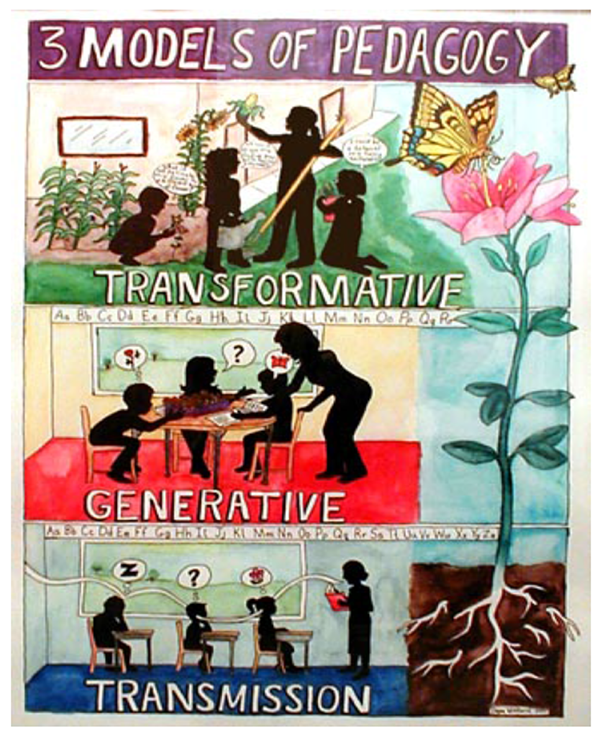
“I believe this is what we are learning in this class. There are many ways to teach and learn, but many of us have experiences with these three ways. ” Dayna continued the story of her learning.
First, look at the bottom of the painting, Transmission model of pedagogy. We come from a long tradition of this approach to teaching and learning. The teacher has the knowledge, and simply transmits it to the students. The students then are tested and give the knowledge back to the teacher. Please note in the image of the children that the knowledge goes in one ear and out the other of the first two students. The child in back is asleep. Note the cut roots of the flower on the right. Many of us have had this done to us, and we have done it to others.
Second, look at the middle of the painting, Generative model of pedagogy. The teacher and students are working together to solve problems. The students and teacher construct the knowledge together. Please look at the right of the image, as the plant begins to sprout. Many of us, as future teachers, hope that we will be generative teachers, and some of us have experienced this as students, ourselves.
Now, third, look at the top of the painting, Transformative model of pedagogy. Please note that the teaching and learning is in the real world, not only in the classroom. Communication flows freely, as teacher and students join together to solve real problems. In this case the class is working on science as they plant a garden for families-in-need in the community. Many of us strive to be this type of teacher–at least sometimes.
For the InfluentialSHE interview, I shared this story. When the podcast is published in January, I will share on WinkWorld, if I don’t embarrass myself. You know how none of us likes to watch ourselves on a video…
Click below for different versions of Dayna’s story.
The Lesson of Dayna: Once Size Does Not Fit All
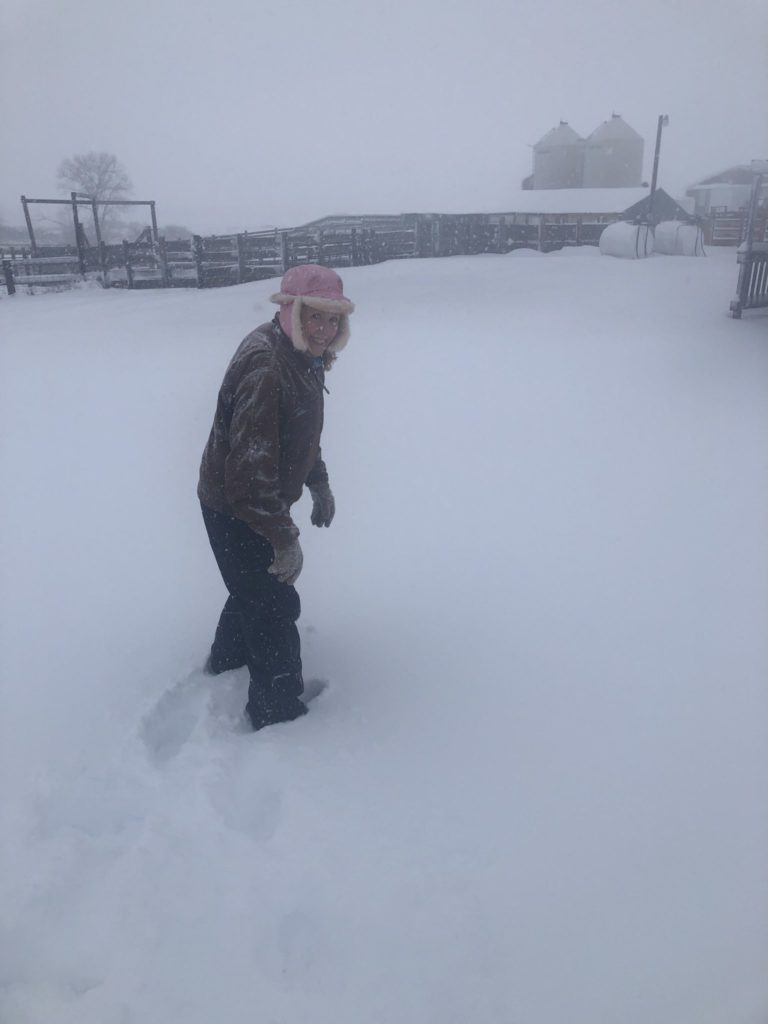
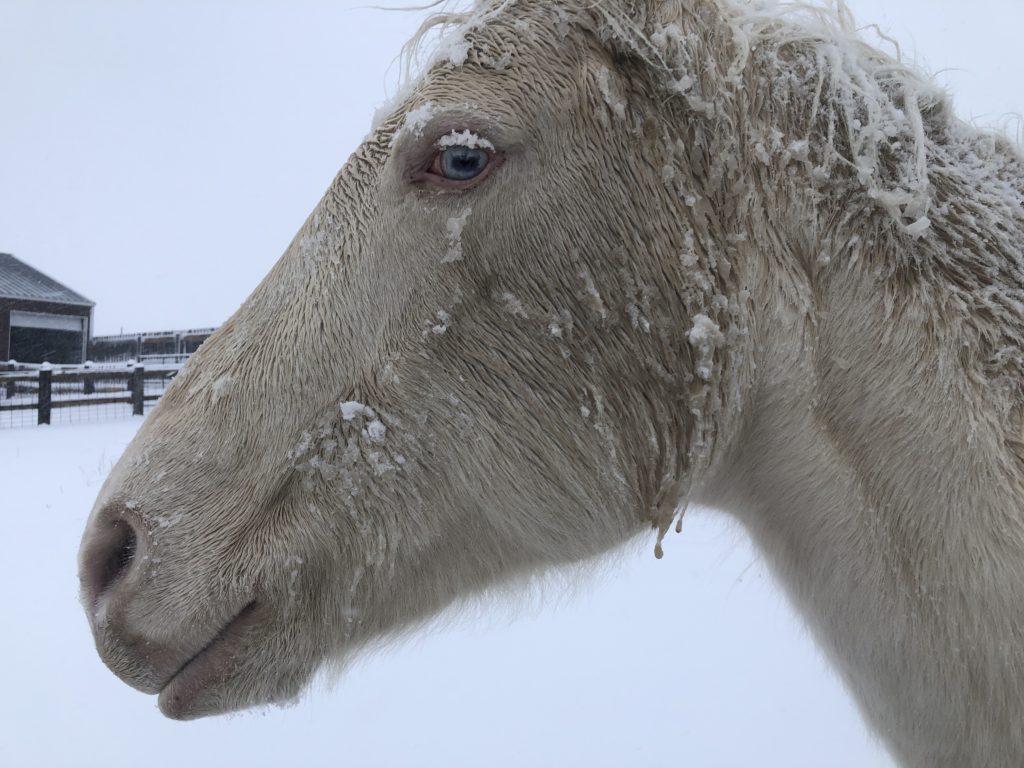
In closing, here are a few photos of our snow yesterday.
Where is the proverbial rope to hang on to as I go out for a walk?
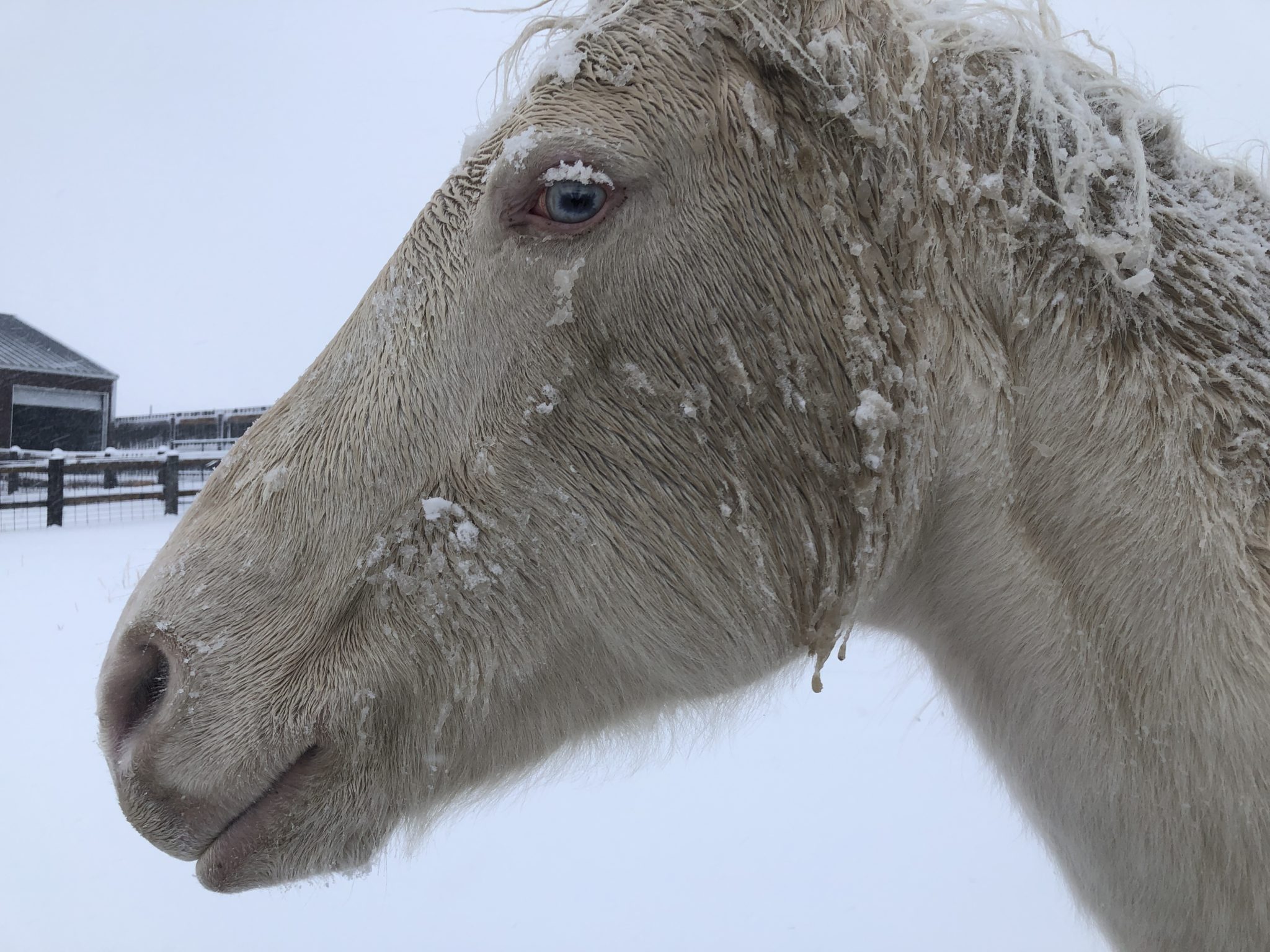
Can you see the frosted eyelashes on Frankie, my horse?
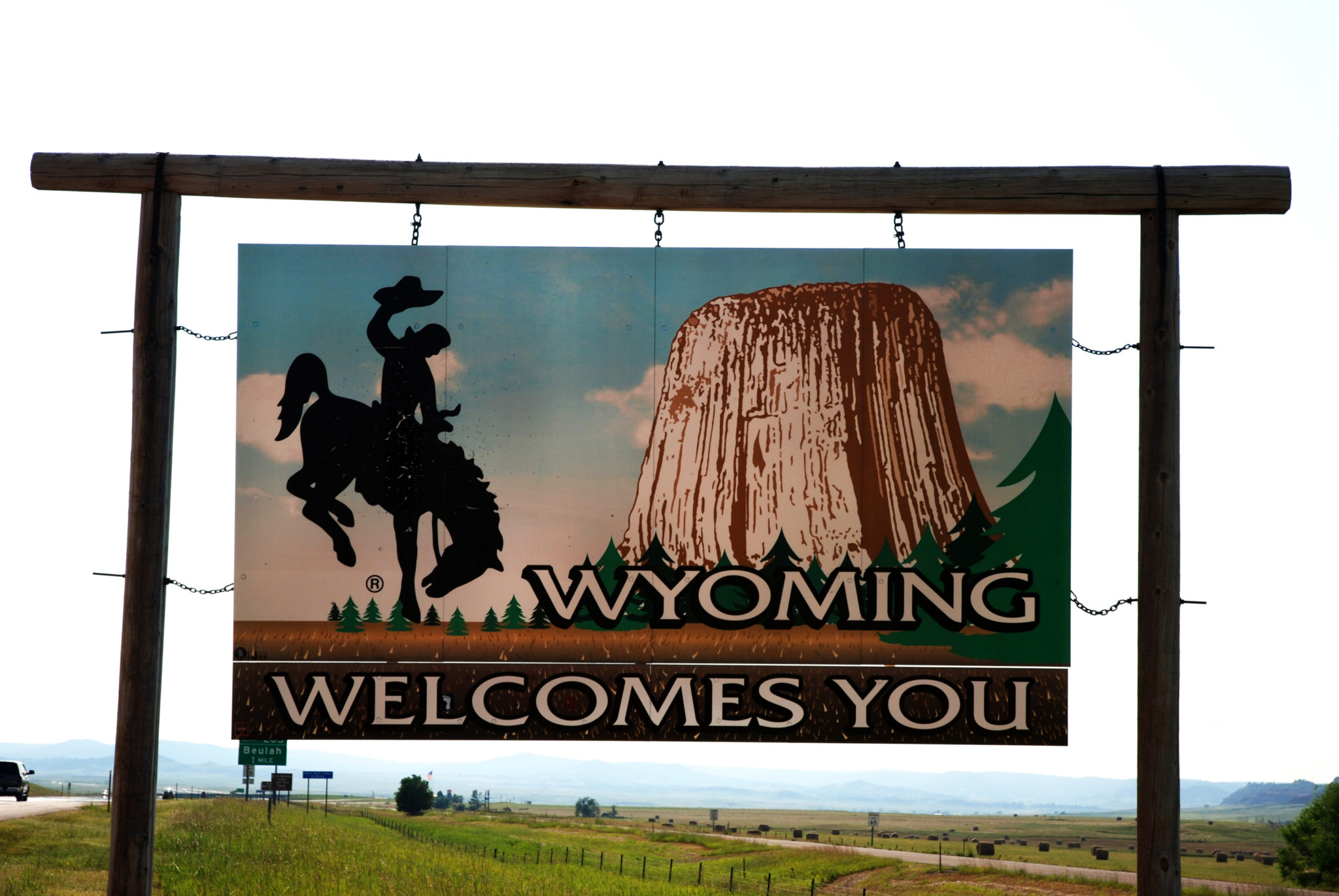
A welcome sign at the Wyoming state line.
Dear WinkWorld Readers,
I am preparing to make a trip to Wyoming to share with teachers about language acquisition. I have been told that they really want some activities which “they can do tomorrow.” Through the years, I have found it fairly easy to share strategies, which help teachers provide access to content for bilingual students and activities which help bilingual students integrate into the classroom. However, the hard part is that I never really know if teachers actually try new things, after I share.
I sat down and wrote a little list of things which mainstream teachers can do tomorrow to help bilingual students.
What Teachers Can Do Tomorrow
Some other activities, which we may discuss are listed below.
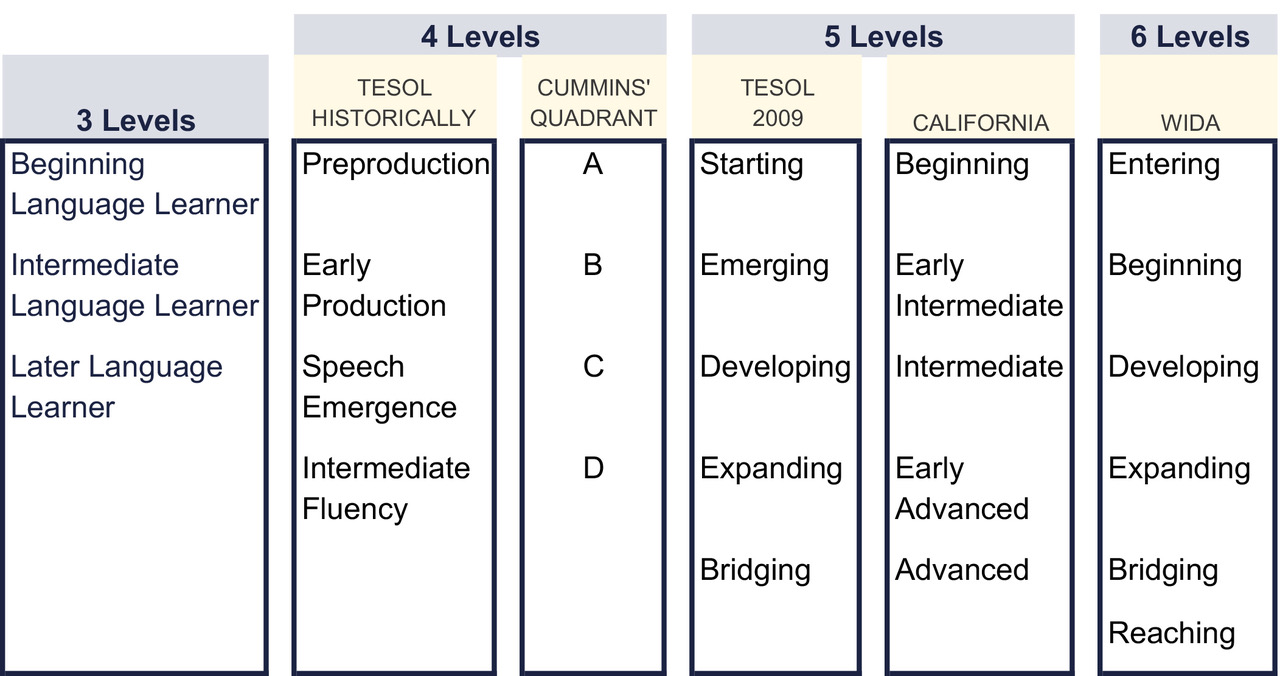
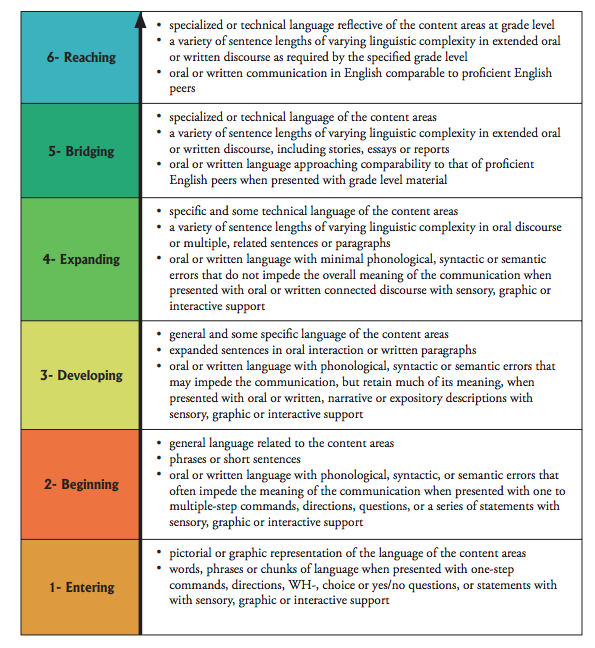
In addition, I have heard a fair amount about different levels of language proficiency while preparing for this professional development. I probably do not take these levels as seriously as some might wish, because I suspect that it is really about a continuum of natural language development. Through the years, I have learned that there are 3 levels, 4 levels, 5 levels, and/or 6 levels of language proficiency–depending on the location and the decade. I created the following to chart to capture a little history of some of these different levels. The district where I will be working uses 6 levels.
Activities and levels of language proficiency are some of the ideas, which we will discuss, but of course, I will try to sneak in my favorite question: Why do we do what we do?
Dear WinkWorld Readers,
I am putting this blog post together for a couple of different groups who want to talk with me about the value of stories. I have no idea what either group wants, but I went digging for some of my stories for them. I am sharing these stories here, in no particular order; I only tried to choose a variety.
Kids, Cows, and Computers
Pivotal and Personal and Professional Experiences
The Lesson of Dayna–One Size Does Not Fit All
The Benson Kids–Teaching Is Learning
Road Warrior Literacy
Four Benchmarks of Literacy Development
My People Made it Without Bilingual Education, What’s the Matter with Yours?
No Cow Left Behind
Dear WinkWorld Readers,
I just sat down to do a new WinkWorld and realized that I had never posted this video taken at the Sturgis Public Library. What a nice little gift of time for me on this late Friday afternoon–now, all I have to do is hit the Publish.
Below is what I wrote several weeks ago.
In a recent WinkWorld, I shared about the new Children’s Learning Center at Sturgis Public Library, the best-kept-secret-in-South-Dakota.
In this blog post, I will post a video of a story I told before reading the beautiful poem, “Lovebrarian” by Laurie Halse Anderson.
First, the short video of me sharing a story of getting my first Sturgis Library card.
And, second, the previous blog post about the opening of the fabulous new children’s center. The following WinkWorld also has the words for that wonderful poem, “Lovebrarians.”
Dear WinkWorld Readers,
A fast video clip (3 minutes), which I was just reviewing for a couple of different groups. Enjoy.
Dear WinkWorld Readers,
As some of you know, Missy Urbaniak and I have been writing about prairie pedagogy.
Recently, we shared some of our work with a publisher, and we were asked: “What is your focus, pedagogy or prairies?” What a great question.
First, let’s start with pedagogy: What in the world is it?
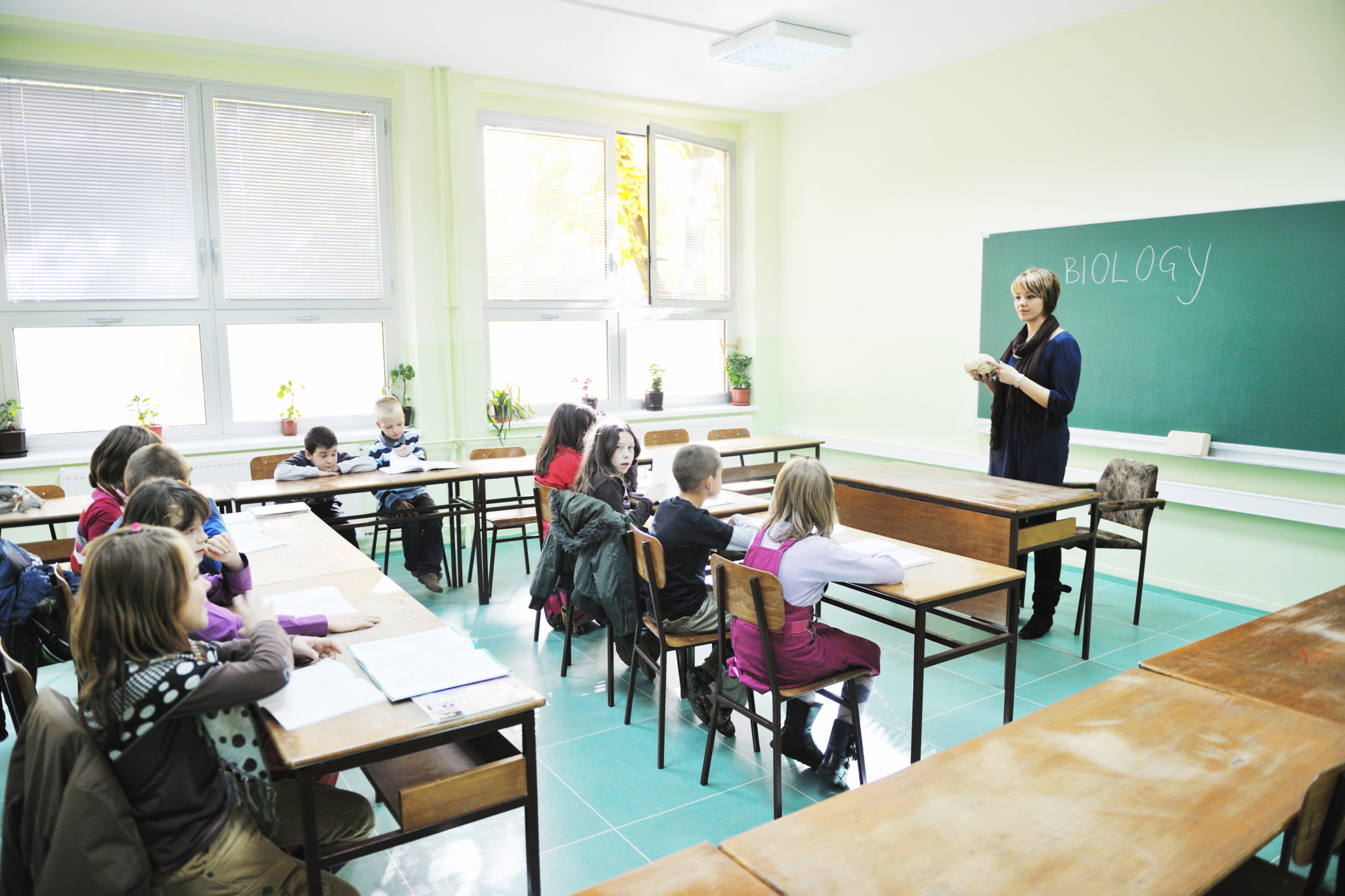
We come from a tradition which taught that pedagogy was the science of teaching. We all sort of thought that pedagogy was something about a teacher, teaching….probably as she stood in front of a class. Maybe your image of pedagogy looks or looked something like the photo posted below.
A group of children group in school classroom taking notes while the teacher talks.
Basically, the word, pedagogy, was a “teacher talk” model of education.
The knowledge was all in the teacher’s head. As she taught, she transmitted her knowledge to the kids’ heads. The teacher controlled what the kids got to learn. In the image below, the teacher thinks in squares so the kids need to do the same.
Hopefully, this view of pedagogy is now history. Our understandings of pedagogy have changed considerably in the last few decades.
Now, we tend to think of pedagogy as something much more interactive, whereby the teacher and students generate, construct, or build knowledge together through problem-solving and/or real-life experiences.
Children and teacher are playing with building blocks in a kindergarten.
Whereas, pedagogy used to be a one-directional type experience, teacher-to-student, it is now more interactive. It is model of teacher and students talking together to learn together.
So, in answer to the editor, who asked if our writing is more about pedagogy or prairies: We write about pedagogy (interactive, dynamic teaching and learning) which happens to take place in one-and-two room schools are the prairies.
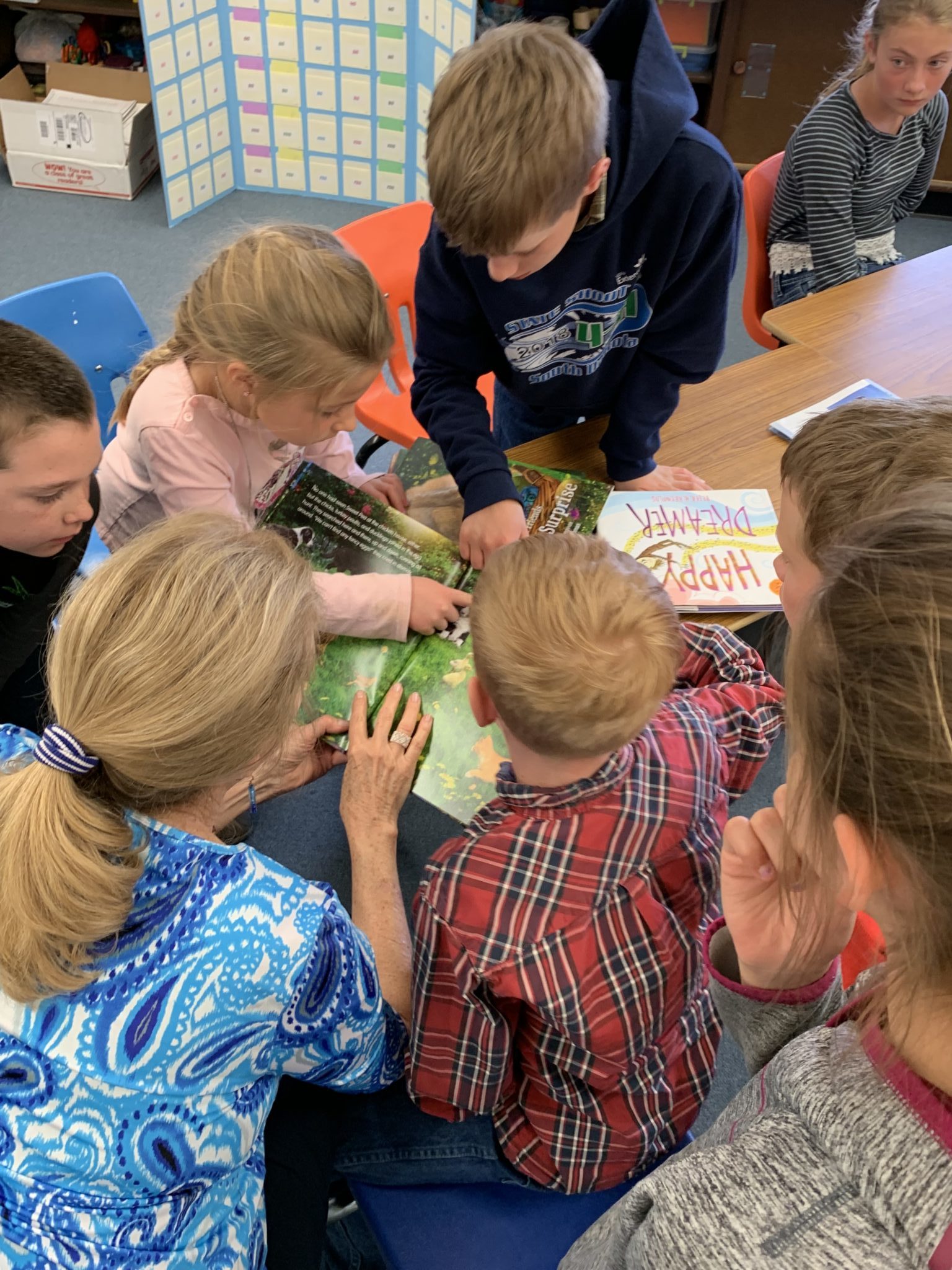
The photo below captures a peak into a more interactive pedagogy, as the students were asking so many questions about that particular book.
Below here is a photo of Missy and some of the students reading together; the students and teacher, Missy, always talk about the content of the book. I know that when I talk about a book, it helps me understand it better.
The image posted below captures the notion of the interaction inherent in our new understandings of pedagogy, as it captures the back-and-forthing of teaching and learning.
Dear WinkWorld Readers,
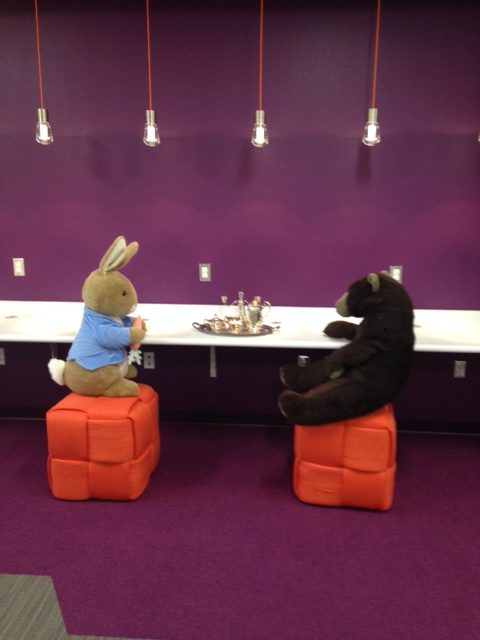
Oh, how I love a good celebration of literacy. Sturgis Public Library: You know how to do it! I even came upon this tea party today while I was there. I’m sure our Scruffy (photo posted way below) would love to be invited sometime for tea.
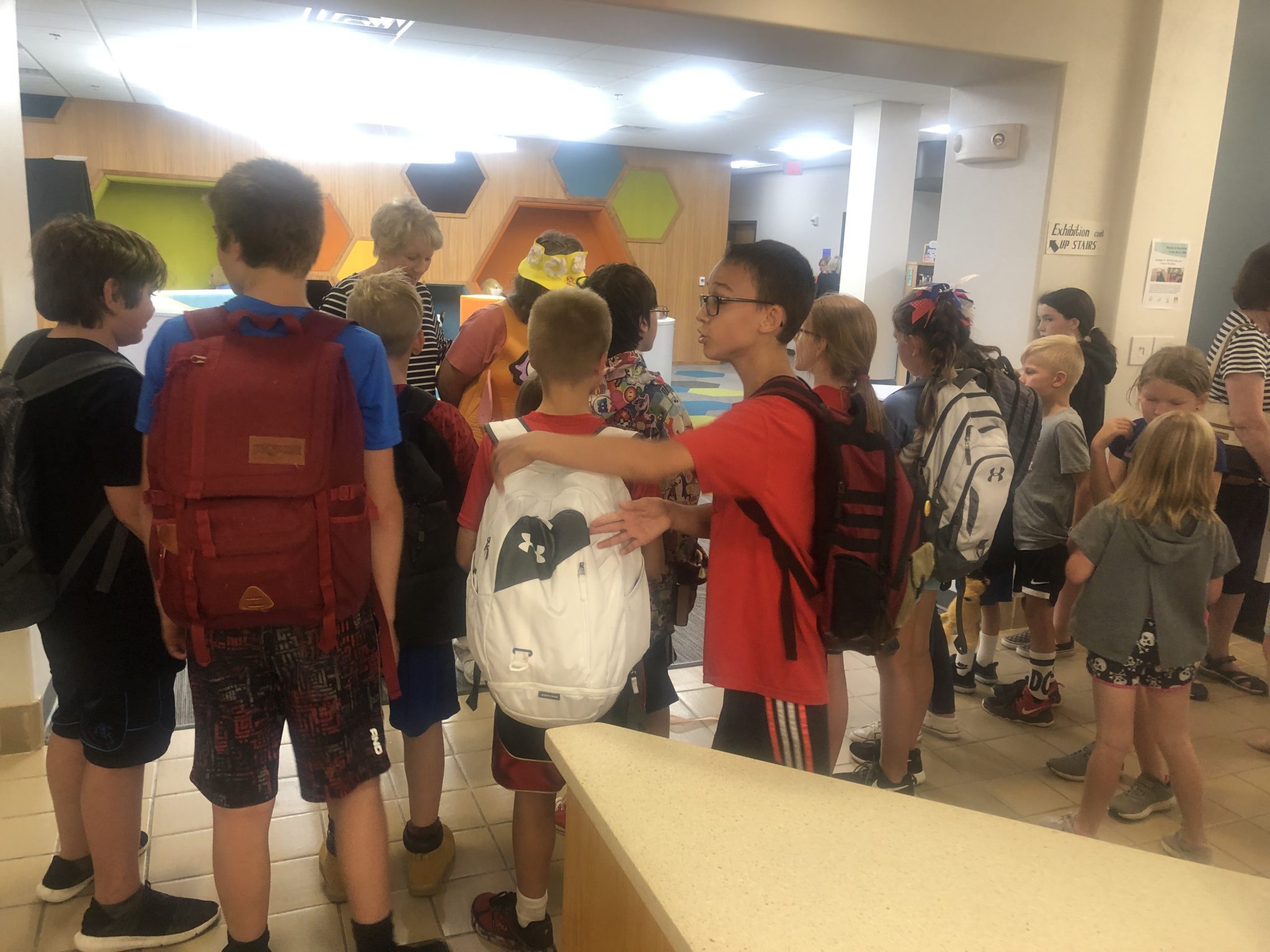
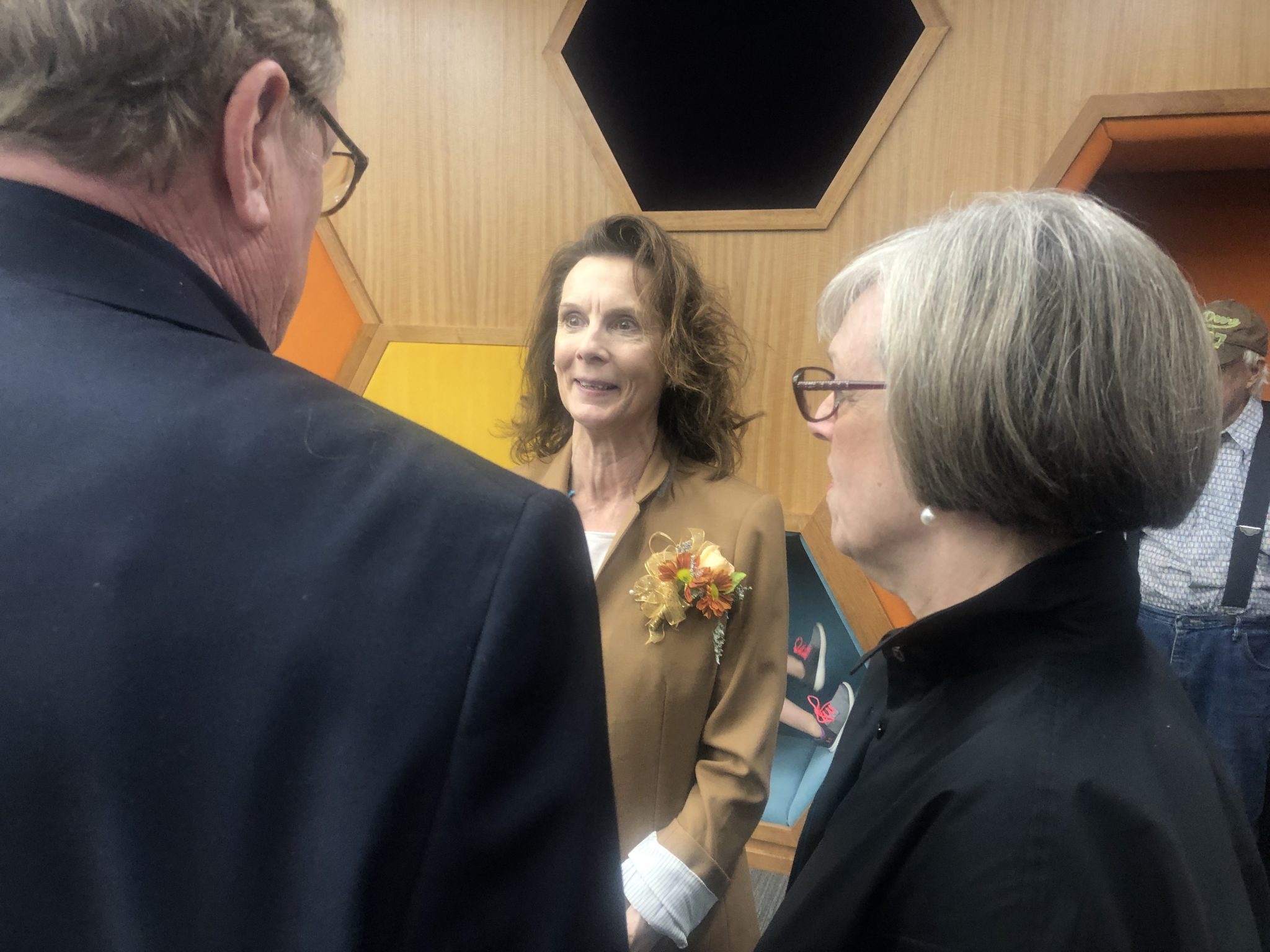
I loved attending the grand opening of the Sturgis Children’s Library September 17. I loved seeing the teeny-boppers lined up waiting for the ribbon cutting so they could get into to see the newly-created Elliott Learning Center.
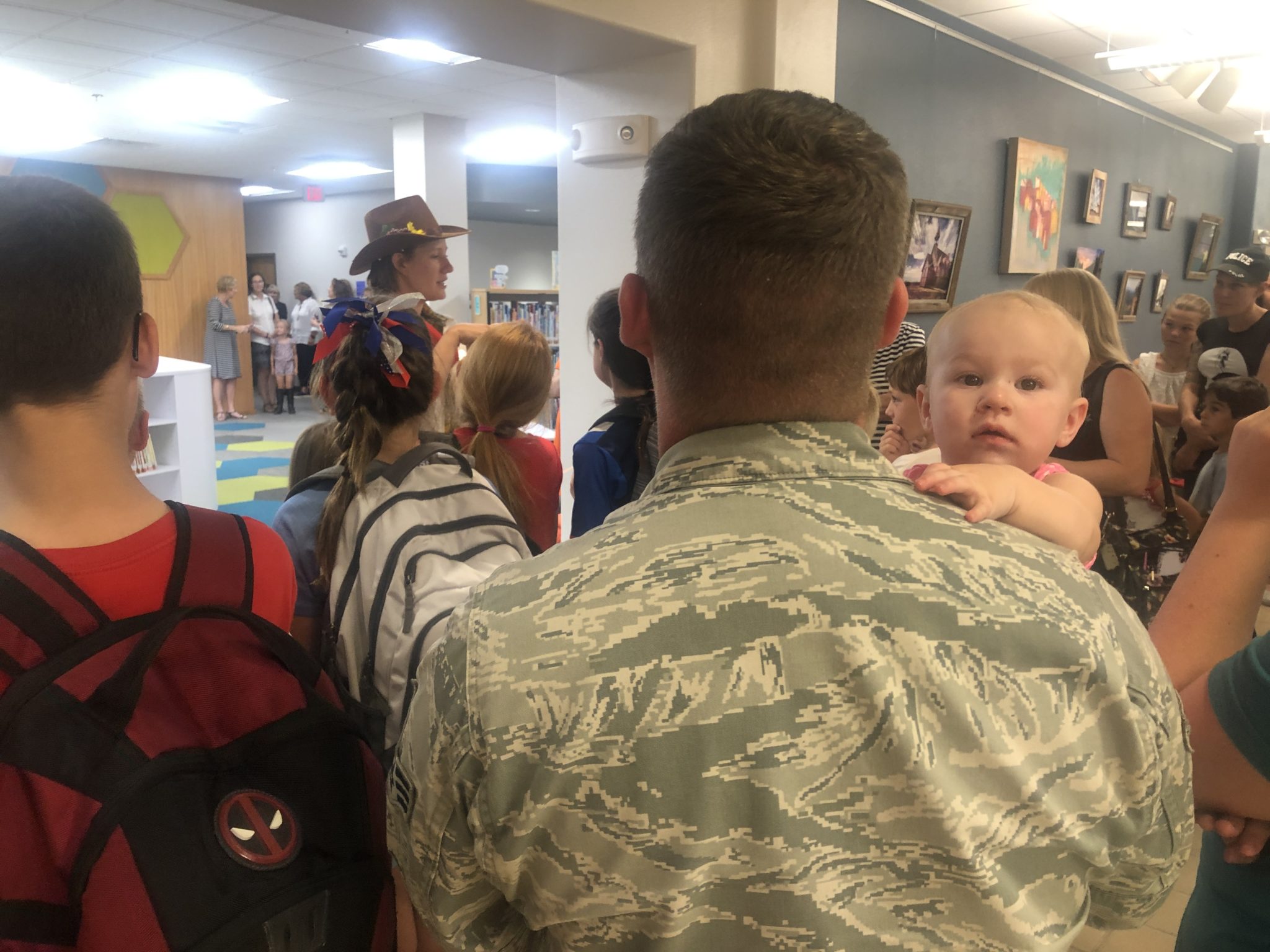
In the photo below, you can see that I was trying hard to take photos of only the back of children’s heads–out of respect for privacy. However, this darling little baby was having no part of that and kept peaking at me. Her mama gave me permission to post this picture. Thank you.
In the days before WinkWorld was a blog, it was a newsletter. In one of these newsletter, WinkWorld, October 2007, I referred to Sturgis Public Library as The Best Kept Secret in South Dakota. October 2007. As you read the following excerpt, please remember that it was 2007, I had just retired and moved back to the ranch, and I did not yet have valid SD ID.
My First Sturgis Library Card, 2007
In addition, I want to share with you the BEST KEPT SECRET IN SOUTH DAKOTA: The Sturgis Library, http://www.sturgislibrary.org/. Sturgis is a small, (5000 pop.) town, heavily influenced by ranchers and the Sturgis Harley Davidson Rally, which causes the population to surge to several hundred thousand every August. However, in the midst of all of this is a diamond: The Library. After school, elementary children come flowing in and happily settle into their own room, complete with computers and books. One half hour later, the teenyboppers arrive and head upstairs to their own retro room with more books and computers. I have noticed that the senior citizens come and go all day. The library has an active CD, books-on-tape, and video section, which gets a lot of use. I notice that many of the people checking out and returning books also stop to read. Do I love this? Yes, I do. It is pure joy to sit and quietly observe real literacy thriving. One little problem: I was not been allowed to get a library card, as I do not have the proper South Dakota identification (ID). We drove to town (85 m.) to take the drivers’ test–wrong day. However, I did get my new SD license plates, which I immediately took to the library. They suggested to me that this was not the ID that they had in mind, but I was allowed to apply, and yesterday my fabulous new library card arrived. The sub-text for this story is that my husband is a county commissioner, and when he tells me what the county has contributed to the library, I always tell him that it is never enough.
At the ribbon-cutting celebration, I was honored to be asked to share this fabulous poem from Laurie Halse Anderson. Please click below to read her amazing poem!
“Lovebrarians” by Laurie Halse Anderson
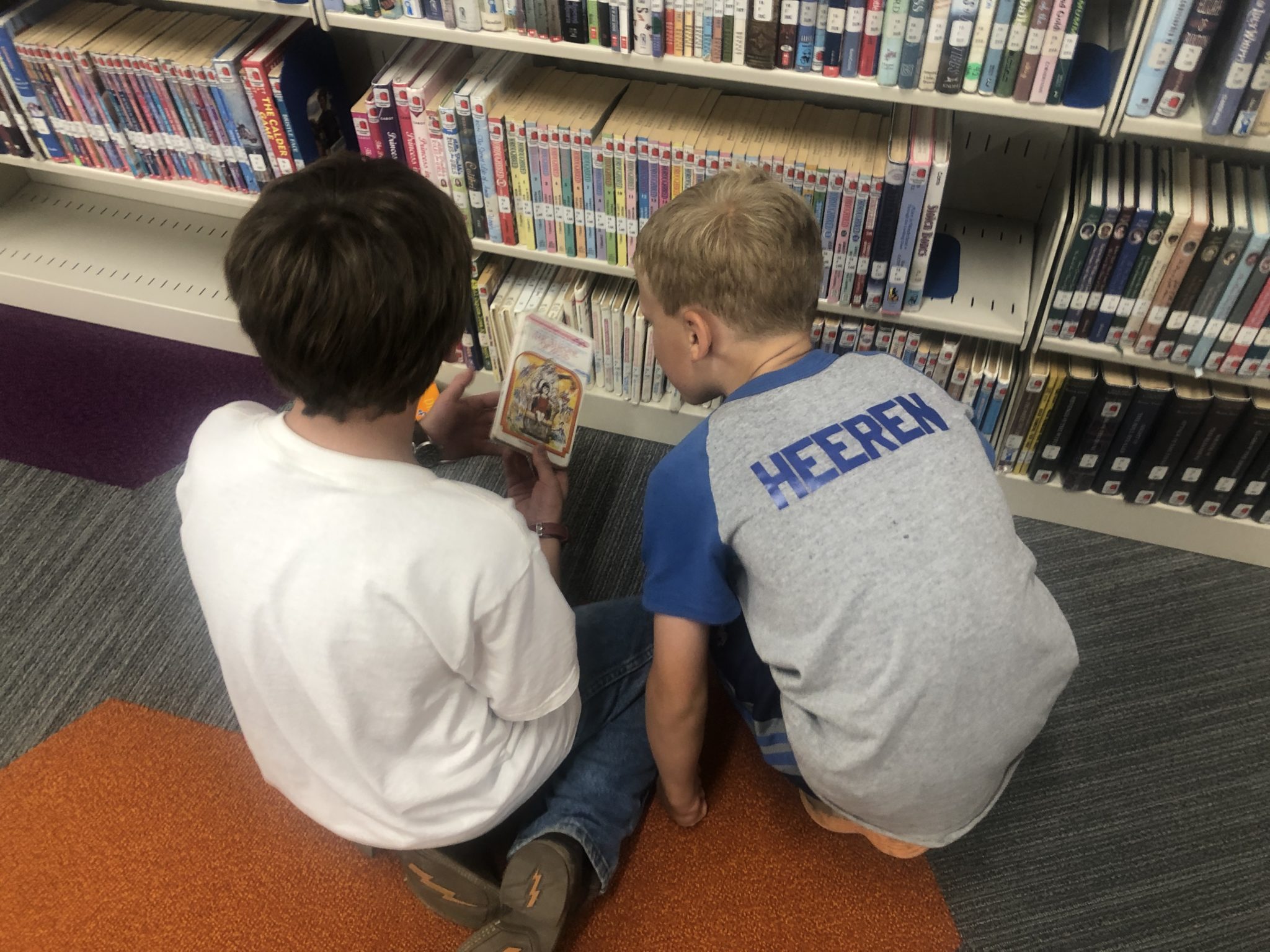
Below here I am posting photos of some of the kids celebrating literacy. When these two boys entered, they raced to these books, and the one boy on the left immediately began giving a super Book Talk to his friend.
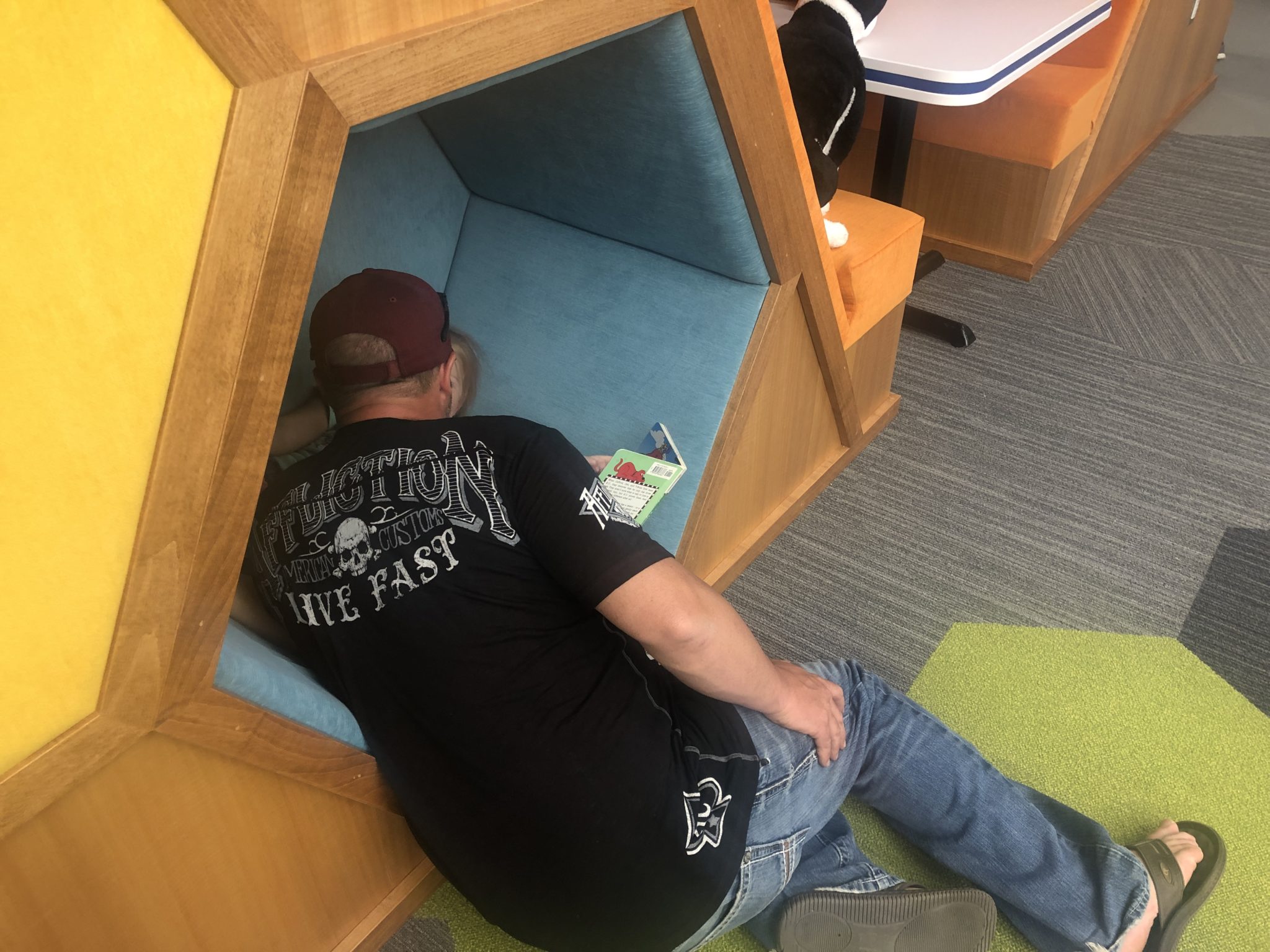
In the photo below, this dad is reading to his daughter in the little hexagon hideaway. 
And, just for fun, more library news from around-the-world follows:
First, a friend sent me this photo from the Greek Isles, specifically Mykronos, this summer. Enjoy.
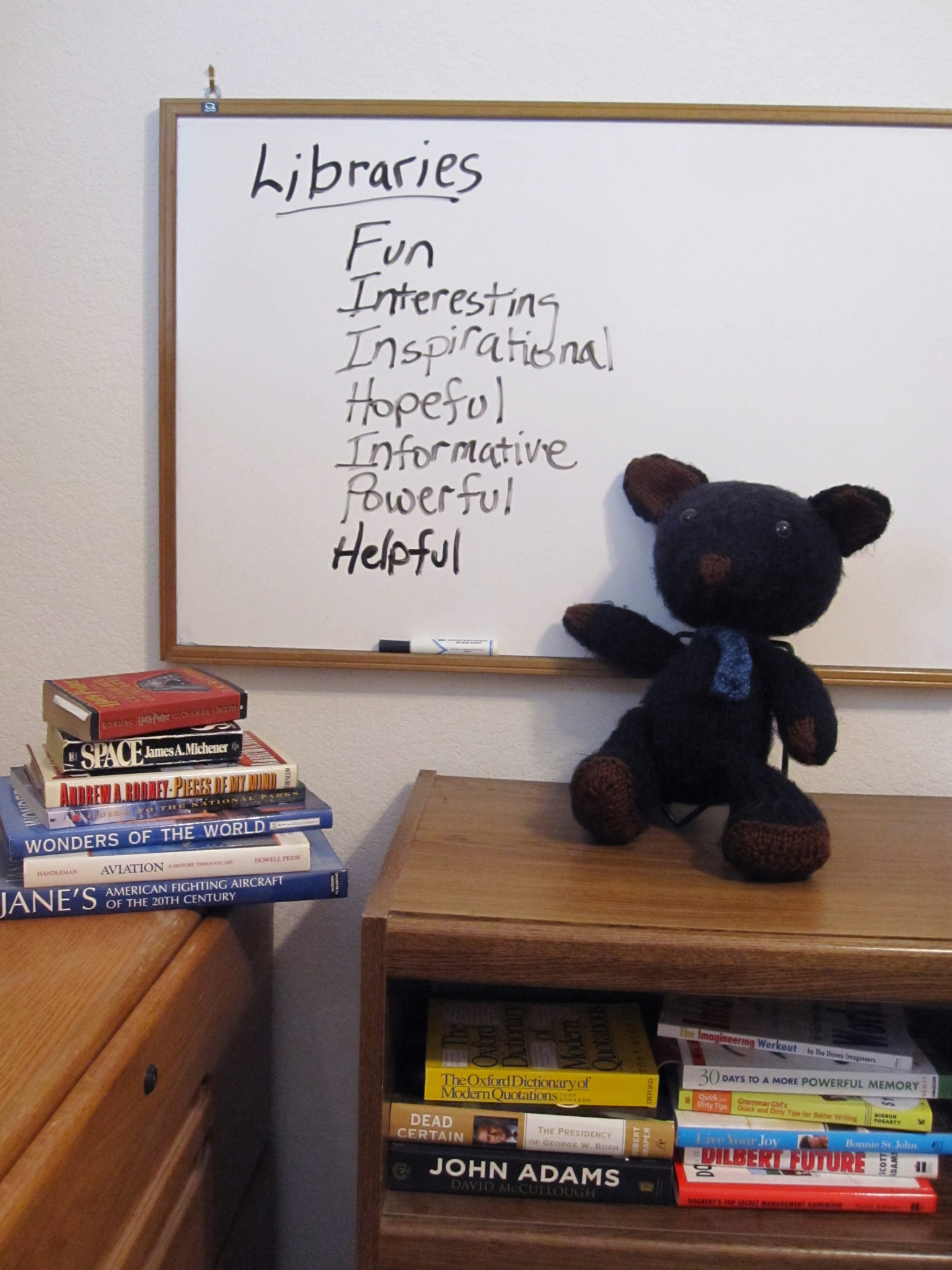
And, checking in to see what Scruffy is up to these days. Oh, that Scruffy: Look what he has to share about libraries. Wise little teddy bear, huh?
And, just in case some of you did not stop to read that beautiful poem, Lovebraians by Laurie Halse Anderson, in that live link from 2007, I am retyping it below here for your convenience. This poem was published in Anderson’s book, SHOUT: A Poetry Memoir.
I hated reading. Loathed the ants
swarming across the page, lost
my excitement about school, fought, reduced
to a puzzle with missing pieces.
Once branded,, the feeling of stupid never fades
no matter how many medals you win.
But then we rode the bus downtown
me and Leslie, who majored in music
and lived in our attic, Mary Poppins
with a Jersey accent, we rode the bus downtown,
the coins hot from my hand plink, plink
in the box next to the dirver, all the way downtown
to a Carnegie library built by an immigrant
so everyone could read, free
and untrammeled by politicians seeking
to bind them into ignorance,
chair them to the wheel.
Leslie promised she’d read me the books
so I didn’t have to be afraid of mistakes
and I wrote My Name in big letters
got my first badge, a library card
I asked the librarian, “Can I take out all the books?”
and she answered quite seriously
“Of course, dear, just not at the same time.”
And so, with extra Leslie help and a chorus
of angels disguised as teachers and librarians
for years unstinting with love and hours
of practice, those ants finally marched
in straight lines for me
shaped words, danced sentences,
constructed worlds
for a girl finally learning how to read
I unlocked the treasure chest
And swallowed the key.

(Photo credit: Kerry Frei, who captured the sign which dear Cuzzin’ Zane made for us.)
Dear WinkWorld Readers,
I have been wanting to share this video of Louise Rosenblatt, who years ago, gave us transactional literacy. I owe a huge thank you to Dr. Philomena Marinaccio of Florida Atlantic University, who created the video with Rosenblatt. Thank you, Mena!
I am finally posting this fabulous video, as I was recently in a discussion of transactional and transformational leadership programs. I have studied transactional literacy and transformational literacy for years so I listened carefully. I could see that others in the room had different understandings from mine.
As I understand it:
A transactional leadership model or program employs traditional rewards and punishments for performance. It is a reactive model that works best to preserve the status quo and develop the existing organizational culture and structure. After hearing this, I could see that Rosenblatt’s notion of transactional now had a very different meaning. So, I conducted a bit of research and asked several millennials what they thought transactional meant, and they shared negative connotations and definitions.
Obviously, the word, transactional, has morphed considerably.
A transformational leadership model employs enthusiasm and aspiration to proactively inspire change. Therefore, a transformational model is not looking for the one next big thing as much as opportunities to change an institution or an institutional culture from one based on bureaucracy to one based on innovation and group priority, not individual priority.
I can see that my understandings of transformational are aligned with this definition. For more about my undestandings of transformational, see Critical Pedagogy: Notes from the Real World
If you click on that book icon, you will note that it takes you to the Table of Contents, which has some live links.
Incidentally, I see today that Amazon has jacked up the price again. Sometimes, they sell it below the Pearson price, and sometimes they charge way too much. I do not understand. However, Pearson’s price remains the same, and that book is all over the web at various 2nd hand book sites.
The purpose of this blog post is to share this video Louise Rosenblatt and her notion of transactional literacy. Dr. Marinaccio-Eckel’s contact information can be found at the bottom of this post.
A video of transactional literacy and Louise Rosenblatt follows. (58 minutes)
The transcript of the interview.
MARINACC@fau.edu
And, as you can see Scruffy was able to go to the park and enjoy a little fresh air while reading a good book.