View Sidebar
Click on any book icon to see Table of Contents and/or to purchase a copy.

Archive for category: Latest

Making with Ms. Dobras on YouTube: PART ONE

Making with Ms. Dobras on YouTube: PART ONE

Dear WinkWorld Readers,

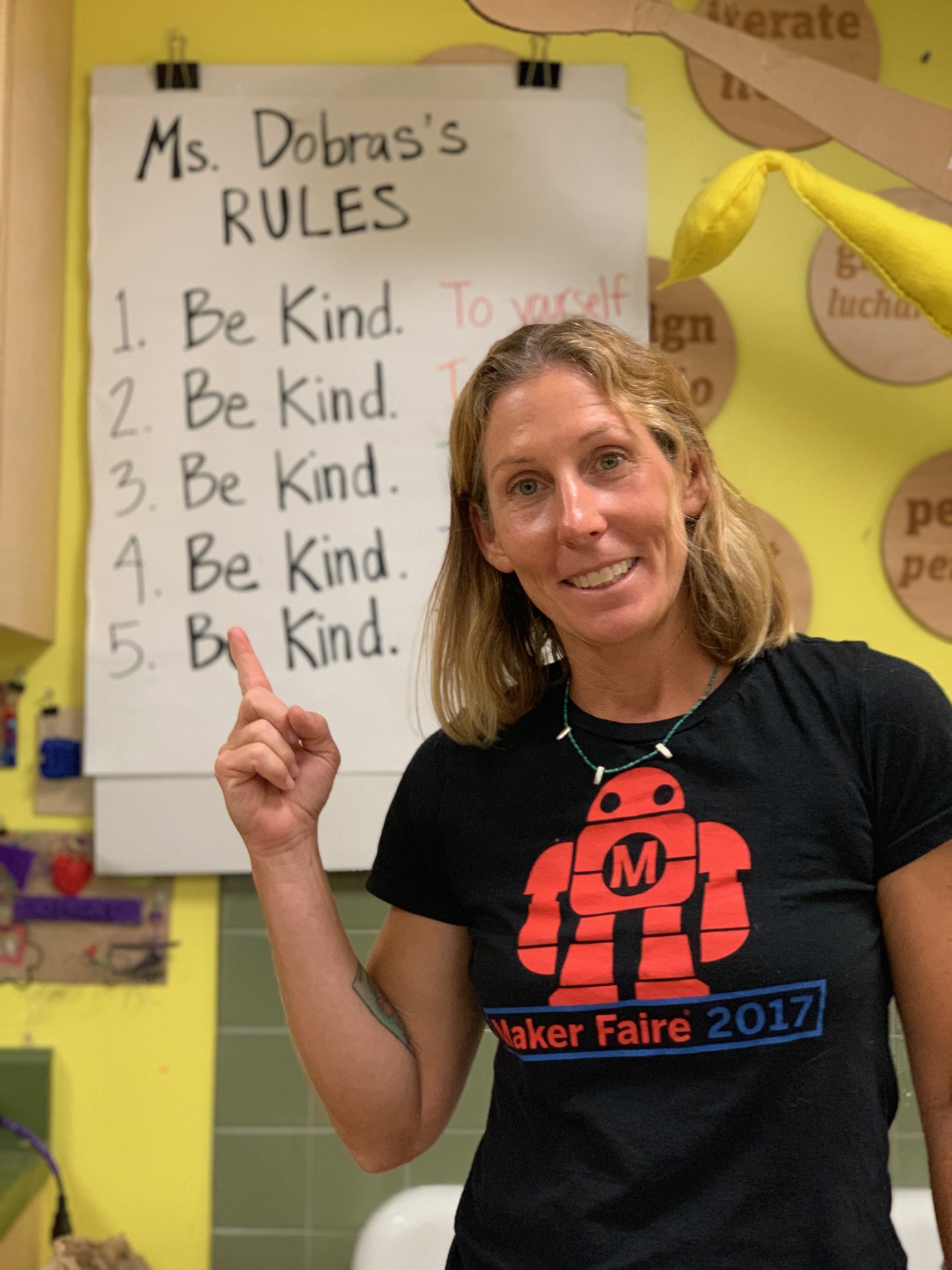
Meet my friend, Ms. Dobras, who has taught in San Francisco, and is now teaching Making to 250 K-4th grade students in Oakland.  I’m loving Ms. Dobras’s classroom rules.  To be honest, Ms. Dobras is that teacher we all want for our kids and grands.

Ms. Dobras's Rules

I know so many teachers and families, who are teaching online or from home, and all are trying to engage students with learning new ideas. Ms. Dobras decided she would share on YouTube, as it forced her to learn new information, also. This is the first of a three-part series on Making with Ms. Dobras.  In this first post, we will share a few fun examples of how you can be a maker, too.  Second, I’ll post a bit of information on making or makerspaces.  And, finally, I’ll tell you more about Ms. Dobras.

Ms. Dobras is a Maker teacher (more to come on what this means), but for now, enjoy a few examples.

Title on YouTube:
Making with Ms. Dobras. Making Project: 3D sculptures (with TP rolls)
April 11, 2020, 10 minute video
Mindful Moments (Ms. Dobras begins her lesson with a mindful moment.)
You will need empty toilet paper rolls or empty paper towel rolls; glue, paper clips, scissors or tape.
 

Title on YouTube:

Making with Ms. Dobras. Making Project #2: Making Tetrahedrons.

April 17, 2020, 9 minutes

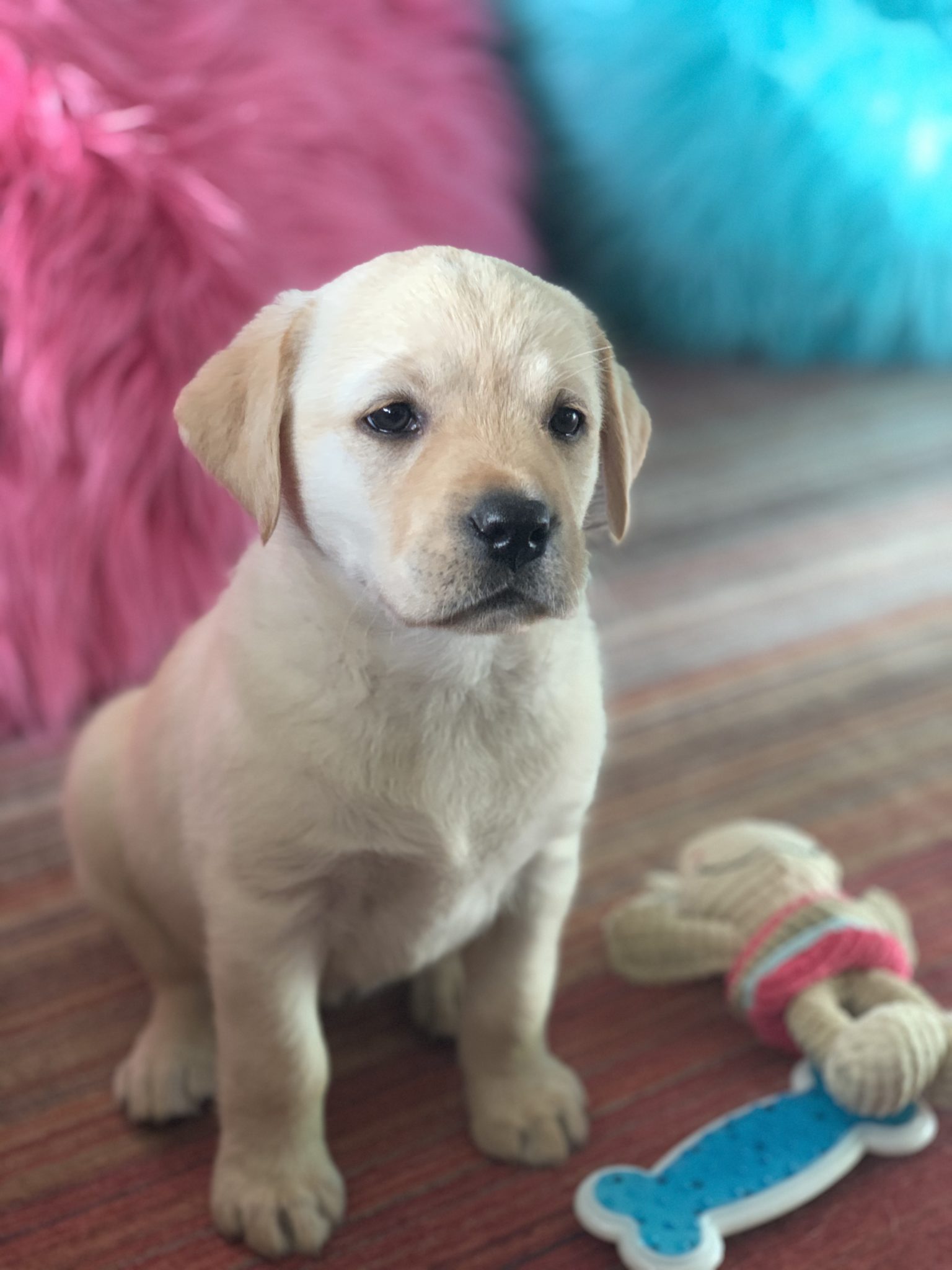
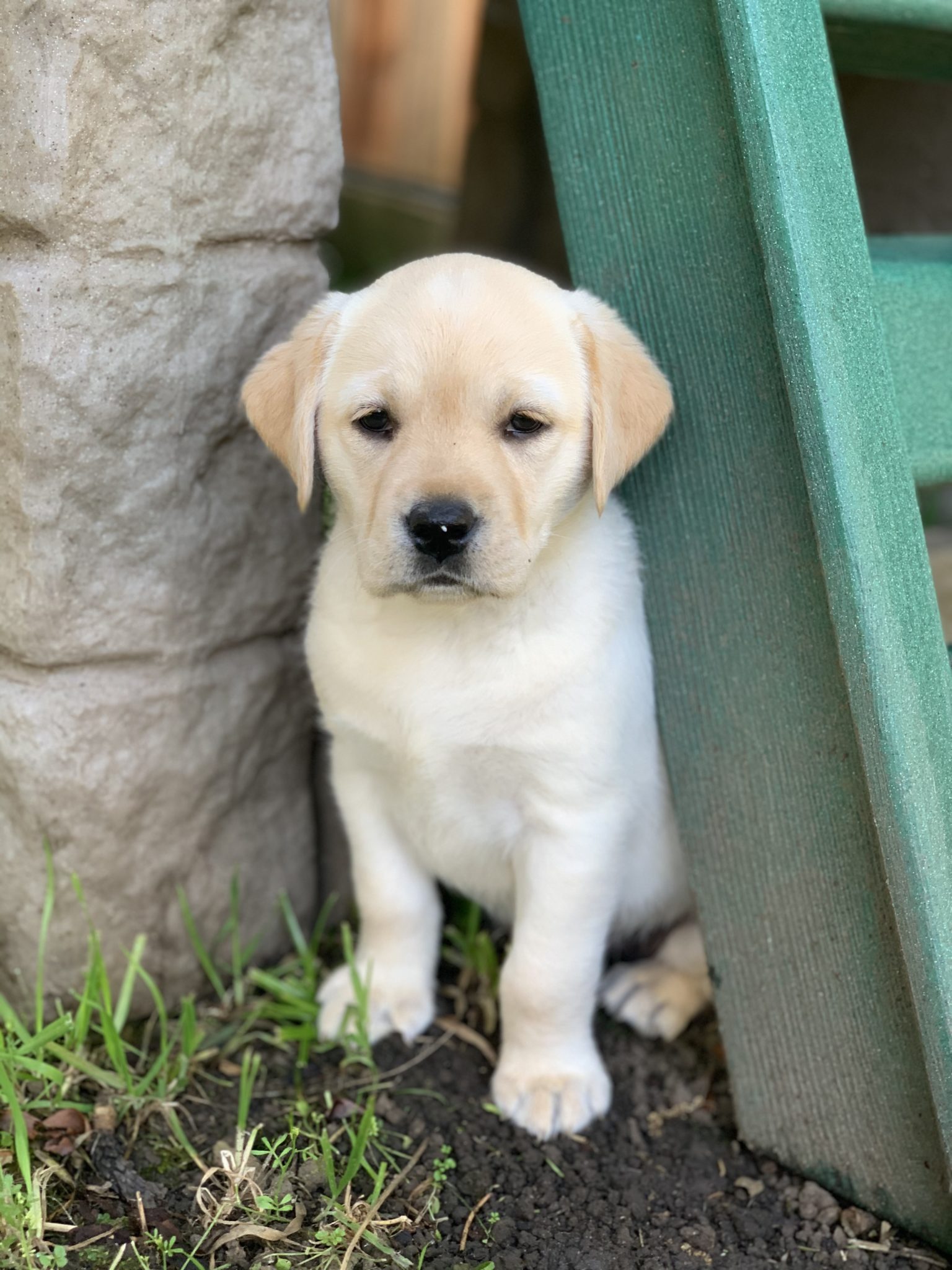
A new guest: Sunny (a little ray of sunshine).  You will see her on the YouTube video.

Sunny the dog

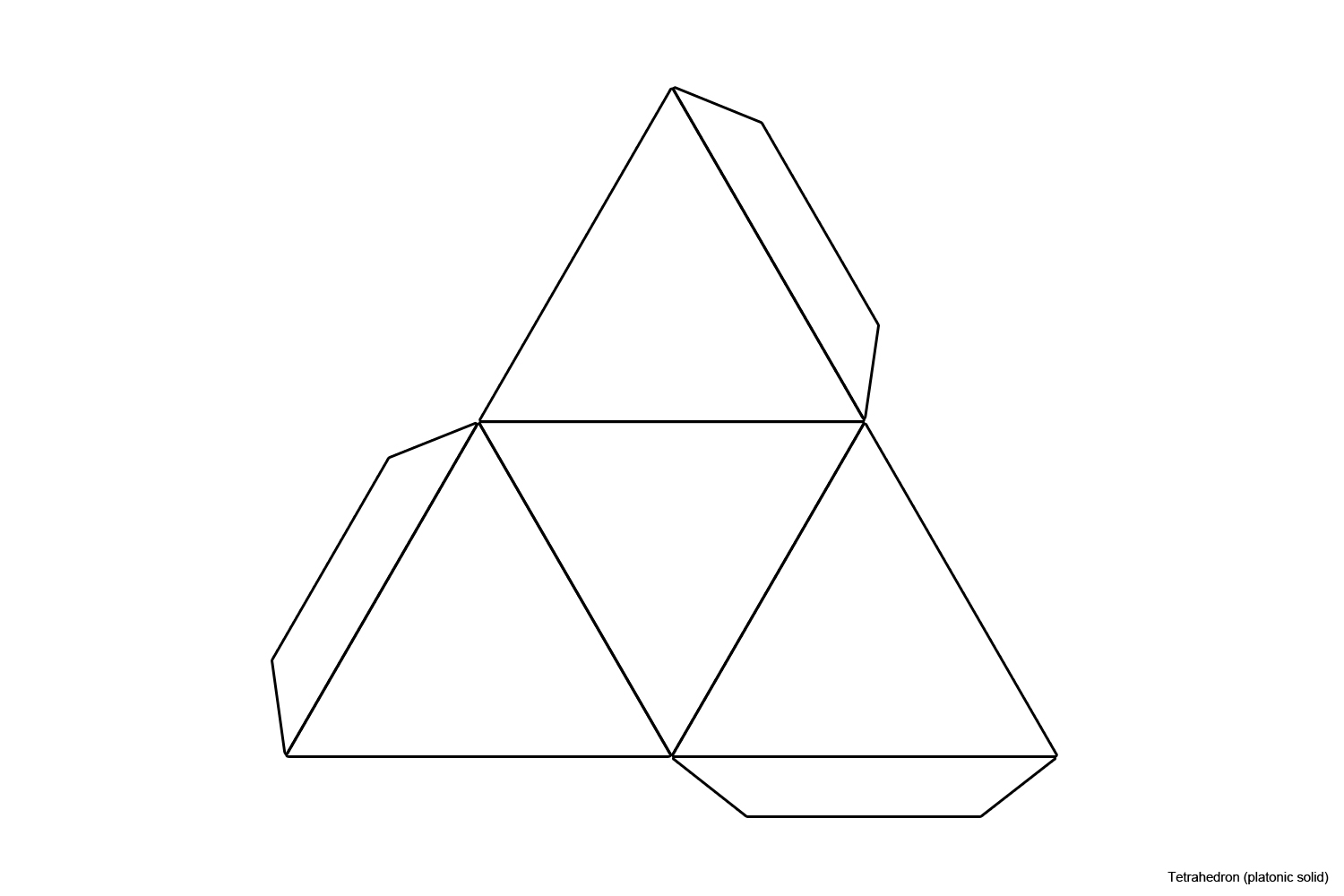
What is a tetrahedron? 4 triangles which are put together to create one unit.  Think of a pyramid.
You might want to create a triangle pattern, as seen below.  Or, you can grab one online.
Tetrahedron
 
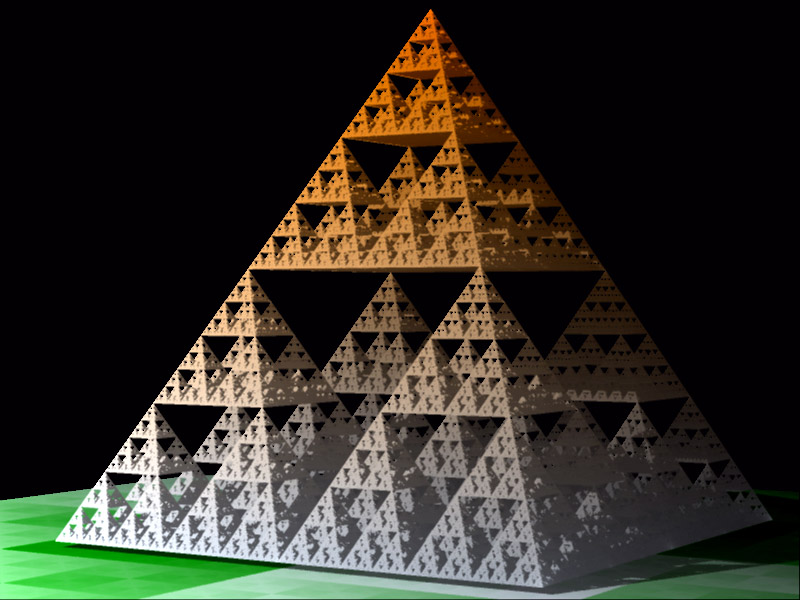
What is a Sierpinski’s pyramid?  When you put tetrahedrons together, you get a Sierpinski’s pyramid.  I have not heard that word since my geometry class (circa 1961) in Mobridge High school, with a fabulous teacher, Don Paulson. I believe that Sierpinski was also mentioned in my Ph. D. statistics class, but I have no idea why.
 
Sierpinski's pyramid(permission granted by Solkoll)
 
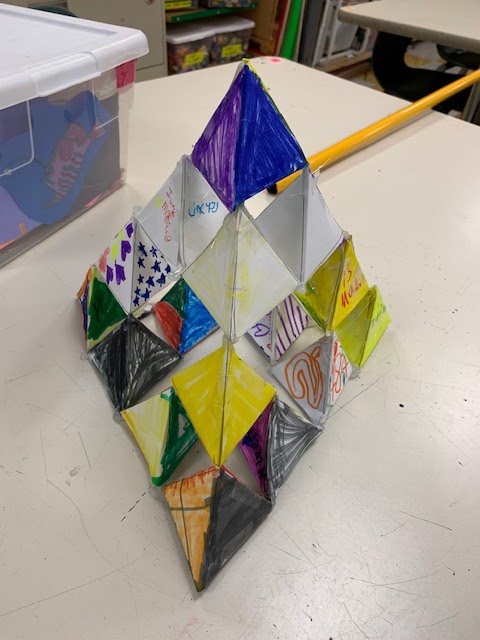
Sierpinski's pyramid by 1st GradersMs. Dobras’s first grade students created this Sierpinski’s pyramid.  If you want to try this, there are many, many examples and templates available on the web.  Think Pinterest. 
 
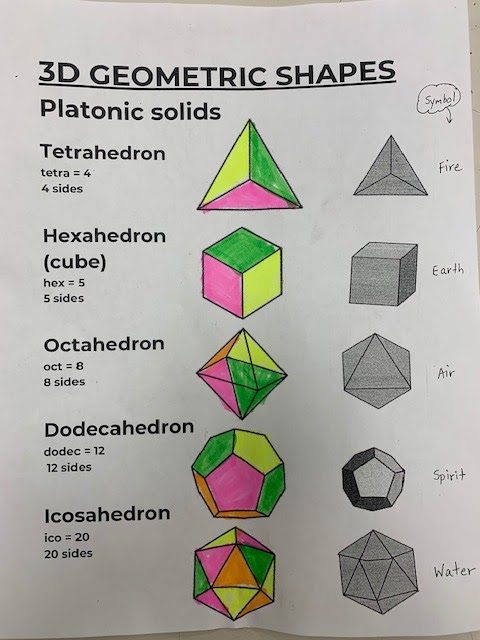
Ms. Dobras teaches 3rd grade, and I am humbled by what these students understand.  For example, these 3rd grade students know the names of the following shapes.
3D Gometric ShapesAll of this conversation with Ms. Dobras about tetrahedrons, Sierpinski’s pyramid, hexahedrons, octahedrons, dodecahedrons, and iconsahedrons made me mutter: Can fractals be far behind?  This caused Ms. Dobras to wax eloquently about her students and their understandings of fractals.
Fractals?Geometric shapes by 3rd Graders
What is a fractal and what does it have to do with Sierpinski’s pyramid?
 
The next issue of WinkWorld will provide more resources and generic understandings about makerspaces.  The following WinkWorld will have more information about how Ms. Dobras does Making.
 
Feel free to Subscribe to Making with Ms. Dobras near the bottom right of each her YouTube posts.


April 22, 2020Read More
Henry Loves “Junk Reading:” Horrors. Nope.

Henry Loves “Junk Reading:” Horrors. Nope.

Dear WinkWorld Readers,

First, the photo at the top is just our little reminder to ourselves…

Now, on to the content of this WinkWorld: As some of you know, I love the various forms of literacy and the multiple meanings of literacies.  Remember when we thought that literacy was reading and writing–well, it is that, but it is also much, much more.  The concept of literacy is now understood to be wider and deeper than what I used to think many years ago. For example, do  you know about “junk literacy?”

 Junk Reading

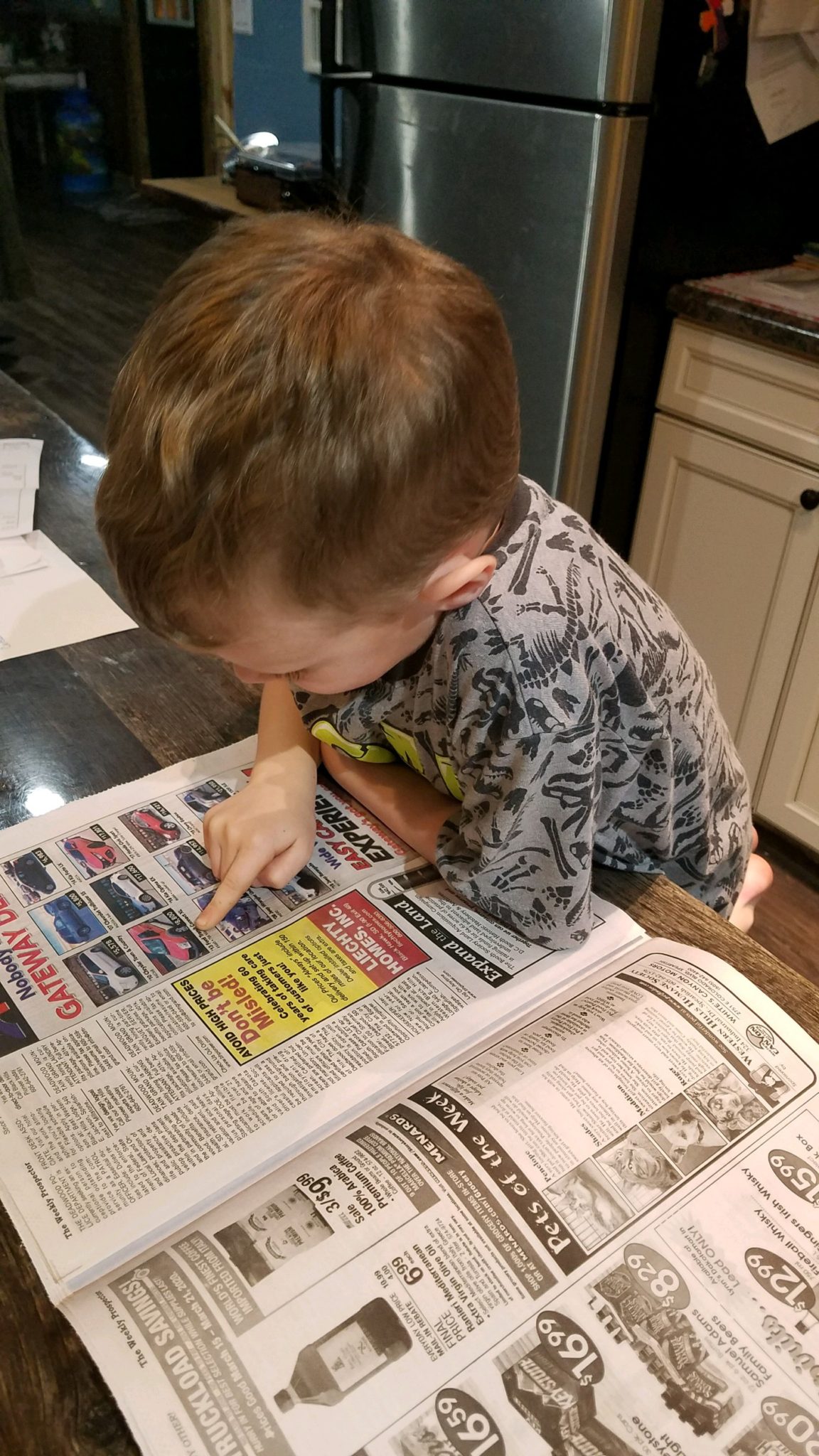
“Henry loves to read junk,” his mom told me.  “What will I do? 

“What is the junk that he reads?” I asked.

“He is constantly reading advertisements for tractor parts, new trucks, and big tires. He even reads the instruction books for our ranch vehicles.  He is always finding the seed or chemical catalogs to read.  He even loves to read credit card applications.  He loves to read junk,” Mom explained to me.

Henry is 5-years-old

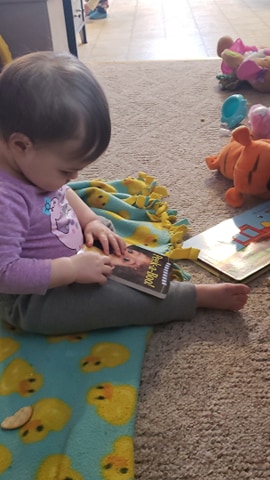
Here he is with his junk literacy.

Below here Henry is reading more of his favorite junk reading.


This reminds me of another little boy and his junk reading: Pokéon and Captain Underpants–and, from there he went right to Harry Potter.  Dawn shared this story with me in The Power of Story.

Here is Wyatt today, and I see no evidence that his junk reading hurt him.

Wyatt today.


Krashen and Ujiie (2005) ask us to re-think our old ideas about light reading, or junk reading.  We all read junk, but we call it light reading.  I have light reading all over the house, and it doesn’t seem to hurt me. Light reading leads to more complex reading.  I can only read one or two fast, easy novels, and then I need something more.

With tongue firmly planted in my cheek, I have also written about junk literacy.

Junk Literacy: What?

The Power of Story, (2018, pp. 30-32)


For more on the various types of literacy, see below.


April 9, 2020Read More
Ann, a Pilgrim: “People Are Good.”

Ann, a Pilgrim: “People Are Good.”

Dear WinkWorld Readers,

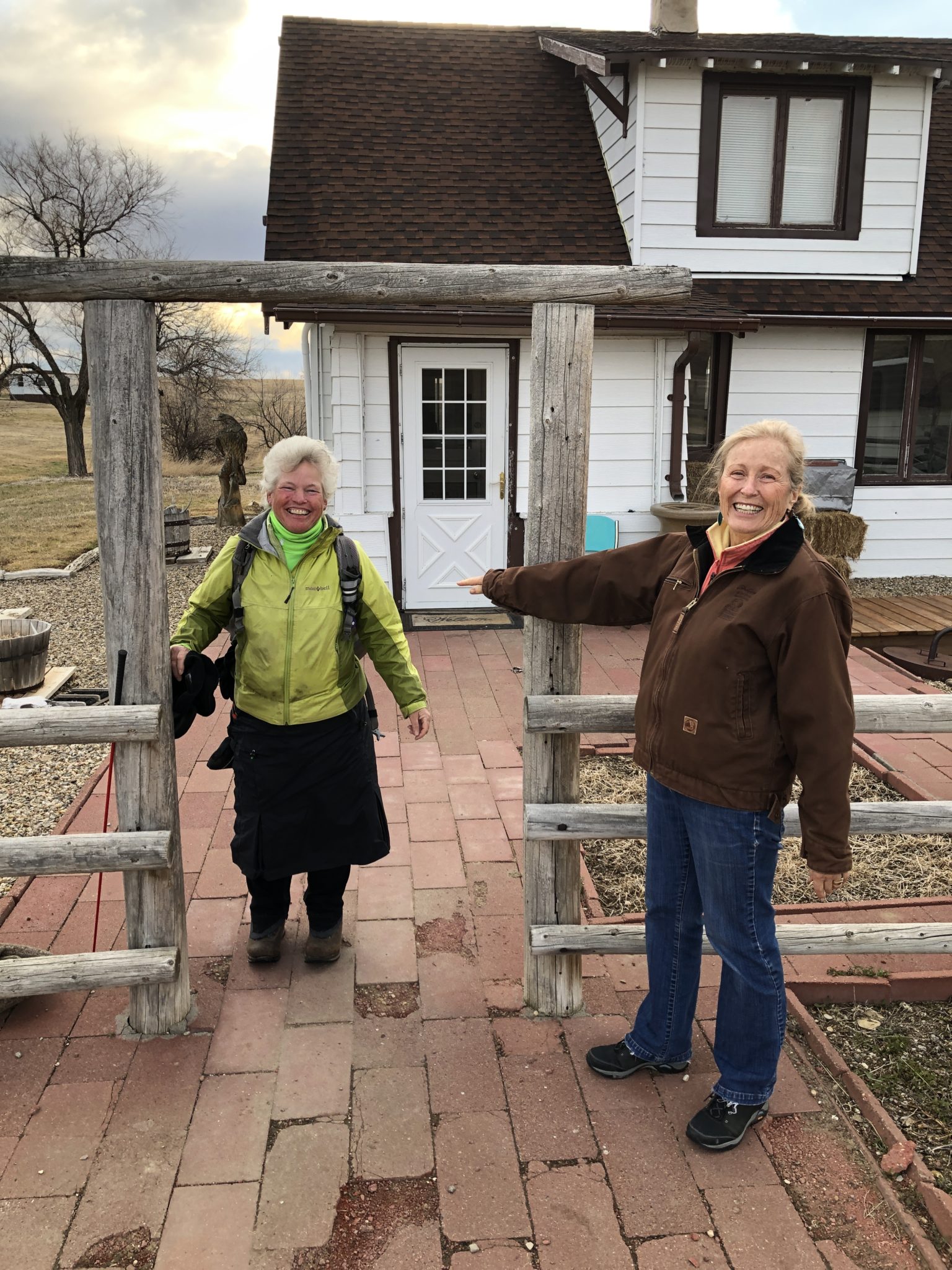
As you know, my blog tends to capture (a) what is happening in my life and/or (b) ideas floating through my head.  Yesterday was a great example.  It was early evening Sunday after a very quiet day of self-isolation, when a woman walked down our gravel lane.  Turns out that she had walked 30 miles yesterday and needed a place to spend the night.  We scurried around and set her up in our Prairie Parlour (a.k.a., single-wide trailor).

Meet Ann Sieben:

Ann is a pilgrim connected with the Catholic church. As I now understand the concept of “pilgrim,” she is like a nun, only she walks. Daily.  And, I do mean, she walks.  So far, she has walked through 55 countries in 13 years. Previously, Ann was an engineer for 20 years; she took a sabbatical, and never returned to that career.  Instead, she took a vow of poverty and joined the Society of Servant Pilgrims. Click on the link below, where you can also register your email in order to receive stories from around the world.

societyofservantpilgrims.com

Camino de Santiago de Compostela

The church at Santiago de Compostela, Spain is a well-known shrine which pilgrims visit every year.   For centuries people from all over the world walk for days to visit the church.  They carry a minimum of personal possessions and pass the nights in simple inns or churches along their way.   However, I was not aware that pilgrimages also take place in the US, too.

Click here to see a peak of Santiago de Compostela, Thank you, Britannica.

Ann is sometimes known as the Winter Pilgrim, as she enjoys cold and snow. If you click on her blogspot, you will find information about some of her walks, and you can read her many stories.  Over you the right side of her blog, she tells about herself.

Winter Pilgrim

So, what did I learn from this surprise blessing in the middle of the prairies on a quiet Sunday during the pandemic?  People are good.  When Ann tells stories, she always ends with “people are good.”    Seems like a good thing to learn and re-learn during these difficult days of Covid-19.

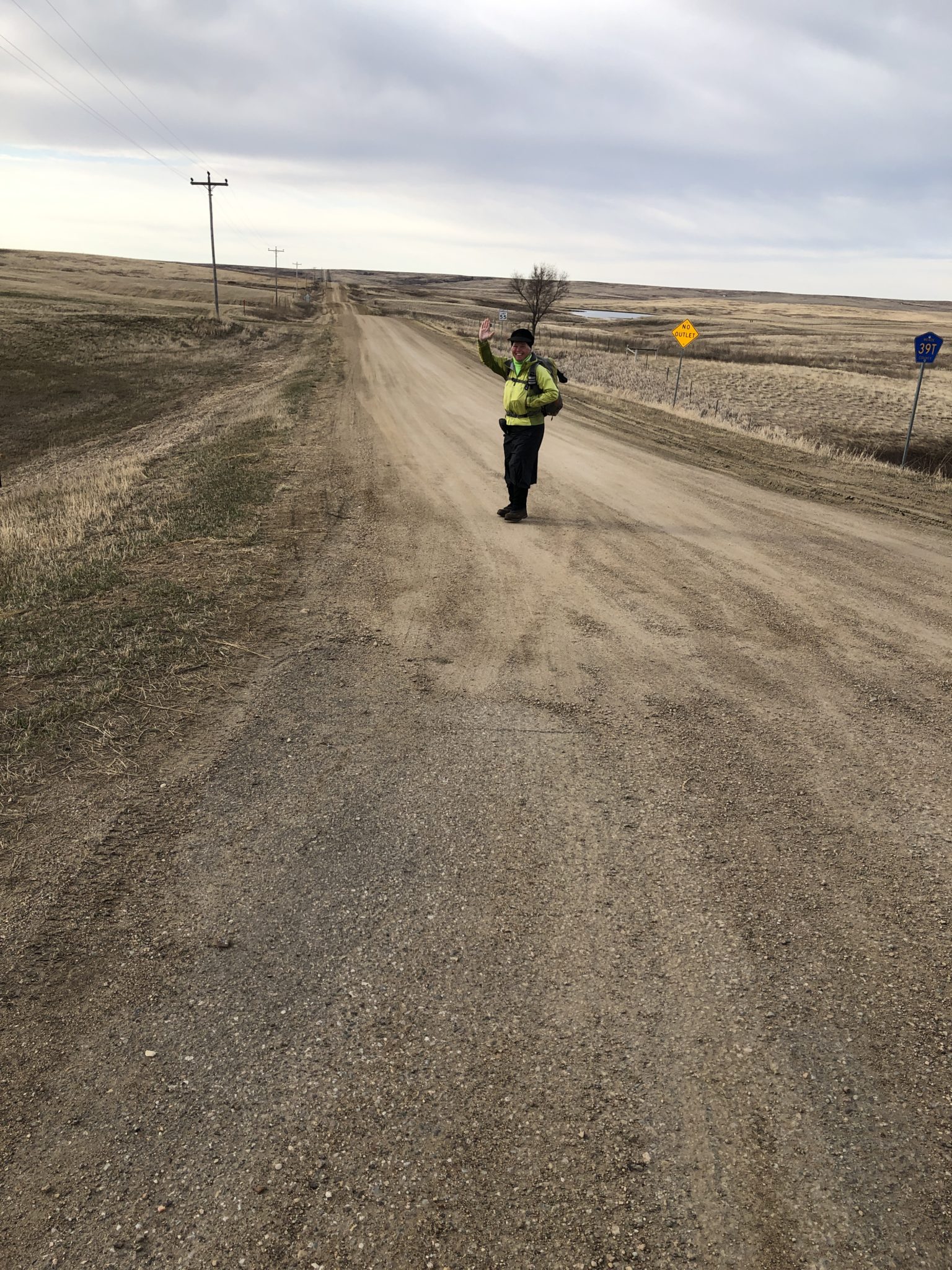
When I last saw her, she was headed South on Plainview Road. 


March 31, 2020Read More
Learning with Your Kids at Home: Some Resources

Learning with Your Kids at Home: Some Resources

Dear WinkWorld Readers, 

In what follows I will share a few resources, which you might want to use at home, while the schools are closed.  I will call your attention to stories, free e-books, free coloring books,  virtual field trips, and even a teacher, who you might find helpful.

Stories

If you simply type into Google, Storytime, you will find many, many locations for stories for all ages. Also, the website for your local library will certainly have stories and other resources for you.

School Library Journal (storytime pages) – just one of my favorites.

Donalyn Miller and Teri Lesesne often have many great resources on Facebook.

Many teachers are reading aloud for their individual classes now.  Patricia Polacco granted permission for teachers to read her stories (see her on Facebook).  I tend to search YouTube for an author reading her own story, as I did in the last WinkWorld with Mem Fox reading Wilfrid Gordon McDonald Partridge.

https://www.youtube.com/watch?v=rOgc7nLSreU

Here is Mem reading Good Night, Sleep Tight.

In the photo below, you can see that little Cora found her storytime without a computer.


The stories of Mem Fox often remind me of the stories of Alma Flor Ada (just Google her).  In this video below, Alma Flor talks about how she learned to read, when her grandmother wrote words in the dirt with a stick as they walk about their farm.   Hopefully, some of you, adults, will enjoy hearing Alma Flor’s  literacy story. 

Two more digital stories from Missy Urbaniak and me, which we created to share with the Atall students.

First, Missy and Crow Boy, a story which I just love. 

And, second, another story I love, If You Are Not From The Prairies.

Free e-Books

Your local library.

Scribid is free right now.

Redshelf has many free titles right now.

Free Coloring Books from Museums

Many museums have opened their collections and have created free coloring books which you can download.  More seem to becoming available daily.  This one below, I believe, is specific for Google docs.

Virtual Trips

Want to visit a farm?

Want to visit the San Diego Zoo and other amazing places?

A Teacher Offering His Services in Secondary Science and Math!

The last time I was with Darren Hayes, he was a teeny-bopper in one of my classes in Benson, AZ.  Since that time, he has gone on to have a wonderful career in TX as a secondary teacher. I noticed on Facebook that Darren offered to help families with secondary students working on science and math. Darren has had 22 years of teaching experience (Chemistry, Biology, Secondary Forensics, and Homebound Algebra 2 and Physics). Darren can be reached at: helpcovid20@gmail.com

Thank you, Darren!

“Homework”

Below you can see that Tinley, who lives on a neighboring ranch, is doing her “homework.”

March 18, 2020Read More
Mem Fox & How This Blog Evolves

Mem Fox & How This Blog Evolves

Dear WinkWorld Readers,

Sometimes I am asked how I write this blog, WinkWorld.  The truth is that it just sort of evolves from something which interests me. I like to think that my blogs might stir some thoughts for families and/or teachers who are interested in literacy.  For example, WinkWorld this time will focus on Mem Fox, a writer from Australia.  I love her stories for children and her books for teachers.  I was thinking about Mem, so I drove to Atall School (50 m. away) to share Wilfrid Gordon McDonald Partridge with the kids. For those who are new to my blog, Atall is a one/two room school on the isolated prairies of South Dakota.  One teacher–11 kids–all grades K through 8. 

On YouTube I found a video of Mem reading Wilfrid Gordon McDonald Partridge.  I hope you enjoy.

https://www.youtube.com/watch?v=rOgc7nLSreU

After reading Wilfrid, the kids wanted to hear Possum Magic.  In this book, the possum can magically make herself invisible, and when I last saw the Atall kids, they were drawing various “invisible” animals.

Here is one example of how the illustrator, Julie Vivas, drew the invisible possum.

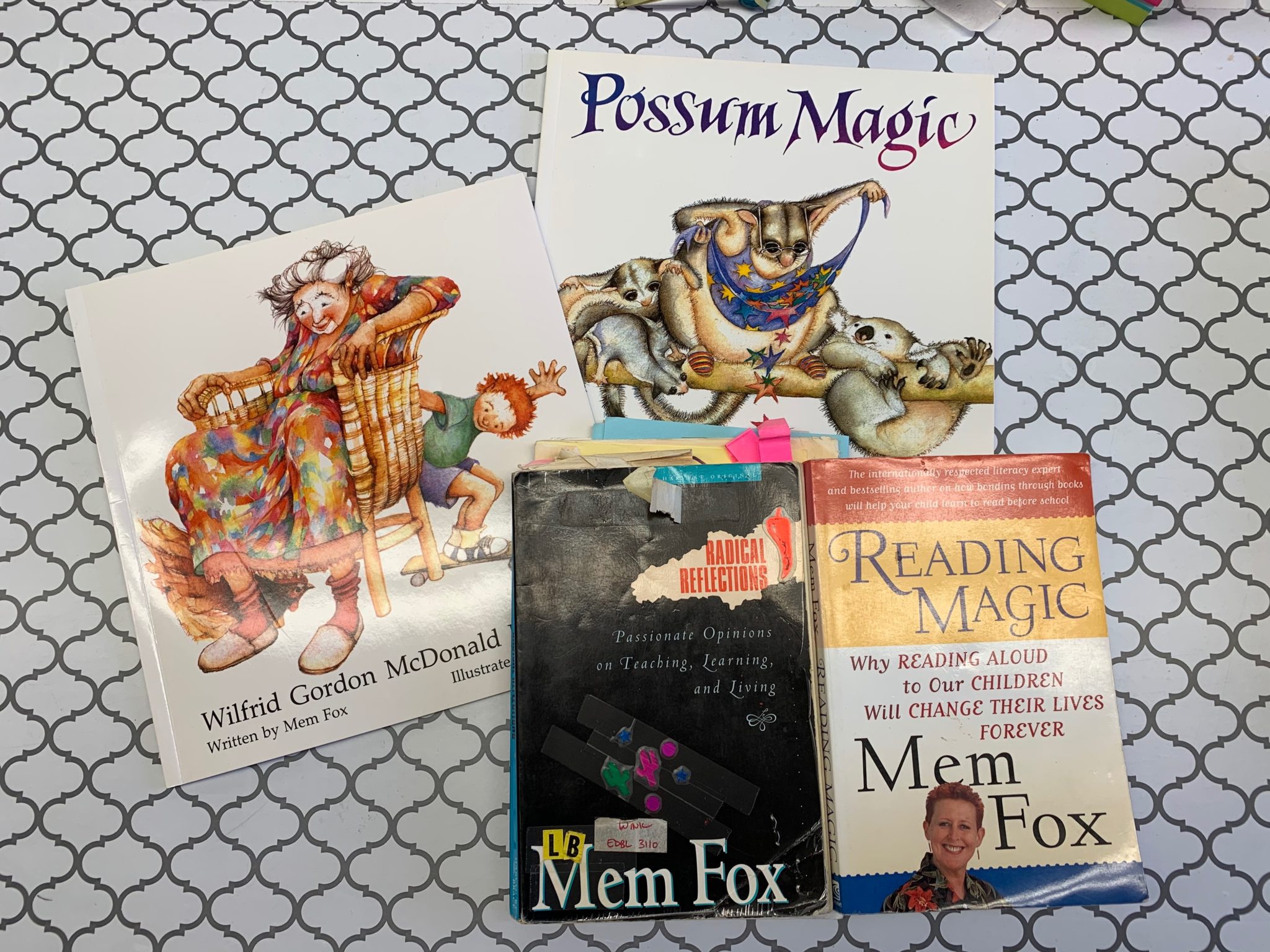
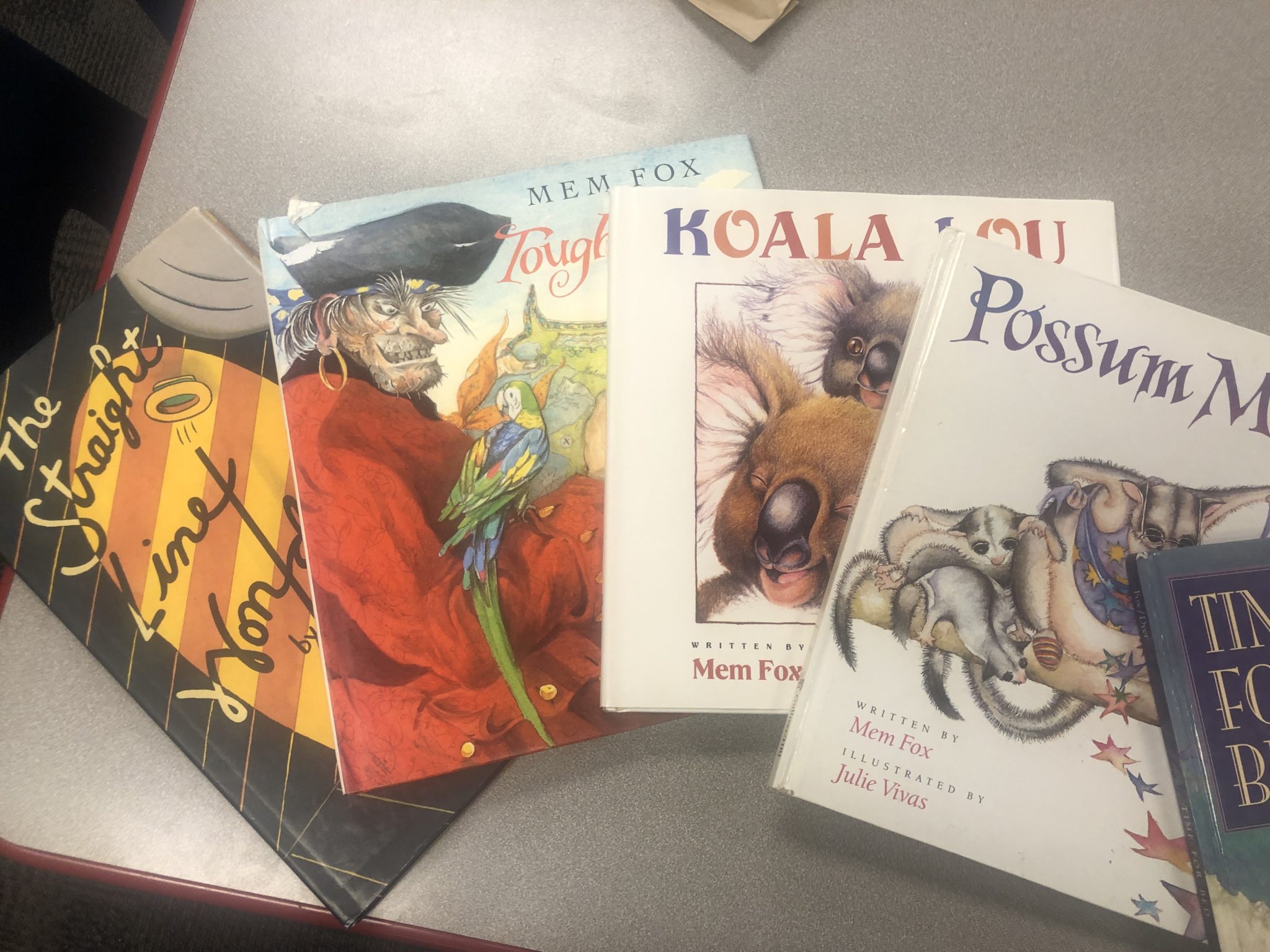
Below here I am posting a photo of 4 of Mem’s books which we used that day in class.

This experience made me realize that I no longer had all of my Mem books–I am sure that I have passed them on during the years. 

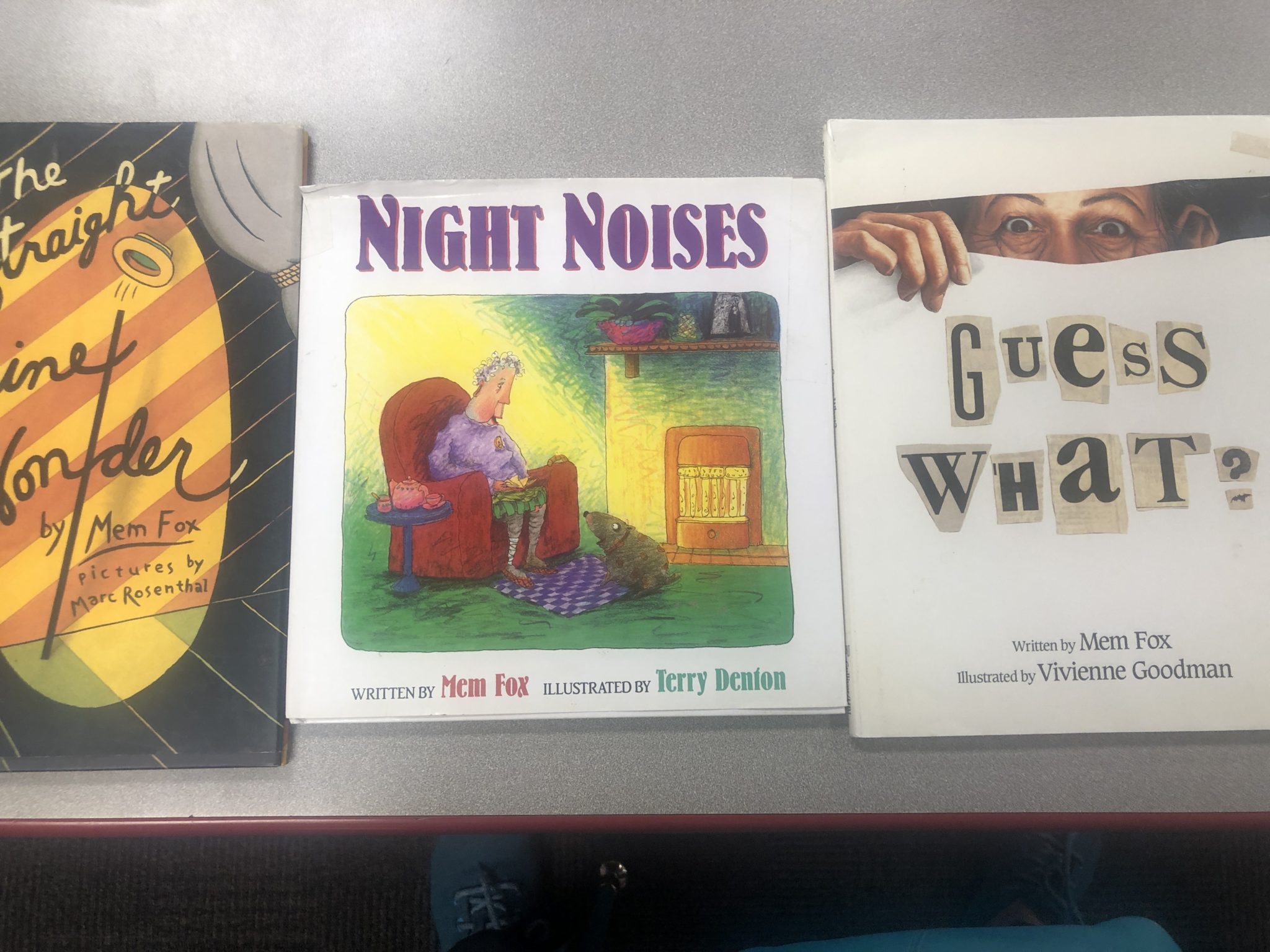
I then flew to Tucson for the Tucson Festival of Books, and the first thing I did was go to my all-time fav used-book store, Bookman’s, which I see is now called Bookman’s Entertainment Exchange.  I asked an employee if he could help me find any Mem Fox books for kids. He crawled around while searching the lower shelf and found a treasure trove of Mem Fox books, which you can see below.

He even found a copy of my fav Mem book.

Thank you, Mosby!  You were terrific.  Without you, I never would have found all of those Mem Fox books to take home to read to the Atall kids.

This is not the first time that Booksman’s has helped me.

In the 1970s, when I started teaching middle school kids in Benson, AZ, a book I found (Hooked on Books by Fader & McNeil, 1966) on the floor of the gardening section of the original Bookman’s on Broadway, saved me.  Before Benson hired me, they asked me if I could teach language arts, and I said yes, since I had majored in Spanish and English lit.  Turns out that I knew nothing about language arts.   However, Hooked on Books and those Benson kids saved me from myself.

So, in answer to my original question: How do I put WinkWorld together?  You can see that I just live and write about it.  This particular issue of WinkWorld took several decades, but when I saw Mosby crawling around on the floor of Bookman’s, I immediately knew I had a story, which you can read below.

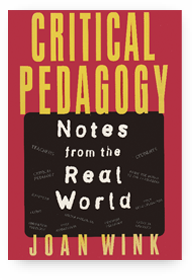
Critical Pedagogy 4th Ed – The Benson Kids

March 8, 2020Read More
Guided Self-Selected Reading (GSSR): Krashen and Mason

Guided Self-Selected Reading (GSSR): Krashen and Mason

Hello WinkWorld Readers, this post is for reading teachers, families, and all who care about literacy,

What in the world is GSSR?  Guided Self-Selected Reading is when “you read a whole lot, really a lot, of very interesting texts,” (2020, Krashen).

In the following 6 minute post, you can see Krashen as he explains the concept.  Please note his granddaughter’s pink bedroom walls, where he does the recording. She is his tech support.

Youtube: Guided Self-Selected Reading

Here is his very short article written in meaningful language with lots of good supporting evidence–isn’t this what we all want? (permission granted)

Teachers and families, your job is to know the children really well so that you can help guide them to best books for  each, but then get out of the way and let them choose for themselves, as Holden does in the photo below.

I primarily follow Dr. Beniko Mason at Story Listening & Reading for Language Acquisition on Facebook.  Thank you, Steve and Beniko, for all of your sharing.


February 5, 2020Read More
Influential She

Influential She

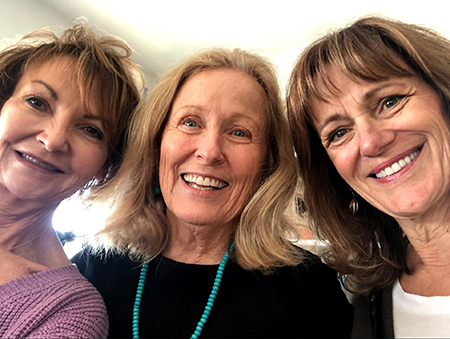
Dear WinkWorld readers, be forewarned, there is a bit of self-promotion coming…. However, I truly am honored to have been one of many women featured by Influential She. In what follows, I will share two short audio clips with quotes and a 30 minute audio interview. We begin with a photo of Melody Schopp, on your left and Deb Soholt on your right. Their words of introduction of me follow.

February 20, 2020, tweet from Influential She

“This week we take you to Howes, SD to meet Dr. Joan Wink, an extraordinary woman, both a professor in California and a ranch wife in SD. Author on the power of story she shared, “Using story has helped me be braver and more honest.”


What is Influential She?

Influential She is the “go-to voice for accelerating women’s influence.” I love that they confess they are not just another leadership “thingy for chicks.” Mel Schopp and Deb Soholt, two terrific women, began this new social media conversation. It has been thrilling and fun to get to know the two of them better, and I am very excited about the potential they are creating for women. I strongly encourage you to check out their website and decide for yourself. Click here.


Two short clips of tiny parts of the interview.

The 30 minute interview.

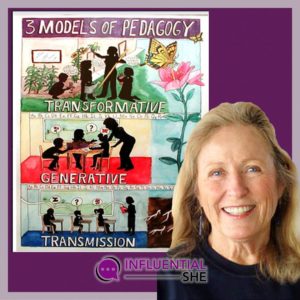
3 Models of Pedagogy poster, and Joan Wink


Personal Note to Mel and Deb

Deb and Mel, thank you from the bottom of my heart for sharing some of my passion for stories about teaching and learning.

January 27, 2020Read More
Prairie School Post (PSP): A Student Newsletter

Prairie School Post (PSP): A Student Newsletter

Dear WinkWorld Readers,

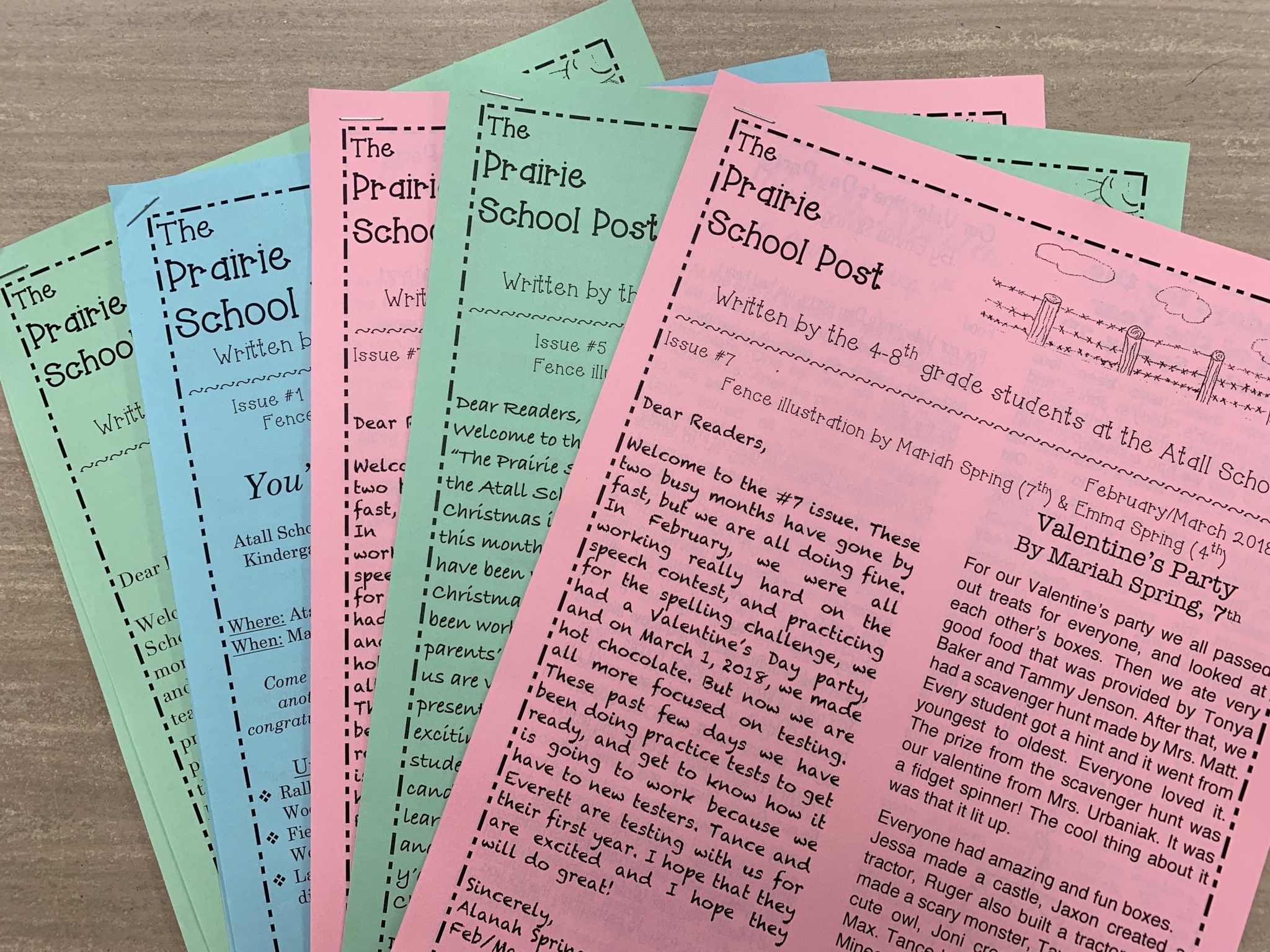
Back to one of my favorite topics: Prairie Pedagogy.  In this issue I will share a series of newsletters written by the students of Atall School, a tiny two-room school on the isolated prairies of South Dakota.  I will also share a brief history of how these newsletters came to be written.

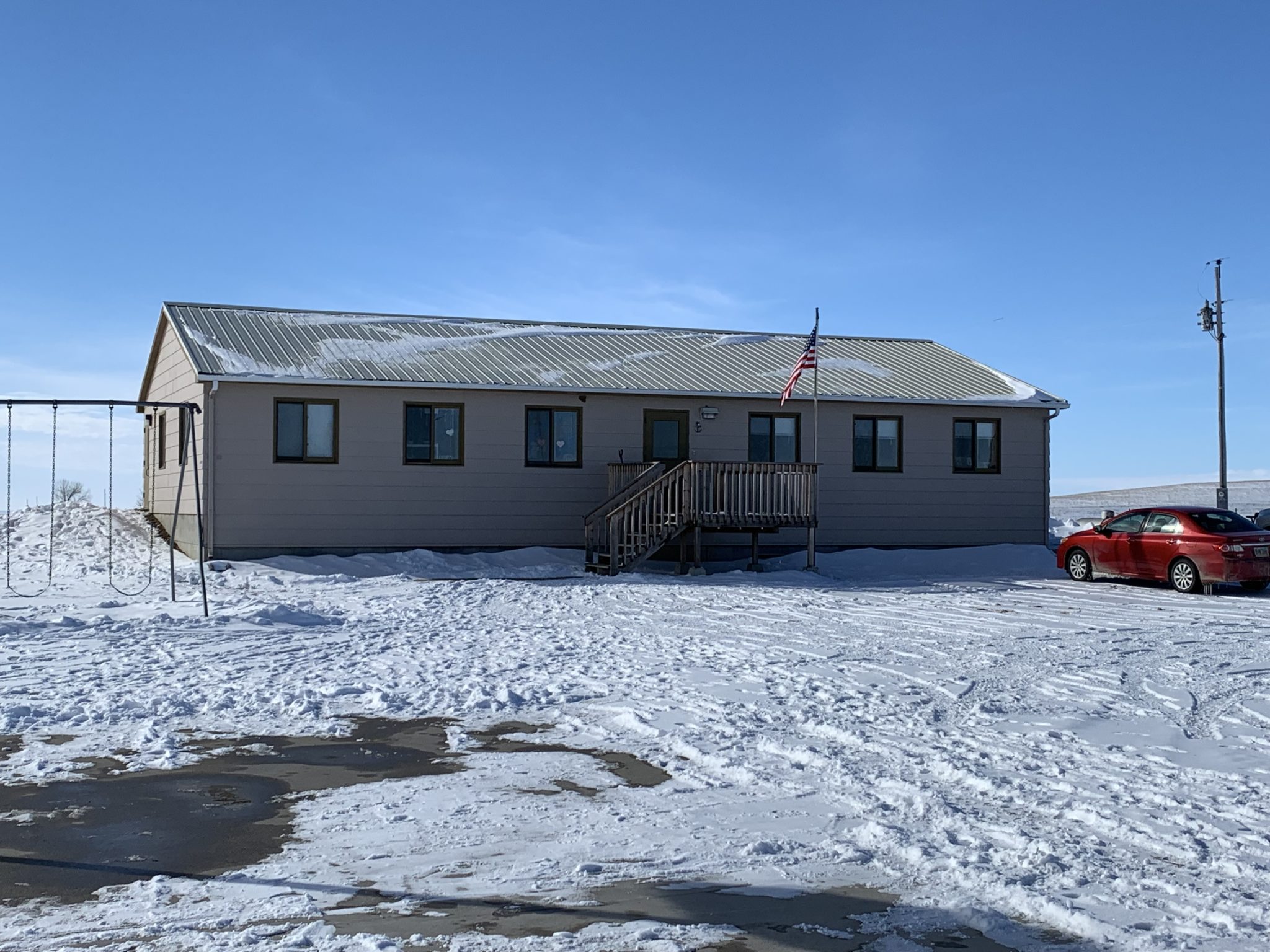
Here is Atall School, remember?  Today, when I texted Missy at school, it was -29 degrees and the power went out, just as she was preparing to microwave the various lunches which the students bring from home.


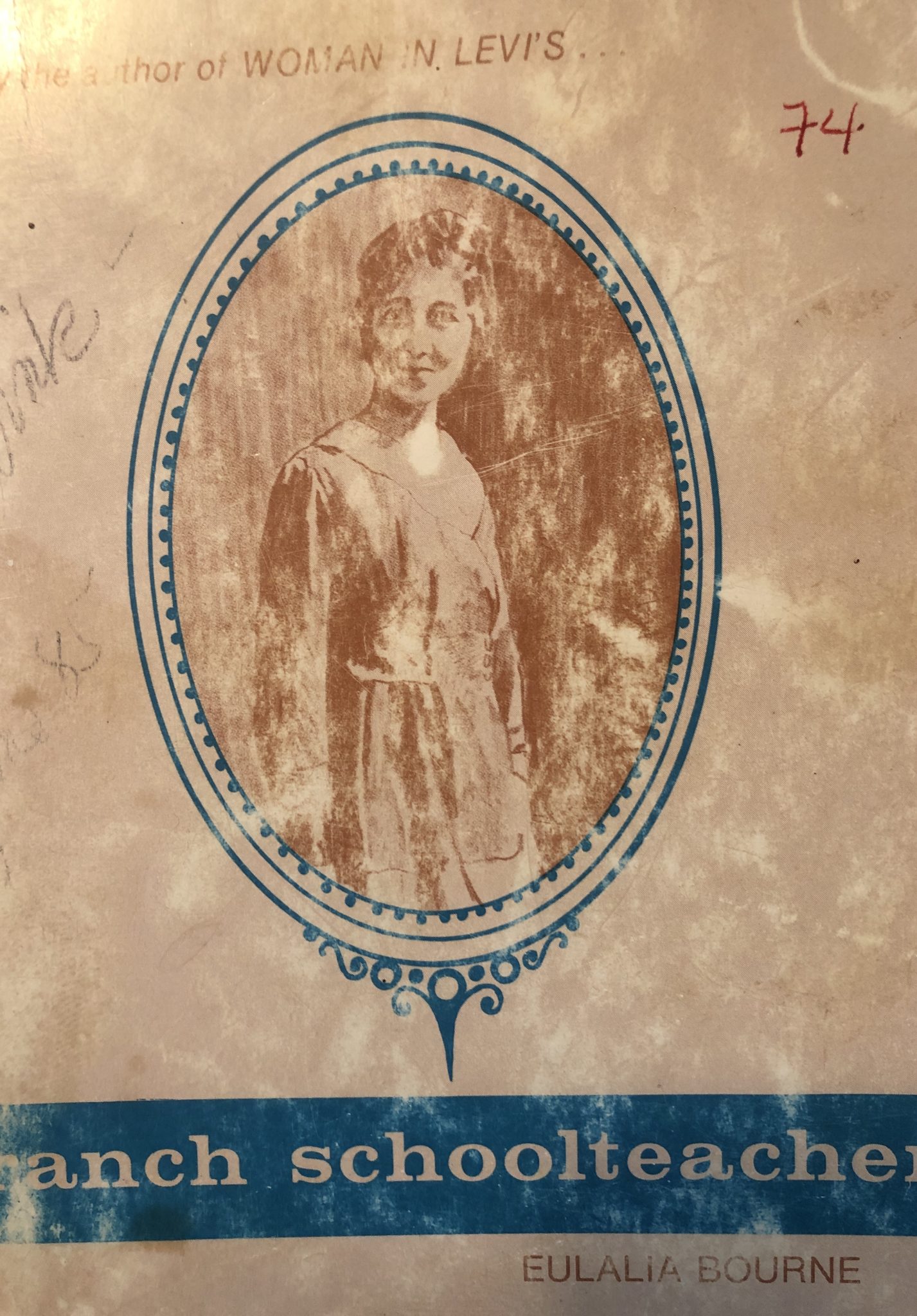
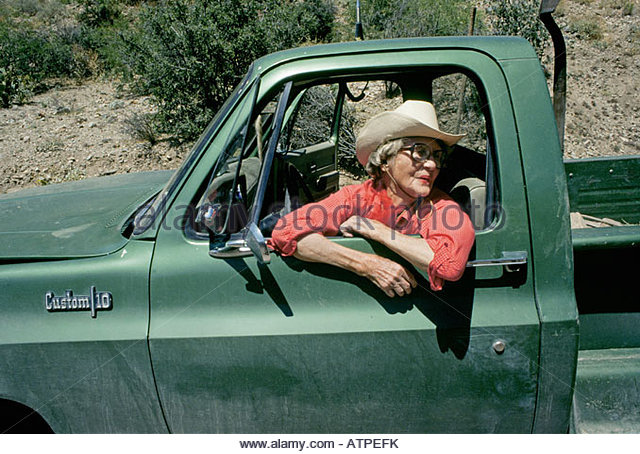
The roots of this school newsletter on the cold prairies extend back to the mid-70s, when I found and fell in love with the work of a teacher, Eulalia (Sister) Bourne, who taught in very small schools on the Arizona desert.  The first book I found was Ranch Schoolteacher (see picture of the book at the very top of this blog post).  When I read that book, I thought Sister had written it just for me.  At that time (70s & 80s), I was teaching middle school and high school students in Benson, AZ.  Sister Bourne taught in various rural schools on the AZ desert in the first half of the 20th century.  After reading her first book, I immediately went on to read her other books: Woman in Levis, and Nine Months Is a Year.  I still have never read her Broken Hearts, Broken Marriages, and Broken Bones, but I think it might reflect her life.  Here is one my absolute favorite photos of Sister Bourne.

Many who knew her would say that she was a complicated person, who very much reflected the independent, rural spirit of the desert, in particular.   

Fast forward about 30 years later, when I retired to our South Dakota ranch, where I note the same independent, rural spirit. I quickly learned that our rural school district continues to operate four different one/two room schools (K-8), and I was very eager to meet the teachers and students in these tiny schools.  Coincidentally, Missy Urbaniak, the teacher of Atall School, is also a relative, so I went there first.  After visiting with Missy for the first time in many years, I remember wondering if she would also like the Sister Bourne’s books, so I shared mine with her.  Missy fell in love with Sister just as I had, years prior.  When I saw Missy’s delight in these books, I knew I had found a soul-sister.  Missy and I and the Atall students have been enjoying books and each other together since that time. 

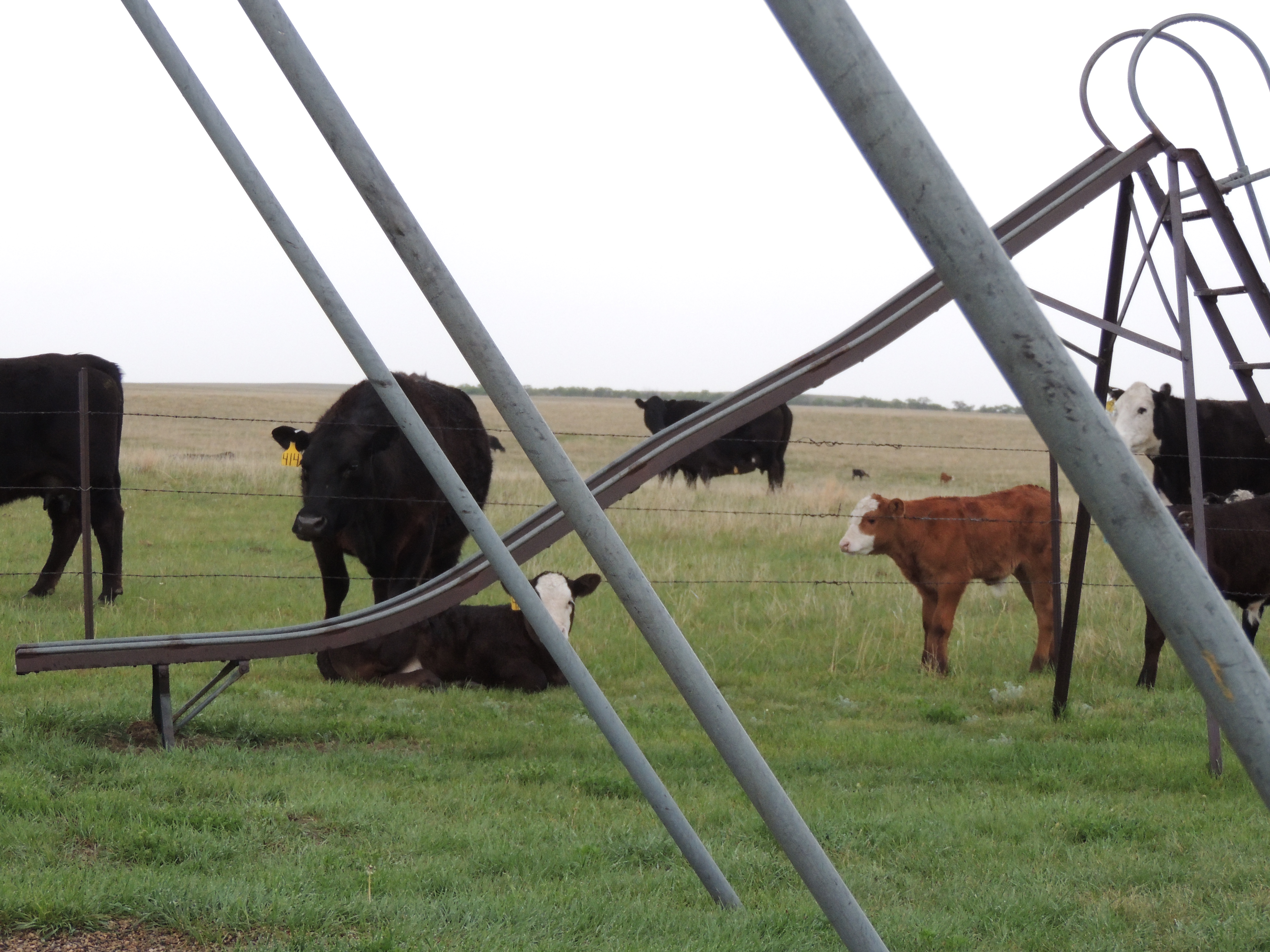
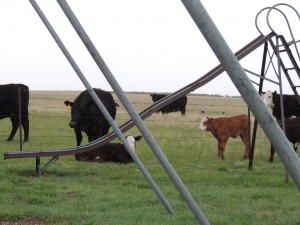
The photo below is a picture of the Atall playground slide and swing set, with the neighbor’s cattle just feet away from where the kids play.
 

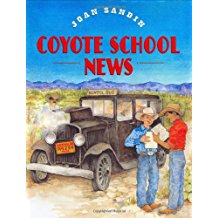
Part of Sister Bourne’s pedagogical legacy from teaching in small, desert schools is that she always had the students write student newsletters, which were called Little CowpuncherJoan Sandin captures the story of these newsletters and the legacy of Sister Bourne in Coyote School News, published by Henry Holt in 2003.
Much of the history of Sister Bourne, her teaching, the rural students, and their newsletters is maintained now by the University of Arizona, Special Collections and by the Arizona Historical Society, Tucson.   As Missy became more and more aware of this history, she and the students of Atall decided that they, too, would create newsletters to capture the legacy of their learning on the South Dakota prairies.

Below here is an assortment of their newsletters.
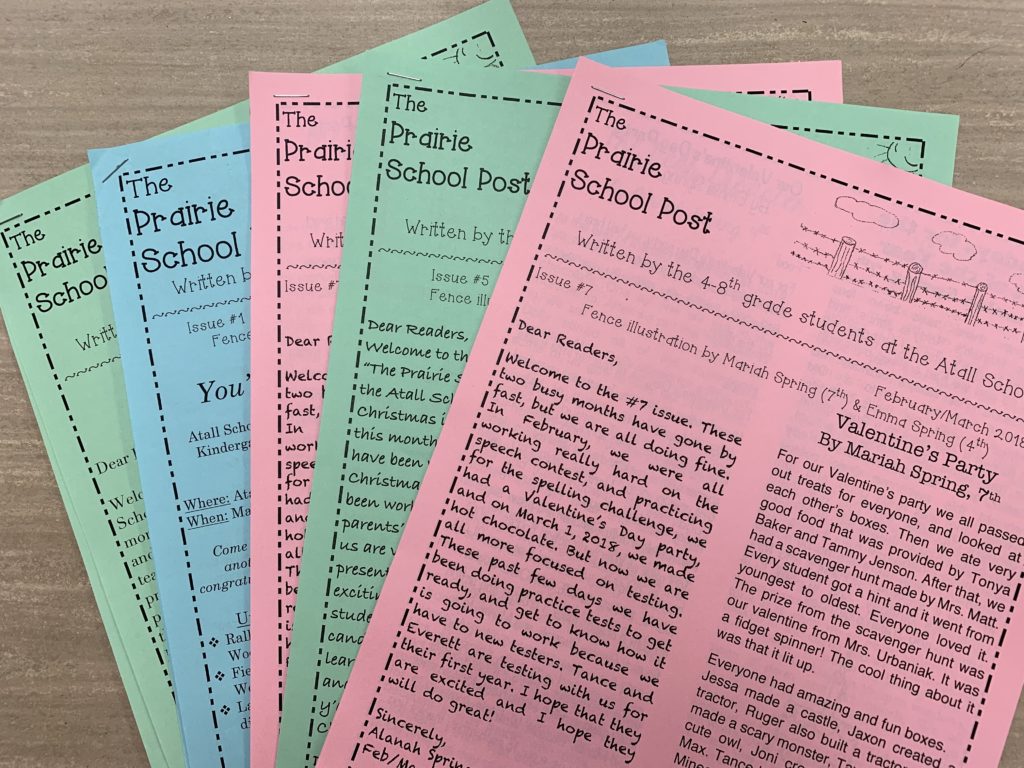
I am posting below the latest issue of Prairie School Post which was just published January 2020. The students think of this issue as their Holiday Edition of Prairie School Post (PSP).  Before you download and read it, you might want some pre-reading vocabulary, questions, thoughts–a peak into some of what the Atall kids share in this issue of PSP.

STEM means classes grounded in science, technology, engineering, and math. 

STEAM means classes grounded in science, technology, engineering, the arts, and math. 

Opal School is another little school, which is about 45 gravel miles away–no shops, no towns–just a gravel road and ranches. When the students get together, as in one of the stories in this issue, the parents drive them, and it takes about 45 minutes. Central Meade County School (CMCS) is another small school in our district; it takes about 30 minutes to drive between Atall and CMCS.

What are oz-O-bots, Lego Mindstorm, Makey-Makey, and Nitro-Type? Can you code? Do  you know about Christmas in Sweden, in Poland, and in Germany?  Even my gift of the Harry Potter advent tree is mentioned.  Thanks, kids.

Imagine, teacher friends, getting this newsletter accomplished in the first 10 days of school in January. And, for 7 grade levels.  And, yes, these one-two room schools are under the same pressure of standards and testing as are all schools.  Of course, I struggle with those mandates, as I have yet to know even one “standard” child.  Each child is unique in my experience.

Below here, you can download the entire issue  of Prairie School Post.

Prairie School Post 15 NOV DEC 19

Two more resources are posted for your convenience.

The UofA Library, Special Collections, The Arizona Historical Society, and The Arizona Humanities Council  have posted online much of the history of Eulalia Bourne and the students’ newsletters, The Cowpuncher.  Thank you!!

Posted below here is a previous issue of WinkWorld, in which I mentioned Prairie School Post.

Synergy Is Synergy: Joan Sandin, Sister Bourne, & A Night-blooming Cereus
January 17, 2020Read More
Shoebox Autobiographies: Funds of Knowledge and Steph Paterson of CSU Stanislaus

Shoebox Autobiographies: Funds of Knowledge and Steph Paterson of CSU Stanislaus

Dear WinkWorld Readers,

Teachers, the shoebox autobiographies are a good way of building community.  CSUS friends, I was able to see Steph, while she was presenting at the University of Arizona.  Hope you enjoy.

FIRST, SHOEBOX AUTOPHOTOGRAPHY

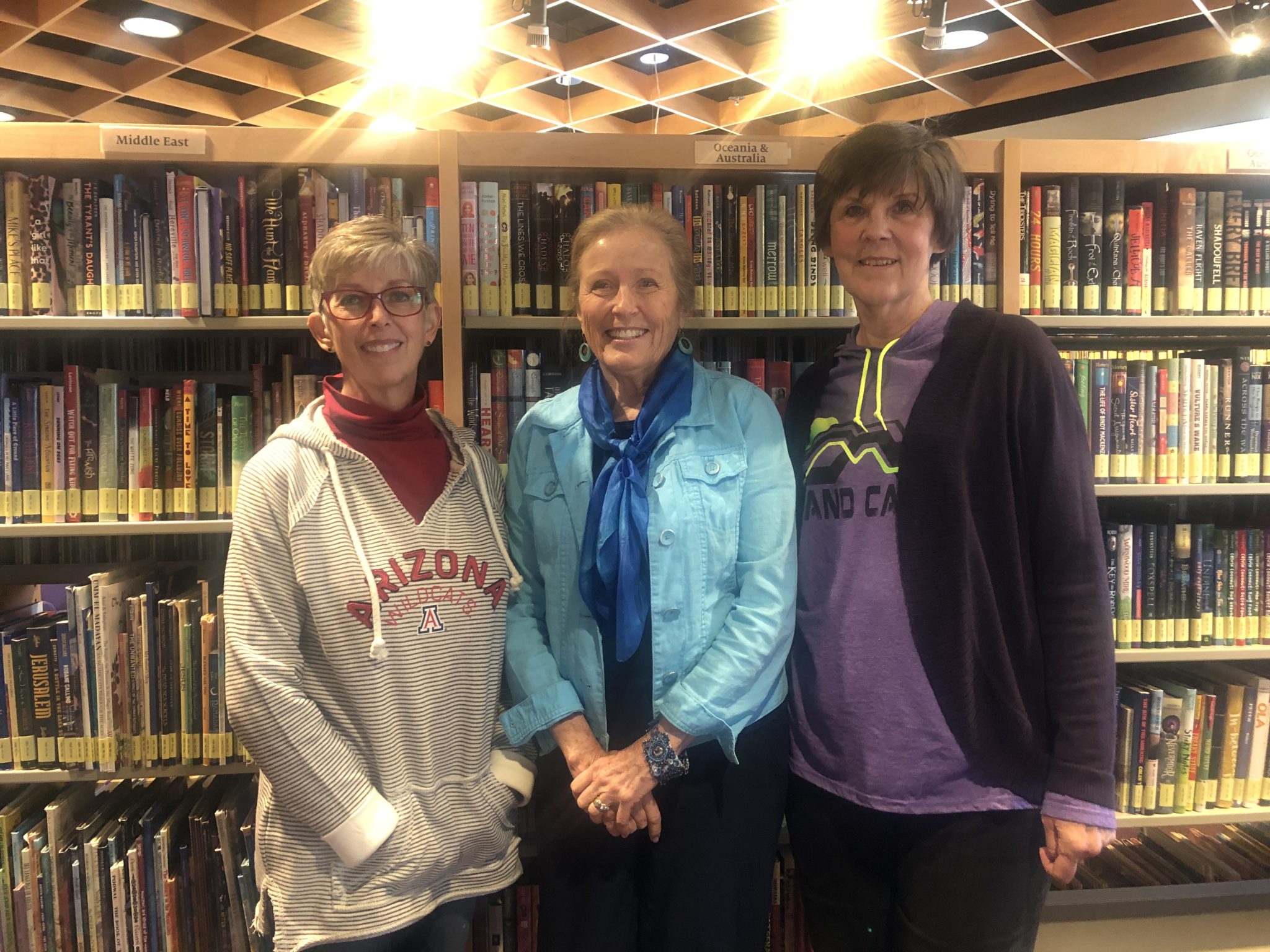
Recently, I was invited to a book study group for Tucson TAWL (Tucson Teachers Applying Whole Language). Throughout the years, I have been a “wanna be” for this group, and I am so happy that I was able to attend today.  Thank you, Caryl Crowell and Prisca Martens for inviting me.  Here I am with them.
You might want to visit the TAWL website, and they are also on Facebook. Here is their mission statement, which I love.

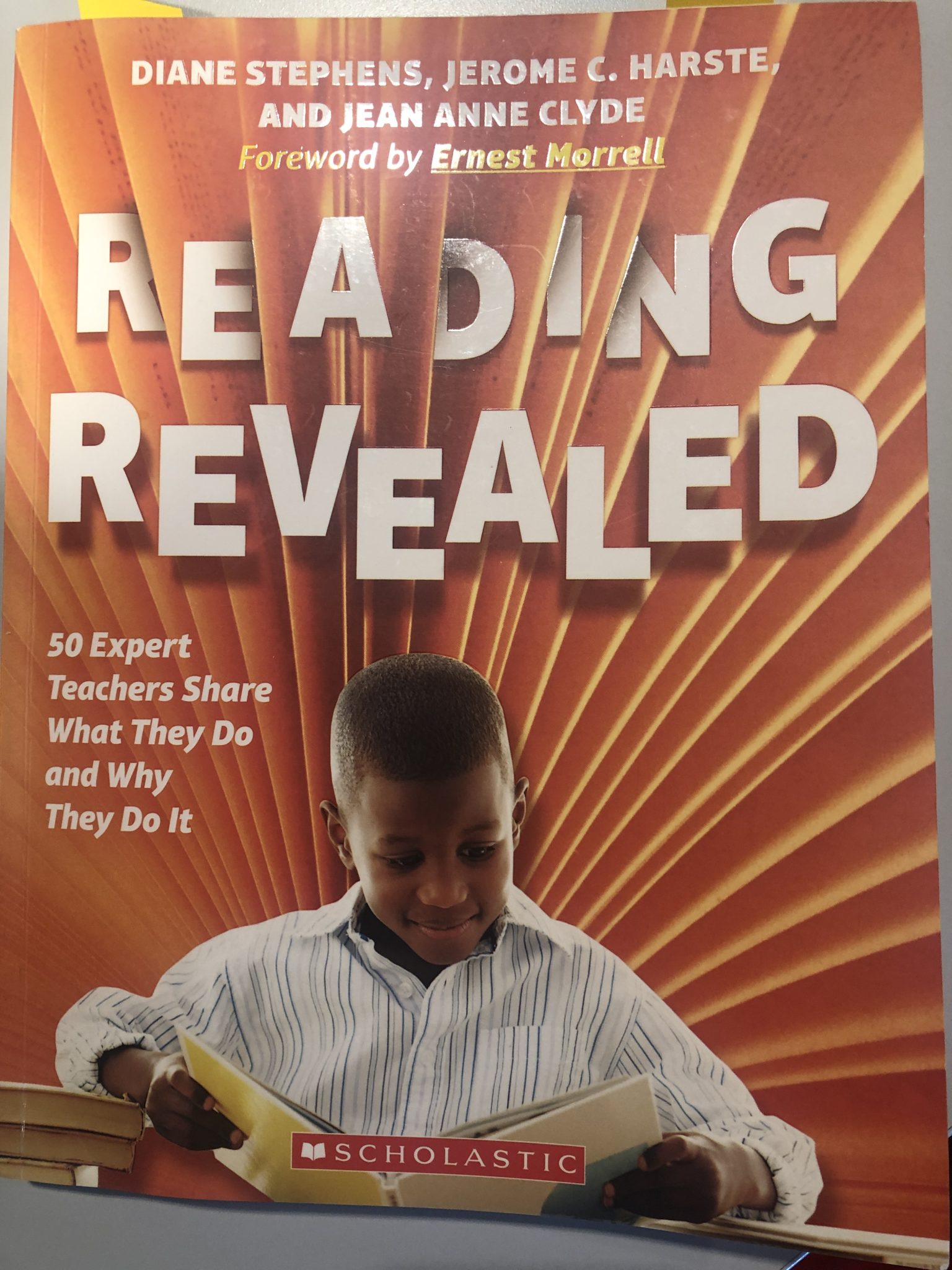
Our book study focused on a new book for me, Reading Revealed: 50 Expert Teachers Share What They Do and Why They Do It by Diane Stephens Jereome C. Harste, and Jean Anne Clyde, published by Scholastic, 2019.

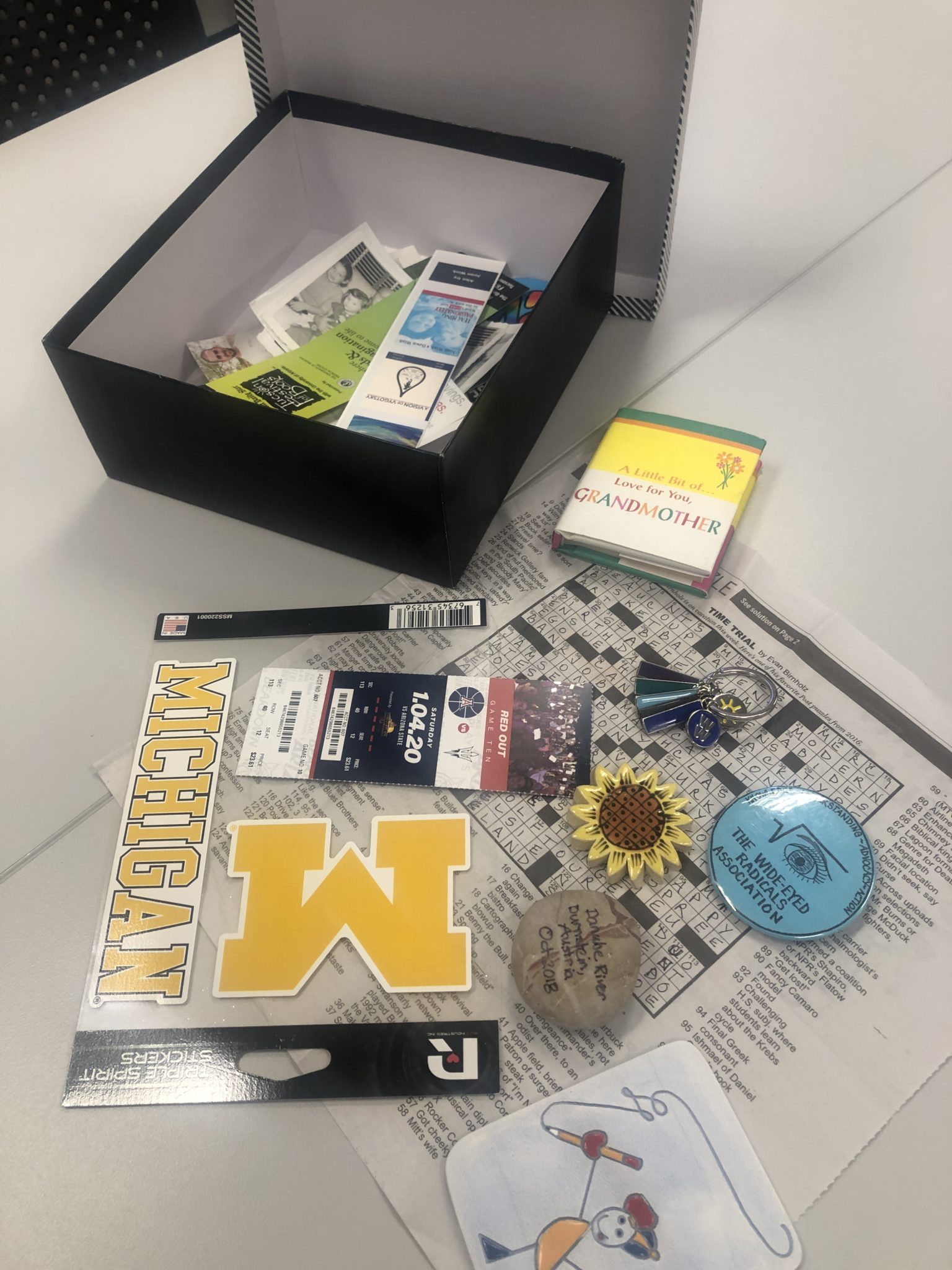
What is a Shoebox Autobiography?  This community-building activity  was originally created by Carolyn Burke.  I learned about it in a chapter by Jean Anne Clyde in Reading Revealed.  Students decorate a shoebox, which has artifacts of their life.

Of course, I immediately thought of Luís Moll and his concept of funds of knowledge.

What are funds of knowledge?

Short answer: objects lying around your home, which represent what you know and have experienced.

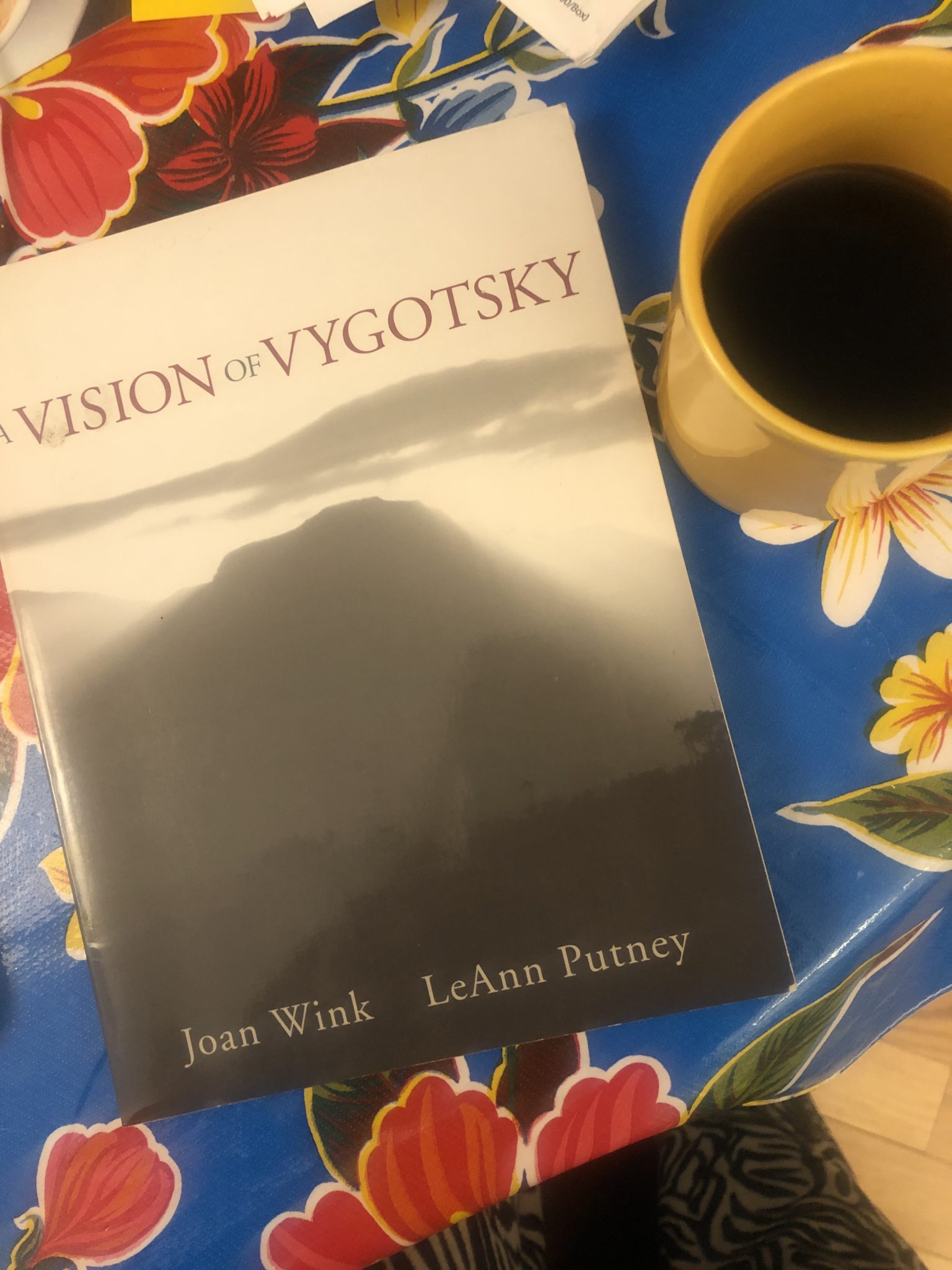
Longer answer, with stories, posted below: excerpt taken from A Vision of Vygotsky, (Wink & Putney, 2002, pp. 97-100).

Vision of Vygotsky – Funds of Knowledge

How do we make these Shoebox Autobiographies in a classroom?

Caryl Crowell did this activity with her students, and I am adapting her classroom instructions, which she had created for the students in her classroom. Thanks, Caryl.

A Shoebox Autobiography is a collection of objects from home and community that reveal something about the person.  We would prefer that the children include at least some objects that remind them of a story about themselves or their family.  Typically, a shoebox autobiography might contain photos, hobby items, a favorite thing, religious symbols, mementos from a trip or special event, or objects of personal importance or interest, among other items.  The objects chosen should fit in the box and be appropriate for handling.

Here’s an example of what I put in my box:

pebbles that I collect on my travels

a dreidl

a seashell

photos of family and ancestors

a copy of my great-grandmother’s Prussian passport

my first grade school photo

a souvenir rock that says “Annihilate Ohio State”

a booklet on whale watching in Hawaii

a paper butterfly

The outside of the box can also be decorated.  Mine is covered with sun-themed paper, the NY Times Sunday crossword puzzle, and plans for remodeling a bathroom.  The owner’s name also needs to be on the outside of the box.

In addition to the wonderful storytelling that always accompanies the sharing of shoebox autobiographies, we make connections to each other that build a strong learning community.  After sharing our boxes, we’ll be using the objects as inspiration for writing the stories that they tell.

In the photo below, are two examples.

The stories which people told were amazing.  I learned so much by just listening.

Can we do this in the middle of the year?

In Reading Revealed (p. 34) Jean Anne Clyde answers that question affirmatively.

Clyde suggests that the teacher say something like this:  “Kids, I recently discovered some things about some of you that I think everyone should know.  I just learned that Cortney is an expert at paining models!  and, I didn’t know that Lucy was going to be a new big sister!  It is really helpful when we know each other well.  We have so many interesting people in our room! So,, over the next couple of weeks, we’re going to do something that will helpp us all get to know each other better. This is a chance to see what’s special about each of us.”

SECOND, STEPH PATERSON AND COLLEAGUES OF CSU STANISLAUS AND THEIR PRESENTATION DURING THE “CONFERENCE ON WRITING AND WELL-BEING: TEACHING, IDENTITY AND THE CLASSROOM.”

Later in the day, I was lucky enough  to run into a wonderful friend/colleague from CSU Stanislaus Dr. Stephanie Paterson.  While at CSU, we had many happy times together. Stephanie presented with other CSU colleagues:  Joshua Costello, Melissa Borillo. Brett Ashmun.

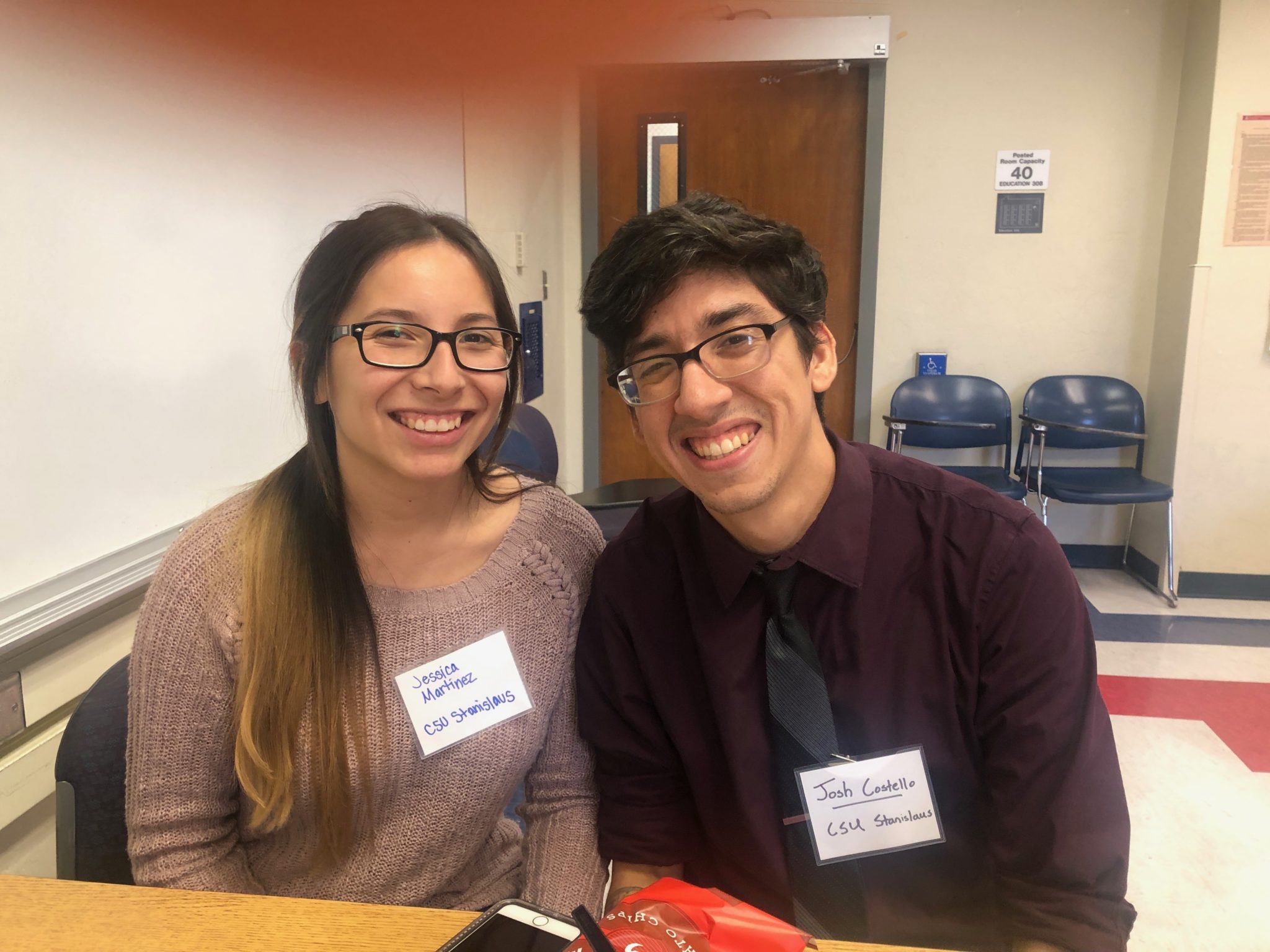
Steph’s colleagues who presented with her:

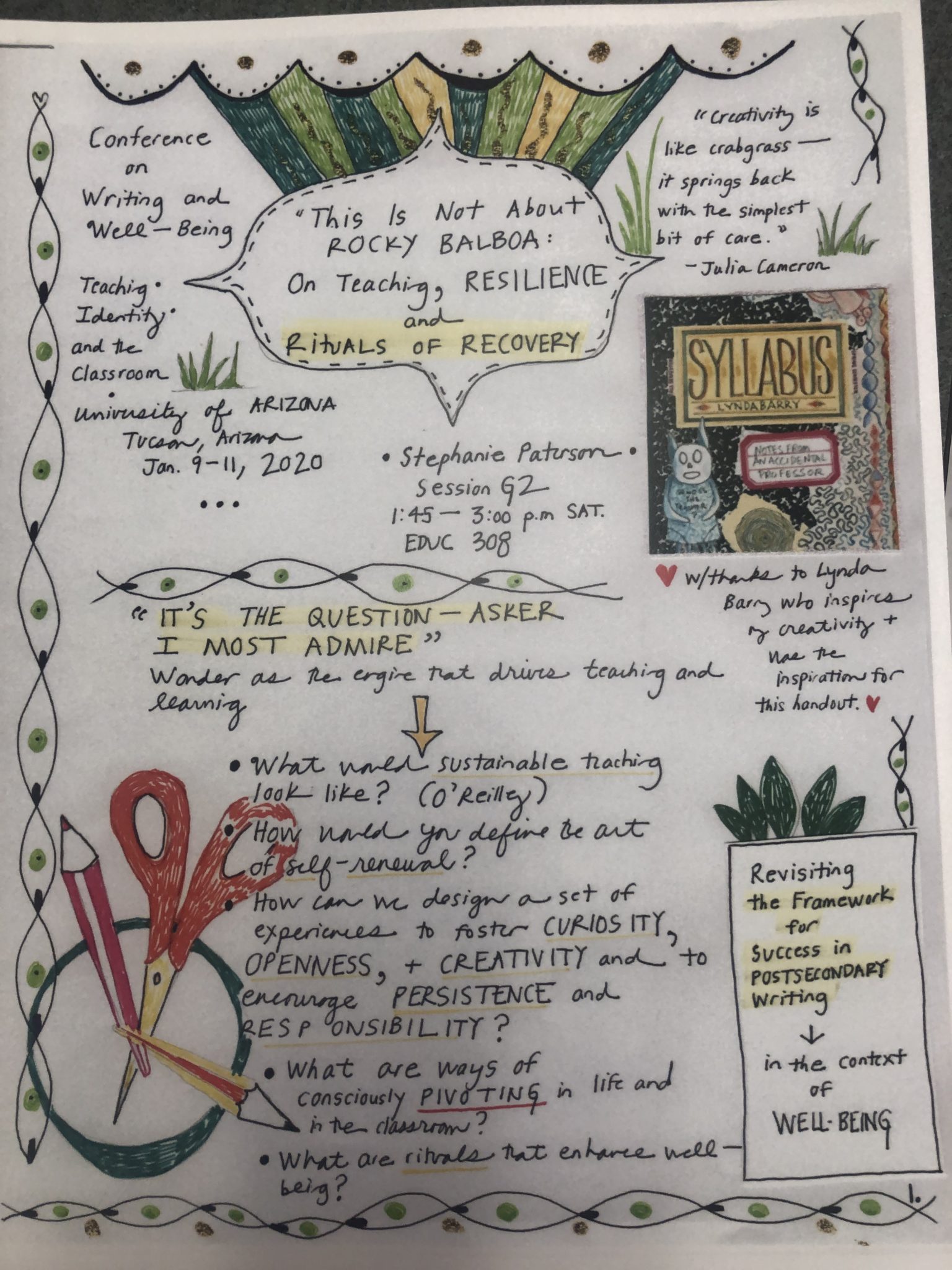
Steph’s handout for her presentation:

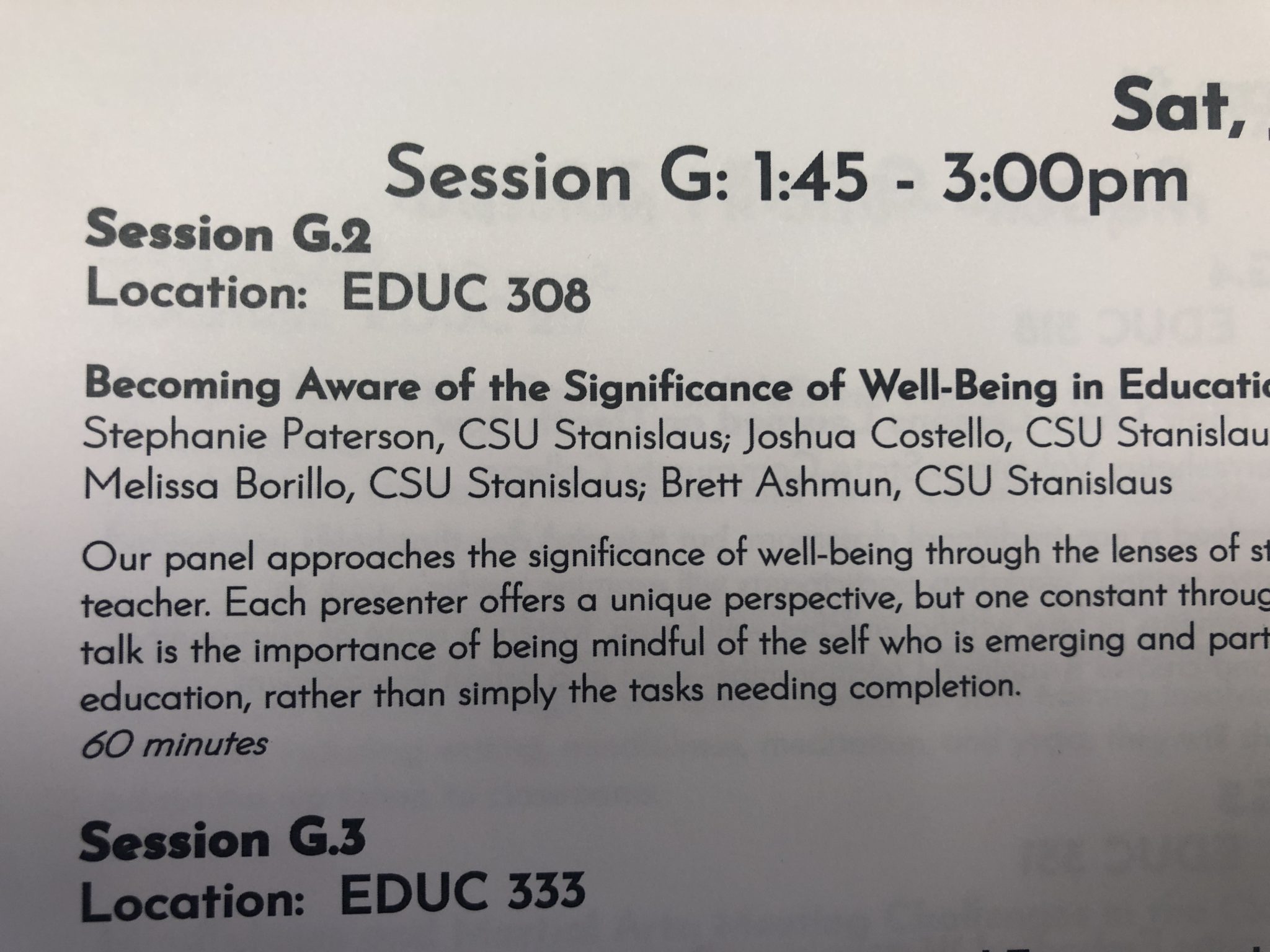
This is what their description in the conference flyer said:

Stephanie Paterson can be reached at Twitter and on her blog.

Steph: Twitter

@stephpaterson13

and her blog:

Steph Scrap Quilts

What a great day!


January 12, 2020Read More
Prairie Pedagogy: A Country Christmas Celebration

Prairie Pedagogy: A Country Christmas Celebration

Dear WinkWorld Readers,

Yes, these one and two-room country schools in our area still have Christmas school programs, which some of you may remember from decades ago.  Lots of stories, music, dancing, families, and fun: All in the basement of tiny little schools.  The kids read, write, create, memorize, and rehearse while their teachers are working hard to stay ahead of them at this busy time of year.  Teachers, you know the intense schedule before December holiday, and now add to that a program to create for families.   Thank you to all of the teachers, who take the extra energy and expertise to create these programs for families.

In this WinkWorld, Missy Urbaniak, the sole teacher of Atall School, also found time to write this blog post about their program and to share these photos. Thank you, Missy.

“Santa’s Stuck in the 50’s” written by Sally K. Albrecht and Jay Althouse, which is available from alfred.com.  For Atall, Missy adapted the story to fit the context.

Mrs. Claus and the kids are singing “A Whole Lotta Cleaning Going On” based on Little  Richard’s famed song.

Soon, Santa entered the stage, and the elves were allowed to open some boxes, where they find: Barbies, Matchbox cars, yo-yo’s, poodle skirts, Play-Doh, Silly Putty, an Erector set,  Mr. Potato Head, Mickey Mouse toys, Hula Hoops, and even pink plastic flamingos.

Soon, the elves discover a box of old musical records, and Mrs. Claus suggests a sock-hop. “Rock Around the Shop” with hand jive motions follows this discovering.

After the rocking good time, Santa and Mrs. Claus hint that the kids will receive a special ’50s surprise in exchange for letters telling how good they have been this year.  Mrs. Claus even squeezes in a few lines from “Gifts Come From the Heart.” And, of course, the kids love the Patricia Polacco story of “Gifts of the Heart.”

At one point in the drama, Santa requests that the kids stop writing letters to him, and Brock Rockman of radio station WXMAS does a live interview with Santa.

The play ends happily when the kids learn that Santa will continue to deliver their gifts.

Atall Alums

And, of course, some of our “big” kids, who now drive 50 m. to high school in Sturgis, came home to celebrate their younger brothers and sisters.  Oh, how we miss the K-8 country kids when they begin high school in far away places.

Thanks for sharing, Missy.


December 21, 2019Read More