View Sidebar
Click on any book icon to see Table of Contents and/or to purchase a copy.

Archive for category: Latest

Scaffolding with Students: What? Why? How?

Scaffolding with Students: What? Why? How?

Dear WinkWorld Readers,

A colleague and I were discussing scaffolding, which led me to review some of my materials.  The purpose of this post to share a few materials on scaffolding.

First, what is scaffolding?

Scaffolding is how we structure our strategies to make content more comprehensible and compelling for students. Scaffolding is the gradual withdrawal of the teacher’s pedagogical support when a student moves from learning in groups to independent learning and mastery (Roe & Wink, 2012).

Second, why do we, teachers, scaffold learning?

•To lead the learner to her next developmental level

•To make language and content comprehensible and accessible

Scaffolding: The Historical Context

Wood, Bruner, and Ross (1976) coined the term when they wrote about a tutor who was interacting with child and a wooden puzzle of a pyramid. Wood et al state that the two are working on “a ‘scaffolding’ process that enables a child or novice to solve a problem, carry out a task or achieve a goal, which would beyond his unassisted efforts” (p. 90).

http://stanford.academia.edu/RoyPea/Papers/109079/The_Social_and_Technological_Dimensions_of_Scaffolding_and_Related_Theoretical_Concepts_for_Learning_Education_and_Human_Activity

Scaffolding originated with Vygotsky’s notion of the Zone of Proximal Development (ZPD).

What is the ZPD?

. . .the distance between the actual developmental level as determined by independent problem solving and the level of potential development as determined through problem solving under adult guidance or in collaboration with more capable peers (Vygotsky, 1986, p. 86; as cited in Wink and Putney, 2002, p. 86)

Many think of scaffolding in the construction business, but it is now almost a prerequisite skill for all teachers. It is particularly effective with students who are in the process of acquiring a new language.

Third, how can teachers do it with students?

Teachers often think of three phases in the process of scaffolding:

I do (or, the teacher will…)

You do (or, the class will…)

We do (or, the individual will…).


2012 Great Valley Writing Project: I do. You do. We do.  

Click here to see this presentation, which begins with scaffolding and moves into TPS (Total Physical Response) and then into TPRS (Teaching Proficiency to Reading through Storytelling).

2012 TESOL in Philadelphia with Dr. Chris Roe

This is the handout, which we shared with the participants at this session.

2012, TESOL: The participants generated this long list of ways of scaffolding with students.

August 6, 2017Read More
Whole Language Umbrella, Tucson 2017

Whole Language Umbrella, Tucson 2017

It happened: I hit PUBLISH after the draft only version.  Every blogger’s worse nightmare. Forgive me. I’ll edit and be back ASAP.


Dear WinkWorld Readers,

The Whole Language Umbrella conference in Tucson was wonderful, and I will share a few highlights, in no particular order. First, What Is Whole Language?  Thank you Donalyn Miller for reposting this definition from Connie Weaver and colleagues from Michigan (1995). Click here to read.

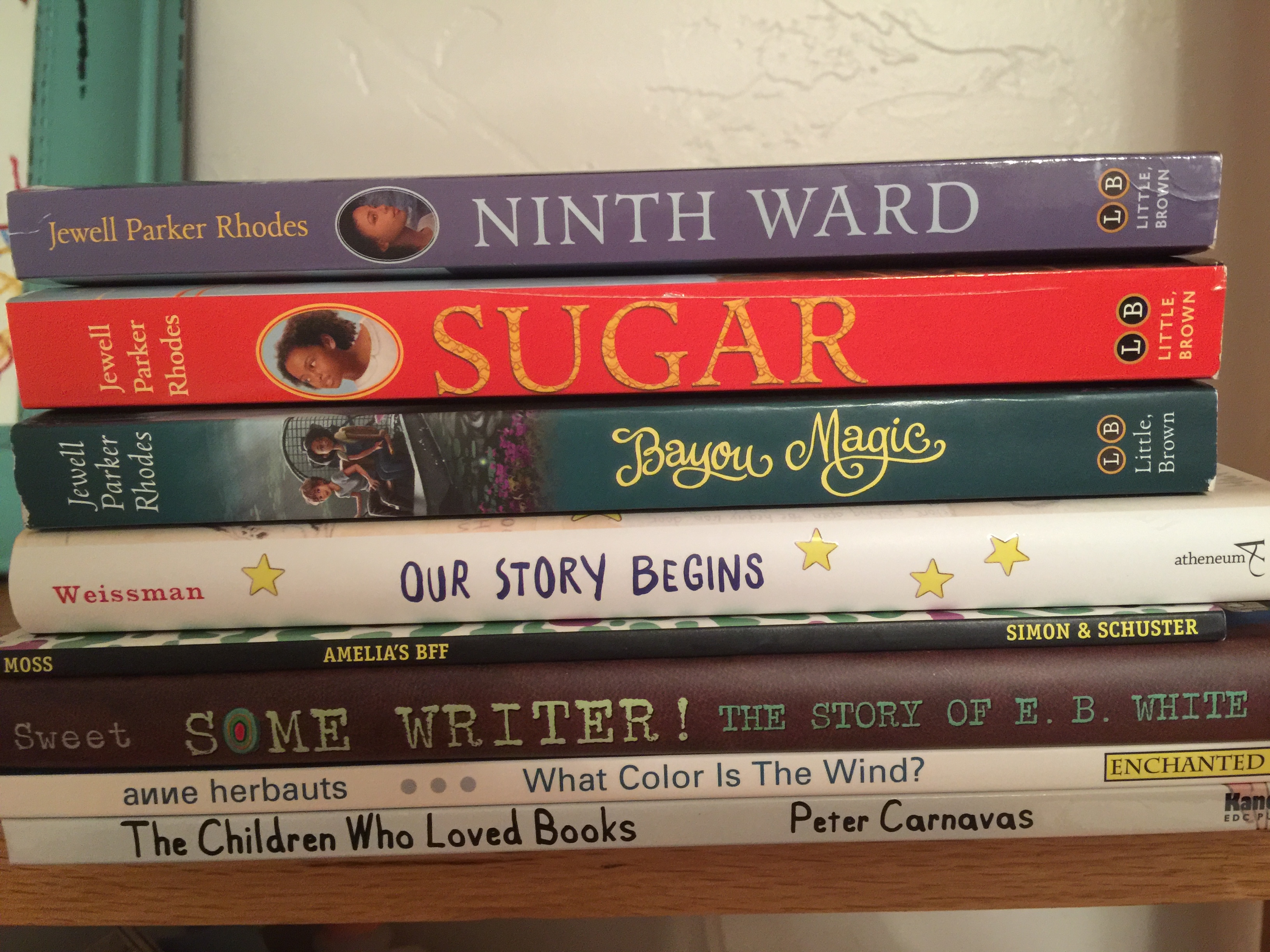
Jewell Parker Rhodes was particularly inspiring for me, as she spoke about writing for children now, as a way of giving back.  She was one of those people, who was saved by books in her childhood.  I was lucky enough to buy 3 of her books. Click here to read more about Rhodes.

The following photo is a stack of books which I bought on  from Kid’s Center (click here) at the conference.  


Ken and Yetta Goodman’s extensive collection of books/reasearch (a.k.a., treasures) will be housed at the University of Arizona (UofA). In the photo below, Alan Flurkey, Yetta Goodman, and I celebrating in the World of Words (WOW). Kathy Short of the UofA has created a lasting legacy with her WOW


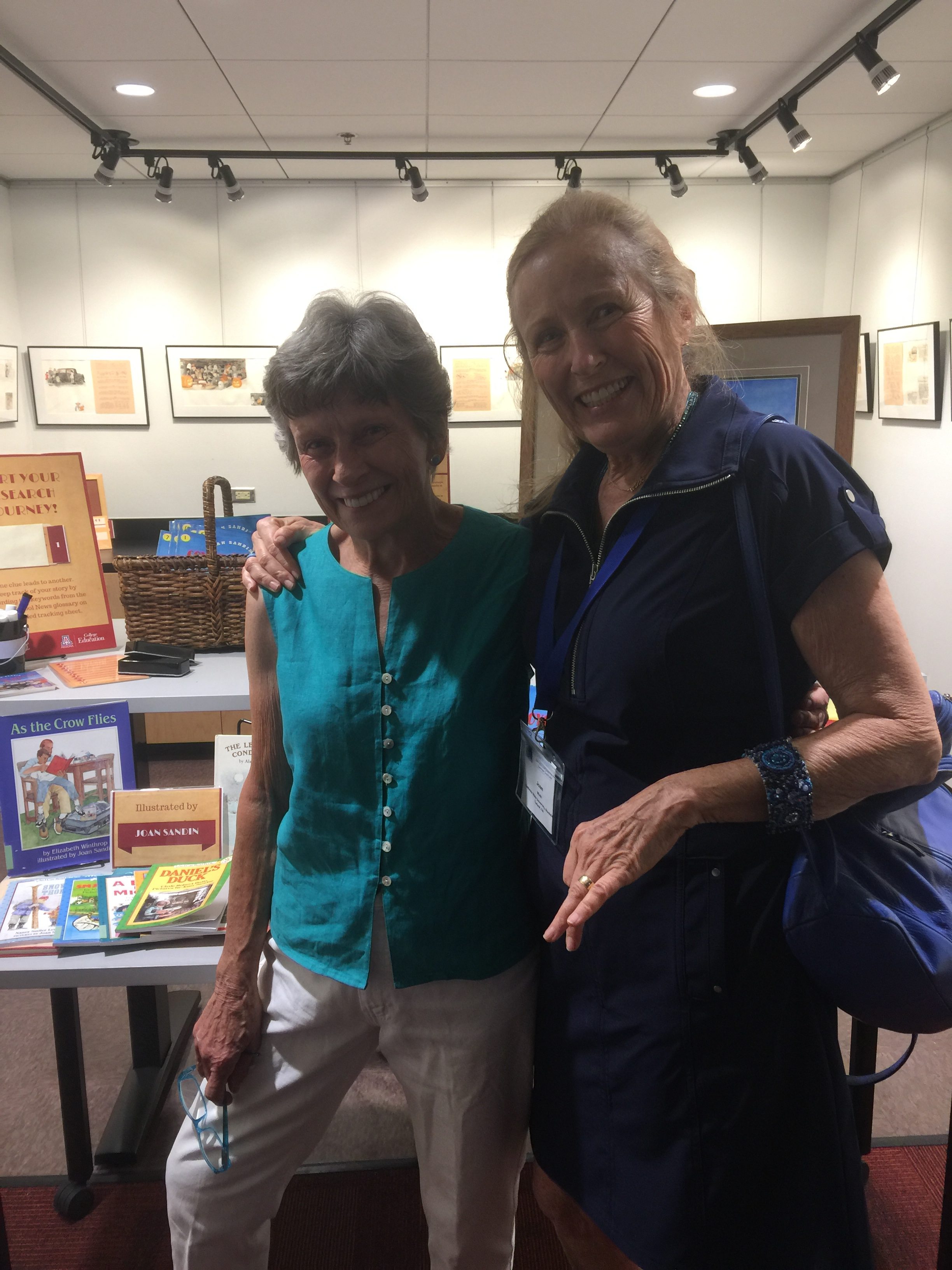
It was a complete joy for me to finally meet the author/artist/illustrator, Joan Sandin. For more about Joan Sandin, click here.  Of course,  I am very interest in her book, “Coyote School News,” as it celebrates Sister Bourne, one of my all-time heroines.  In the 1970s, while teaching in Benson AZ, Sister Bourne’s books had a powerful impact on my teaching/learning.

See Joan Sandin here.


Click here for a little overview of Sister Bourne and the students she taught in AZ.


More on Sister Bourne to be coming in WinkWorld.

Perry Gilmore (click here for more on Perry ) closed this wonderful conference with the story of her son and a little boy from Kenya, who generated their own language: A beautiful, fascinating, and heart-wrenching story. You can read about it in the book, Kisisi (Our Language): The Story of Colin and Sakiki. Click here.  If I were teaching translanguaging or language acquisition, I sure would add this book to the course syllabus.

Translanguaging: What in the World is That?

Translanguaging? What in the world is that?

Dr. Curtis Acosta opened the conference and was a highlight of the conference for many.  Dr. Acosta, as many of you know, has been a central voice in the struggle to save the Mexican American Studies program in Tucson.  As he was speaking, the final day of the court case was in session.  Jesse Turner on FaceBook has the best photos of the ppt and quotes, which Dr. Acosta shared.  This trial has been widely publicized and is readily available on the web.

As the Whole Language Conference came to a close, I reflected on the many moments of synergy throughout the conference.  I had the amazing experience of connecting with friends and colleagues of many decades and many different contexts.  Thrilling.

As Perry Gilmore was presenting late on Saturday afternoon, yet another monsoon storm hit Tucson.  I could hear the various storm warning sirens coming from the hotel hallways and various phones.  My car was parked a mile across campus, but it was still light, and I was wearing all cotton, so I headed out into the rain storm. There were places where I could not cross as the water was running too hard and too deep. As I came around Old Main, a huge rainbow was hanging in the East, right over Cascabel. I continued splashing across the grassy mall alone with only the rain, the rainbow, those palm trees, and me. I will forever treasure this experience. Thank you Tucson area Whole Language Umbrella for giving me this wonderful memory.

Mark your calendars: NCTE (National Council of Teachers of English), which sponsors WLU.

St. Louis, MO

November 16-19, 2017


July 24, 2017Read More
The Power of Story Chapter Seven

The Power of Story Chapter Seven

Dear WinkWorld Readers,

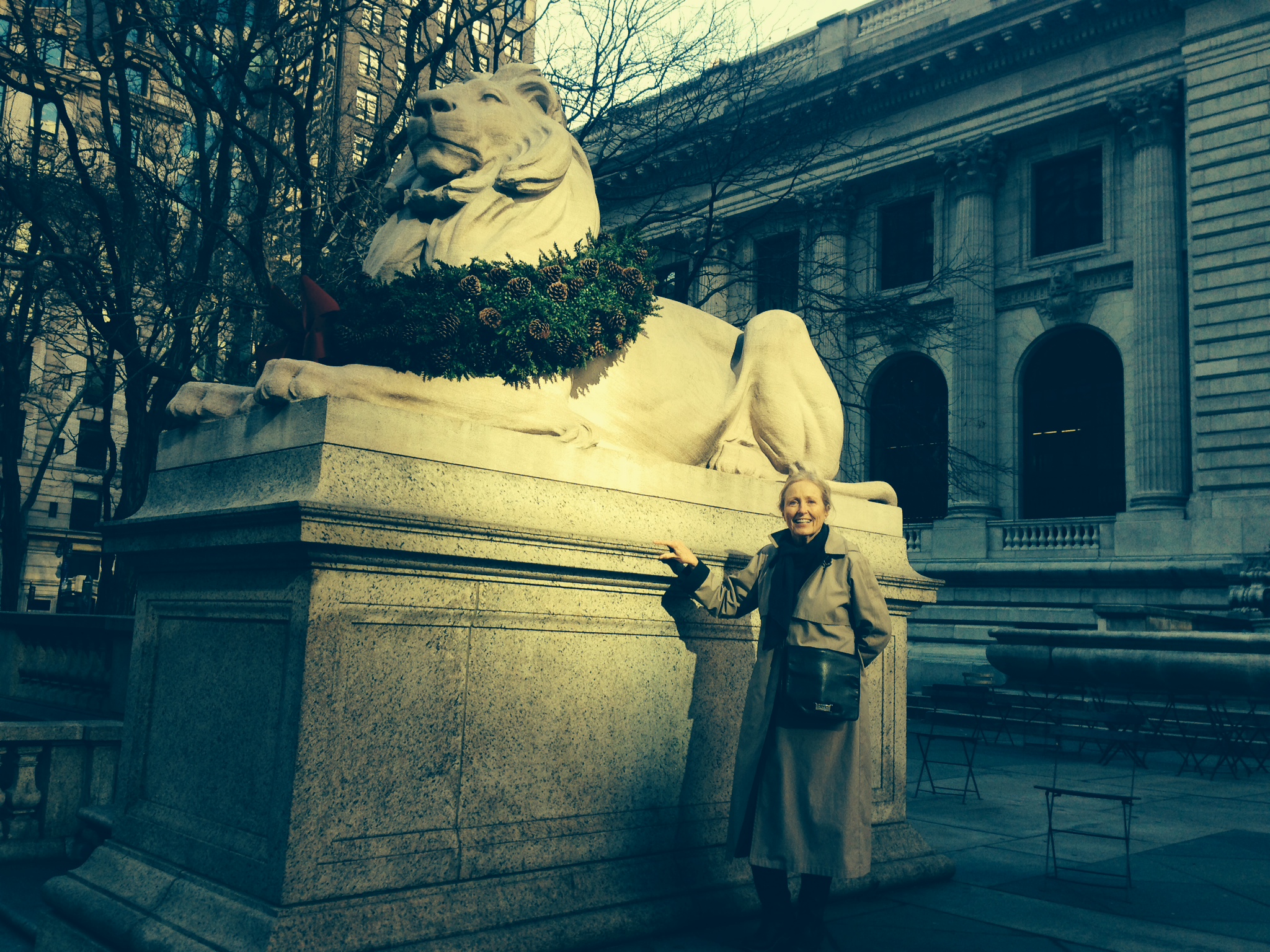
Chapter Seven, Patience and Fortitude, is the final chapter of the book.  Patience and Fortitude are the names of the two marble lion statues, which guard the entrance to the New York Public Library.  

Katie Knox captures one of the lions in her image posted below.


The visual graphic below captures the content of chapter seven. Thanks, Missy Urbaniak

Chapter seven is about money, greed, power, real estate, secrecy: This story has it all, and then one courageous journalist began to notice and to write honestly about his suspicions. And, because he wrote honestly, and not safely, we all can still enjoy the priceless treasure in the heart of Manhattan: The New York City Public Library. Patience and Fortitude are the names of the two iconic lion statues, which guard the entrance to this beautiful building, which holds our history, our identity, our cultural memories.

            Scott Sherman, a journalist, had a suspicion that someone was trying to get their hands on Patience and Fortitude and the hallowed library which they silently guard. This all happened right before the 2008 financial crisis. Not only is the library filled with treasures, it also sits on a treasured piece of property in the heart of New York City. Had this attempt succeeded, millions of books would have been sent to out-of-state storage facilities, and property developers could have gobbled up prime property.

2008

            The plot to take control of the New York Public Library (NYPL) was conceived in secret by leaders of NYPL and monied interest in New York City (NYC), under the guise of renovation, change, and new technologies, but the then Mayor Bloomberg would have had an avenue to take over prime midtown real estate. Ideas, books, history, and land would have been taken from the readers, writers, storytellers, thinkers of the world. Sherman followed his hunches and the evidence, documented what he found, and published it in The Nation (Sherman, 2011, November 30; Sherman, 2014, May 7), breaking the story wide open and triggering a rousing debate among the power brokers and the patrons of the library.

Ada Louise Huxtable

Sherman, patrons, scholars, artists, and grassroots library lovers who fought to save the library, were derided as “elitists,” but they were undeterred. Ada Louise Huxtable (2012), a 91-year-old woman, played a pivotal role in revealing the truth and turning the tide with an article she published. Eventually, the power-brokers and library board backed off with, what is now considered, ill-conceived plan. The debate continues, as three million books were sent to New Jersey and have not been returned. Sherman (2015) warns his readers of indifference, and Corrigan (2015) suggests that perhaps we need a third iconic lion, Vigilance. However, another result of this is that it raised more discussion nationally about the future of libraries—a discussion that continues to this day (Corrigan, 2015, June 24; Huxtable, 2012; Sherman, 2015).


July 21, 2017Read More
The Power of Story Chapter Six

The Power of Story Chapter Six

Dear WinkWorld Readers,

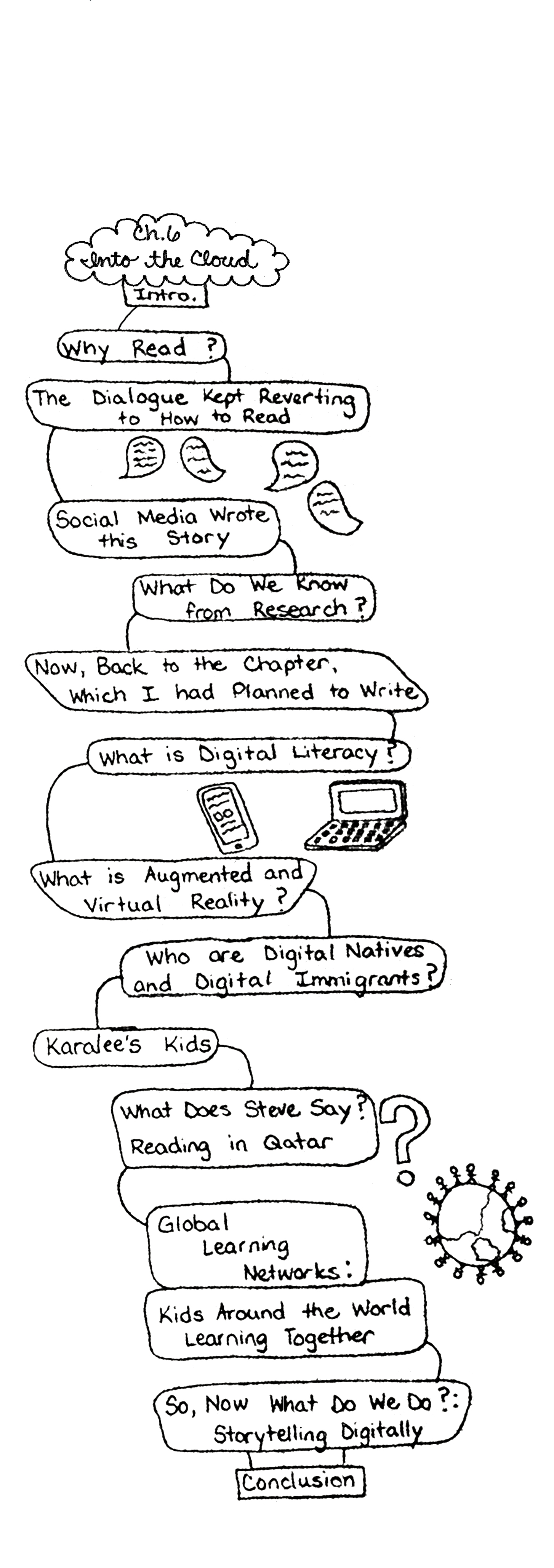
Here we go with a peak into chapter six, Into the Clouds.  This is the pixel or paper chapter. I have previously written about this on 9-12-16 ad 9-20-16, which you can find at WinkWorld News at joanwink.com.

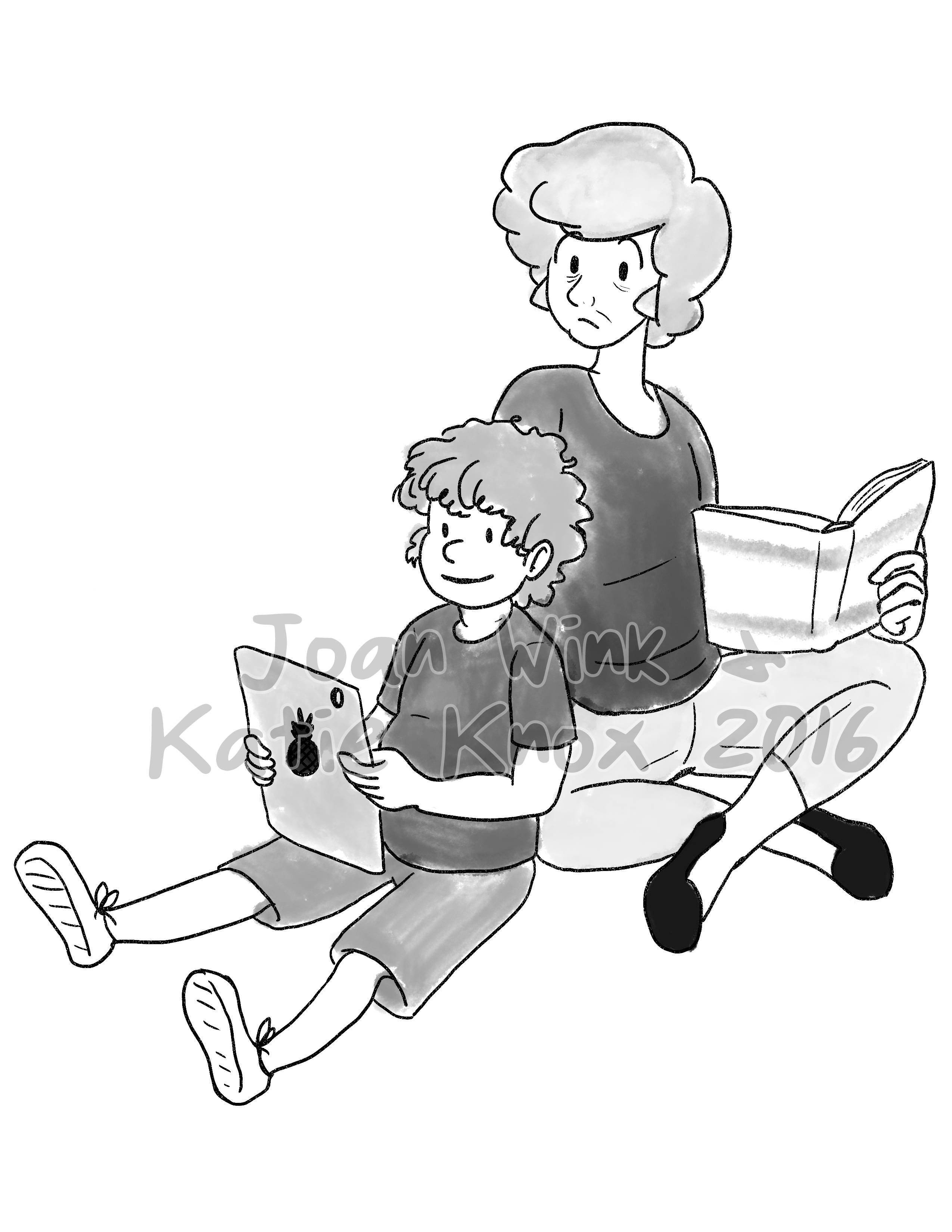
I love the look at this mom’s face, as she watches her son read on his device. Thanks, Katie Knox.

In the Visual posted below, you can see the table of contents (TOC) for this chapter.  Thanks, Missy Urbaniak.

The following is a short story of how I like to read.

Let me again remove all mystery, and let you know that I prefer to read hard copy books, but I spend most of each day reading digitally. I begin every day with lots of online reading, and I end every day with a book in my hands, except that sometimes, I awake and find that the book has fallen onto my face. I think I must be one who likes the tactile experience of a book, and I also love making notes in the book for the next reader. I have novels downloaded on my devices, but even when I get on a plane, I note that I still grab a light paperback. There you have my bias, or at least one of them.

The Power of Story Chapter Five

The Power of Story Chapter Five

Dear WinkWorld Readers, 

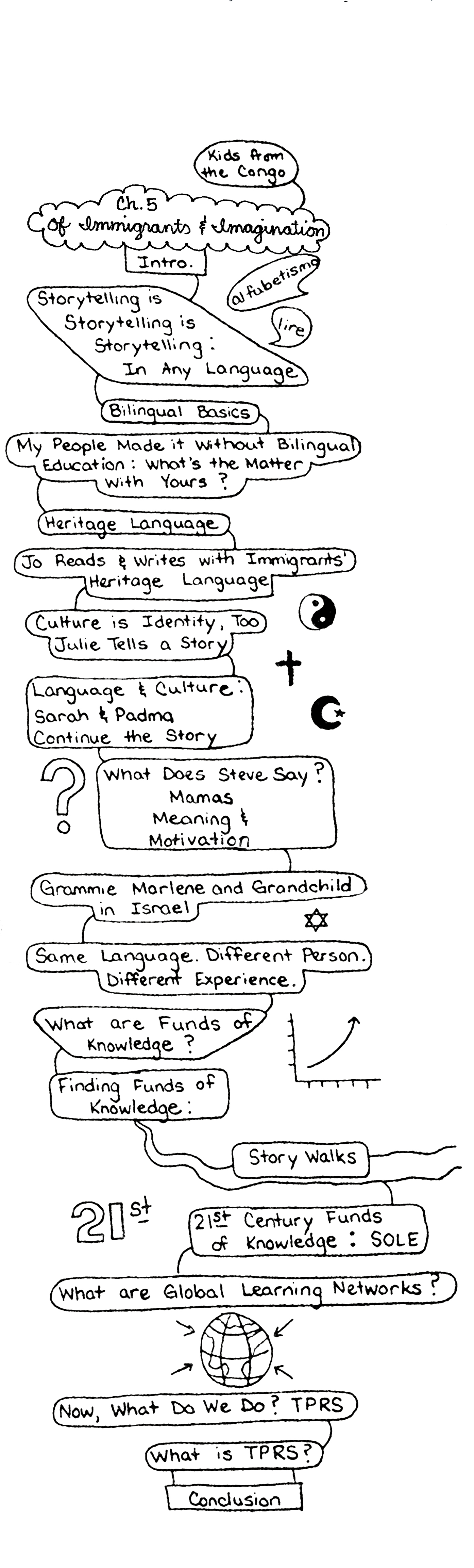
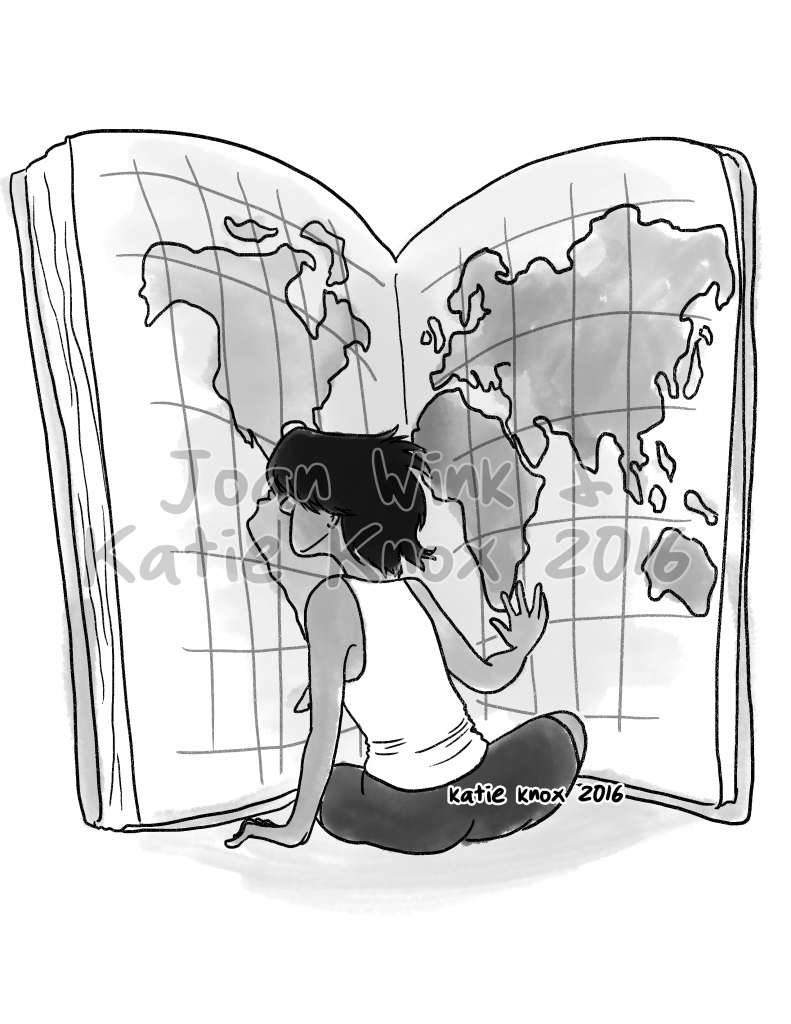
On we go to chapter five, Of Immigrants and Imagination.

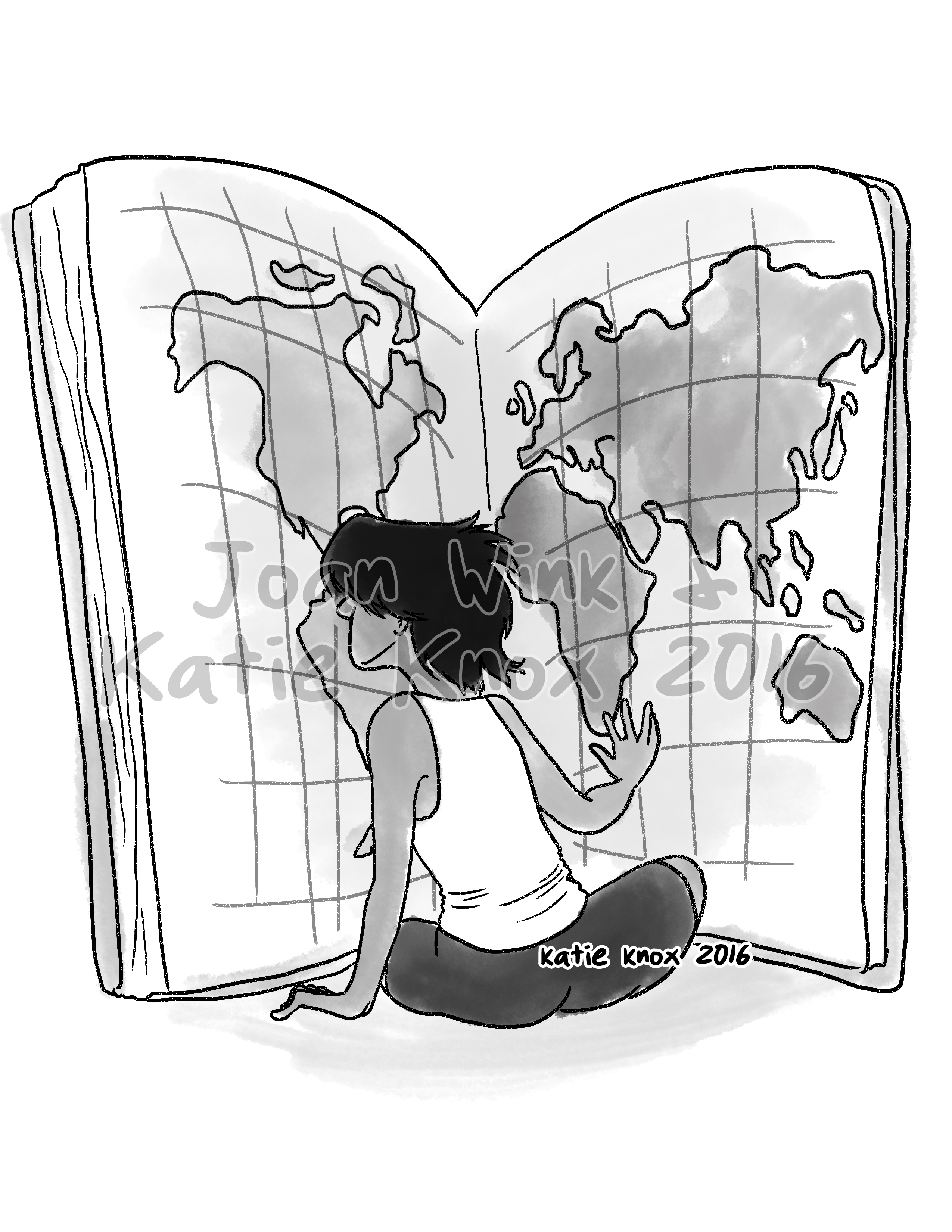
First, an mage that chapter, which Katie Knox created for me. Thanks, Katie. Enjoy Japan.
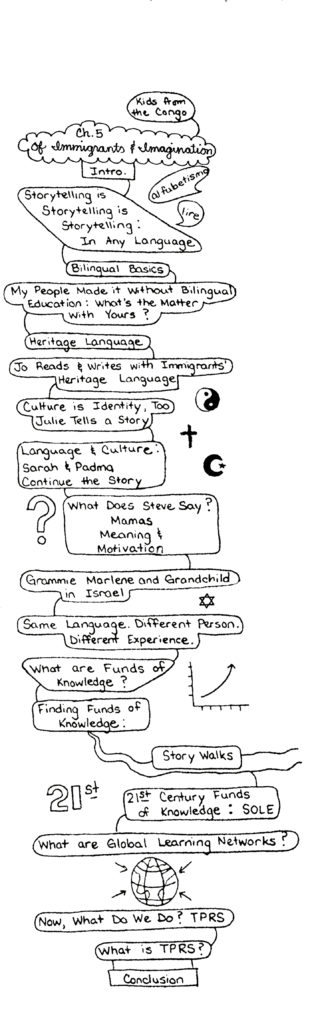
Next a story map (visual Table of Contents), which Missy Urbaniak created for me. Thanks, Missy.
And, finally a selected sample story from this chapter–yes, from the pre-copy edit version.  Just faster this way for me. In this section of the chapter, I have bee writing about identity texts and providing different examples.

What are identity texts?

    An identity text is any text (written, spoken, visual, musical, dramatic or any combination), which is laden with the identity or lived experiences of a student—specifically an immigrant student. In an identity text, a student situates his own life in the story. The life of the student is the story. The text itself functions as a mirror, reflecting the identity of that student’s life. We often think of identity texts with languages, which are not used by the school, nor the community. Often times, these languages are not valued, and this can also apply to the speakers of these other languages. Cummins has found that identity affirmation is the key to literacy engagement (Cummins, J., et al., 2005, 2006, 2009).  Much more about this can be found in my 4th edition of Critical Pedagogy: Notes from the Real World, which is available on the first page of joanwink.com

***

Yes, this following example is from a school in South Dakota.

            Jo, an instructor of young adult immigrants and refugees has collected identity texts for years. The young adult students in this program primarily come from Nepal, Burma, Eritrea, Somalia, Sudan (Darfur), Bhutan, Rwanda, Burundi, Central America, and Congo, although other countries are also represented—for example, I have met Philippine students, and also I met one Chinese student, who was left behind in China when his parents immigrated to the U.S. so they could have more children. He finally made it here alone. When I visit this classroom, I marvel at the strength, good humor, and resilience of people. In addition, I always need to run to a world map to visualize these countries.

This classroom is filled with identity texts: The students share, and they celebrate each other. Jo celebrates; Jo affirms each identity. I stand in awe. The students write or tell their story first, in either their mother tongue or their new language, English. The languages used might be Karen, Poe Karen, Sgaw Karen, Malay, Burmese, Cantonese, Tagalog, Arabic, French, Swahili, Arabic, or one of many tribal dialects. The first language scaffolds the meaning to the next language, English. The use of the first language in the story accelerates the acquisition of English. Eventually, each identity text is told and written in English, although I must admit an absolute fascination with the opportunity to see the identity texts written in the many other languages. At each step in the process, the classroom is filled with honor and celebration.

In what follows are several examples of short excerpts, which I have taken from their identity texts. Once again, I am not using their real names.

            Sammy entitles his, “I Fled from Burma,” and he adds the following:

Note to the reader: The Karen people of Burma are victims of an ethnic cleansing campaign by the military government of Myanmar. Therefore, they do not use the name Myanmar for their country, and continue to call that country Burma.

            In 2002 when I was 12 years old, I was helping my father at the farm, and my mother hurried to us. She said, “A group of armed military men is looking for the children; they want child soldiers, and they want every child they see. Take this money and go to Thailand.” I told her that I didn’t know where Thailand was, and she told me to follow the group of villagers.

            I looked at my mother, and she was crying. I walked away and found the villagers. I never saw my mom again. On the way to Bangkok, we walked day and night and slept a little in the forest. Once 28 of us found a ride in an enclosed truck; I thought I would suffocate. We finally made it, and I found a job in construction, and 8 months later I tried to flee to Malaysia, where I had a brother. I was caught at the border and put in prison. After 8 days, I was able to buy my way out of prison and made it to Malaysia. I could not get a job, until I learned Cantonese. In 2010, I came to America, and now I am learning English.

Kay writes,

            I was a street child in Nepal, and I slept on the streets, even though I did not have a shawl to be warm. I am writing this story because I feel sad. My mother left me alone when I was five years old and killed herself. My step-father sold me to a place to work. I ran away from there. My uncle finally found me and took me home. Now that I am in America, I have a heart for the street children and want to do what I can to help them.

Note to WinkWorld readers: I marvel at how well these young people write in English, and yes, they also write their identity texts in their home language.
July 20, 2017Read More
The Power of Story Chapter Four

The Power of Story Chapter Four

Dear WinkWorld Readers,

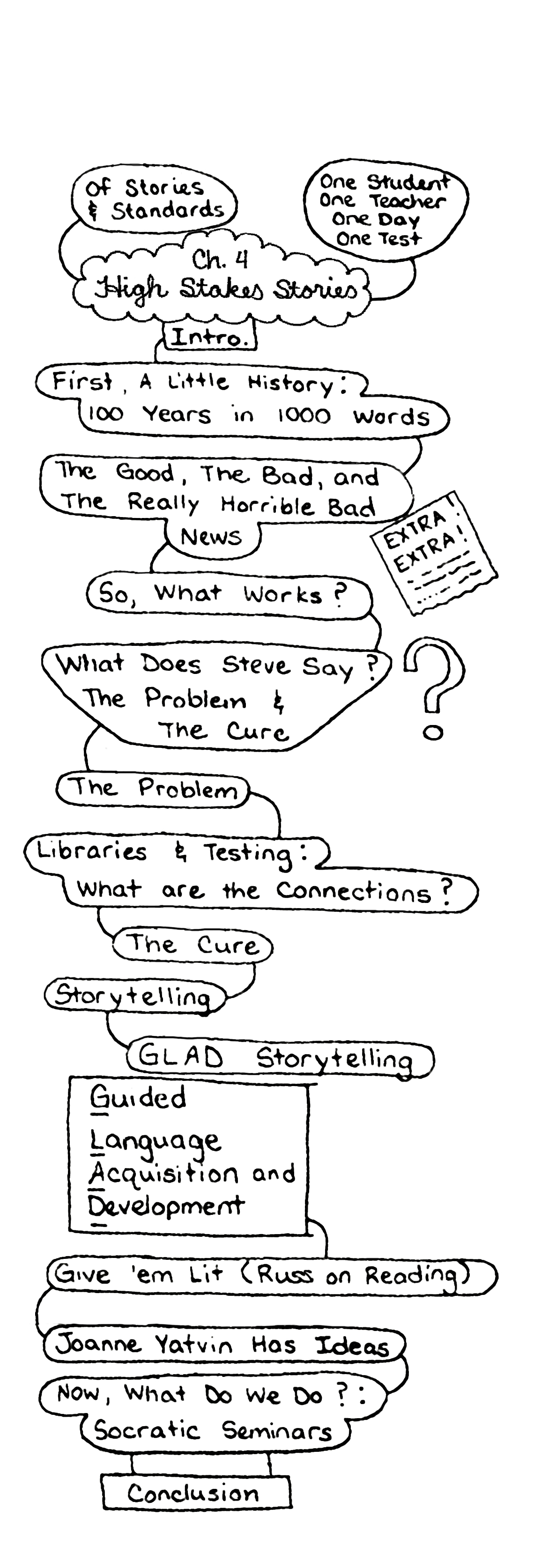
Here we go with a glimpse into chapter four, High-Stakes Stories.  Remember all of those feel-good stories of the first three chapters? In this chapter, I’m going to tell you what doesn’t feel good, a punishing approach to mandated testing.

In this image from Katie Knox, you can see how this student is feeling.

Here is the story mapping (thanks, Deb Schneider) which Missy Urbaniak created.

The most difficult part of sharing a story from each chapter is deciding which story to share.  Here goes, and this one is cut/paste from a pre-copy edit version.  Just faster for me to use this one.

            At the beginning of this section, I promised that I would share my thoughts about the testing that is driving education today. Borrowing from an old spaghetti western movie (The Good, The Bad, and The Ugly, 1966) and morphing it with a favorite children’s book, Alexander and the Terrible, Horrible, No Good, Very Bad Day, by Judith Viorst (1987), I will tell you a story, and soon you will know exactly how I feel.

The Good; The Bad; and The Terrible, Horrible, No-Good, Very Bad News

            I have good news; bad news; and terrible, horrible, no good, very bad news. My question: Why do “reformers” think that we need to “standardize” kids? The kids and grandkids in our family are not the least bit standardized; they are each very unique individuals. I’ll bet your family is the same.

            The good news is that most of the public now realizes that standardized tests might not be all that they were cracked up to be, as NCLB and RTTT (Race to the Top) tried to make us believe. In fact, those tests were really about one publisher making a lot of money off the backs of districts struggling with fewer dollars, not to mention off the backs of struggling students, who often begin to believe that they are stupid.

            Let’s be clear: The tests are stupid; the kids are smart.

            The bad/good news is that these tests are no longer going to be mandated by the feds, and the responsibility will shift to each state. One would think that I am a champion of this process, but the truth is that most state leaders have bought into the existing ideology that all kids need to be tested on all subjects, all of the time. So, the very same testing continues, even though it often now has unique state titles. Sadly, the assumption of the myth that standardized tests are good continues. So, in many places as the mandated tests continue, the dollars keep rolling in to the publisher.


What Is Personalized Learning?

            In addition, we have even bigger bad news: Even if standardized tests go away, they will be replaced by a new myth, “personalized learning.” Sounds good, doesn’t it? Do not be fooled, even if it comes cloaked in social–emotional learning. Hear me out. I am always for authentic personalized learning by kids who are emotionally healthy and are surrounded with a loving and supportive social network. However, this new approach to “personalized learning” is nothing more than a new superhighway to standardizing kids through mandated modules and daily testing; it will also be called competency-based education—just to keep us confused. Our new national education policy (ESSA) supports this approach to testing, as does the National Governors Association, even though there is no evidence supporting this major shift. I have even heard teachers refer to the new personalized learning as the “no-teacher” approach.

            Computer companies and publishers win again; kids, families, and districts lose again. Did I mention that, in this case, a synonym for “personalized” is competency-based education, with its own acronym, CBE? And after all of this money is spent on personalized learning/CBE, I guarantee that my kids and grandkids will still not be standardized. “Personalized” feels like something I would really like, right? As Picasso said, the meaning of life is to find your gift, and the purpose of life is to give it away, which feels right to me (Krashen 2016, April). However, it turns out that “personalized” now has two meanings. The first is the meaning you have always understood: Find your own path; discover your own gifts; share. However, the second meaning of “personalized” is to set kids in front of a monitor and make them complete modules of instruction; take a test; open the next model. This second meaning gives a whole new meaning to “semantically altered.” To the corporate reformers, business-centric computer software sellers, and computer companies, you can readily see that teachers will be further marginalized and deprofessionalized, as anyone could run the software for the programs of “personalized” learning.

And, now for the really terrible, horrible, no-good, very bad news: The corporate take-over of public education is not only in the U.S. but is really a world-wide plan to take over education (https://dianeravitch.net/2016/04/20/anya-kamenetz-pearson-is-creating-a-worldwide-for-profit-educational-empire/).

            As an anecdote to what can feel like overwhelmingly discouraging information, remember the 100 Years in a 100 Words? Remember that we are not the first group of people to struggle to save public education. Our work is not finished. One suggestion right now is to find your local school and run, don’t walk, to the front office and ask to read stories to and with children. Perhaps, you can begin with, Alexander, and the Terrible, Horrible, No-Good, Very Bad Day by Judith Viorst. This is how you make a difference in the life of another. True personalized learning.


The Power of Story Chapter Three

The Power of Story Chapter Three

Dear WinkWorld Readers,

I’m back with a glimpse into chapter three, Animals and the Alphabet.

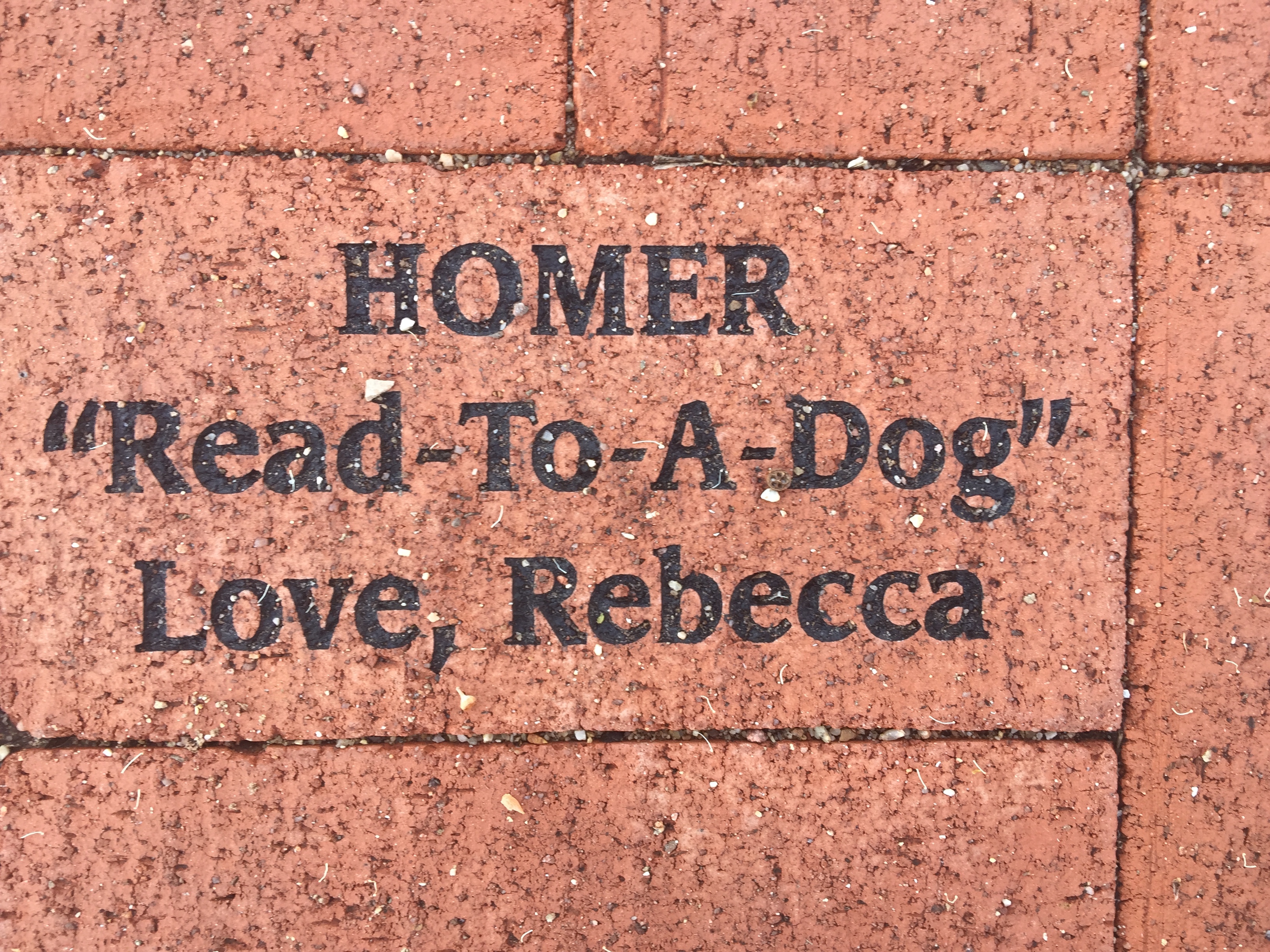
 Yesterday on a early morning walk to one of my fav libraries in Tucson, Himmel Park Library, I was enjoying all of the clever sayings on the sidewalk of bricks, which are given as donations to help support the library.  The picture of this brick is not in the book, but only because I just found it.

Here is an image from Katie Knox, which will be in chapter three.


Next, here is the visual of the contents of chapter three which Missy Urbaniak created for me.

And, finally, here is the opening story of chapter three.

Love and Literacy Last

Much of what I know about teaching and learning, I learned from The Benson Kids (Wink, 2011) in the 1970s and 1980s. One of the things I learned from those kids was that literacy mattered and that it was the gift of a lifetime, but I also learned that the love we had in that classroom would also last. Literacy and love would link us together for our lifetime. When I think of these junior high and high school students, I am always reminded of Paulo Freire’s words of wisdom.

Education is radically about love.

(Freire, as cited in Wink, 2011, p. 2)

Recently, I was sadden and thrilled when a precious little neighbor girl was sobbing because the puppy died in a story, which her mom was reading to her.

“Please read it again, Mommie,” she sobbed to her mom. I was saddened, as the little girl could not stop the tears from running down her face, and I was simultaneously thrilled, as she wanted to hear the story again and again. This reminded me so much of when I used to read Where The Red Fern Grows, by Wilson Rawls to The Benson Kids, when they were 8th graders. We lived on the desert, and the students, who always seemed to be hot, sweaty, and dirty, came running into the classroom after their lunch.

“Please read to us,” they begged. At that point in my career, I didn’t know if reading novels to 8th graders was good or bad, but I could see that the students would settle down and be ready to face the content of the afternoon if they were given the opportunity to decompress with a story.

I now know that reading stories to anyone of any age, hot or cool—dirty or clean—has untold cognitive, affective, and social benefits. Year after year, the students always wanted to hear Where The Red Fern Grows, and it always left us with a few tears and many poignant memories.

Old Dan and Lil Ann

“Lil Ann died peacefully yesterday,” Darcie said to me when I arrived to visit her after an absence of decades. When she greeted me with those words, we both immediately knew the literary reference, although years had passed since I read Where the Red Fern Grows to Darcie and her fellow 8th grade classmates.

 Simultaneously and instantaneously, Darcie and I were carried back to the final scene in the book, when “Old Dan,” the trusted hunting dog, died after saving Billy from a mountain lion attack. In the story, “Lil Ann,” the female hunting dog, died within a few days of a broken heart. Darcie reminded me that this fictional scene was so sad for me, that I was not able to continue reading aloud to the class. Fortunately, another 8th grade student jumped up from his desk to read the final pages of the novel to his classmates, Darcie, and me. Tears and silence prevailed, as none of us wanted to re-enter reality.

And, now here I was reconnecting with this former student, the day after her own beloved “Lil Ann” had died.

***

To my copy-editor friends, who are reading this, yes, this example is taken from my pre-copy-edit-version, as the post-copy-edit-version just had too many mark ups on it.


July 19, 2017Read More
The Power of Story: Chapter Two

The Power of Story: Chapter Two

Hi WinkWorld Readers, 

I am still sitting here working on copy edits and sharing a bit as I go.

Here is a glimpse of Chapter Two, Loving Those Stories, from forthcoming The Power of Story from Libraries Unlimited ABC-CLIO.

a)First, I want to share an image from Katie Knox.

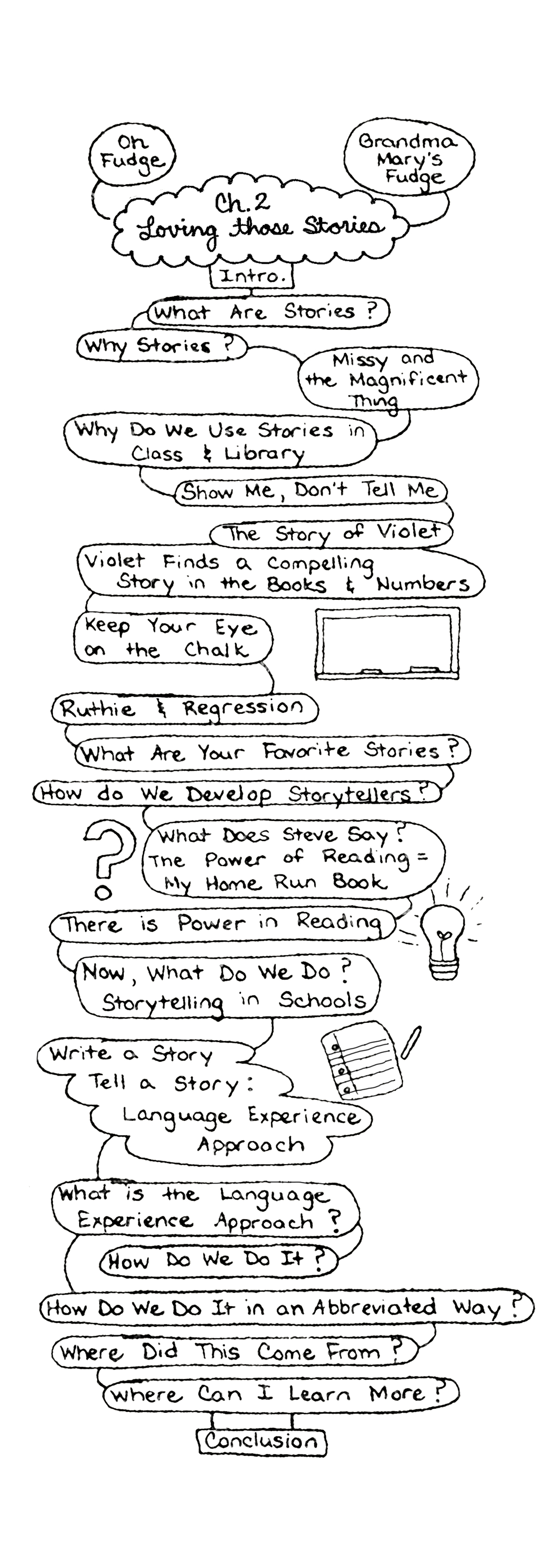
b)Next I want to share the visual Table of Contents from Missy Urbaniak for chapter two.  Thanks, Missy.

c)An example of a story from chapter two.

Linda Huff, a teacher librarian in TX, shared this story with me. I hope you enjoy.  I particularly like the very last part, where Linda is speaking of how her grandfather learned English.  Happy Reading.

            If you are here, with this paper now, with your coffee, at your breakfast table, in your armchair, or on your coffee break, taking time out to read, you already value one of the fundamental pillars of culture—reading.

            As our days are getting shorter and the weather is pushing us indoors, we look for ways to occupy and entertain ourselves. It is true, that most often, we are at the Red Box looking for the next blockbuster movie, or browsing Netflix or Amazon for a title that matches our mood, but allow me to defend reading for a moment.

            There is power in reading! As an elementary school teacher, I am fortunate to be part of the bustling library at the center of our school. Two years ago, I was able to attend a seminar on English Language Learners. The keynote speaker, Stephen Krashen, a guru on language acquisition, summed up a very inspiring conversation by saying, “If you want language success in all areas of academic learning, foster a love a reading in your students.”

            So, with the support of an administration that is willing to explore all avenues of learning, our English as a Second Language (ESL) classes are now centered in the library. Just being among books and reading for the fun of it has helped transform our ELL students. Our students are becoming more verbal, confident, and their reading levels are burgeoning, as their language development is steadily progressing. Mostly though, they enjoy reading.

            At the end of October, our school invited parents to come in to visit with their students’ teachers during Parent-Teacher Conference Day. I sat in on several of these conferences and discovered a recurring issue. Students who struggled in reading comprehension also struggled with math word problems. They were able to calculate math problems, but had difficulty in setting up the calculations found in word form.

            I hypothesized that this is a comprehension problem, an issue with reading. As with math, science and social studies texts require higher levels of reading comprehension. These core subjects require a higher level of reading abilities.

            Teachers do a great job with reinforcing conceptual learning and exposing students to a variety of strategies for learning across the curriculum. The student who is reading on grade level is always more able to grasp these concepts because they are not hindered by reading comprehension.

            At the conclusion of parent conferences, we encouraged parents to have their children spend more time reading, with the reminder that reading well has the power to transform.

            My own parents are first-generation Italians, and were educated in New York at a time when English as a Second Language did not exist. In New York in the 1930s, practically everyone was a second language learner. My mother reminisces about seeing my grandfather return from work every night with a newspaper, which he used as his ESL instruction. Reading with frequency worked. It still does!

One to chapter three for me. I’ll be back when finished.

July 18, 2017Read More
The Power of Story: Chapter One

The Power of Story: Chapter One

OK, WinkWorld Readers, here is a little overview of chapter one, as I finish the copy edit for this section. Remember, first an image, next a visual Table of Contents, and finally one story from chapter one.

An image from Katie Knox in Chapter One, Loving that Literacy


Visual TOC from Missy Urbaniak


And, one story from this first chapter.

Road Warrior Literacy

            Once upon a time, long, long ago, I used to commute between two worlds–1534 miles door-to-door. Ginny, my beloved black Labrador and I had many grand adventures while driving through California, Nevada, Utah, Wyoming, and South Dakota during those 25 years. In addition, we witnessed many changes on our Western commute.

            In the early days, we seemed to be driving though safe little dusty, rural communities. We stopped in state rest areas for Ginny to run and play. We drove without cell phones or computer connectivity and didn’t worry. The truth is that there were often long, endless stretches without AM or FM radio stations. In the early days, I used to mutter that I couldn’t get a good cup of coffee from Turlock to Rapid City.

            Eventually, I began to notice changes. The mining money transformed little dusty ranch towns into bustling clean communities with better roads, more lights, clean parks, and swimming pools. Ginny and I experienced the explosion of technology, and I found that if I parked near any casino in Nevada, I could jump on their internet service provider—free. This was long before I knew anything about cyberspace security. Eventually, I began to notice a greater variety of radio programs to help pass the long hours. I could find more music and news. I remember when I started to find better coffee, more often, and finally even a latte.

            Many of these social and technical changes were very positive. However, simultaneously I began to feel my sense of security change to a sense of vulnerability. I started looking for safer paces for Ginny to run and play and for me to rest a bit.

Ah-ha: The library

            We could go into any town during that long commute and find a local library. I felt totally safe in the parking lots, and Ginny could run and play. When I entered the buildings, I found air conditioning and clean rest rooms. You guessed it–they even had books. Lots of books—just for my pleasure. Reflecting on those days of travel, I can now see that this is when I developed my Road Warrior Literacy and fell madly in love with public libraries. No more rest areas in isolated areas for Ginny and me.

The Power of Story: Preface

The Power of Story: Preface

Dear WinkWorld Readers,

As I mentioned in an earlier blog posting this a.m., I am in the midst of a copy edit blitz, and as I finish the copy edit for each section, I will share briefly. My plan is to share (a) an image from Katie Knox from each chapter; (b) a treasured visual Table of Contents (TOC), which Missy Urbaniak created as a gift for me; and (c) a story from each chapter.  

I hope you enjoy.

First, an image from Katie, which will be in the Preface.

Second, a visual presentation of the contents of the Preface from Missy. 

And, finally, a little story from the Preface.

My Perspective

            Let me remove all mystery and share my perspectives, which will flow throughout the chapters. First, librarians are teachers, too—the entire school or the public library is their classroom. Therefore, throughout much of this book, I will use these three words interchangeably: teacher, school librarian, and librarian. I will try very hard not to use words like, libreachers or teabraians, but that is exactly what I mean. I find that I am in very good company in this new and emerging understanding that librarians are teachers, too. The American Association of School Librarians (AASL) has a new position statement (http://essa.aasl.org/aasl-position-statements/), which supports my understandings. In addition, as you read the following chapters, you will find that libreachers or teabrarians are some of my favorite people in the whole world.