Dear WinkWorld Readers,
So, what should we do in K-12 schools today? Here are great ideas for your consideration. Thank you, Valerie Strauss for this terrific interview of Diane Ravitch.
Dear WinkWorld Readers,
So, what should we do in K-12 schools today? Here are great ideas for your consideration. Thank you, Valerie Strauss for this terrific interview of Diane Ravitch.
Dear WinkWorld Readers,
Here are some resources from my website. Help yourself.
Can you tell that I am getting ready to teach in Palma, Mallorca?
Joan
www.JoanWink.com
Free To A Good Home
http://www.joanwink.com/charts.php
Joan’s Schedule
http://www.joanwink.com/scheditems/4150-bib-F08_S09.pdf
WinkWorld News
(my previous blogs since January 2014)
WinkWorld Archive (my previous newsletters since 2002)
http://www.joanwink.com/newsletter/archive.php
Prairie Pedagogy, 2002 to 2014
Free to a Good Home
One-page-grab-n-go for classroom use. Previously know as black/line masters.
Joan Wink Channel on YouTube
https://www.youtube.com/channel/UCws1UeejkgxdJ_YFUHtK-Pg
Pedagogy Timeline, 15 minutes,
Three Perspectives on Teaching/Learning, 7 minutes, https://www.youtube.com/watch?v=MWH0VLPYeAc
Skinner v. Vygotsky by Christopher Redd & Jeremiah Scalla (students in Mallorca)
Spiral of Literacy, 10 minutes,
Krashen’s 5 Hypotheses, 11 minutes
https://www.youtube.com/results?search_query=Joan+Wink
Principles of Bilingual Education, 11 minutes
Bilingual Basics Part One, 50 seconds
Bilingual Basics, Part Two, 1 minute, 10 seconds
Language Assessment: Syllabus At-a-Glance
https://www.youtube.com/watch?v=nasjOyuXw0A
The Link to Wink TCNJ Mallorca
Emily Tells the Story of Our Class with Index Cards (2014)
https://www.youtube.com/watch?v=mFJ_mrUKB2k
Eduardo Bruno Rodriguez and Colleagues: Our Class 2010
https://www.youtube.com/watch?v=f3qzR8gUmWQ
Using Music for ESL Summer 2011
Skinner V Vygosky by Chris Redd and Jeremy Scalla
Dear WinkWorld Readers,
Deb Harrison is a teacher in WY, and while she was in my classes at BHSU, she put together a great collection of Stephen Krashen’s contributions. In my on-going attempt to organize and share treasures, which I have received while teaching graduate students, I want to share some very handy websites with you. I admit that making neat little categories of magic can be a real challenge. Sharing is caring.
The Power of Reading by Deb Harrison
First, you might want to read her book review.
Book Review of The Power Of Reading
Here is her PowToons of The Power of Reading.
Annotated Overview of Recent Steve Krashen Videos by Deb Harrison
Krashen Videos Update by Deb Harrison
Krashen, Harrison, Wink Videos
Poe and Powtoons by Deb Harrison. No, this one is not about Krashen, but it is about Edgar Allen Poe.
The Power of Reading is My Home Run Reading Book by Deb Harrison
(The following paper is presently being updated for a publication submission, June 2016.)
Krashen Pulls It All Together in Fifteen Minutes
Krashen Pulls It All Together in 25 Minutes
Karly on Krashen: A follow-up to the 2 videos listed above. Karly is another teacher in WY.
Dear WinkWorld Readers,
We decided that the best 50th anniversary (June 4, 1966 to 2016) for us would be to have time together. Here are a few of our happy memories during these past few days.
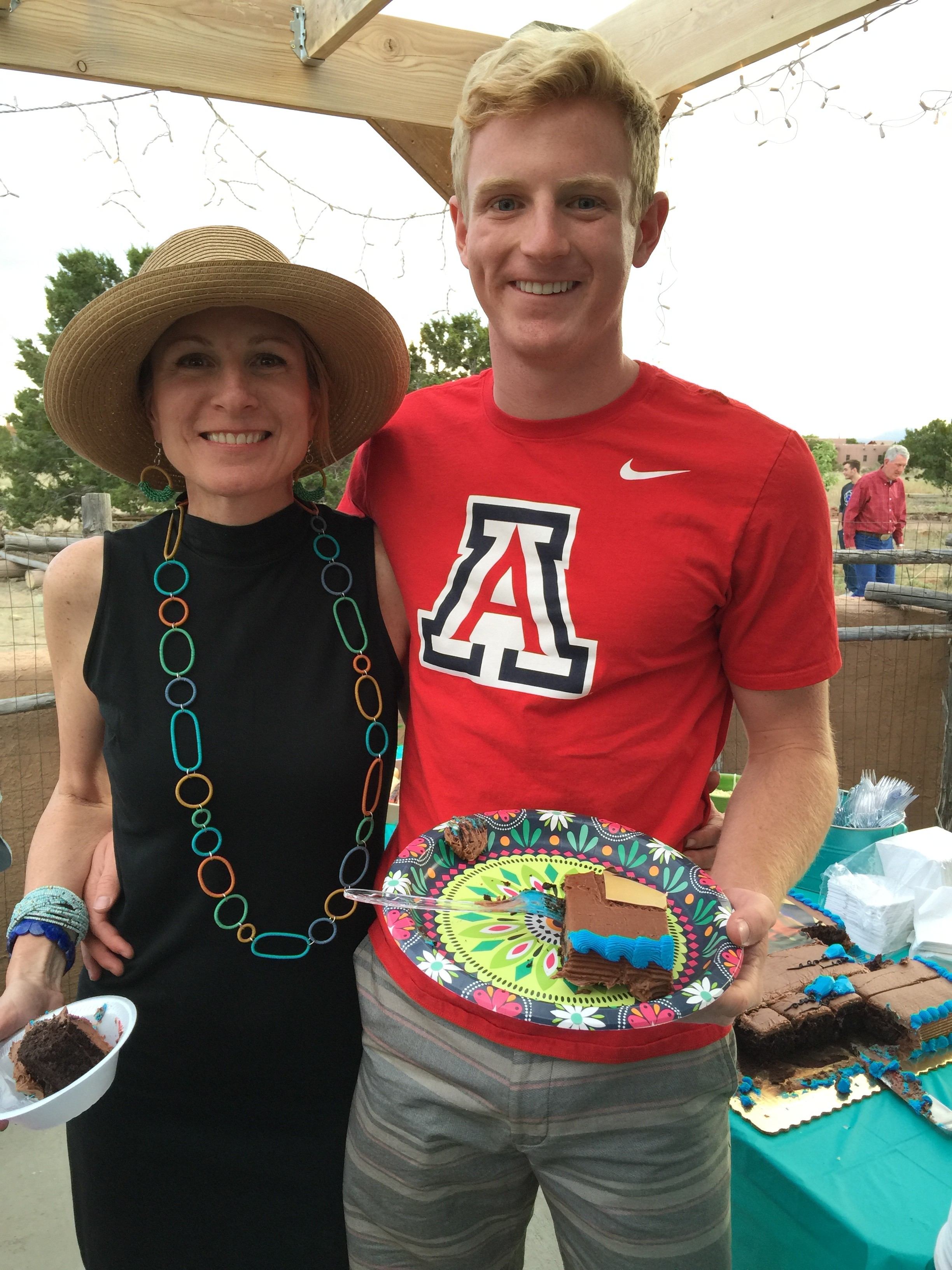
Thursday, May 26 – 16 hour drive home from Santa Fé after Lukie’s fabulous high school graduation. And, now he is off to one of my favorite places, University of Arizona. Here he is with his proud Mama.
We arrived home from Santa Fé to find Bo, Austin (13) and Garrett (10) fishing in the N. dam, just as the sun was setting.
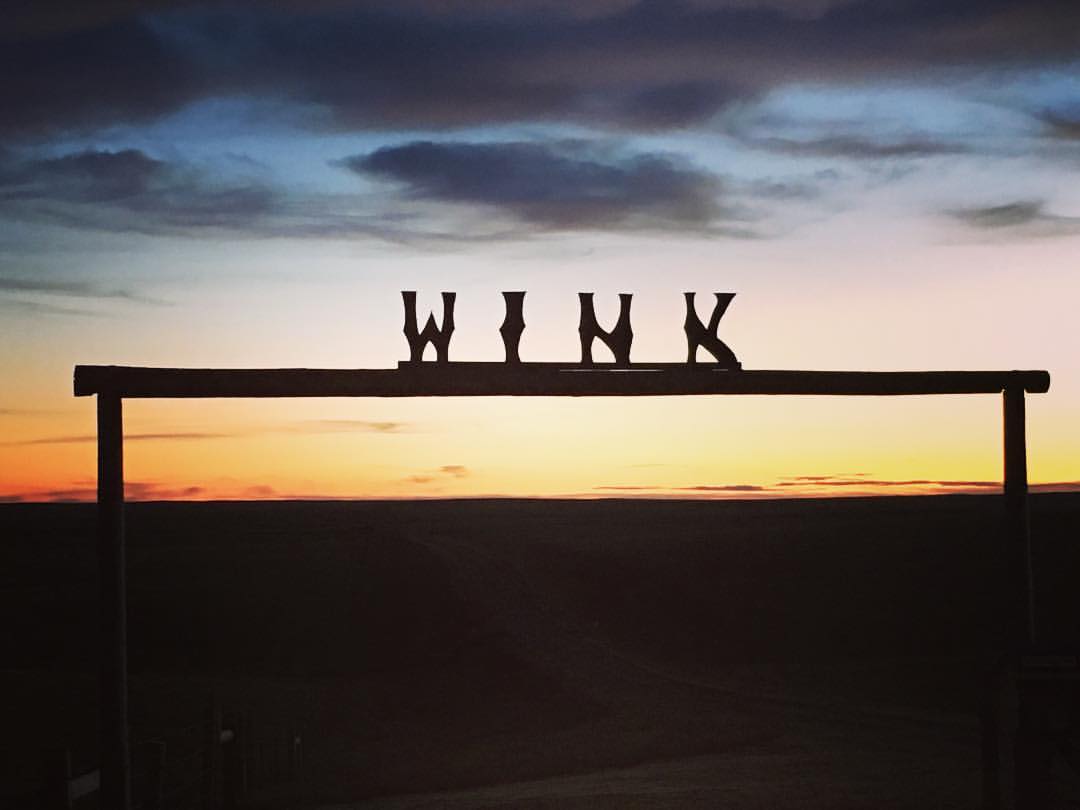
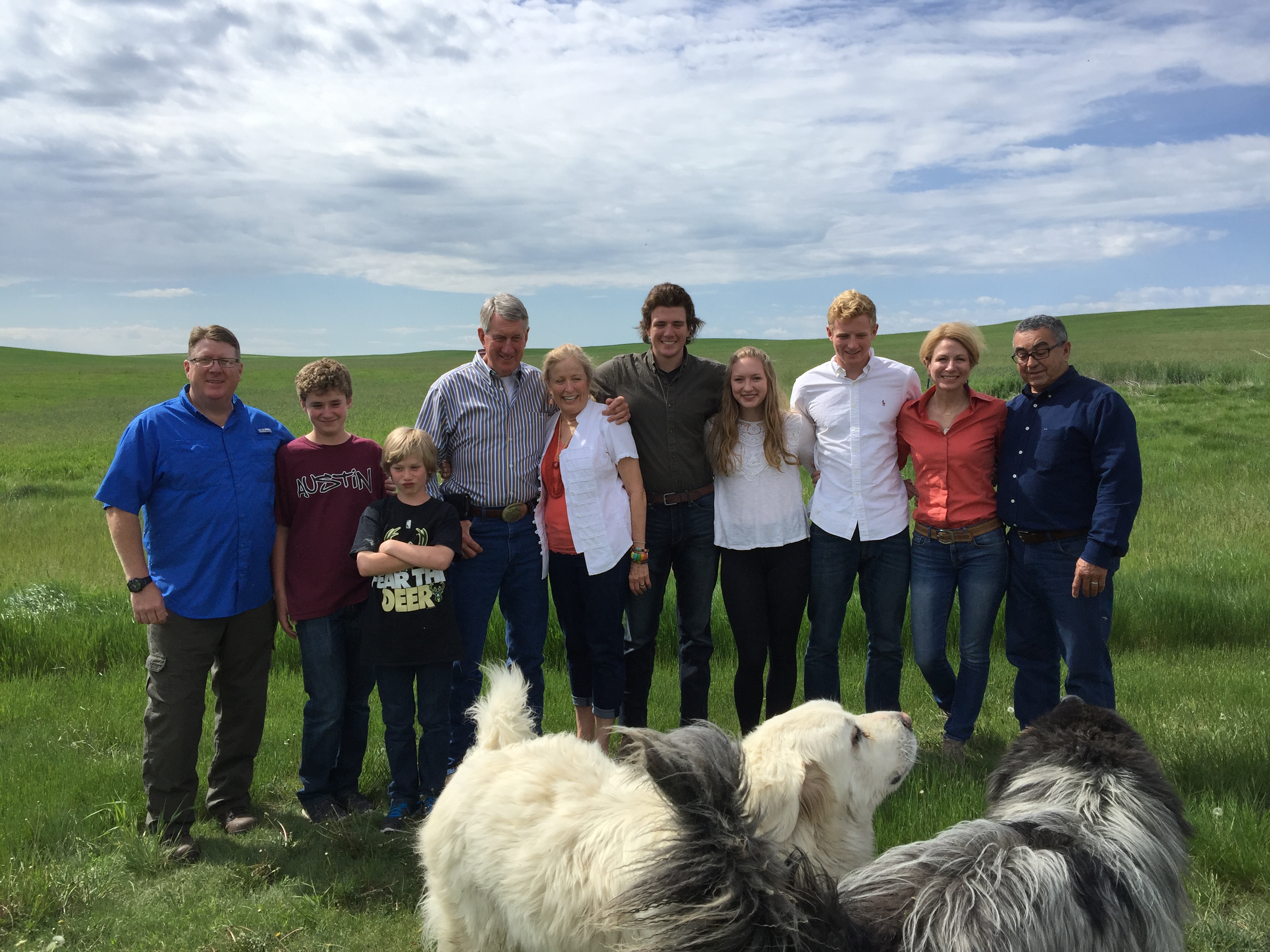
Friday, May 27 – Wyatt (20) and Lukie (18) drove through the night to surprise us, and we found them in the Prairie Parlour this morning. Dawn and family arrived just as it was getting dark, and Dawn grabbed this great photo.
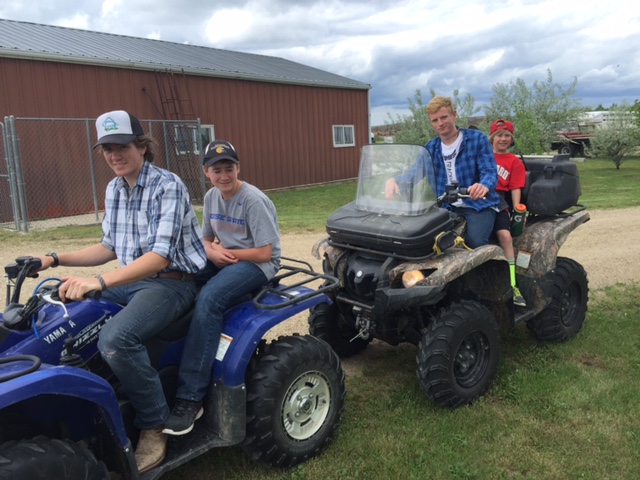
We rode 4-wheelers.
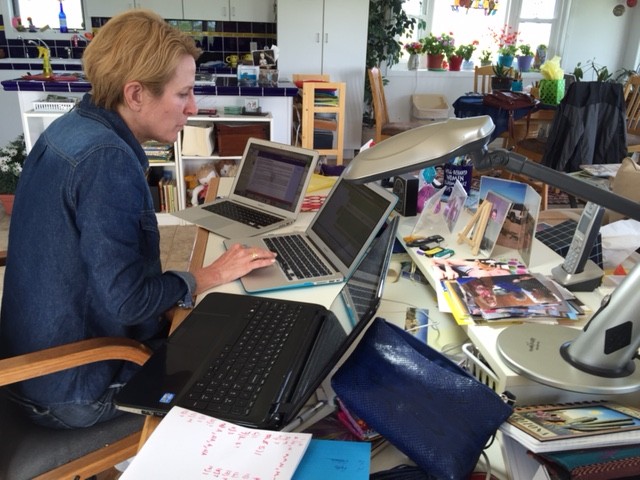
Dawn worked.
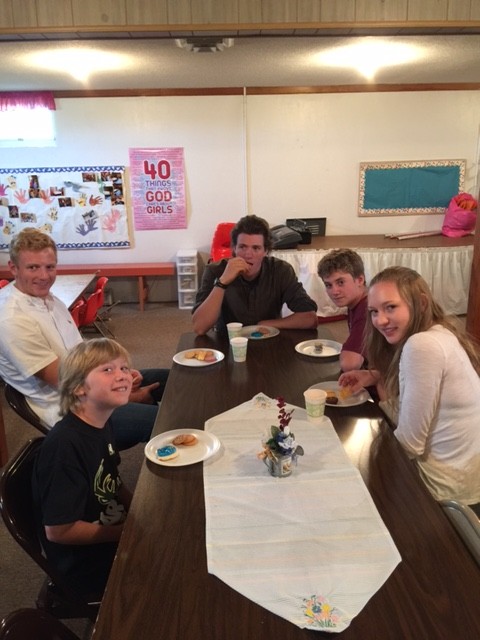
5 grands had good cousin time.
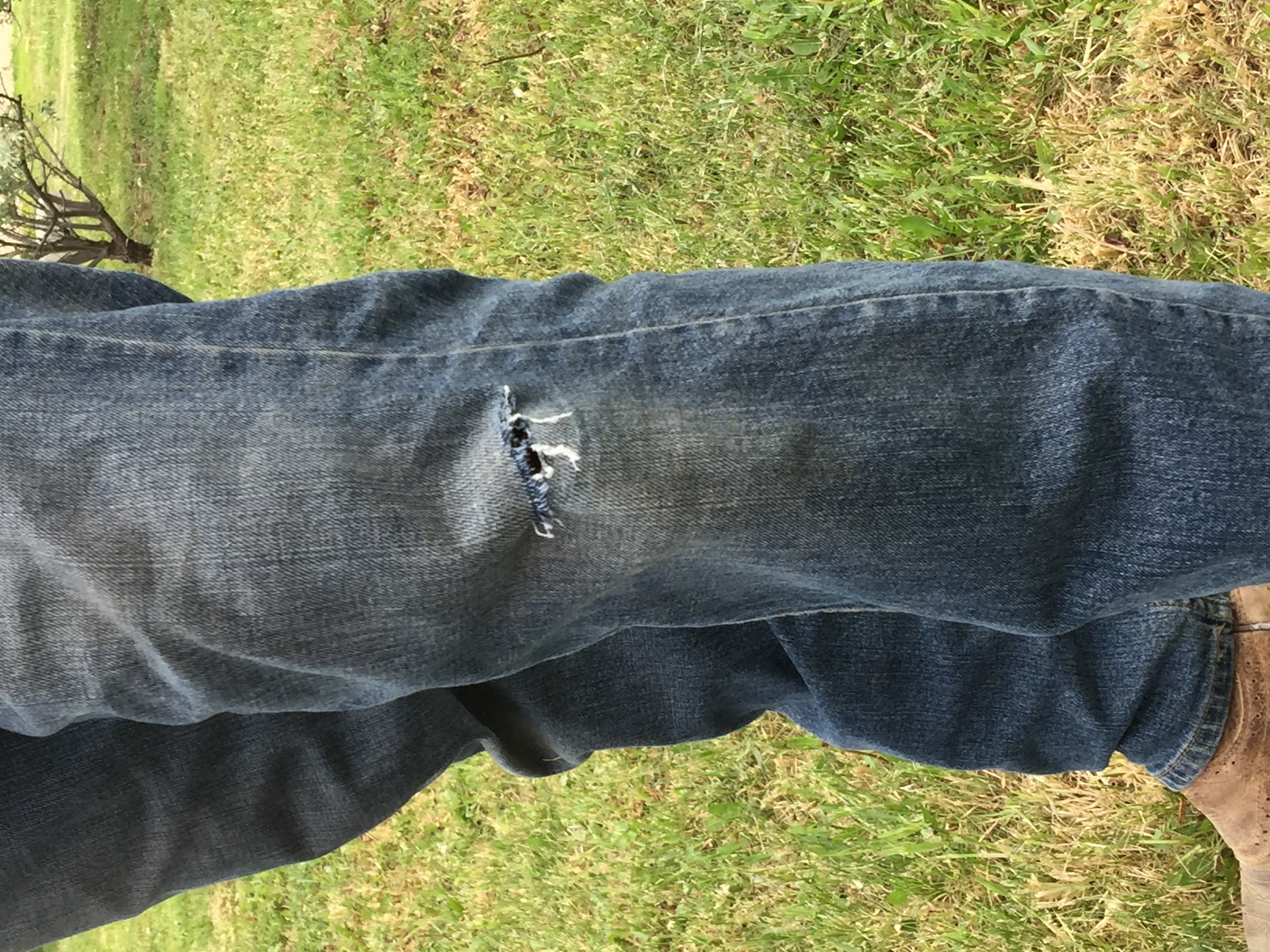
First rip in new jeans.
Saturday, May 28
Dawn and Bo and kids gave us treasured gifts. Dawn and family made a beautiful book with cards/letters/photos from family and friends. Bo and family gave us of those digital frames–all loaded with rotating family/friends photos.
Sunday, May 29
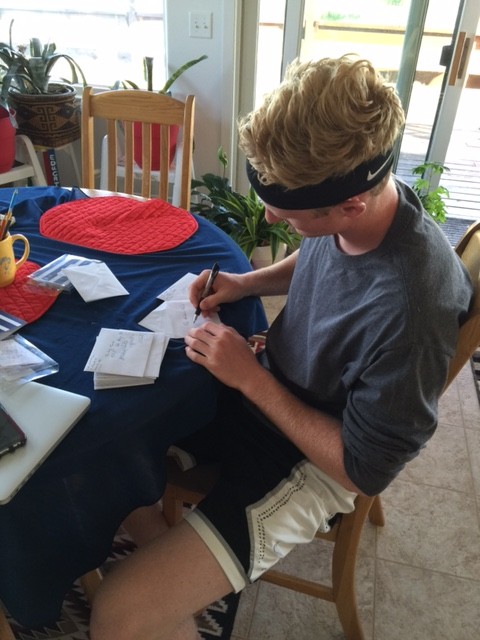
Lukie wrote thank you notes for all of his many wonderful graduation gifts.
And, Wyatt read.
We ate and told stories.
The guys stared at the dam.
And, the church dogs tried to get into our photos with us.
Monday, Memorial Day, May 30
The ranch is quiet; all are on their way home except for Wyatt and Luke, who will be helping BopBop prepare for branding. I am taking off to the Hills to visit graves: my mom’s, my dad’s, Grandma Grace’s, Grandpa Dick’s (Tom in Meadowlark), Grandma Mary’s, Uncle Bob/Aunt Eva’s, Uncle Irwin/Aunt Inga, Cousin Lola, and Grammy/Grampy’s.
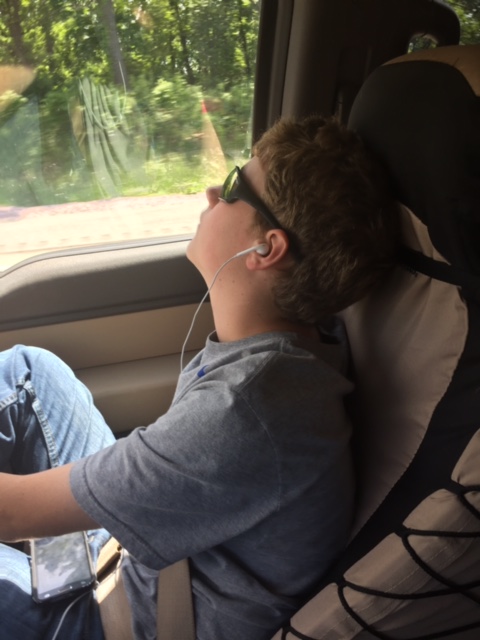
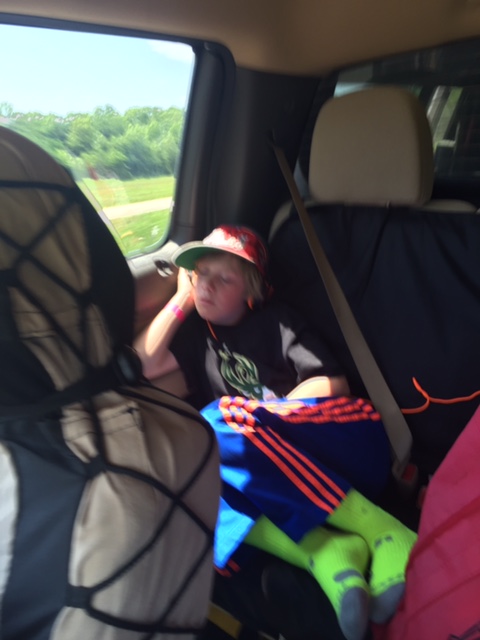
Garrett and Austin slept on their way back to WI.
#gratefulfor50andfamilyandfriends.
Dear WinkWorld Readers,
Normally, in this blog, I try to share some little tidbit, often related to kids and cows, or pedagogy and prairies. However, in this issue, I am not sharing; rather, I am asking you to share. In spite of the fact that I have devoted my career to languages and literacies, I do not think that I have ever had a truly dyslexic student in one of my classes. However, I have recently met several students (middle grades), who seem to have, what I perceive to be, symptoms of dyslexia: b/d reversals; lack of double consonants in writing; making meaning of only the first syllable or two of longer words when reading, etc. Interestingly, the students I have met love to read and to write, in spite of their unique challenges.
MY QUESTION: What can mainstream classroom teachers do with reading/writing activities, which will benefit these students? Yes, I have checked around the internet, but I am looking for good suggestions from people who have real experiences with dyslexia.
Thanks.
Dear WinkWorld Readers,
Some of you know that I am busy working on the next book, which will focus on literacy stories. Here is a peak at the organization of the chapters.
Chapter 1
Loving That Literacy
Chapter 2
Loving Those Stories
Chapter 3
Animals and the Alphabet
Chapter 4
Of Stories and Standards
Chapter 5
Of Immigrants and Imagination
Chapter 6
Into the Cloud
Chapter 7
Patience and Fortitude: The Future
So what does this have to do with The Wizard of Oz and a cowboy? At one point in the book, I am sharing the idea that we all come to literacy with unique and various paths. There is no one way. Rather, there are multiple paths to literacy. In what follows, I tell the story of how I learned to read, and Dawn shares how she learned to read.
http://www.joanwink.com/store/teaching-passionately/teaching-passionately-the-spiral-of-literacy/
Dawn’s and my literacy stories will be followed by a totally different story from a tall cowboy–no, not the one I live with here on the ranch. I heard Gary Robson spontaneously tell this story at a literacy conference in Montana.
It started slowly, gained momentum, and then consumed the room. The panel of children’s authors had finished sharing their new books, and the assembled listeners were preparing to leave the room, when a final question from one of the panelists asked a great question.
“What are your personal memories of books from your childhood?” The atmosphere in the room changed perceptively. A peaceful reflective mood took over the room.
“Narnia.” We all sighed and envisioned the book icon and the stories.
“I think I can. I think I can. I think I can.” The little train engine popped into our minds.
“Secret Garden.” We saw the vine covered secret entry.
As each favorite memory was shared, emotions of childhood literacy experiences started creeping out of long-term storage for each of us.
Suddenly, one of the authors on the panel stood tall to speak as Gary was, indeed, a tall man with an even larger personality. He reflected his native rural Montana roots. He wore jeans, cowboy boots, a western belt with buckle, and a big cowboy hat with whiffs of long gray hair sticking out on the sides and back.
“When I was a child,” he began, “my parents used to take me with them when they went to the home of some friends, whose own children had already grown and left home. It was always the 4 adults at the table and me. When dinner was over, the adults went to the living room, and I would immediately steal away to the basement, which had only one room. One huge room. Each of the 4 walls, floor to ceiling was lined with books. In the middle of this large room, there was one light and one chair. I would happily read the night away. The Wizard of Oz by L. Frank Baum, my favorite series, would be piled around me in the chair, when my parents came down to get me.”
“Years later when I was an adult and off on my own, the man who owned the house died, and I received a phone call from his lawyer. I was invited to go to the reading of the will and pick up something the family friend had left for me.”
“I remember thinking, why me? He had his own children, but when I went to the lawyer’s office and saw The Wizard of Oz series piled on the conference table, the stories came flooding back to me.”
When Gary finished his story, there was not a dry eye in the room. Not even on the face of that big cowboy.
Dear WinkWorld Readers,
In this issue, I will share a product from my class at Black Hills State University (BHSU) this spring. A teacher, Karly Cheney-Werner of Wyoming compiled this information based on a new Krashen video, the collective summaries of that video by her colleagues, and her own synthesis.
First, we watched Steve Krashen’s video,
The class focused specifically on his explanations of “communication,” and each teacher synthesized their own understandings.
Next, Karly synthesized the learning of her colleagues. Enjoy.
After Karly turned in her final project, she had a healthy baby girl, and then shared a video clip, which shows her son reading to his new little sister. Thank you, Karly for sharing.
Dear WinkWorld Readers,
In this issue, you will find the archive of Sonia Nieto speaking on Language, Literacy, and Diversity for
Global Conversations in Literacy Research (GCLR), April 17, 2016.
Thank you to Peggy Albers of GCLR and to Sonia Nieto for permission to re-post here.
See also Global Issues: Education & Multilingualism.
GCLR Click here to see GCLR’s archive of 5 years of previous seminars.
Dear WinkWorld readers,
I’ve got good news, bad news, and terrible, horrible, no good, very bad news.
My question: Why do “reformers” think that we need to “standarize” kids? The kids and grandkids in our family are not the least bit standardized; they are each very unique individuals. I bet your family is the same.
The good news is that most of the public now realizes that standardized tests might not be all that they were cracked up to be, as NCLB and Rttt (Race To The Top) tried to make us believe. In fact, those tests were really about one publisher making a lot of money off the backs of districts struggling with fewer dollars…not to mention, off the backs of struggling students, who often begin to believe they are stupid.
Let’s be clear: The tests are stupid; the kids are smart.
The bad news is that these tests are no longer going to be mandated by the feds. Sadly, many states have bought into the existing myth that standardized tests are good. So, in many places the mandated tests continue. The dollars keep rolling into the publisher.
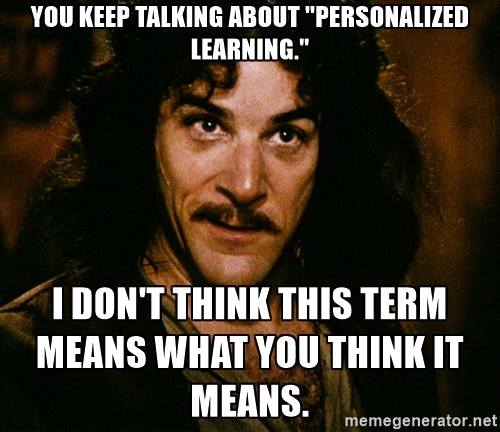
In addition, we have even bigger bad news: Even if standarized tests go away, they will be replaced by a new myth, ‘personalized learning.’ Sounds good, doesn’t it? Do not be fooled. Personalized learning is nothing more than a new superhighway to standardizing kids through mandated modules and daily testing; it will also be called competency-based education (CBE)…just to keep us confused. Our new national education policy (ESSA) supports this approach to testing, as does the National Governors Association, even though they have admitted that there is no evidence supporting this major shift.
Computer companies, publishers win again; kids, families, and districts lose again. And after all of this money is spent on personalized learning/CBE, I guarantee that my kids and grands will still not be standardized.
For more on this, read Personalized: What does it mean? by Steve Krashen. He also posted this information Facebook.
And, now for the really terrible, horrible, no good, very bad news: The corporate take-over of public education is not only in the U.S., but is really a world-wide plan to take over education. The following is one example.
Anya Kamenetz: Pearson Is Creating a Worldwide For-Profit Educational Empire
Thank you, Steve, Diane, and Anya: You are such handy research assistants.
Our work is not done.
Do you really want to support kids in your local schools? Please go sit with kids on a regular basis, listen to them, know them, and read to them. You could start with: Alexander and the Terrible, Horrible, No Good, Very Bad Day by Judith Viorst.
Dear WinkWorld Readers,
Today on the ranch.
I seem to remember reading some pesky memo, which said that I was to have my syllabus for my Mallorca class posted on Canvas by today. No problem–I was making great progress, when these two little guys popped into the kitchen to warm up from our cold spring snow and rain. There goes the syllabus…
They were shivering so badly, and we just kept rubbing and rubbing to try to warm them. After a couple of hours, we did get each of them to take some warm milk.
We have now moved both of them to a nice, warm pile of hay in the barn.
Let the clean up begin.
I am hoping that this will be the first and the last WinkWorld I write from the dirty, smelly kitchen floor. Back to the syllabus.