View Sidebar
Click on any book icon to see Table of Contents and/or to purchase a copy.

Archive for category: Latest

Week Three, 1.26.2016, The Big Ideas

Week Three, 1.26.2016, The Big Ideas

Dear WinkWorld Readers, remember this is for my class.  No required reading for you.  “Please, please, please do not throw me into ‘dat briar patch.'”

To the teachers in our class.

Many of you have been teaching for 1 to 10 years, and you sometimes have the idea that the past decade is all we know about teaching and learning.  Therefore, we are focusing on the BIG IDEAS of teaching and learning, and how do those ideas ebb and flow through the decades?  How do those ideas influence classrooms every single day? We have asked ourselves ‘Why do we do what we do?’  (Wink, J., & Putney, L., 2002, p. 1).

First, we looked at this image, as the ideas (unexamined long-held assumptions, in some cases) turn into reality. We talked about how our ideas can morph into a sort of philosophy or theory (even in DC) and how this can then morph into a policy (NCLB, RttT, or ESSA), which will then become programs requiring specific types of curricula and influence our practice (methods) in our own classroom.

Paulo Freire always reminded us to focus on our practice.

PHILOSOPHY > POLICY > PROGRAMS > PRACTICE

As Vygotsky (1986, p. 41) taught us: “Deliberate avoidance of philosophy is itself a philosophy.”

A Pedagogical Timeline

Here is a new image of a timeline (A Vision of Vygotsky, 2001, p. 5), which you might want to grab.

Vov_Timelines 2 pp. Jan. 2016

Here is a new image of telling the story from only 2 points of view, but it might help some of you understand the big ideas of teaching and learning

2 perspectives on schooling gestault an image

Here is the story from 3 points of view.

Three Perspectives

And, when you go on for more learning, you will soon discover that you can easily tell the story from 4 and 5 and many more points of view.

[H]e who considers facts, inevitably considers them in light of one theory or another (Vygotsky, 1987, p. 55).

An Open Letter

We read from multiple sources (hardcopy and digital), and we tried to understand teaching and learning from different perspectives (2 points of view; or 3 points of view).  We talked about how there are many, many different perspectives.

“The schools ain’t what they used to be and probably never were”. ~Will Rogers.

100 Years in A 1000 Words 2.2016

Teachers, you have read and watched many sources for the last couple of weeks.  Tonight in our Collaborate class, you will be asked to tell (articulate) the story of the big ideas of teaching and learning from different perspectives and different sources.  As you tell (articulate) the stories in class tonight, you will be negotiating your own understanding.  Talk is text…

“Conversion is the laboratory and workshop of the student”. ~Ralph Waldo Emerson

Thank you to Ruthie for leading class tonight, as I will be with friends from high school graduation (1962).  I am ready.

IMG_3796


January 26, 2016Read More
Why Stories? The Answer from Carmine Gallo

Why Stories? The Answer from Carmine Gallo

Dear WinkWorld Readers,

I know that many of you are aware of this, but I wanted to share, in case anyone had missed it.

I very much appreciate the permission from Carmine Gallo & his BrightSight Group to share with you.  I hope you enjoy as much as I did.

The question is: Why stories?

And, the answer is found in…

The Storyteller’s Secret, to be published Feb. 2016.


January 21, 2016Read More
Week Two, 1.19.2016

Week Two, 1.19.2016

Dear WinkWorld Readers, remember this is for my class, and you do not have to read it…

Class, in what follows is a summary of what we will focus on for the next week.  Actually, we will refer back to these ideas for the entire semester.

Happy Reading.

100 Years in A 1000 Words 1.2016


January 19, 2016Read More
Fun With Words, Collective Nouns

Fun With Words, Collective Nouns

Dear WinkWorld Readers,

This post is specifically for teachers, who just want to have a little fun with words today in class.

FUN WITH WORDS

A bunch of kids

A patch of menders

A herd of horses

A pack of dogs

A gaggle of geese

A clutch of chickens

A school of fish

A charm of goldfish

A covey of parrots

A stitch of quilter

A litter of cubs

A ruffle of lacemakers

A gang of elk

A colony of ants

A pod of butterflies

A swarm of eels

A knot of toads

A rhumba of rattlesnakes (However, we never say that when we see one.)

A worship of writers

An equivocation of politicians

A consort of corgis

A congress of baboons

A stitch of lace

A murder of crows

A rash of dermatologists

A multitude of mushrooms

A friendship of women (Ok, it’s true: I made up that one.)

A pile of cats.

.a pile of cats


(Can’t make up that one.)

Thank you, Rose from SD; Betty from AZ; and Dwight from NB for sharing a few of these with us. I know you can find these on the web, but it really is more fun to discover them in the context of reading or conversation with others.

Collective Nouns


January 15, 2016Read More
Remember Those 2 Young Boys from the Congo?

Remember Those 2 Young Boys from the Congo?

Remember the two young boys from the Democratic Republic of the Congo (DRC), who suddenly found themselves living with new families in a new country with a new language, new customs, new food…and, no friends?

2 New Students from the Congo

Whatever Happened with Those 2 Boys from the Congo?

3 Months Later The Teacher Wrote on Facebook.

In October I started one of the scariest challenges of my teaching career; I had two young boys from the Congo start with no English! Today, only 3 months later they each presented to their class a project we had been working on about their life before coming to America. Many nights I leave work tired, exhausted, and sometimes even frustrated; but then I have days like today that remind me how incredibly lucky I am to work with such amazing students. And it’s all worth it!!

WinkWorld Readers: Your Test Question.

Where in the world in the Congo?  Grab a piece of paper and draw Africa. Now, draw where the DRC is located.

THANK YOU to this teacher and this school community!

January 14, 2016Read More
Class: Week One, The Heart and Soul of our Foundations Class

Class: Week One, The Heart and Soul of our Foundations Class

Dear WinkWorld Readers, please remember that this post is specifically for the teachers in my class at Black Hills State University (BHSU).

Looking Backward 5 minutes

This video is specifically for those in the English as a New Language (ENL) endorsement program. If you watch this, it will help you hook your previous learning with the new learning coming in this class.

Why do we do what we do?

This semester, we will begin with a discussion of how our national philosophy determines policy in the states and districts; the policy determines programs, which determine practice.  We will use the following image to guide our discussion.

P >P >P >P

The following video clips are the heart and soul of our foundations course, Spring 2016. My thanks to technical support from California State University, Stanislaus and Black Hills State University.

Pedagogy Timeline, 15 minutes,

Three Perspectives on Teaching/Learning, 7 minutes, https://www.youtube.com/watch?v=MWH0VLPYeAc

Skinner V. Vygotsky by Christopher Redd & Jeremiah Scalla (students in Mallorca)

Spiral of Literacy, 10 minutes,

Krashen’s 5 Hypotheses, 11 minutes

https://www.youtube.com/results?search_query=Joan+Wink

Principles of Bilingual Education, 11 minutes

Bilingual Basics Part One, 50 seconds

Bilingual Basics Part Two,, 1 minute, 10 seconds


How WinkWorld Will Change

How WinkWorld Will Change

Dear WinkWorld Readership,

I have wanted to refer to my blog, as irreverent and irregular, but that is already taken: Alfie Kohn beat me to those two great descriptors. WinkWorld tends to be whatever is lying around my desktop or floating around in my head.

However, you will notice a change soon, in that I am also going to post information for my class. This is not required reading for you, WinkWorld Readers; it is simply meant to make information more accessible in multiple ways for the teachers in my class.

“Please, please, please don’t fall into the briar patch,” comes to mind. . .

I will also continue to post the normal WinkWorld, which I hope carries a bit of grit and grace.

January 11, 2016Read More
Power UP: Book-At-A-Glance

Power UP: Book-At-A-Glance

When I prepare to teach a class, I always like to create a document, which is labeled, Semester-At-A-Glance. Hopefully, this lets the students see where we are going and what we plan to do. As I am working on my next book, Power Up Literacy through Storytelling in Libraries, I decided to create something similar: Book-At-A-Glance. I have been told that I should be able to tell anyone about my next book in one sentence. Ok, the purpose of this book is to link libraries and literacies through the power of storytelling. This book is written for librarians, teachers, and families who love literacy.

However, I have been working on this book for about 8 months now, and I want to share more than just a sentence, or even a paragraph. I am writing this as I want my friends, family, and colleagues to know what I am working on, as if you are not in the house watching me every day, it might look like I’m not doing anything. Such is a life of a writer. It takes a long time to birth a book.

How Was This Book Birthed?

About a year ago, I unexpectedly received an email from a colleague, whom I had met several years ago; she is now an editor for a publishing house, Libraries Unlimited. She said:

“I was just reading your blog post, which reminded me so much of my first teaching experience in rural Kansas with the farm kids who were in the eighth grade and still couldn’t read and didn’t want to read the basal. Suddenly, the thought hit me that you might be interested in writing something about the power of reading and writing–both very important in school libraries.”

“Yes,” I responded, and thus the book was born. Much of what I know about teaching and learning, I learned from The Benson Kids in the late 1970s and early 1980s.  When I think of these students, I am reminded of Paulo Freire’s comment: “Education is radically about love” (Wink, 2011, p. 2). The blog post, which caught her eye can be seen at,

The Benson Kids

Now, I am at the point in the manuscript, where I can promise readers that this book is not filled with data in the form of pie-charts, graphs, nor vertical or horizontal line charts–and not a single scatter plot to be found anywhere. Rather the truth of the research will be grounded in authentic stories, which reflect, not only the interpretation of these data, but also the transformative nature of teachers, librarians, literacies, and libraries.

My career has been highly influenced by many, but no one more so that Steve Krashen. This text is not a re-telling of his The Power of Reading; however, it is Krashen’s research filtered through my eyes and re-told with stories. This text is not a re-telling of Kendall Haven’s Story Proof: The Science Behind the Startling Power of Story and Story Smart: Using the Science of Story to Persuade, Influence, Inspire, and Teach. Rather, I am a teacher, who values the use of storytelling to make abstract constructs accessible for all.

My Perspective

Let me remove all mystery and share my perspectives, which will flow throughout the chapters. First, librarians are teachers, too–the entire school or the public library is their classroom. Therefore, throughout much of this book, I will use these three words interchangeably: teacher, school librarian, and librarian.

A second perspective relates to languages, literacies, and language acquisition, which have been central in my career. I started as a terrified and overwhelmed Spanish teacher with five different preparations daily (1966), but somewhere along the road, I morphed (1970s) into a “nice Spanish teacher.” Eventually, I started to notice that it wasn’t just about some neutral use of words, which I was fascinated by, and I began to notice that language had power, and I found myself at home in the world of bilingual education, ESL, and dual language immersion programs (1980s). I came to recognize that language was not only culturally grounded, but it was also historically, socially, and politically grounded (1990s), and I began to thrive in critical pedagogy. It was about this time, that I noticed people no longer referred to me as a “nice Spanish teacher.”

Later in my career (2000s), a teacher stopped me in my tracks and said, “Joan, you know what you are? You are a storyteller.” I was shocked, but since that time I have focused on honing my skills with storytelling, and I consistently find that, not only do stories break down barriers among people, they also help people access meaning, which is reflected in stories. Literacy is all about making meaning.

All of these experiences have influenced by perspectives.

The-Book-At-A-Glance

Chapter One will focus on literacy, and readers will have the opportunity to create their own Spiral of Literacy at the end of the chapter.

Chapter Two will highlight storytelling in libraries, and the chapter concludes with activities using the Language Experience Approach and the Reflective Cycle.

Chapter Three will deviate a bit from the regular literacy path and brings to life the use of children’s storytelling with animals. The use of Writers’ Workshop concludes the chapter.

Chapter Four will use stories to rethink standards: Why on earth do we think we need to standardize kids? Pokémon, Captain Underpants, and Harry Potter will all make an appearance, and more Writers’ Workshop activities will close the chapter.

Chapter Five will use the stories of immigrants to bring their world into a clearer vision. Bring your imagination to this chapter. TPRS (Teaching Proficiency in Reading through Storytelling) is presented at the end of the chapter.

Chapter Six takes us into the cloud for digital literacy and ends with ZooBurst, storytelling digitally.

Chapter Seven takes on the future with Patience and Fortitude, the two concrete lions, which grace the entrance of the New York City library and tells a story about how money can be used to undermine the value of literacies and libraries.


Thanks for reading. Now, back to work.
January 8, 2016Read More
Baby Monet

Baby Monet

Dear WinkWorld Readers,

Sometimes a picture is worth a thousand words.

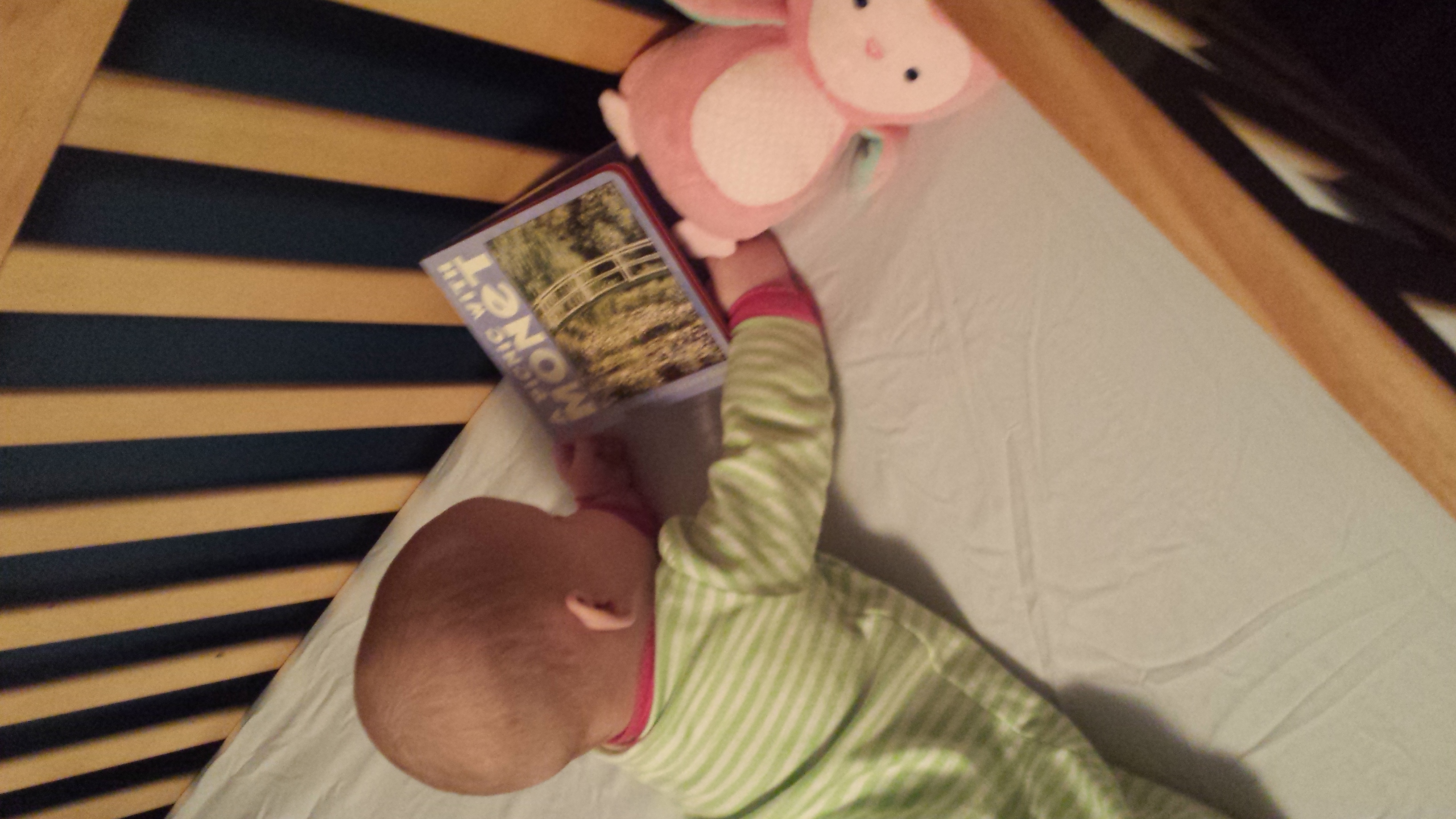
Let me introduce you to Baby Monet, 5 months old.

Baby Monet 1 (5 mos)Obviously, in the following photo, she is reading. Note her “pointing finger.”

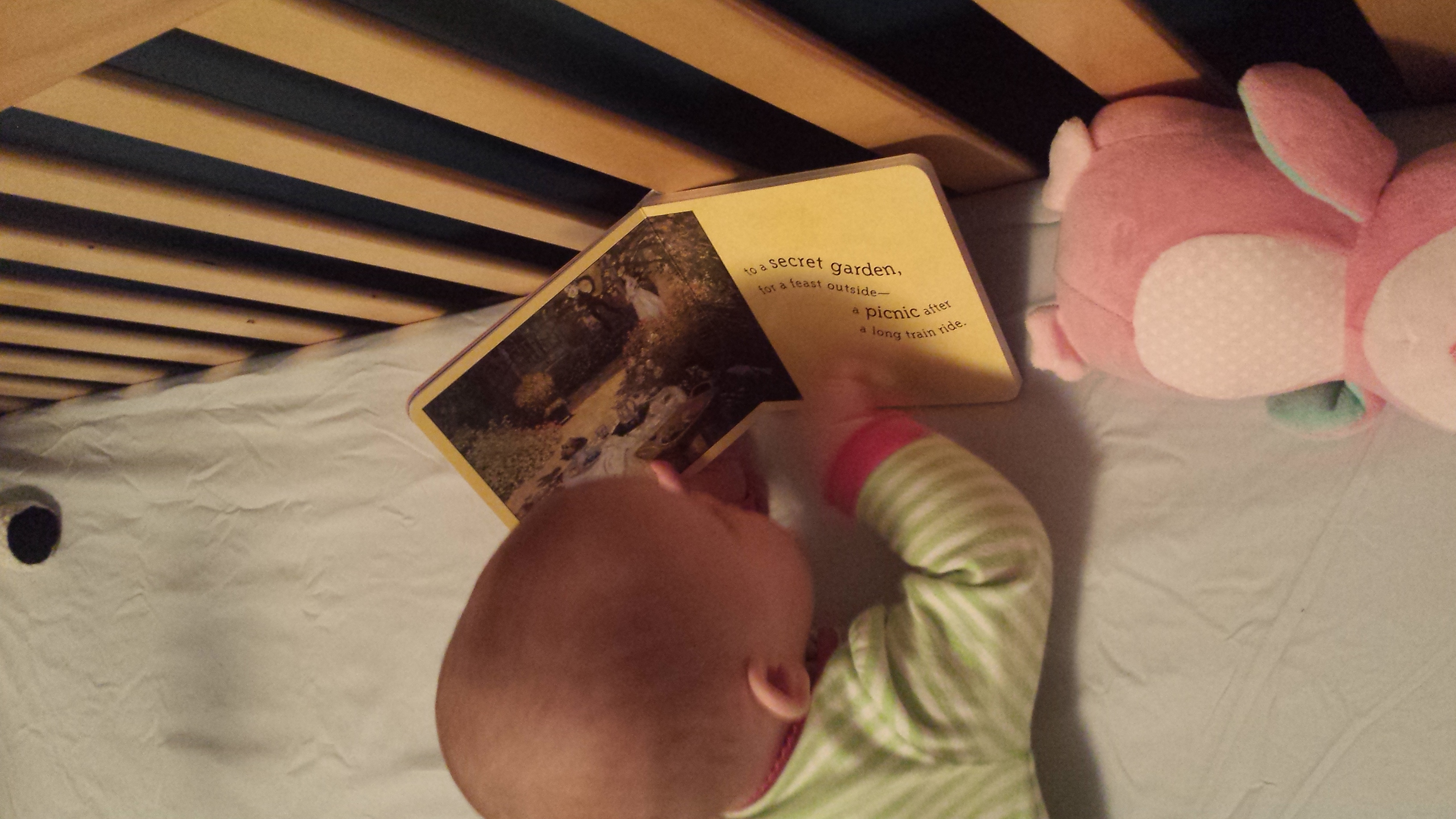
Baby Monet pointing 22In the following photo, you can see that Baby Monet really eats up her reading time.

Baby Monet eatingPlease note the words “secret garden” on this page.  Remember?

Books beget Books.

Thank you to Baby Monet’s mommie (a grad student in one of my classes) for spontaneously sharing with us.  She knew we would love these photos.


December 18, 2015Read More
Strega Nona, Atall School, & Country Kids

Strega Nona, Atall School, & Country Kids

December 16, 2015

Dear WinkWorld Readers,

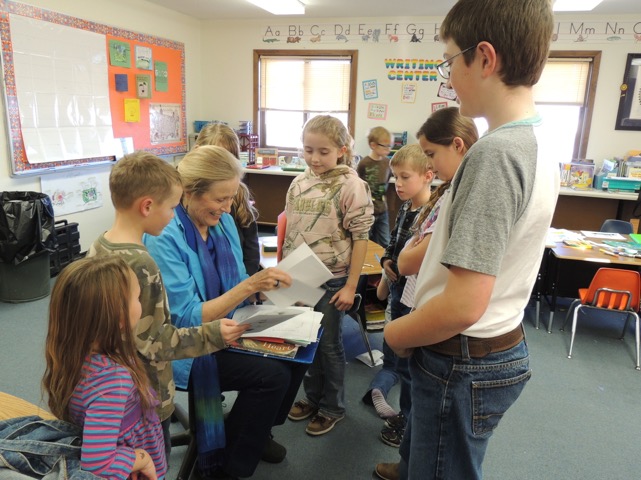
If you follow this blog, you are aware that I love going to Atall School (a one-room country school) to read to the 13 students.

Atall School #1

In WinkWorld News, you  will find a previous Atall School posts. Click here to read WW News.

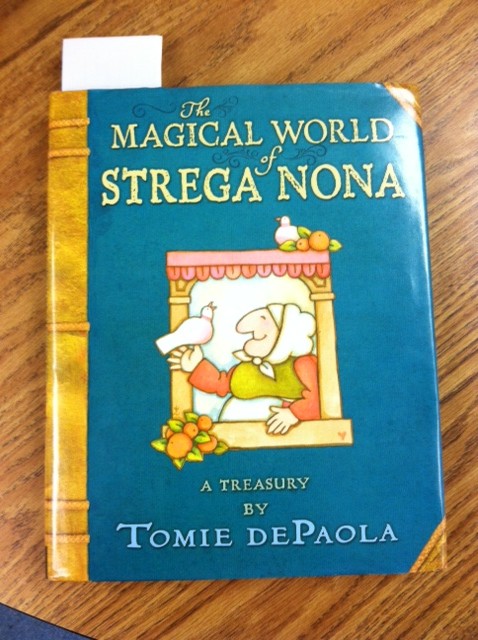
Recently, I’ve been excited about Tomie dePaola’s new edition of his classic, Strega Nona, and I learned that the Atall students did not know the stories. Here is his new book.

new strega nona

Of course, I immediately began to plot and plan to read all of the stories to them in the spring.  On the day I was to read the first story, I was not able to get to the school, which is about 50 miles from the ranch where I live.

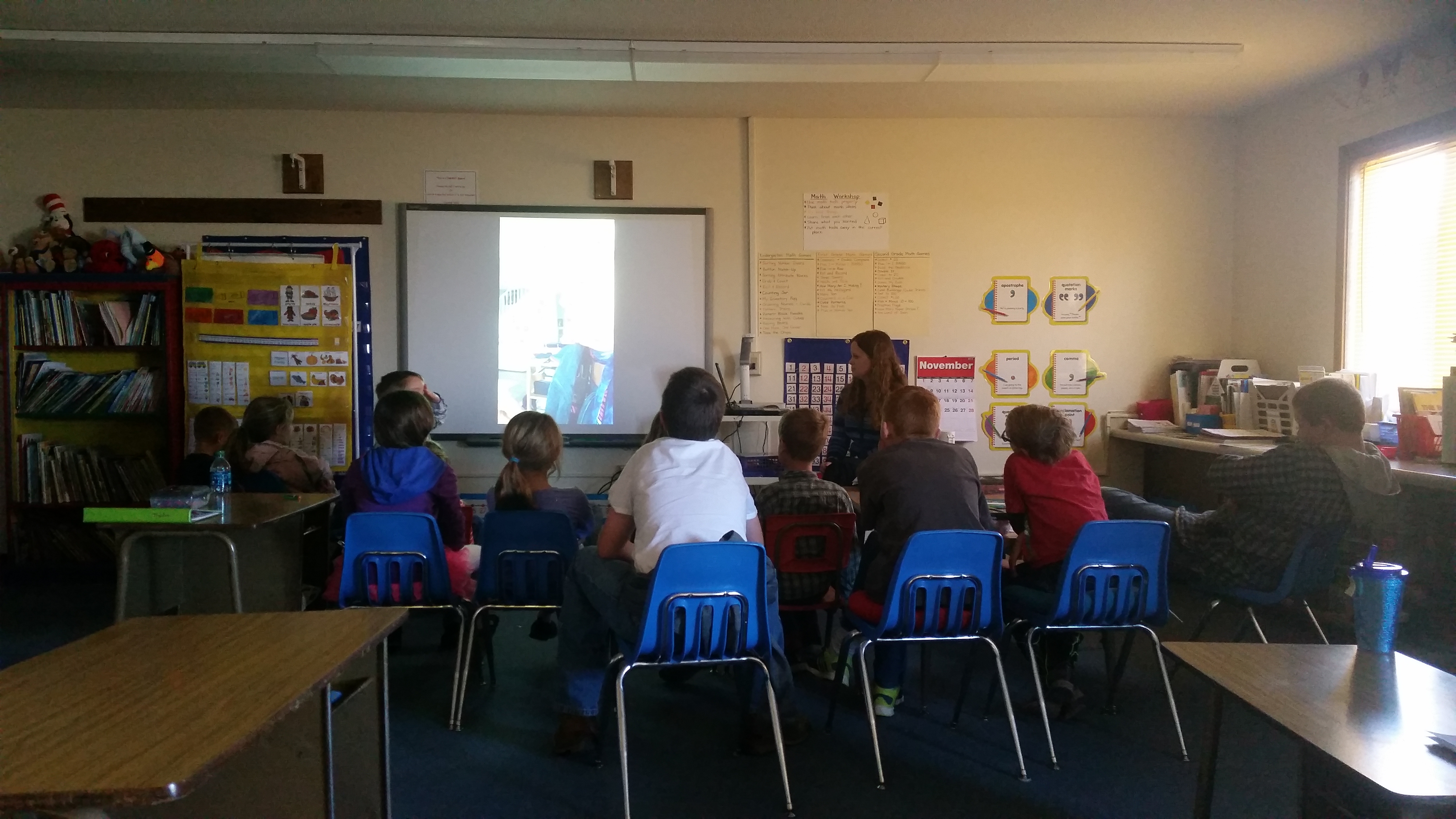
What to do?  Of course, videotape the story and send to the kids, which I did. Below here are the kids watching and listening to the first Strega Nona.  


Atall kids listening to Strega Nona

While it is clear to me that I have much to learn about video-taping a story for the kids, they were very forgiving of my lack of experience with this process.   They were simply captured by the magic of Strega Nona, as I am.

Incidentally, after the video-taping, I learned that I needed permission of the publisher to do that. Sorry, Scholastic and Tomie dePaola. It has been deleted.

Click right here to hear Tomie  DePaola read his story.

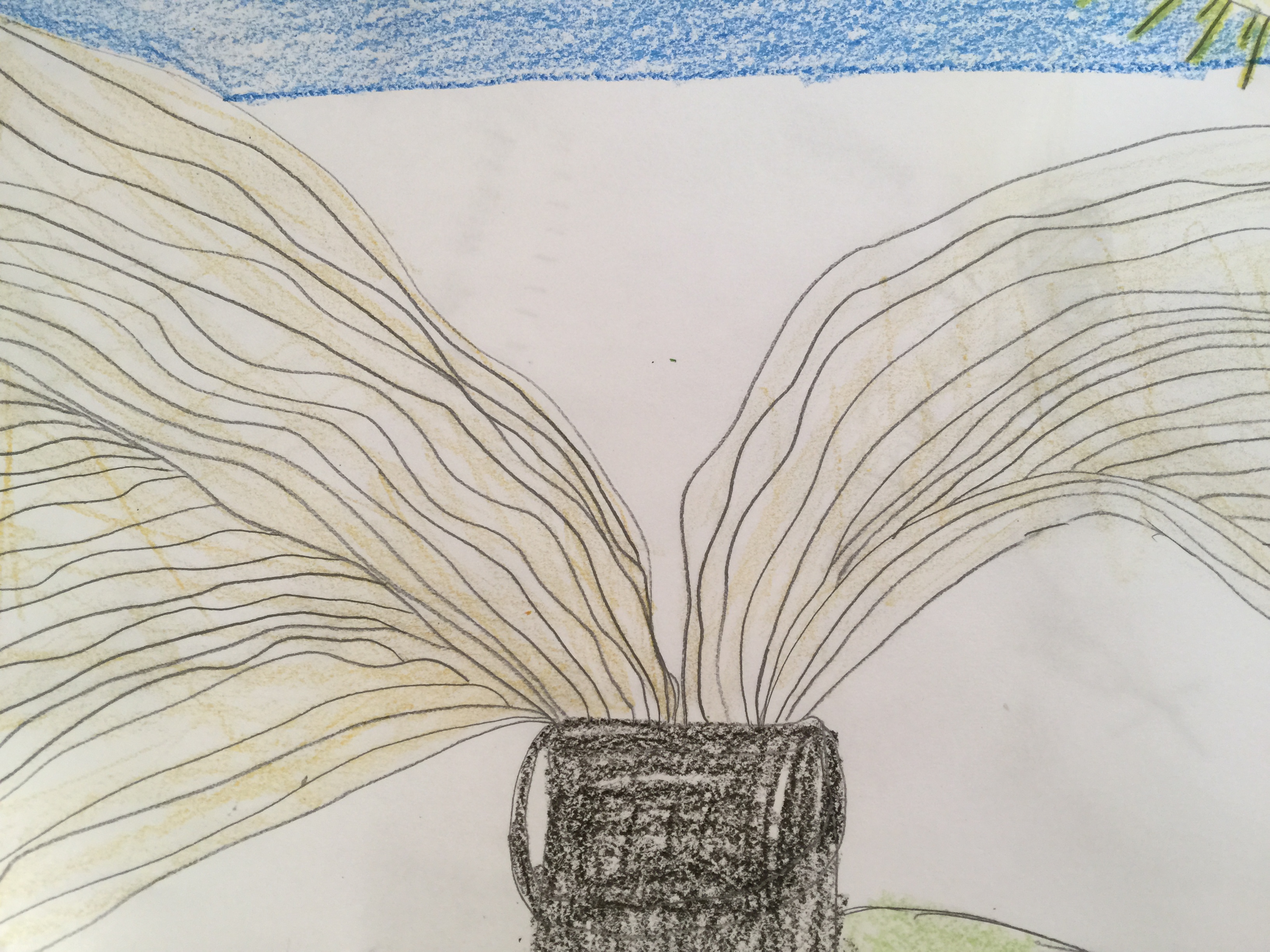
The students drew some pictures. Here is that famous pasta pot boiling the past everywhere.

pasta pot

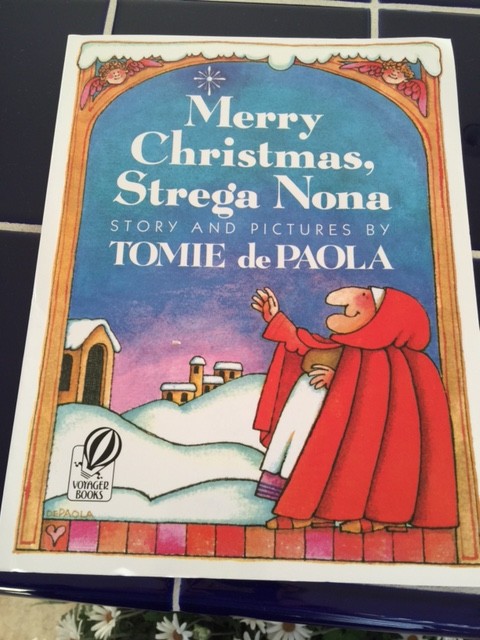
Here is a picture of his Christmas book, which I gave to the students.

Strega Nona Christmas

They surprised me with glorious homemade Christmas cards.

cards from kids

christmas cards joan

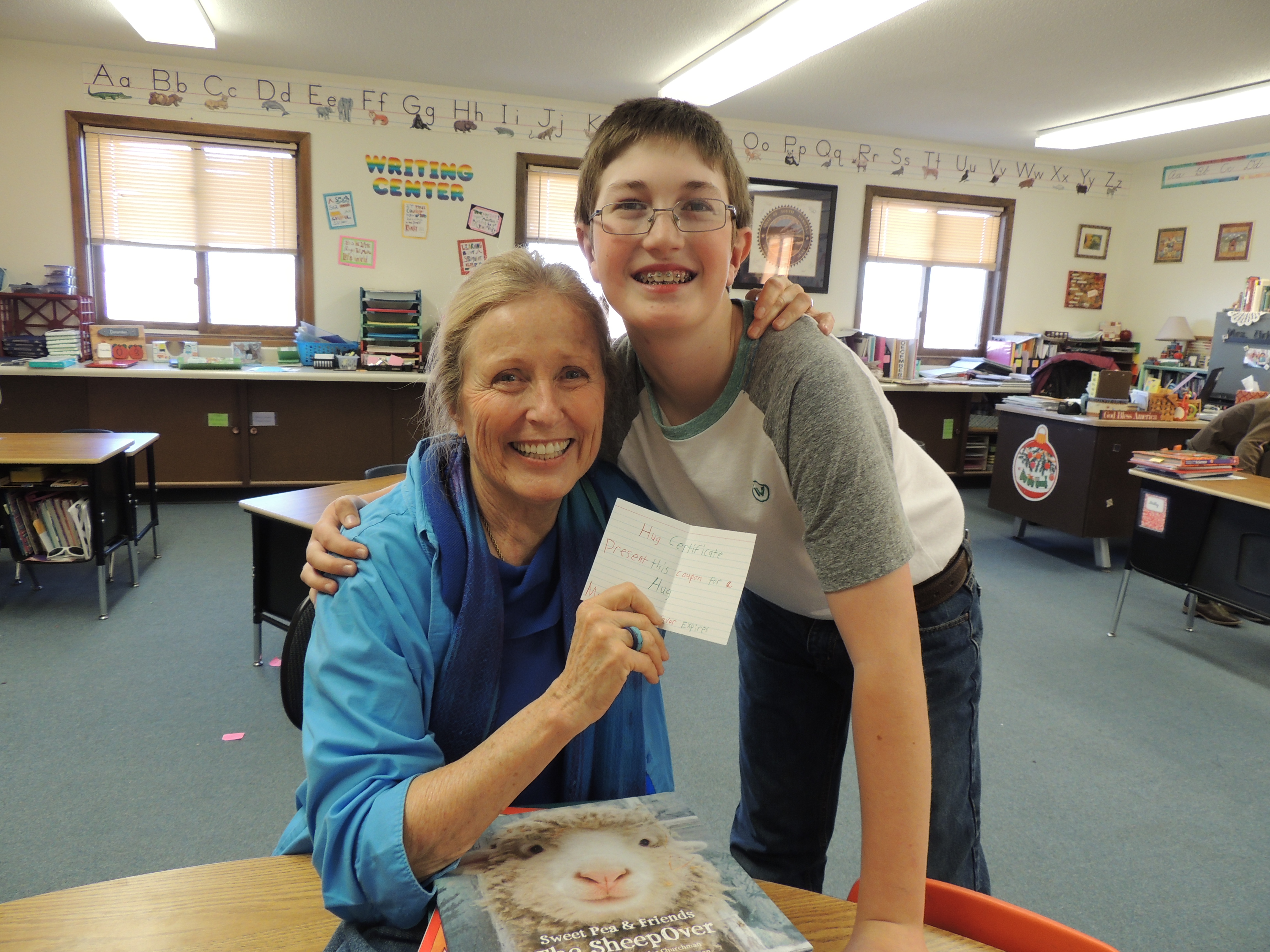
I even received a coupon for hugs.

Kody Joan hugs coupon

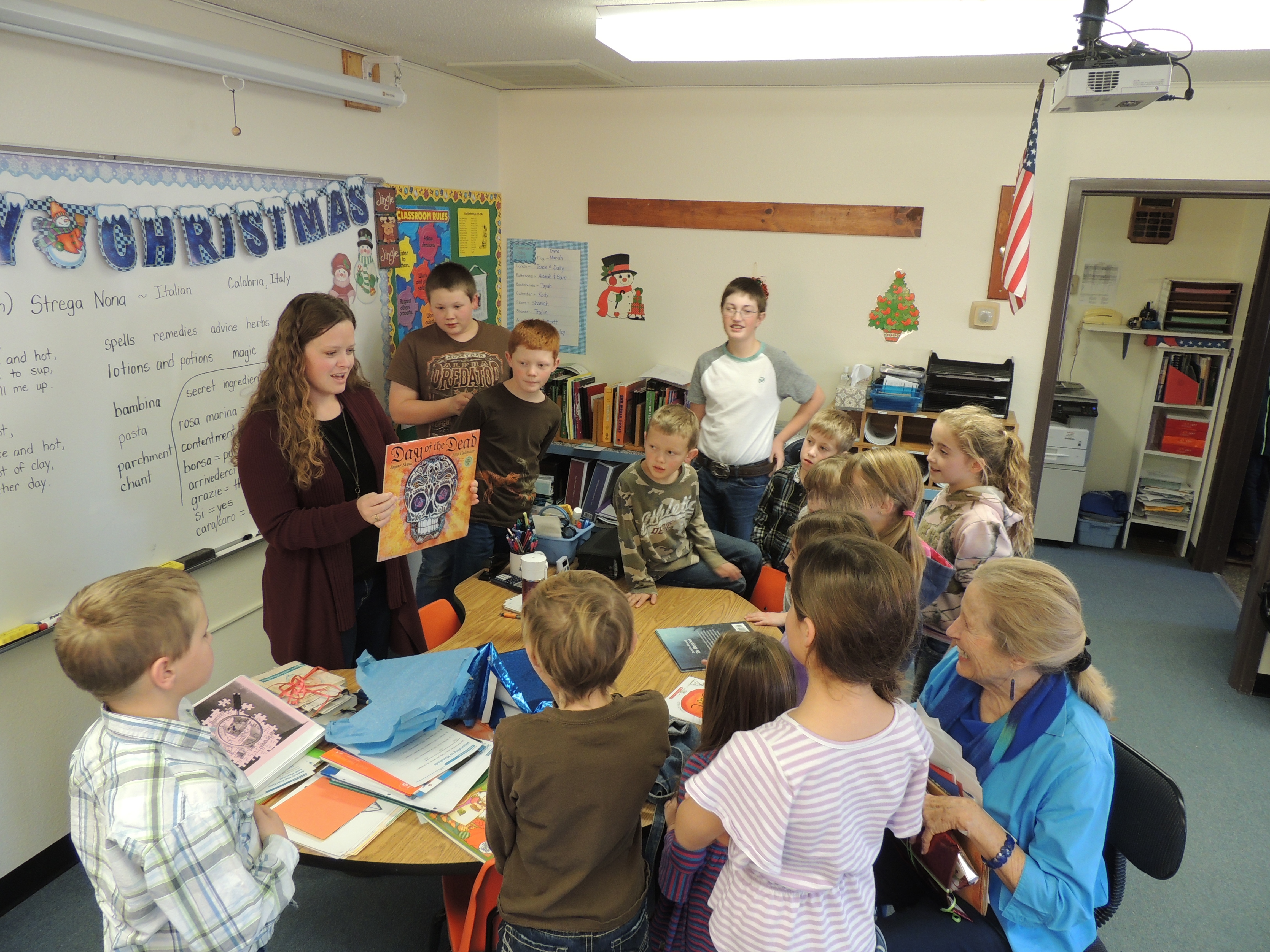
Finally, here is the teacher, opening a gift.  Oh, how I love visiting this school.  There is a bit of magic in these stories and also in this school.

blurred faces Emma JoniIf you are on FaceBook, Tomie dePaola’s pages are some of the best. He generously shares his art often for all of us to enjoy.

Janet Towell: You are the one who introduced me to Strega Nona.  Every time I read these stories, I think of you.  Happy memories of CSU Stanislaus.


December 16, 2015Read More