View Sidebar
Click on any book icon to see Table of Contents and/or to purchase a copy.

Archive for category: Latest

Krashen in 6 minutes–with our apologies to Steve for his vast contributions.

Krashen in 6 minutes–with our apologies to Steve for his vast contributions.

Dear WinkWorld Readers,

As some of you know, Deb Harrison of Moorcroft WY teaches English to high school juniors and seniors. In addition, she is working on her English as  New Language (ENL) endorsement and her second masters’ degree.  In my class this semester, she has focused on the work of Steve Krashen, and I have previously shared some of her work.

In the following 6-minute video, she summarizes some of Steve’s more recent work with literacy and language acquisition.

We hope you enjoy.  Thanks, Deb.

And, for those of you who have asked about the two boys from the Congo, who recently started school in WY, we will soon have an update.

Harrison, D. (2015, Oct 8). Stephen Krashen Compilation Video. Retrieved from Youtube.com: https://www.youtube.com/watch?v=6vUFzb6v3n4


November 14, 2015Read More
The Power of Reading Is My Home Run Reading Book

The Power of Reading Is My Home Run Reading Book

Dear WinkWorld Readers,

Recently, Deb Harrison, a high school English teacher in WY and a graduate student in my class at Black Hills State University, turned in a rough draft of a story about the power of “The Power of Reading” by Steve Krashen.  The same day on Facebook, we noticed that a teacher in Huntsville TX had written about this book and posted on Steve’s page.

Read the TX short article on “The Power of Reading” right here.

Deb followed up with a part of her story which follows.  We hope you enjoy.


The Power of Reading is the home run book in my professional world, and The Box Car Children was my home run reading book of my youth.

I have always been a voracious reader. I can remember being in second grade and going to the school library in our small town in North Dakota, to check out The Box Car Children books by Gertrude Chandler Warner. How I loved reading those books.

Even though, I have loved reading my entire life, and I love teaching English to Juniors and Seniors in high school in WY, and I already had one masters degree, the truth is that I struggled when I entered the English as a New Language (ENL) Black Hills State University, SD as part of the reading masters.

During the first semester, I seriously considered dropping out from the program. I just did not understand, and I had no idea what I was going to do for a final project. I felt overwhelmed.

“Try this,” Joan Wink, the professor said to me, as she handed me her copy of The Power of Reading (2004) by Stephen Krashen, and then she left me alone. As I read, I began to understand how important reading was to the success of language learners as well as students in any setting. I began to make sense of how reading affects language learning; I began to understand how getting kids reading could help them acquire language!

To me, the term home run reading is a book that made us fall in love with reading. I now have two: The Box Car Children and The Power of Reading. I think about its message and its impact on learning daily. I talk about the impact of reading to students and co-workers alike. More and more, where I teach, we are not talking about assigned reading; rather, we are talking about Krashen’s description of Free Voluntary Reading: No tests, no book reports, no evaluations, just reading for the love of reading.

The Power of Reading changed my life. I am working independently on a major project on Steve Krashen, which will soon by shared on www.WinkWorld.com, a blog written by my professor.

 Deb Harrison:  We thank you!

November 9, 2015Read More
Why stories? Ruthie and Regression Help Us Understand

Why stories? Ruthie and Regression Help Us Understand

October 30, 2015

Dear WinkWorld Readers,

You may remember that recently, I asked the question: Why stories? I used the story of Violet, age 5, who was having a terrible time with her numbers to 100, until she could place them in a story.

Click here to read the story of Violet.

As I wrote about Violet’s struggles with numbers, I was reminded of my statistic class when I worked on my Ph. D. Our prof, who was close to retirement age, was a legend at TX A&M. He was the consummate gentleman, who wore a white shirt and bow tie to every class. One of my colleagues, who did her Ph. D. in math education, knew him well and told me to keep a very close eye on him all semester, as it would be worth every minute. So, I did. I sat front and center of the class. My most lasting memory is all of the 35 to 40-year-olds, who had never been away from an annual math class or two their entire lives. Some even fell asleep in the back row; they always seemed bored and blasé. I was afraid to blink for fear that I would miss something, as there had been very little math in my years of teaching Spanish and raising a family, and certainly, there had been no statistics.

In those days, we didn’t have devices in class; calculators existed, but we were not allowed to use them. Each problem had to be completely worked on yellow legal pad–reams and reams of legal pad. The prof checked each step of the calculation for each student. If an error was found, he showed it to us, and we had to do it again.

On an old-fashioned chalkboard, he meticulously worked out each problem for us. Chalk flew in all directions. I often wondered about how much chalk he actually used in a semester. Stat was a mystery for me; however, I apparently got so I could do the problems, as I know that I got good grades. One problem: I never, ever knew what I was doing. Not a clue.

I now understand that I simply needed to put all of that stat into a story to understand, like 5-year-old Violet had done. But, I digress: Remember, I was front and center of the class, watching like a hawk to see what he would do, as my friend had promised.

Sure enough, one day when the rest of the class seemed particularly bored or sleepy, and I was ever-vigilant. The prof was madly writing numbers on the chalkboard. In an instant, he passed his hand with a brand-new large piece of chalk in front of his face and magically popped the new piece of chalk into his mouth. He chewed the whole thing without ever acknowledging that anything might be unusual about that. He just continued to explain the specific problem. I looked around on both sides and behind me, as I wanted to enjoy this moment with someone. Not another soul noticed. I was in awe of the prof, and I think I noted a slight twinkle in his eye.

Finally, I had my story, and from that moment on, I knew that if I were ever going to make stat meaningful for teachers, I would have to find a story in the numbers and charts. When I went on to teach at the university, I loved research and still do, but it is always about making it meaningful with a story.

Now, back to Violet, whose mother, Ruthie, is now struggling with regression in her statistics class for her Ph. D. Turns out, that it is not just Violet and I, who need a story to understand.

Ruthie writes:

I am convinced that narratives are the most important and underutilized pedagogical tool in our arsenal. Not only did I recently experience this power of the narrative with Violet, but also in my own attempt to understand regression in my statistics class–albeit, at very different ends of the educational spectrum.

Last semester, I was taking a course in quantitative methods. The professor divided the course into three units. The final unit of the course was comprehensive test on the content of an entire graduate-level statistics text. He didn’t have us buy and read the text for his class, but I happen to stumble upon the text that he had used to write his lectures, as I was trying to learn the information on my own. All of the examples, topics, and course materials were taken directly from the text that I found.

Anyway, when listening to the lectures and doing the work in class, I was so lost that whenever he would ask if we understood, I would say “yes” because I wanted him to stop talking. Everything that he said confused and frustrated me even more. Even after doing the course readings and looking for additional information, I was still lost. I did not understand how to read the tables. I could never remember which pieces of information were necessary and which were superfluous. Moreover, I couldn’t accurately and confidently construct a meaningful whole out of the different tables and statistical information I was given.

Two days before the final exam, I was in a panic. I found another Ph. D. student, who is very strong in statistics. Her background is in finance. I explained my problem and how every time I looked at my notes and tried to study, I just wanted to cry.

“You have to look for the story,” she said to me, as I quickly printed out a sample regression table. She showed me the story on the chart. She showed me which aspect of the chart to look at to find the beginning of the story; what questions to ask to find the next elements of the story; where to find the answers: and how to interpret the data given.

After that short session, I knew how to interpret a regression. I understood what kind of data I needed to run a regression, and I was able to explain any regression analysis that my Google search could find.

Moreover, I was able to apply the principle of looking for the story in the data to other types of statistical analysis. I got a 99 on my final exam.  The missing piece was learning how to construct the narrative from the data tables.

“But, did she eat the chalk?” I wanted to ask.

October 31, 2015Read More
2 New Students from the Congo

2 New Students from the Congo

Dear WinkWorld Readers, I need  your help.

Last night I received a question from a teacher in Wyoming, who had just learned that she will have 2 new students from the Congo; the boys have only been in the US about a week.  I do not know the grade, nor the age of the students…yet.  I suspect that we may learn that she teaches 4th, 5th, or 6th.  She has access to some ESL materials, but basically there are very few students who speak other languages in the school.

Where in the world is the Democratic Republic of the Congo?

Where in the world is the Republic of the Congo?

What are the languages used in the Republic and the Democratic Republic?

French and about 200 others. Apparently, the 2 boys speak one of the other languages.

Her question: What materials can I buy to help the students learn English?

Here is what I told her:

Today is Friday.  Study the Congo with the class.  Learn the languages spoken in that country.  Talk about refugees and immigrants with the class today.  Draw a big map as a welcome to the boys when they come on Monday.  How does one get from the Congo to Wyoming? Find out the names of the boys and practice the names with the class today.  Plan a class welcome: music? art? games?

Apparently, the boys have not had much schooling. In addition, it is doubtful that anyone in the community will speak their language.  I am not sure if the school has an ESL support teacher.  However, I do know the community, and the teachers tend to love working there, and the district tends to always try to do its very best. It is a great community.

Monday: When the boys arrive, have desks ready for them; close to each other; close to the teacher; and surrounded by caring kids.  Create a one-on-one buddy system; this could be rotated weekly, so that the boys soon know all of the kids in class.

On their desks daily, be sure to have:

a) a colorful book with lots of pictures–change this book daily.  By the end of the week, the boys should know where the classroom library is and when/how to choose their own book.

b) one blank sheet of paper for doodling–at the end of the day, the teacher dates the paper and sticks it in a file.  Soon, some type of information about the boys will emerge.

c) a blank writing journal

d) 6-10 blank index cards daily, where the boys can capture new words while the class is learning them.  When the boys are able, copy these words into their journals. A student can model/demonstrate how to do this.

e) a couple of pencils; a couple of pens; colored pencils

f) Responsibility of the student buddy: Help with lunch lines; be with the 2 boys during lunch; bathroom privileges; lining up for bus; being a friend on the playground, etc.

I know the teacher well enough to know that she is the best thing in the world for these boys. Our task, WinkWorld Readers, is to simply support the teacher this week.  I am confident that the district will soon be providing support for her and the boys.

We look forward to your responses. Thank you.


October 23, 2015Read More
Critters, Polacco, Novak, & Atall

Critters, Polacco, Novak, & Atall

Dear WinkWorld Readership,

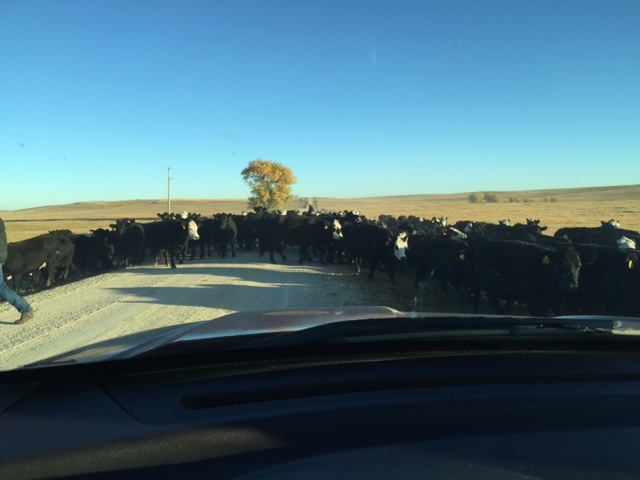
Yesterday I drove to a local school, Atall, about 50 miles away to read a story, and I was stopped in my tracks by these critters.

cows Atall trip

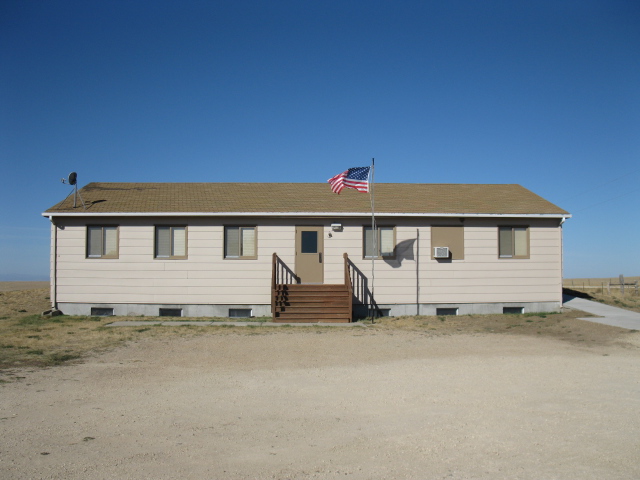
See Atall School here.

Atall School #1


I waited until the cattle got by me, and soon I arrived where Missy, the teacher, has 13 students in 7 grades. In this age of Common Core, teaching the mandated curriculum for 7 different grades seems overwhelming to me. She describes it as “triage.”

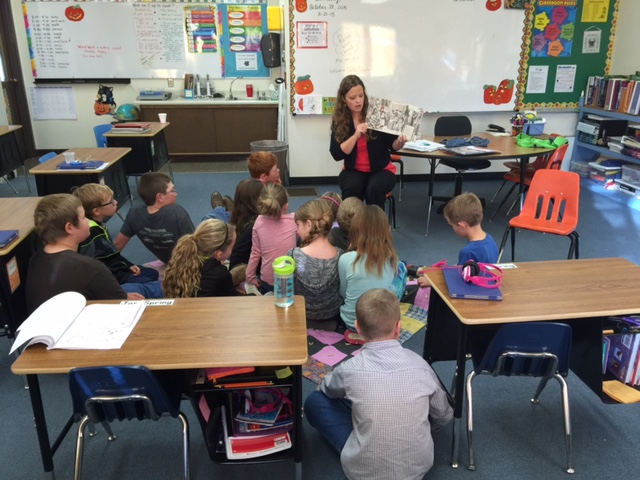
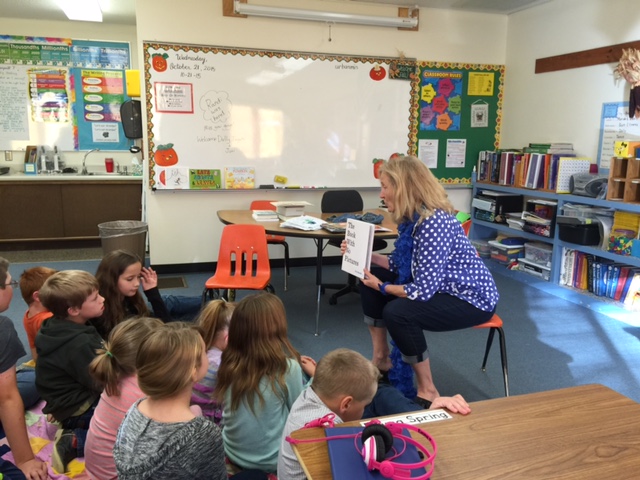
I read Sweet Pea & Friends: The SheepOver. All of the kids particularly liked the play-on-words of “sheepover,” and I was even able to slip in the use of double entendre.

Next Missy read The Keeping Quilt, while all of the kids sat on the quilt from Missy’s great-grandmother.

Missy kids quilt

If you look carefully, you can see the quilt where the kids are seated.

Hear Patricia Polacco reading the story on YouTube.

See the quilt and hear the author/illustrator.

After hearing the story, we talked about quilts in our families.

See Everett and Bailey, the great, great-grandsons of the woman who made the quilt for Missy.

ev and bailey ggrandma's quilt

The kids remembered The Book With No Pictures by B.J. Novak, which I had read to them last year. Of course, they wanted to hear that one again.

joan reading Atall

Here is the author, B.J. Novak, as he reads his story.

Before I left, Missy and the kids gave me a book, The Dot, by Peter H. Reynolds, and they showed me their dots, which they have created.  My assignment is to make my own dot.  Gotta get to work on that one.

See The Dot here.

Hear the story here on YouTube.


https://www.youtube.com/watch?v=t5mGeR4AQdM


October 22, 2015Read More
4 Questions about Stories

4 Questions about Stories

Dear WinkWorld Readers,

In what follow, I will focus on 4 questions: What are stories?, What are your favorite stories?, Why do we use stories in class?, and How do we develop storytellers?

If you would like to use these questions for your own purposes, the Four Corners activity works quite well.

See Four Corners Activity right here.

First, What Are Stories?

Stories are narratives, which help us make sense of our world. Compelling stories are the ones we remember, as they entertain, educate, inspire, and stretch us. Stories also glue us together with one group while simultaneously breaking down our pre-conceived barriers with new groups. Stories act like a mirror and reflect our lives, our experiences, and our thinking. They capture our history, and they paint a picture of our future.

Show Me, Don’t Tell Me.

In schools, we often remind ourselves: Don’t tell me, just show me. We, teachers, like to model new learning. Then why in the world did I write a paragraph defining the word, story? Wouldn’t it be better, if I simply told you a story. . . about a story?

Stories help us make connections; they power up our learning, imagination, and literacy. Even our financial literacy, as in the case of 5-year-old Violet. Like her, I often can get lost in facts, but if you can tell me a story about those facts, I will learn it and often remember it.

The Story of Violet

Violet, simply could not understand numbers from 1 to 100 until she connected the numbers with a story.

Violet is in kindergarten and comes from a very enriched family with food, books, laughter, languages, and love. We can safely guess that she will do well in school. All of this was true until she met the number 100 and a bunch of 10s. Violet could not count to 100 by 1’s, nor by 10’s. It was just incomprehensible for her in her own stage of development in spite of base ten blocks, a super teacher, and a very supportive family.

Her mom and dad, Ruthie and Rusty, started to count authentic items in Violet’s life: They collected and counted shells from the beach; they grouped and counted toys at home; they played jump rope and counted; they counted cars when they drove; they picked up stones and counted them. Still, from December until May of kindergarten, those numbers simply made no sense to Violet.

Frustrated, Violet’s mom, went to the school librarian, who gave her

a book “Let’s Count to 100” by Masayuki Sebe.

See the book here.

When the book arrived, Violet and her mom sat down and previewed the pages of the new book.

“Which is your favorite page, Violet?” her mom asked.

“I hate this book and never want to see it again,” Violet responded, as she held back tears.   Wisely, her mom set the book on the coffee table and moved on to other stories, which Violet wanted to hear.

However, Violet’s little sister, Zoe, found the book and started looking at the pictures and telling stories about the animals in the book. After a few days, Violet’s curiosity was peaked, and she started looking at the book, also.

Violet Finds A Compelling Story in the Book about Numbers

Suddenly, Violet found a page with a family of piranha fish, who were busily planning an attack on an elephant’s truck. Violet was compelled to know more about the piranhas and the elephant. The story grabbed Violet’s imagination; it powered-up her learning and her literacy.

“Read to me, Mom, about this elephant with the hurt trunk,” she excitedly told her mom. Violet’s active engagement with the story (and, thus numbers) shot through the roof as she began to talk about the other elephants in the story.   Her mom continued to read and to listen.

“Look at all of the elephants–let’s count them, Mom,” she squealed. “Oh, and look at those piranha, let’s count them, too.” Violet and her mom counted aloud by ones, and then her mom showed Violet how she could count super fast by tens, grouping the piranha into their different families.

“I can do that,” Violet said. And she did. That night, she showed her dad how she could count by ones and by tens.

The story of the piranhas and elephants grabbed her interest, and instead of simply trying to memorize abstract groups of numbers, she was grouping the animals of her story.

Now, Ruthie and Rusty are reading the story about piranhas and elephants over and over again, and Violet is counting to 100 by 1’s and by 10’s. Violet has moved on to other stories about other animals, not just piranhas and elephants.

Violet now understands and can manipulate those numbers because of a story.

“The narrative grabbed her interest; it was a compelling story for her. It boosted her confidence, and it provided a conceptual framework in which she could place the details of the different number families. Instead of trying to memorize the words ten, twenty, thirty, etc., in order, she could think about different fish families and their different functions.  The number words just came naturally because they just fit into the narrative,” Ruthie told me. “She now brings the book to me over and over again. That repetition which is so important for young learners is fueled by her desire and interest.

We went to the library and found another book in the series “100 Hungry Monkeys.” This one has a larger narrative in which each page of 100 builds on the story. Knowing the power of narratives and her increased self-confidence with and interest in counting, I am confident that she’ll do it well.

See 100 Hungry Monkeys here.

And, that is what a story is.

Second, What Are Your Favorite Stories?

My favorite stories capture the memories of my family. They capture a moment in time, which elicits laughter or tears. Emotions have primacy in my favorite stories. The language used in the story is like code-speak in our family, as the stories have been re-told so many times, yet each time we hear it or tell it again, we love it just as much. Our family stories are like the glue, which hold us together. Our stories capture a mutual and treasured experience.

Show Me, Don’t Tell Me

For example, just say “Jack and The Beanstalk” to Dawn and Bo, our two adult children, and they are immediately taken back to their childhood, when they, and half dozen other family/friends’ kids were cleaned up, in their jammies, lined up on the couch, and breathlessly awaiting the family/friend storyteller, Frank, who could do more with Jack and a beanstalk than anyone I know. Each child was suddenly a protagonist in the story; each child was a hero in some part of the story; each child could barely contain the joy of listening and loving. Jack and that bean linked those kids together for life.

It seems we never tire of our favorite stories. You put us with specific groups of people, and we immediately begin to tell stories. The other day, during an unsuccessful hunting experience, I heard my husband say to my now adult son, Bo, “At least you’ve got a good story.”

Third, Why Do We Use Stories in Class?

Stories are yet another tool which we can use to engage learners and enrich their learning, language, and literacy. However, as good as that is, stories do more: they link us through love. I am reminded of another story–actually, two different stories about the same student, José.

Show Me, Don’t Tell Me.

I met José when he was a 7th grader in my class. He was a balanced bilingual, equally at home in both English and Spanish. However, he was not achieving…yet. I encouraged him to read. Read anything he wanted.

“Anything?” he queried.

“Yes, anything, as long as it did not demean or belittle any group…including women,” I responded. He understood. He grabbed the huge Tucson phone book and started to read, as a challenge.

“Read, read, read,” I told him when I saw him with that boring tome.  Soon he, too, became bored with the phone book (and the challenge to me) and moved on to reading about the world. Now, as an adult, he has since visited many of those countries.

Later, when José was a senior, and in another class I was teaching, the students had been studying various languages and countries. They wanted to know how to say “I love you” in different languages. In those days, we didn’t have multiple devices, so off we went to the library to research how to say “I love you” in various languages.   During their spring comprehensive test, on a whim, I inserted the following into the cognitively demanding test.

I love you.

I love you.

I love you.

I love you.

I love you.

I love you.

I love you.

I love you.

I love you.

I love you.

The task for the students was to translate this into 10 different languages. I could tell when each senior came to that question; a smile crept across their faces as they remembered our time together.

When I received the test from José, he had written in Spanish:

Yo sé.

Yo sé.

Yo sé.

Yo sé.

Yo sé.

Yo sé.

Yo sé.

Yo sé.

Yo sé.

Yo sé.

In Spanish, Yo sé means: I know. And, now you know, too.  One of my happy memories is the day José graduated from high school with a gold and a white honor cord hanging down the front of his gown: one from the National Honor Society and the other from the Spanish National Honor Society.  The huge Tucson phone book and the two honor societies are forever wedded in my mind.

“Education is radically about love.”

~Paulo Freire

Fourth, How Do We Develop Storytellers in Class?

Time and choice. That is the secret. Teachers/librarians need to value storytelling enough to create time for it to happen and to assure that students have choice. In this age of top-down, mandated curriculum, and non-ending punitive testing,  I am only too aware that I am asking a lot of you, but we never told you that teaching would be easy.

Roadblocks? Go around them.

Don’t make me send you my t-shirts, which say in bold letters: We Can Do This.

 Show Me, Don’t Tell Me.

Recently, a teacher attended a professional development day, which focused on how to administer the state and nationally mandated test. As I have heard from several, it was grueling, but at one point, the teacher-of-teachers stopped long enough to deviate from the mandated script to share one story.

A grade-school child in the district began to feel pain in his arms. As it turned out, he had a rare condition in which the bones were dying. He had to take a medicine with the hope that it would promote re-growth and healing of the bones. During this time, the child could not attend school, because if he were to be bumped or jostled slightly in the hallway, it could damage the healing. However, in spite of this, the student was still required to come and take the test. In addition, he was not even allowed a scribe to write his answers. He had to type in his answers, without assistance, for the test.

How do we develop storytellers? Time and choice.

Stories are inherently a part of being human. When teachers/librarians allow time and choice, the stories will flow. You cannot stop them.

*the quote by Paulo Freire:

As cited on p. 2 of this book (2011).
October 20, 2015Read More
A Peek Into Our Class

A Peek Into Our Class

Dear WinkWorld Readers,

As some of you know, I continue to teach part-time in the English as a New Language (ENL) endorsement program at Black Hills State University (BHSU).  The teachers in the program come from various districts around the Black Hills and other districts in Wyoming. Mostly our classes are online (D2L and Collaborate), which I enjoy, but I love the Face-to-Face periodic classes.  Here is a glimpse into our class last Saturday, 10.11.15.

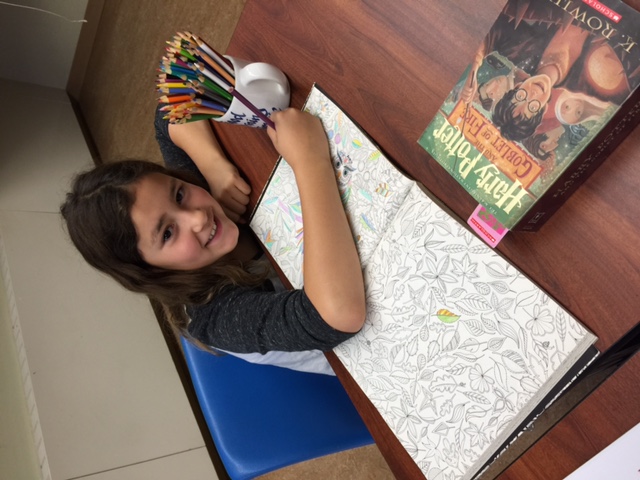
One of the teachers brought her daughter; through the years I have had a lot of busy teachers bring their own children to our classes, and I have always loved the experience.

Here is Jeslyn settling into our class.

Jeslyn is ready for class

This semester I discovered that the Language Experience Approach (LEA) is new for many of the teachers.

See Language Experience Approach here.

This group is also interested in learning the various approaches to Readers’ & Writers’ workshop.

See Readers’ & Writers’ workshop here.

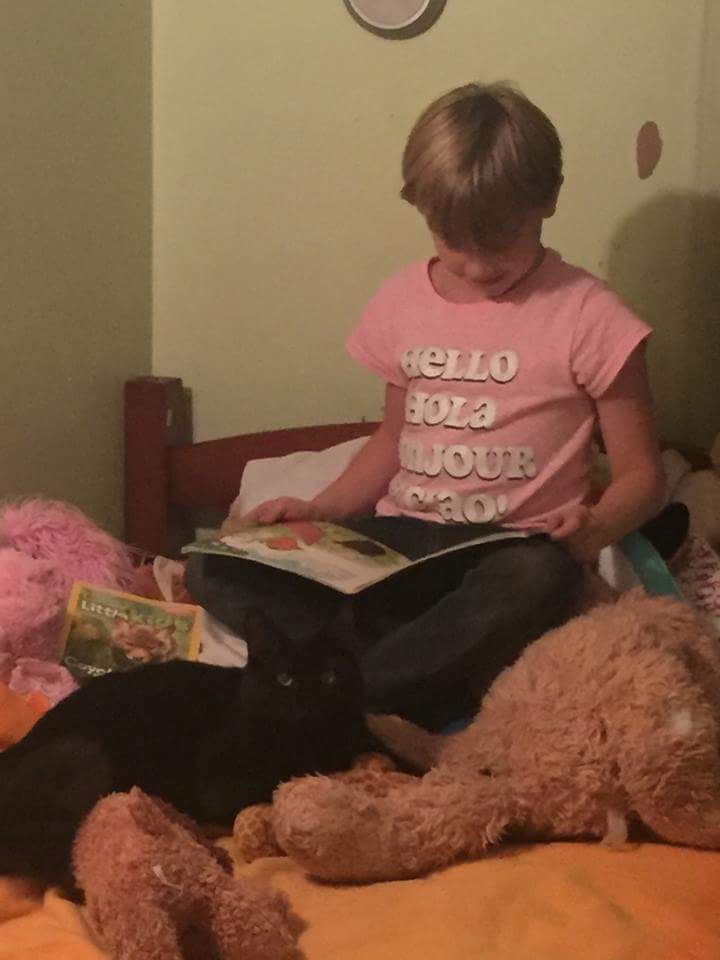
One of the teachers brought a photo of her granddaughter reading. Hope you enjoy this, as much as we did.

Deb grand10.15

As the class had recently focused on the treasured books of Mem Fox, one teacher shared a class photo of her reading  “Let’s Count Goats.”

Sarah Williams reading to kids1]

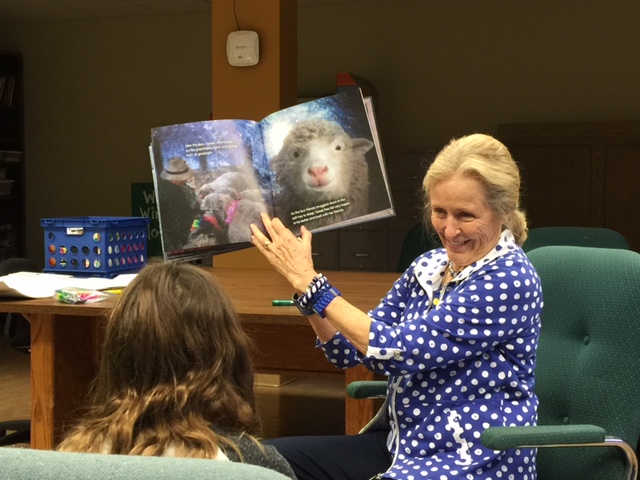
Finally, I read “Sweet Pea & Friends: The SheepOver” by John and Jennifer Churchman.

Sweet Pea & Jeslyn

October 14, 2015Read More
Buffalo: Custer State Park, SD

Buffalo: Custer State Park, SD

Dear WinkWorld Readers,

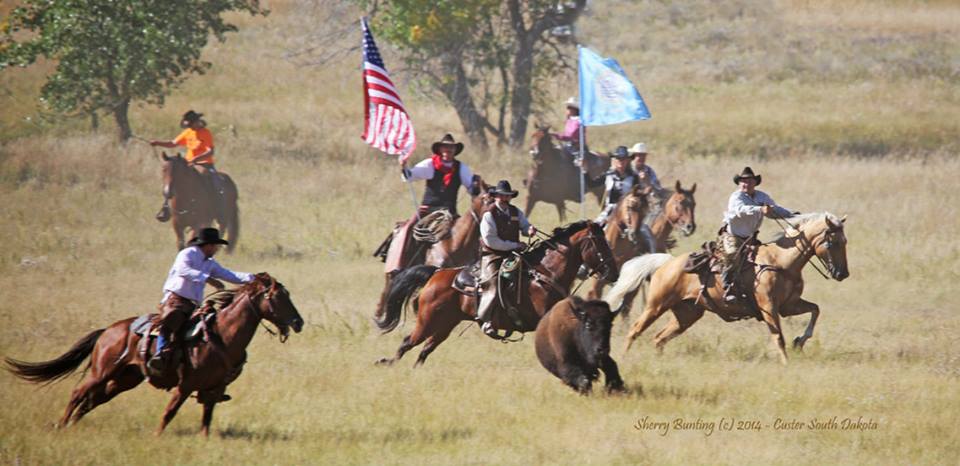
Normally, I share something for teachers and/or teacher educators, but in this issue I will share something for everyone: Buffalo. Lots of them.  We have previously ridden in this buffalo roundup, but not this year.  However, our friend, Sherry Bunting, has generously shared some of her photos from the Buffalo Roundup in Custer last week. Sherry’s contact information is all posted at the end of this post.

Here they come.

buffalo here they come 2015

The flag-bearer and a little action.

buffalo flag 2015

And, even more action.

buffalo rider hard riding

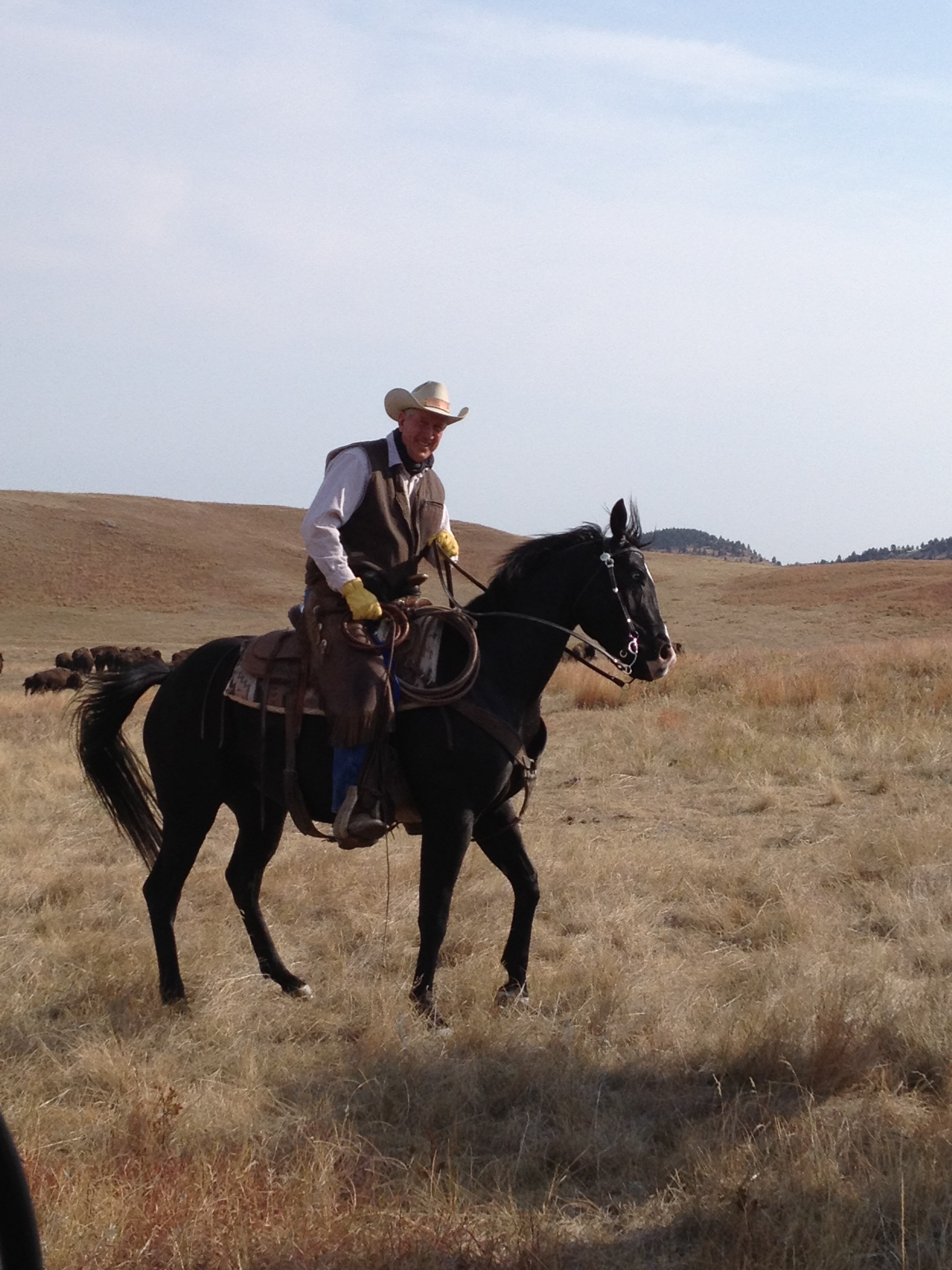
And, here is Wink on Badger a year ago.

Dean Badger buffalo 2012

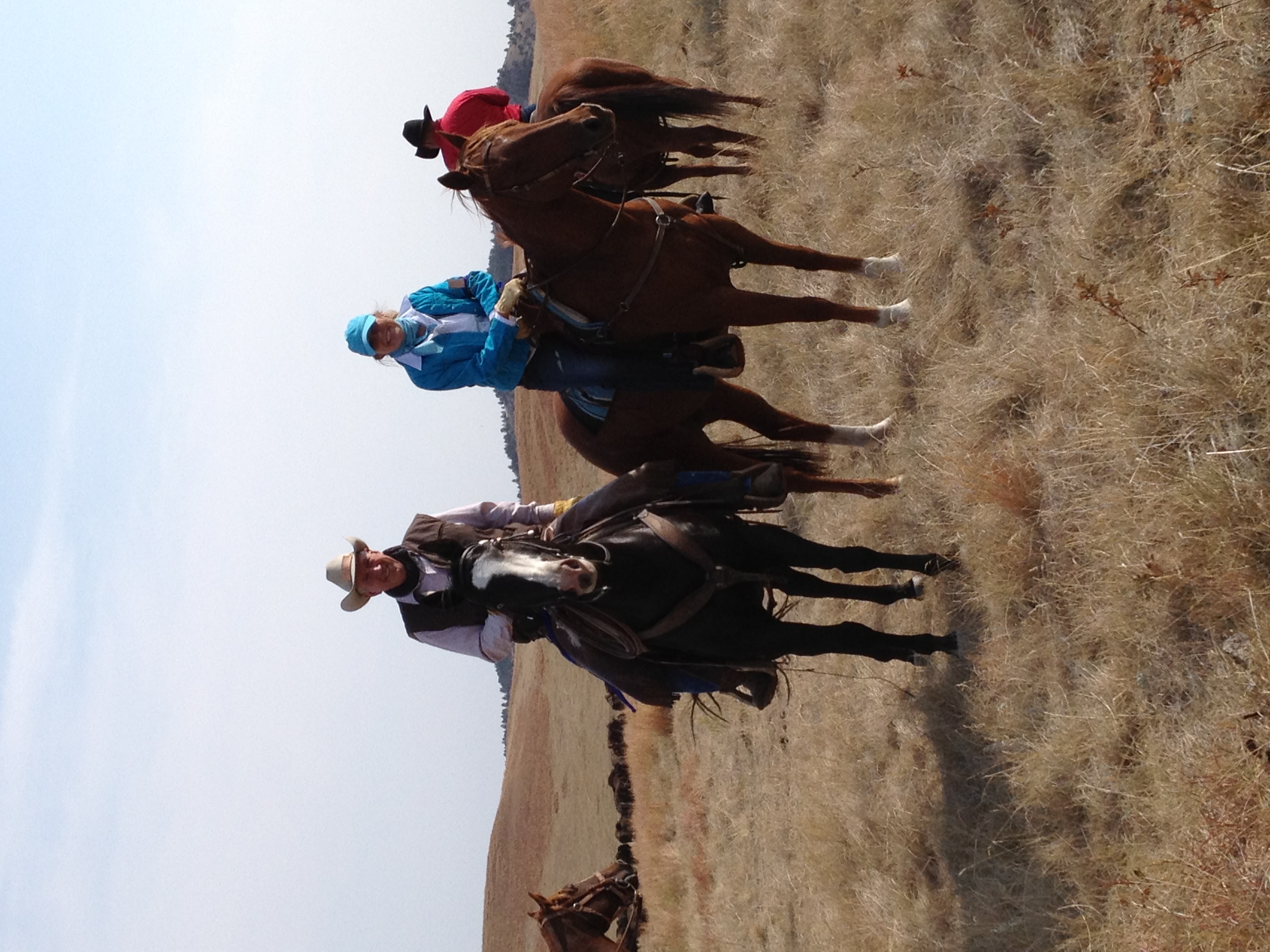
The 2 of us last year.D&J buffalo best photo


Many thanks to Sherry Bunting.  Her blog: agmoos.com

Her email: agrite@ptd.net

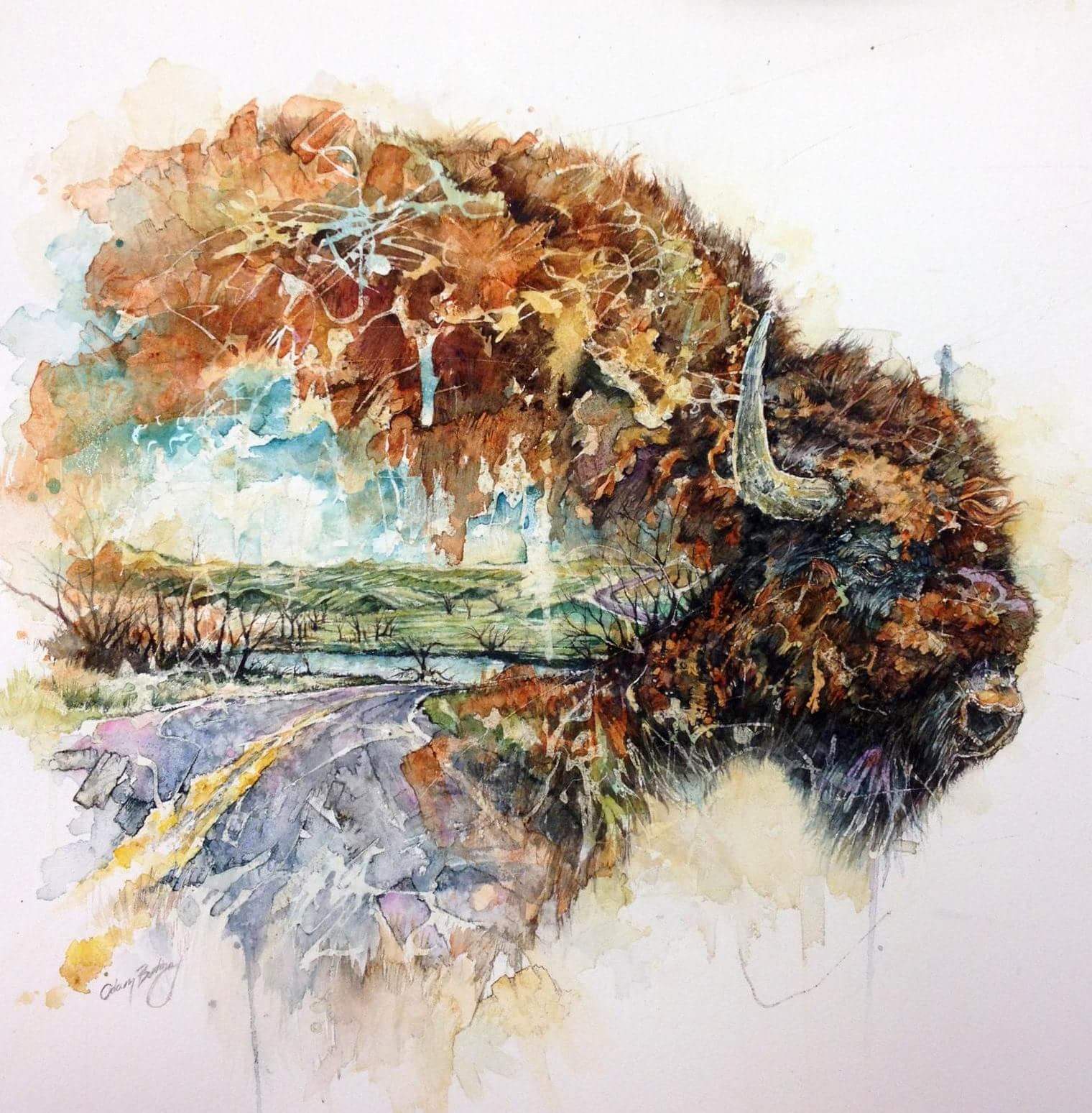
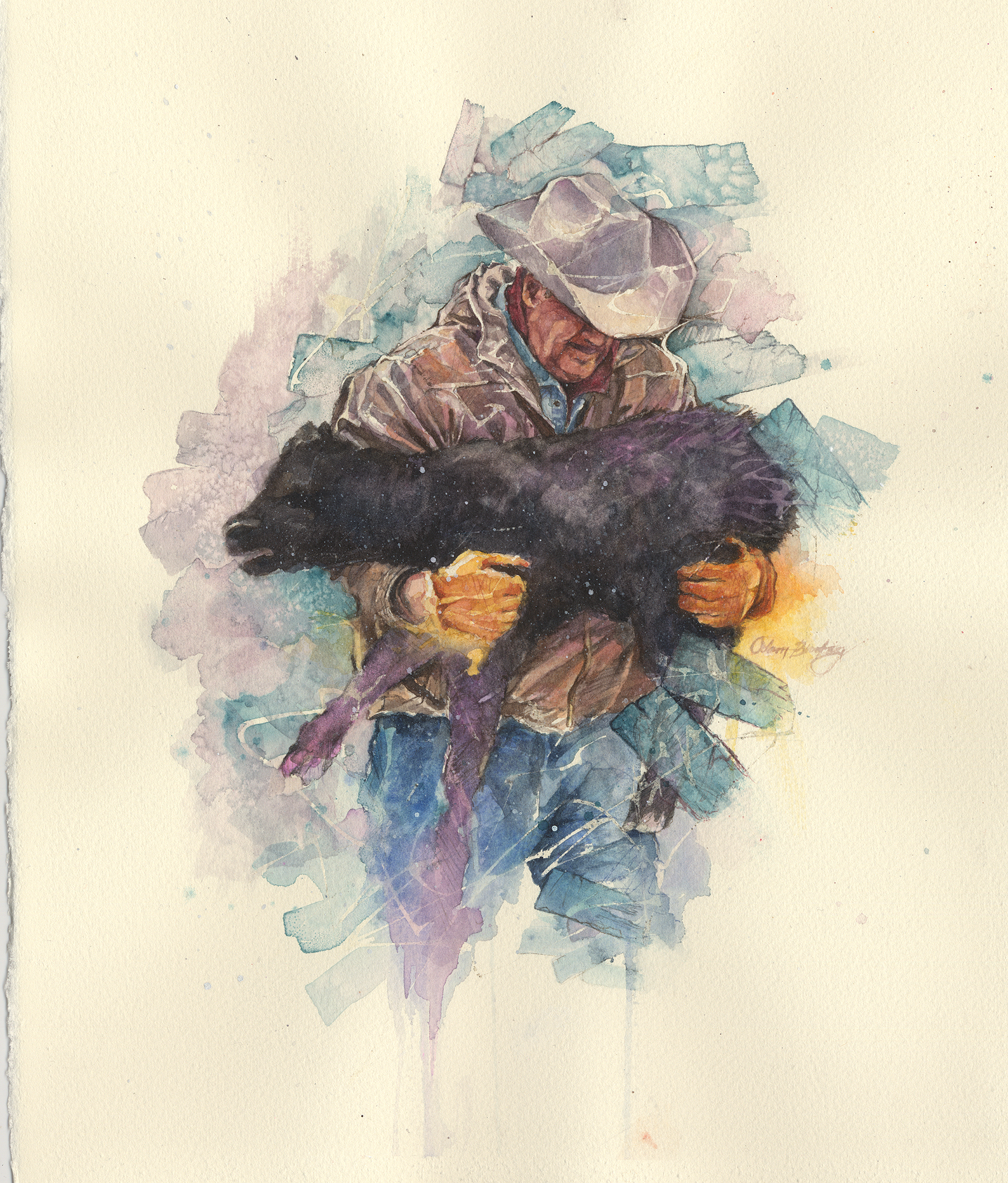
In addition, Sherry’s son, Adam Bunting, is a high school teacher and an artist.  Here are 3 examples; below these, I list his contact information.

A new buffalo painting from Adam Bunting.

Adam Bunting buffalo painting

Adam also painted this picture, which was taken in the spring after the Atlas blizzard.  First, I am posting the photo, which Sherry gave to Adam, and next I share the painting which Adam did.

The photo:

Dean-with-calf post Atlas

The painting of the photo:

Dean calf-facebook

I’ve saved the best for last–Adam also painted my dear horse, Frankie.

Art scan Frankie 02-facebook

See Adam Bunting’s art:

Adam’s email: abunt26@gmail.com

See more of Adam’s art can be seen at Red Raven Gallery

Thank you so much, Sherry and Adam, for so generously sharing your talent and expertise with WinkWorld readers.


September 28, 2015Read More
Krashen videos: Update

Krashen videos: Update

Dear WinkWorld Readers,

In the previous WinkWorld, I shared a Word doc, created by Deb Harrison, which shared several of Krashen’s more recent videos on YouTube; this involved you downloading the doc and then doing a copy/paste of each URL.  In this WinkWorld, my intention is to make  some of these links more accessible: No copy/paste, just click. The following list of YouTube links will follow the same order, as the Word doc on the previous WinkWorld for those who want to read the annotated summary of each video.

See previous WinkWorld here.

See Textbook vs Story (2014)  Book by Krashen here, 54 minutes.

https://www.youtube.com/watch?v=40S7clwRXxs

Here Steve Krashen (2015) present to the1st International ELT Symposium, Part 1: 3 videos follow, each about 20minutes.

Comprehension Hypothesis compared with Skill Building.

British Council Interviews/International ELT Symposium, Part 2

How to make input comprehensible and compelling.

British Council Interviews/International ELT Symposium, Part 3.

In this final video, Steve talks about the positive effects of technology on kids’ reading, and he mentions Rosetta Stone and Accelerated Reading.

I refer you back to the previous WinkWorld to grab Deb Harrison’s Word doc with even more of Krashen’s recent videos.

OK, you can watch Joan’s videos, too.  You can probably guess what the content for my class is this week.  I very much appreciate the tech support from California State University, Stanislaus and Black Hills State University.


September 26, 2015Read More
Krashen, Harrison, and Wink videos

Krashen, Harrison, and Wink videos

September 22, 2015

Dear WinkWorld Readers,

This WinkWorld edition is primarily for those interested in literacy and language acquisition.  First, I am sharing an overview of some recent videos from Stephen D. Krashen.  This summary and these annotations were organized by a teacher, Deb Harrison from Wyoming, who also is in one of my English as a New Language (ENL) classes at Black Hills State University.

See Krashen videos here. Thank you, Deb Harrison

You may remember her from her high school project on Poe and Powtoons, which I shared last year.

See Poe and Powtoons here.

In addition to Steve’s and Deb’s sharing, you may remember that I (with the help of CSU Stanislaus and Black Hills State University) created several videos which focus specifically on language acquisition.

See Joan’s videos here.

September 22, 2015Read More