Dear WinkWorld Readers,
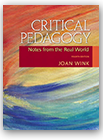
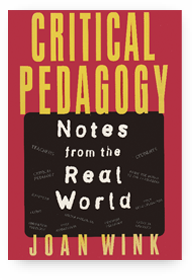
This week, the teachers have been playing with and reviewing some of the ideas found in Critical Pedagogy: Notes from the Real World (2011) from a PowerPoint, which I created.
Help yourself to anything, which works for you.
Dear WinkWorld Readers,
This one is just for fun. Can you read this entire poem aloud?
At the bottom of this post is also a recording of the poem being read by someone who really can read it without stumbling.
Have fun.
“The Chaos” by Gerard Nolst Trenité.
Here are the words, if you would like to have a copy.
Thanks to JimmmyJam (YouTube) for reading part of it for us.
WinkWorld Readers, again this issue is for the teachers in my class, but you are more than welcome to come along for the ride. Teachers, last week you explored new software, and it was great fun to see your creations.
Below here, I will list some of the software which you used. First, I have chosen to share a voki.com, which Jill created to impersonate me. Enjoy. Jill reported that her students loved creating their own.
Several of you created Powtoons and others created StoryBoardThat
Another new software for me was Canva, and two of you played with that. Others which you shared came from Kahoot.it, FunBrain, Planbook, Remind, Prezi, Quizlet, Animoto, Socrative, and several examples from Google.
In language acquisition, we guard against ‘fossilization,” and apparently the same is now true of educational software. It is too easy for us to fossilize in our use of just one or two types of software. Not so, the students: They jump right in and try any of the formats. We have to stay up with them.
Next week, we will have our midterm writing assignment. You might want to watch this video again before you begin writing.
Dear WinkWorld Readership,
I know that many of us are trying to understand the new education bill, Every Student Succeeds Act (ESSA), which recently replaced NCLB and RttT (Race to the Top). My initial understanding is that it is good for school libraries, which helps everyone. However, I am not so optimistic for kids and classroom teachers, who are once again focused on nothing, but the spring tests. Why? Why? Why? Classrooms should not be filled with pain and shame; classrooms need to be filled with love and learning.
In the post below, Diane Ravitch and Sen. Lamar Alexander (R-TN) help us unpack the new ESSA. Thank you to Nancy Bailey for bringing this piece to our attention.
Does the Every Student Succeeds Act MASK No Child Left Behind?
Dear WinkWorld Readers, as you can guess, I am posting this for the teachers in my class, but any of you are free to watch and enjoy, too…..
Teachers, here are some questions you might like to focus on as you watch: How are language acquisition and literacy alike? What is the role of communication? What does this have to do with Cosmo, the Parrot?
Many thanks to Deb Harrison for alerting me to this golden nugget.
Dear WinkWorld Readers, I am often asked what I read. Here are a few blogs and books, which I am presently enjoying.
BLOGS:
Here is a listing of the Top Blogs on Education.
http://blog.feedspot.com/2015/12/30/top-50-education-blogs-for-educators-and-teachers/
BOOKS:
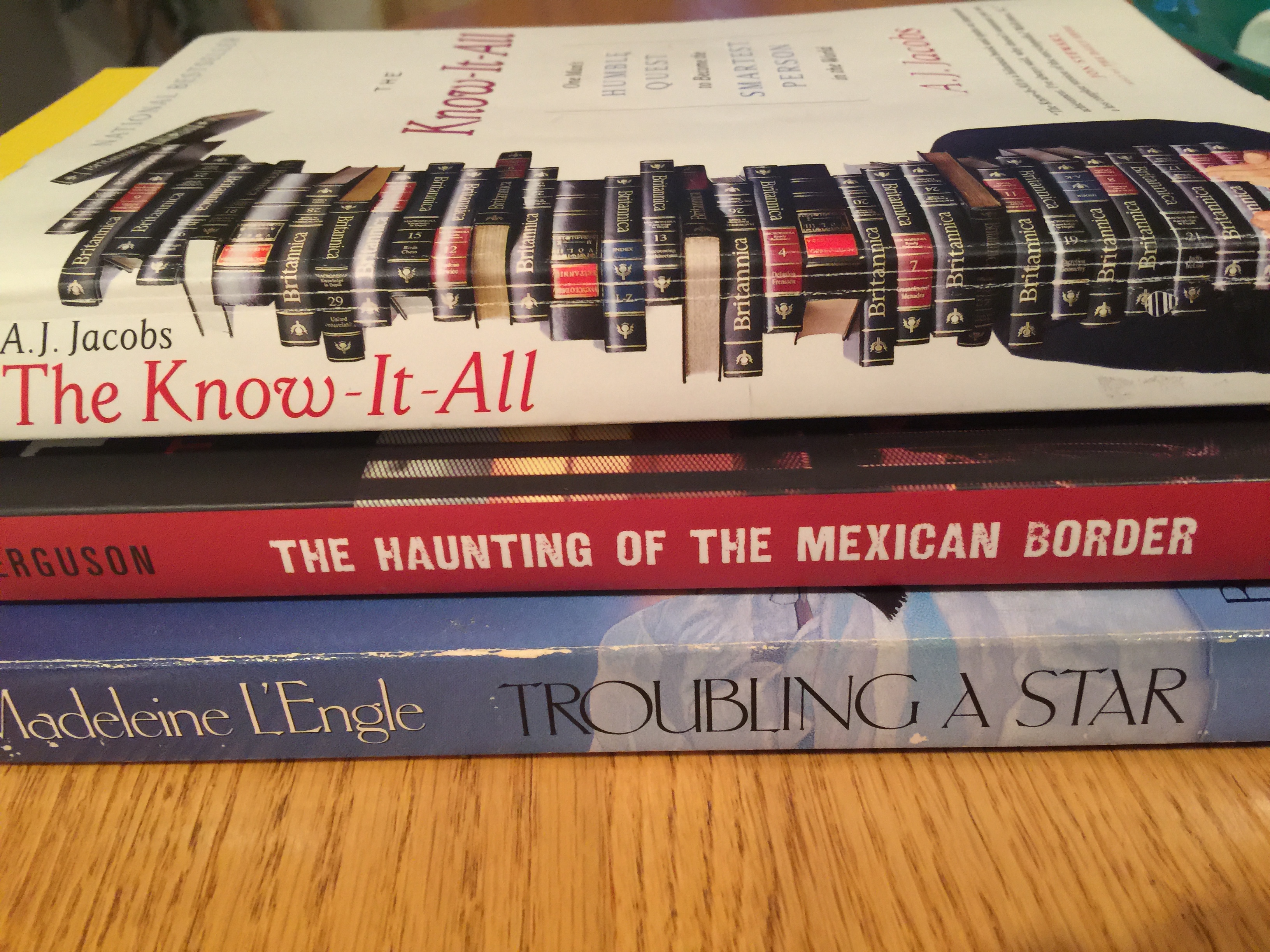
Here are 3 books, which I am reading right now.
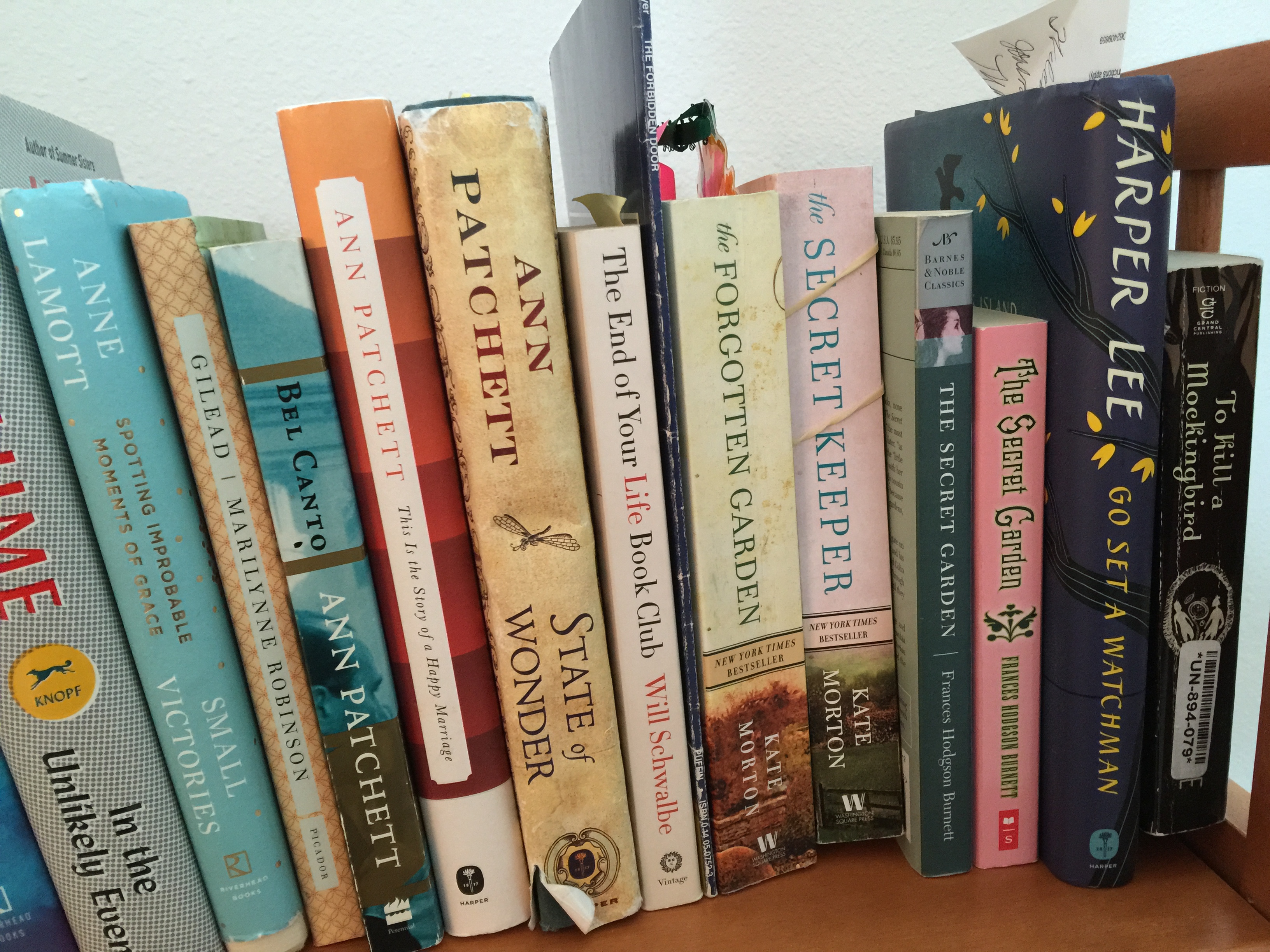
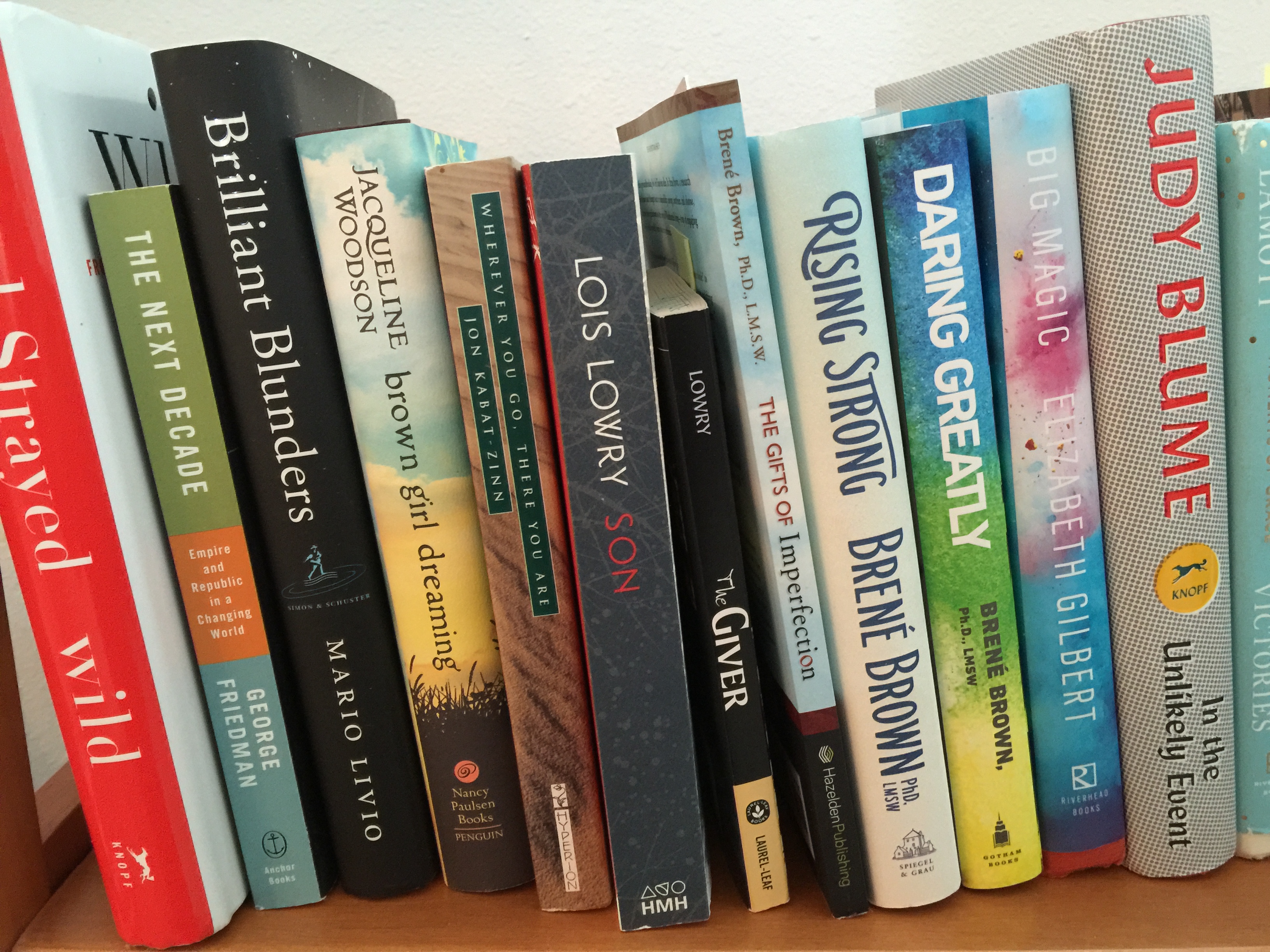
Here is a picture of recent books, which I have enjoyed.
Dear WinkWorld Readers,
This issue of WW is especially for dear friends of many years ago. Recently, a group of us from MHS suddenly and spontaneously all found ourselves laughing around the dining room table of Donna (Wessel) and Frank Durant in AZ. In the photo below, can you find 3 Wessel sisters and 3 Brown sisters? The five 1962 grads in matching t-shirts were suddenly “the kids” in the group.
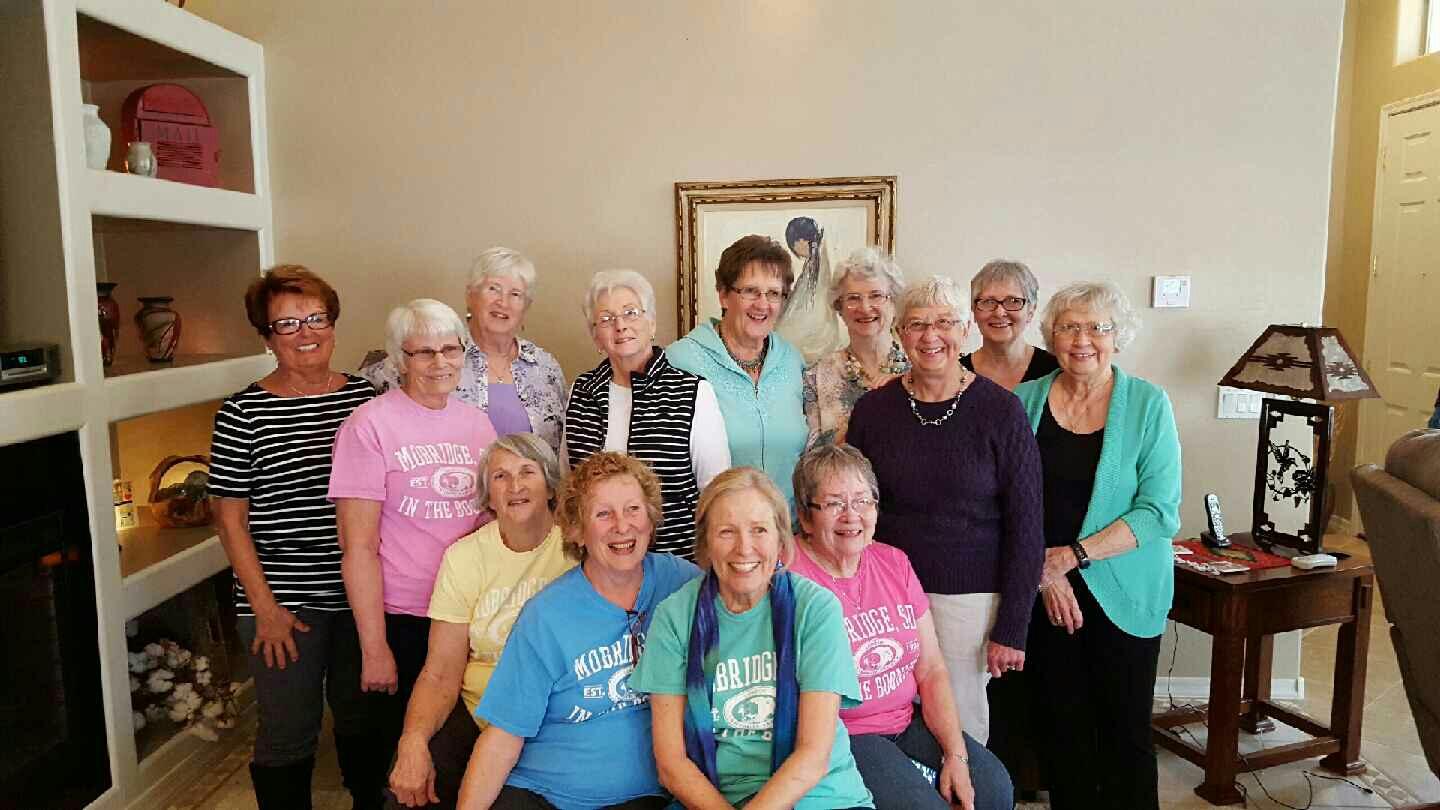 Left to right, but omitting the 5 t-shirts: Carol Piefle (from Eureka and then RapidCity), Fidder (yes, even her grandkids now use that name) Brown, Ione Strohl Oster, Gayla Dorn Kramme, Vi Brown, Sharon Kindt Cripe, “youngster” Joyce Wessel Piefle, and our gracious hostess Donna Wessel Durant.
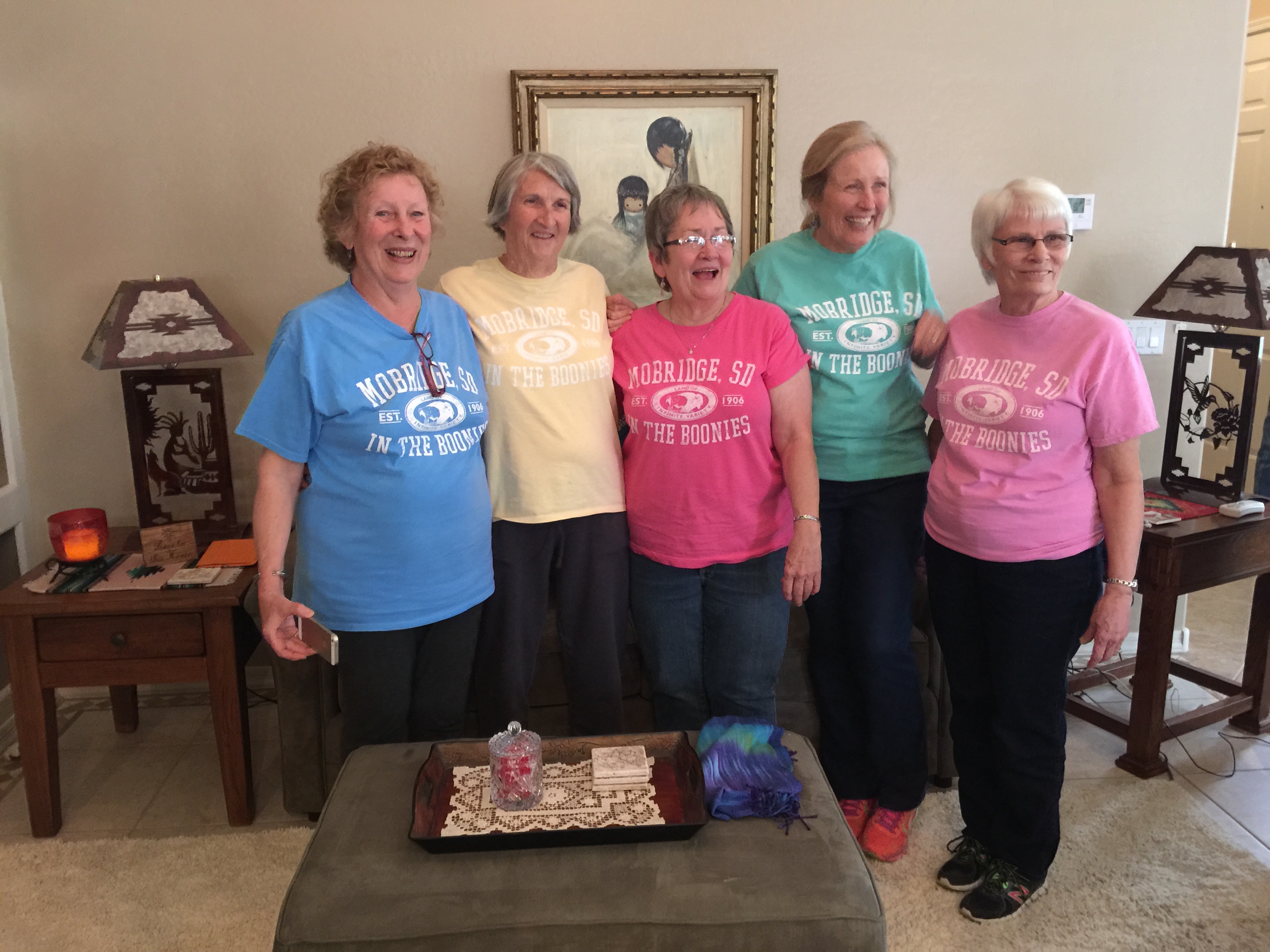
Ok, now L to R of the t-shirts: JoAnn (Runny) Rundlett Brenner, Donna (Tiny) Brown Glerup, Judy (Toots) Lind Coggeshall, me, and Diane Wessel Kindt.
In the photo below, you can see that the 5 1962 t-shirts are still having fun.
The quilt below is created from previously-worn Indian saris, like the one posted below,

and now also stores our wonderful memories. Can ou see all of those gazillion teeny-tiny hand stitches?

Sometimes magic happens.
Dear WinkWorld Readers,
Here we are again, but this one is for the teachers in my class. I love it when their dialogue turns to concepts, which are not on the planned syllabus. I love it when they go beyond. No where on the syllabus did I mention Vygotsky and his notion of the zone of proximal development (ZPD), but they do ask about it.
Dear WinkWorld Readers, remember this one is for the teachers in my class. Join us if you like.
Class, in the past 3 weeks, we have focused on the BIG IDEAS of teaching and learning. We have talked about transmission, generative, and transformative perspectives, but we have learned that there are many, many ways of teaching and learning. At this point, we are moving towards you being able to tell your own story of your pedagogical practices. This is all a part of our planned syllabus.
History Helps: 3 Perspectives on Teaching and Learning
http://www.joanwink.com/store/critical-pedagogy-3rd-edition/critical-pedagogy-3rd-edition-history-helps/
However, you keep generating bigger ideas, which are not on the syllabus.
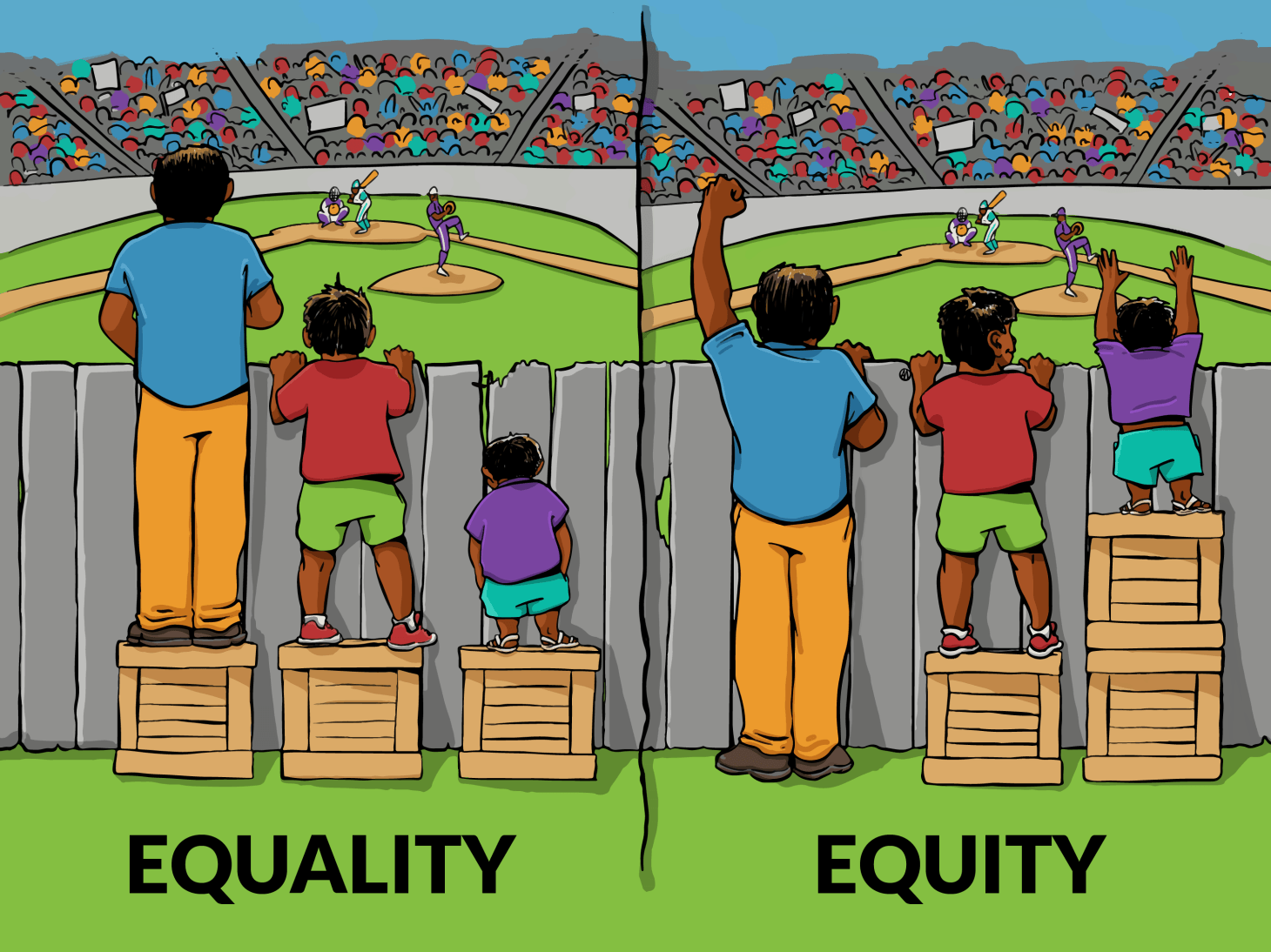
For example, the whole notion of equality and equity keeps creeping into your dialogue. Here is an imagine, which seems to periodically move across social media. This might help you understand a bit.
In addition, we keep thinking about how the perspectives on teaching and learning ebb and flow across the decades.
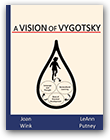
Timelines of the Big Ideas from A Vision of Vygotsky
Vygotsky is not on our planned syllabus, but you keep mentioning his ideas, specifically regarding mentoring and the zone of proximal development. So, who was he, and how did I meet him? (No, of course, I didn’t really meet him, but I did run into his legacy.)
Teachers, for me, your most interesting dialogue occurred when I posted the following quote from Margaret Wheatley. Thank you for your reflective teaching and learning.
They were eager to create a model or framework into which they could slot information. I was intent on letting information do its thing. They wanted to get organized at the start; I wanted them to move into confusion. I urged them to create more information than they could possibly handle. I guaranteed them that at some point the information would self-organize in them, crystallizing into interesting forms and ideas. ~Margaret Wheatley (1992, p. 150)
Finally, the best question of the week came from Jill, who asked: What is literacy? Class, you can enjoy your colleagues’ sharing on D2L.
A
Donalyn Miller generously shares her thoughts and a great overview of the research (if you must have it). Or, just grab a book and see what happens.
Thank you, Book Whisperer!
I’ve Got Research. Yes, I Do. I’ve Got Research. How About You?
Copyright © 2026 JoanWink.com. All Rights Reserved.
 Designed by