View Sidebar
Click on any book icon to see Table of Contents and/or to purchase a copy.

Archive for category: Latest

Critters, Polacco, Novak, & Atall

Critters, Polacco, Novak, & Atall

Dear WinkWorld Readership,

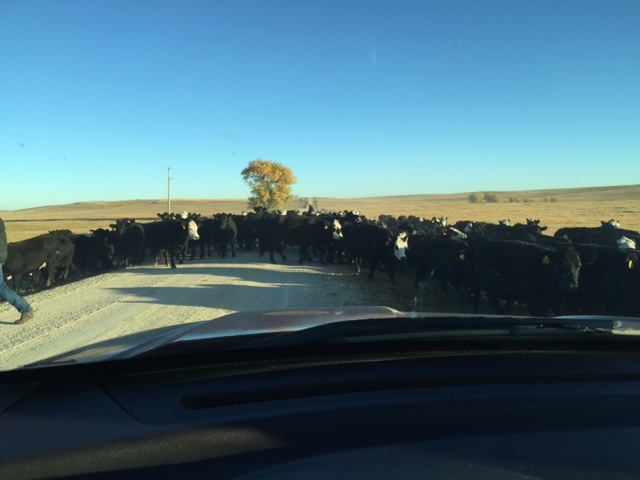
Yesterday I drove to a local school, Atall, about 50 miles away to read a story, and I was stopped in my tracks by these critters.

cows Atall trip

See Atall School here.

Atall School #1


I waited until the cattle got by me, and soon I arrived where Missy, the teacher, has 13 students in 7 grades. In this age of Common Core, teaching the mandated curriculum for 7 different grades seems overwhelming to me. She describes it as “triage.”

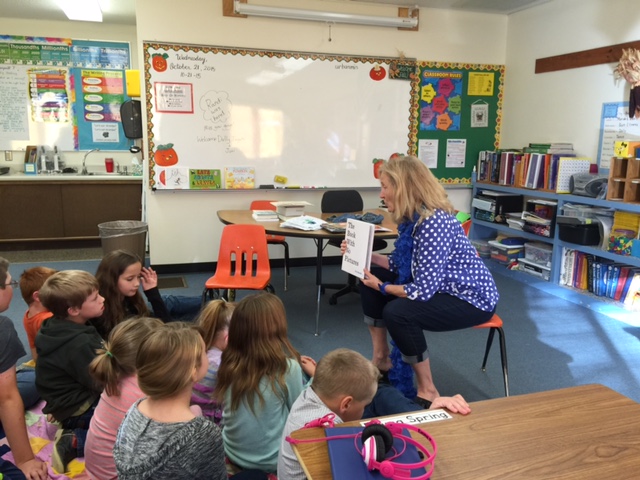
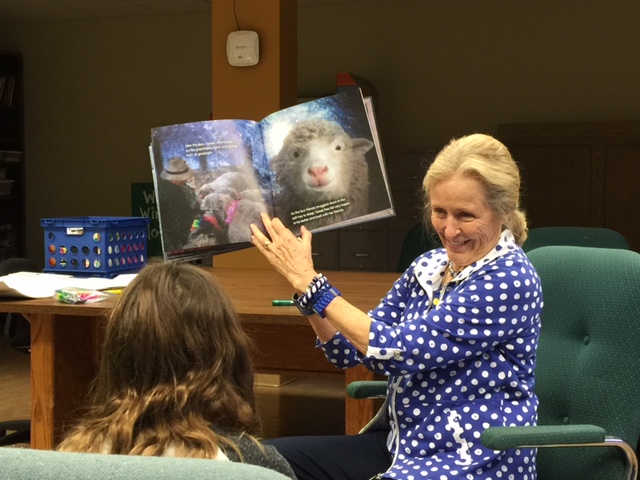
I read Sweet Pea & Friends: The SheepOver. All of the kids particularly liked the play-on-words of “sheepover,” and I was even able to slip in the use of double entendre.

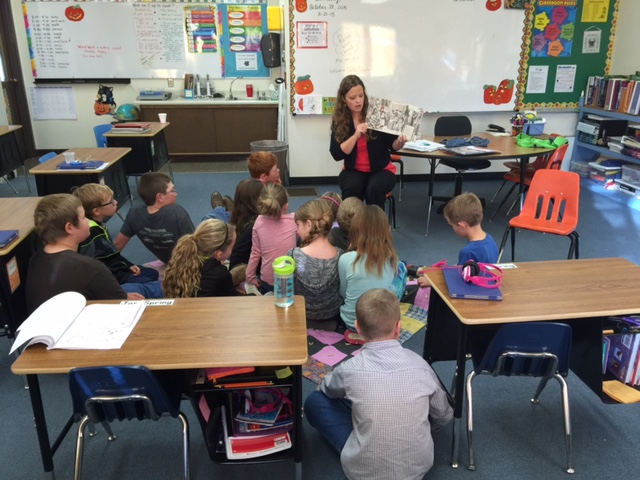
Next Missy read The Keeping Quilt, while all of the kids sat on the quilt from Missy’s great-grandmother.

Missy kids quilt

If you look carefully, you can see the quilt where the kids are seated.

Hear Patricia Polacco reading the story on YouTube.

See the quilt and hear the author/illustrator.

After hearing the story, we talked about quilts in our families.

See Everett and Bailey, the great, great-grandsons of the woman who made the quilt for Missy.

ev and bailey ggrandma's quilt

The kids remembered The Book With No Pictures by B.J. Novak, which I had read to them last year. Of course, they wanted to hear that one again.

joan reading Atall

Here is the author, B.J. Novak, as he reads his story.

Before I left, Missy and the kids gave me a book, The Dot, by Peter H. Reynolds, and they showed me their dots, which they have created.  My assignment is to make my own dot.  Gotta get to work on that one.

See The Dot here.

Hear the story here on YouTube.


https://www.youtube.com/watch?v=t5mGeR4AQdM


October 22, 2015Read More
4 Questions about Stories

4 Questions about Stories

Dear WinkWorld Readers,

In what follow, I will focus on 4 questions: What are stories?, What are your favorite stories?, Why do we use stories in class?, and How do we develop storytellers?

If you would like to use these questions for your own purposes, the Four Corners activity works quite well.

See Four Corners Activity right here.

First, What Are Stories?

Stories are narratives, which help us make sense of our world. Compelling stories are the ones we remember, as they entertain, educate, inspire, and stretch us. Stories also glue us together with one group while simultaneously breaking down our pre-conceived barriers with new groups. Stories act like a mirror and reflect our lives, our experiences, and our thinking. They capture our history, and they paint a picture of our future.

Show Me, Don’t Tell Me.

In schools, we often remind ourselves: Don’t tell me, just show me. We, teachers, like to model new learning. Then why in the world did I write a paragraph defining the word, story? Wouldn’t it be better, if I simply told you a story. . . about a story?

Stories help us make connections; they power up our learning, imagination, and literacy. Even our financial literacy, as in the case of 5-year-old Violet. Like her, I often can get lost in facts, but if you can tell me a story about those facts, I will learn it and often remember it.

The Story of Violet

Violet, simply could not understand numbers from 1 to 100 until she connected the numbers with a story.

Violet is in kindergarten and comes from a very enriched family with food, books, laughter, languages, and love. We can safely guess that she will do well in school. All of this was true until she met the number 100 and a bunch of 10s. Violet could not count to 100 by 1’s, nor by 10’s. It was just incomprehensible for her in her own stage of development in spite of base ten blocks, a super teacher, and a very supportive family.

Her mom and dad, Ruthie and Rusty, started to count authentic items in Violet’s life: They collected and counted shells from the beach; they grouped and counted toys at home; they played jump rope and counted; they counted cars when they drove; they picked up stones and counted them. Still, from December until May of kindergarten, those numbers simply made no sense to Violet.

Frustrated, Violet’s mom, went to the school librarian, who gave her

a book “Let’s Count to 100” by Masayuki Sebe.

See the book here.

When the book arrived, Violet and her mom sat down and previewed the pages of the new book.

“Which is your favorite page, Violet?” her mom asked.

“I hate this book and never want to see it again,” Violet responded, as she held back tears.   Wisely, her mom set the book on the coffee table and moved on to other stories, which Violet wanted to hear.

However, Violet’s little sister, Zoe, found the book and started looking at the pictures and telling stories about the animals in the book. After a few days, Violet’s curiosity was peaked, and she started looking at the book, also.

Violet Finds A Compelling Story in the Book about Numbers

Suddenly, Violet found a page with a family of piranha fish, who were busily planning an attack on an elephant’s truck. Violet was compelled to know more about the piranhas and the elephant. The story grabbed Violet’s imagination; it powered-up her learning and her literacy.

“Read to me, Mom, about this elephant with the hurt trunk,” she excitedly told her mom. Violet’s active engagement with the story (and, thus numbers) shot through the roof as she began to talk about the other elephants in the story.   Her mom continued to read and to listen.

“Look at all of the elephants–let’s count them, Mom,” she squealed. “Oh, and look at those piranha, let’s count them, too.” Violet and her mom counted aloud by ones, and then her mom showed Violet how she could count super fast by tens, grouping the piranha into their different families.

“I can do that,” Violet said. And she did. That night, she showed her dad how she could count by ones and by tens.

The story of the piranhas and elephants grabbed her interest, and instead of simply trying to memorize abstract groups of numbers, she was grouping the animals of her story.

Now, Ruthie and Rusty are reading the story about piranhas and elephants over and over again, and Violet is counting to 100 by 1’s and by 10’s. Violet has moved on to other stories about other animals, not just piranhas and elephants.

Violet now understands and can manipulate those numbers because of a story.

“The narrative grabbed her interest; it was a compelling story for her. It boosted her confidence, and it provided a conceptual framework in which she could place the details of the different number families. Instead of trying to memorize the words ten, twenty, thirty, etc., in order, she could think about different fish families and their different functions.  The number words just came naturally because they just fit into the narrative,” Ruthie told me. “She now brings the book to me over and over again. That repetition which is so important for young learners is fueled by her desire and interest.

We went to the library and found another book in the series “100 Hungry Monkeys.” This one has a larger narrative in which each page of 100 builds on the story. Knowing the power of narratives and her increased self-confidence with and interest in counting, I am confident that she’ll do it well.

See 100 Hungry Monkeys here.

And, that is what a story is.

Second, What Are Your Favorite Stories?

My favorite stories capture the memories of my family. They capture a moment in time, which elicits laughter or tears. Emotions have primacy in my favorite stories. The language used in the story is like code-speak in our family, as the stories have been re-told so many times, yet each time we hear it or tell it again, we love it just as much. Our family stories are like the glue, which hold us together. Our stories capture a mutual and treasured experience.

Show Me, Don’t Tell Me

For example, just say “Jack and The Beanstalk” to Dawn and Bo, our two adult children, and they are immediately taken back to their childhood, when they, and half dozen other family/friends’ kids were cleaned up, in their jammies, lined up on the couch, and breathlessly awaiting the family/friend storyteller, Frank, who could do more with Jack and a beanstalk than anyone I know. Each child was suddenly a protagonist in the story; each child was a hero in some part of the story; each child could barely contain the joy of listening and loving. Jack and that bean linked those kids together for life.

It seems we never tire of our favorite stories. You put us with specific groups of people, and we immediately begin to tell stories. The other day, during an unsuccessful hunting experience, I heard my husband say to my now adult son, Bo, “At least you’ve got a good story.”

Third, Why Do We Use Stories in Class?

Stories are yet another tool which we can use to engage learners and enrich their learning, language, and literacy. However, as good as that is, stories do more: they link us through love. I am reminded of another story–actually, two different stories about the same student, José.

Show Me, Don’t Tell Me.

I met José when he was a 7th grader in my class. He was a balanced bilingual, equally at home in both English and Spanish. However, he was not achieving…yet. I encouraged him to read. Read anything he wanted.

“Anything?” he queried.

“Yes, anything, as long as it did not demean or belittle any group…including women,” I responded. He understood. He grabbed the huge Tucson phone book and started to read, as a challenge.

“Read, read, read,” I told him when I saw him with that boring tome.  Soon he, too, became bored with the phone book (and the challenge to me) and moved on to reading about the world. Now, as an adult, he has since visited many of those countries.

Later, when José was a senior, and in another class I was teaching, the students had been studying various languages and countries. They wanted to know how to say “I love you” in different languages. In those days, we didn’t have multiple devices, so off we went to the library to research how to say “I love you” in various languages.   During their spring comprehensive test, on a whim, I inserted the following into the cognitively demanding test.

I love you.

I love you.

I love you.

I love you.

I love you.

I love you.

I love you.

I love you.

I love you.

I love you.

The task for the students was to translate this into 10 different languages. I could tell when each senior came to that question; a smile crept across their faces as they remembered our time together.

When I received the test from José, he had written in Spanish:

Yo sé.

Yo sé.

Yo sé.

Yo sé.

Yo sé.

Yo sé.

Yo sé.

Yo sé.

Yo sé.

Yo sé.

In Spanish, Yo sé means: I know. And, now you know, too.  One of my happy memories is the day José graduated from high school with a gold and a white honor cord hanging down the front of his gown: one from the National Honor Society and the other from the Spanish National Honor Society.  The huge Tucson phone book and the two honor societies are forever wedded in my mind.

“Education is radically about love.”

~Paulo Freire

Fourth, How Do We Develop Storytellers in Class?

Time and choice. That is the secret. Teachers/librarians need to value storytelling enough to create time for it to happen and to assure that students have choice. In this age of top-down, mandated curriculum, and non-ending punitive testing,  I am only too aware that I am asking a lot of you, but we never told you that teaching would be easy.

Roadblocks? Go around them.

Don’t make me send you my t-shirts, which say in bold letters: We Can Do This.

 Show Me, Don’t Tell Me.

Recently, a teacher attended a professional development day, which focused on how to administer the state and nationally mandated test. As I have heard from several, it was grueling, but at one point, the teacher-of-teachers stopped long enough to deviate from the mandated script to share one story.

A grade-school child in the district began to feel pain in his arms. As it turned out, he had a rare condition in which the bones were dying. He had to take a medicine with the hope that it would promote re-growth and healing of the bones. During this time, the child could not attend school, because if he were to be bumped or jostled slightly in the hallway, it could damage the healing. However, in spite of this, the student was still required to come and take the test. In addition, he was not even allowed a scribe to write his answers. He had to type in his answers, without assistance, for the test.

How do we develop storytellers? Time and choice.

Stories are inherently a part of being human. When teachers/librarians allow time and choice, the stories will flow. You cannot stop them.

*the quote by Paulo Freire:

As cited on p. 2 of this book (2011).
October 20, 2015Read More
A Peek Into Our Class

A Peek Into Our Class

Dear WinkWorld Readers,

As some of you know, I continue to teach part-time in the English as a New Language (ENL) endorsement program at Black Hills State University (BHSU).  The teachers in the program come from various districts around the Black Hills and other districts in Wyoming. Mostly our classes are online (D2L and Collaborate), which I enjoy, but I love the Face-to-Face periodic classes.  Here is a glimpse into our class last Saturday, 10.11.15.

One of the teachers brought her daughter; through the years I have had a lot of busy teachers bring their own children to our classes, and I have always loved the experience.

Here is Jeslyn settling into our class.

Jeslyn is ready for class

This semester I discovered that the Language Experience Approach (LEA) is new for many of the teachers.

See Language Experience Approach here.

This group is also interested in learning the various approaches to Readers’ & Writers’ workshop.

See Readers’ & Writers’ workshop here.

One of the teachers brought a photo of her granddaughter reading. Hope you enjoy this, as much as we did.

Deb grand10.15

As the class had recently focused on the treasured books of Mem Fox, one teacher shared a class photo of her reading  “Let’s Count Goats.”

Sarah Williams reading to kids1]

Finally, I read “Sweet Pea & Friends: The SheepOver” by John and Jennifer Churchman.

Sweet Pea & Jeslyn

October 14, 2015Read More
Buffalo: Custer State Park, SD

Buffalo: Custer State Park, SD

Dear WinkWorld Readers,

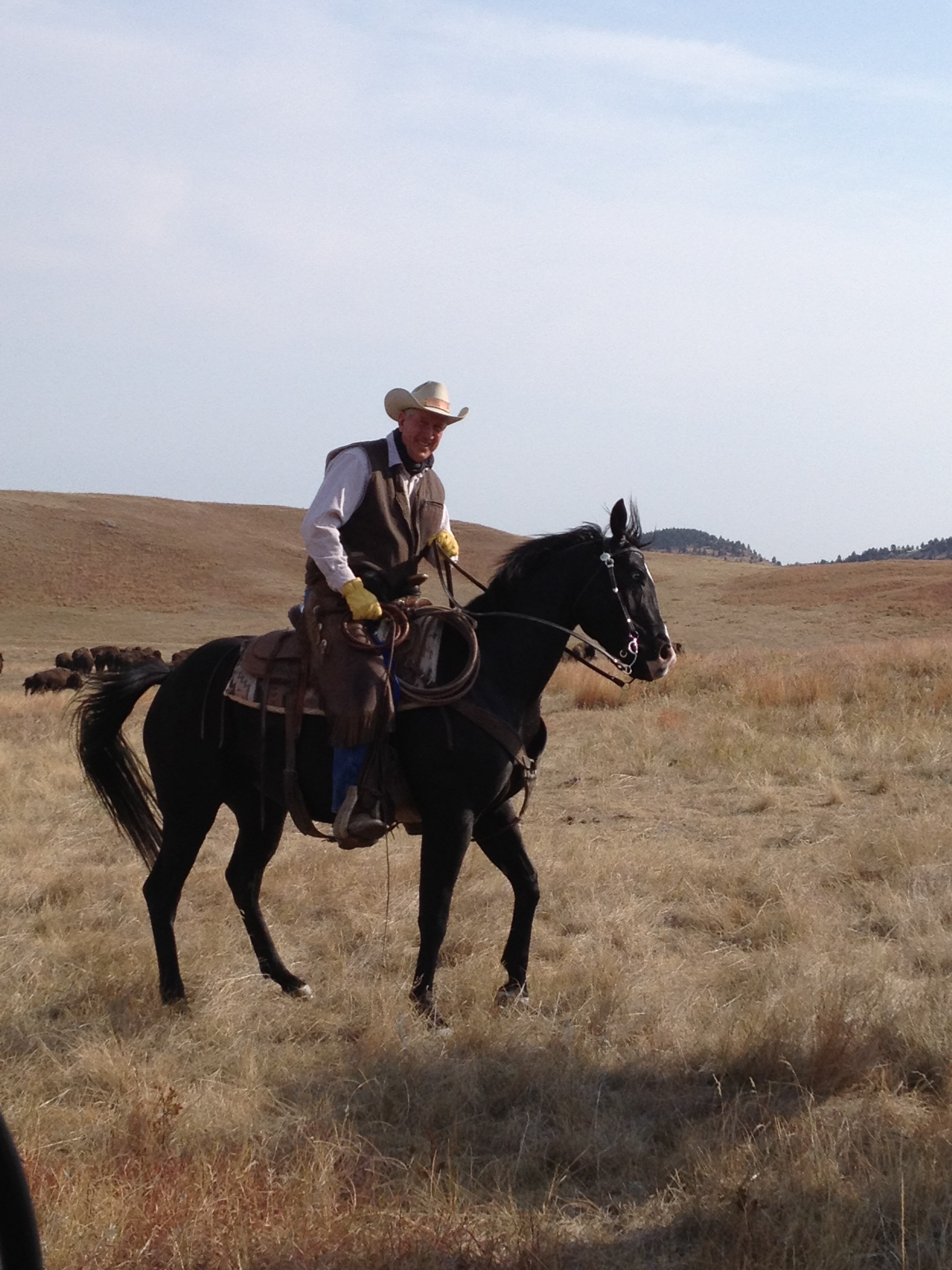
Normally, I share something for teachers and/or teacher educators, but in this issue I will share something for everyone: Buffalo. Lots of them.  We have previously ridden in this buffalo roundup, but not this year.  However, our friend, Sherry Bunting, has generously shared some of her photos from the Buffalo Roundup in Custer last week. Sherry’s contact information is all posted at the end of this post.

Here they come.

buffalo here they come 2015

The flag-bearer and a little action.

buffalo flag 2015

And, even more action.

buffalo rider hard riding

And, here is Wink on Badger a year ago.

Dean Badger buffalo 2012

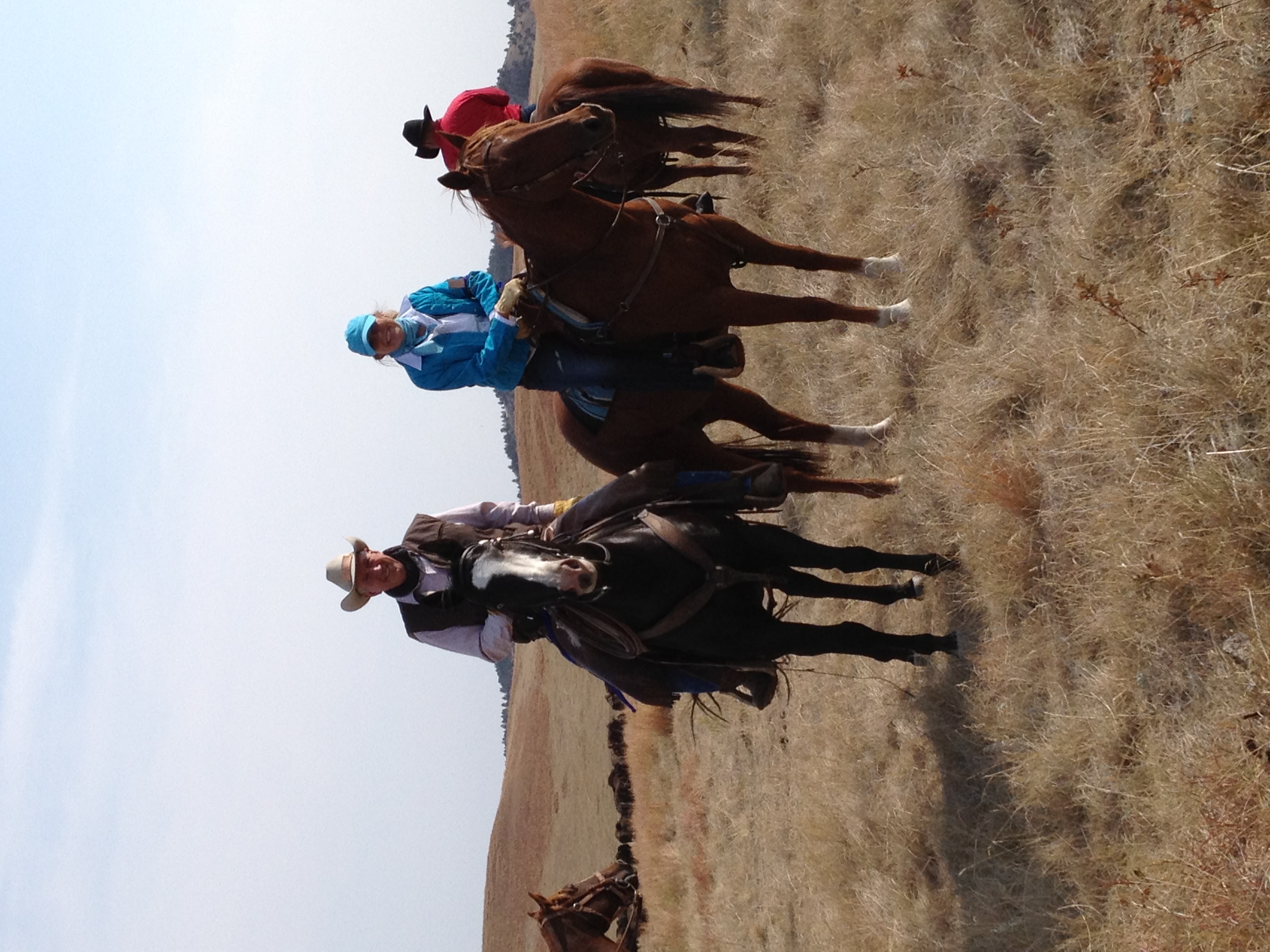
The 2 of us last year.D&J buffalo best photo


Many thanks to Sherry Bunting.  Her blog: agmoos.com

Her email: agrite@ptd.net

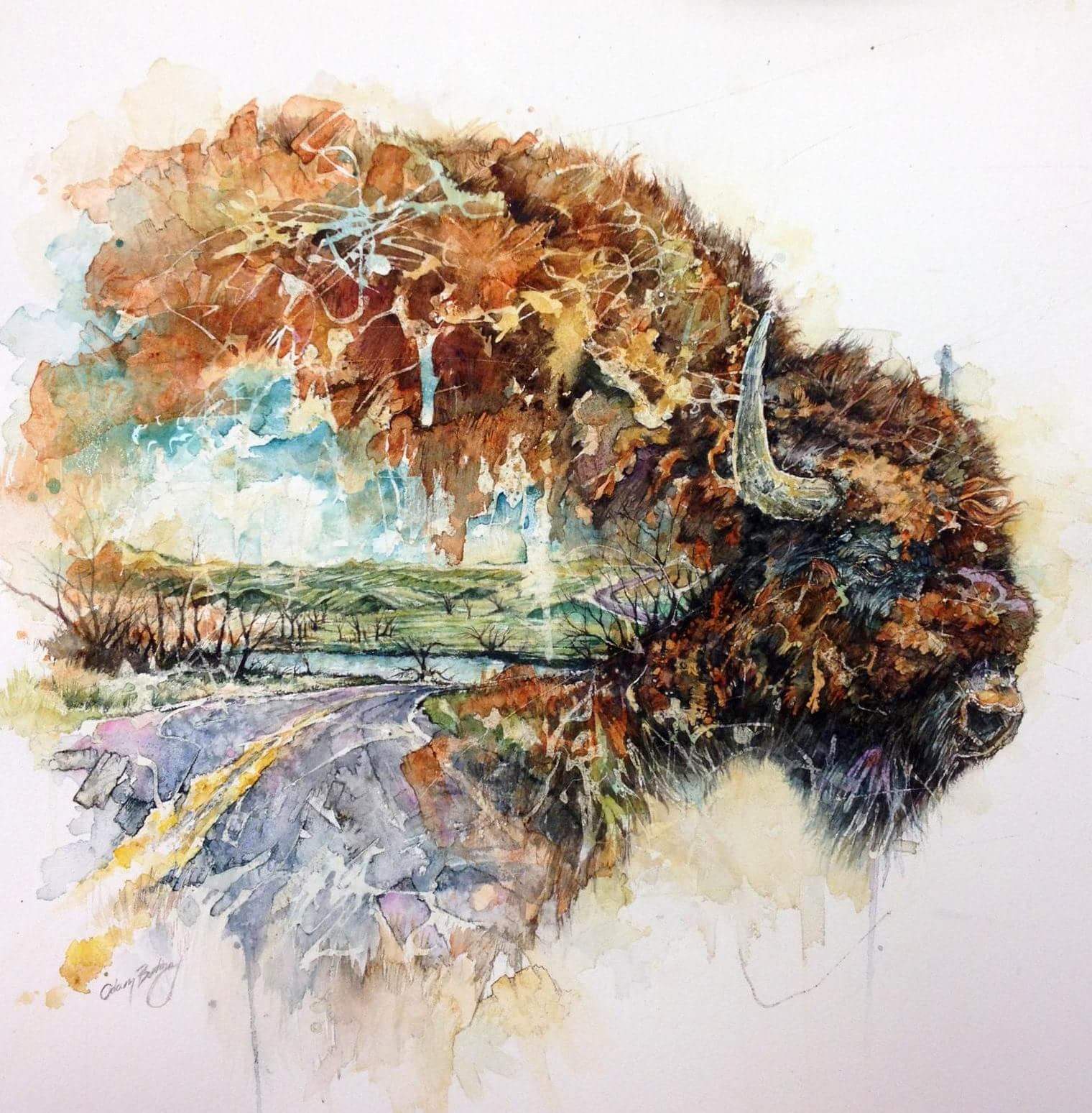
In addition, Sherry’s son, Adam Bunting, is a high school teacher and an artist.  Here are 3 examples; below these, I list his contact information.

A new buffalo painting from Adam Bunting.

Adam Bunting buffalo painting

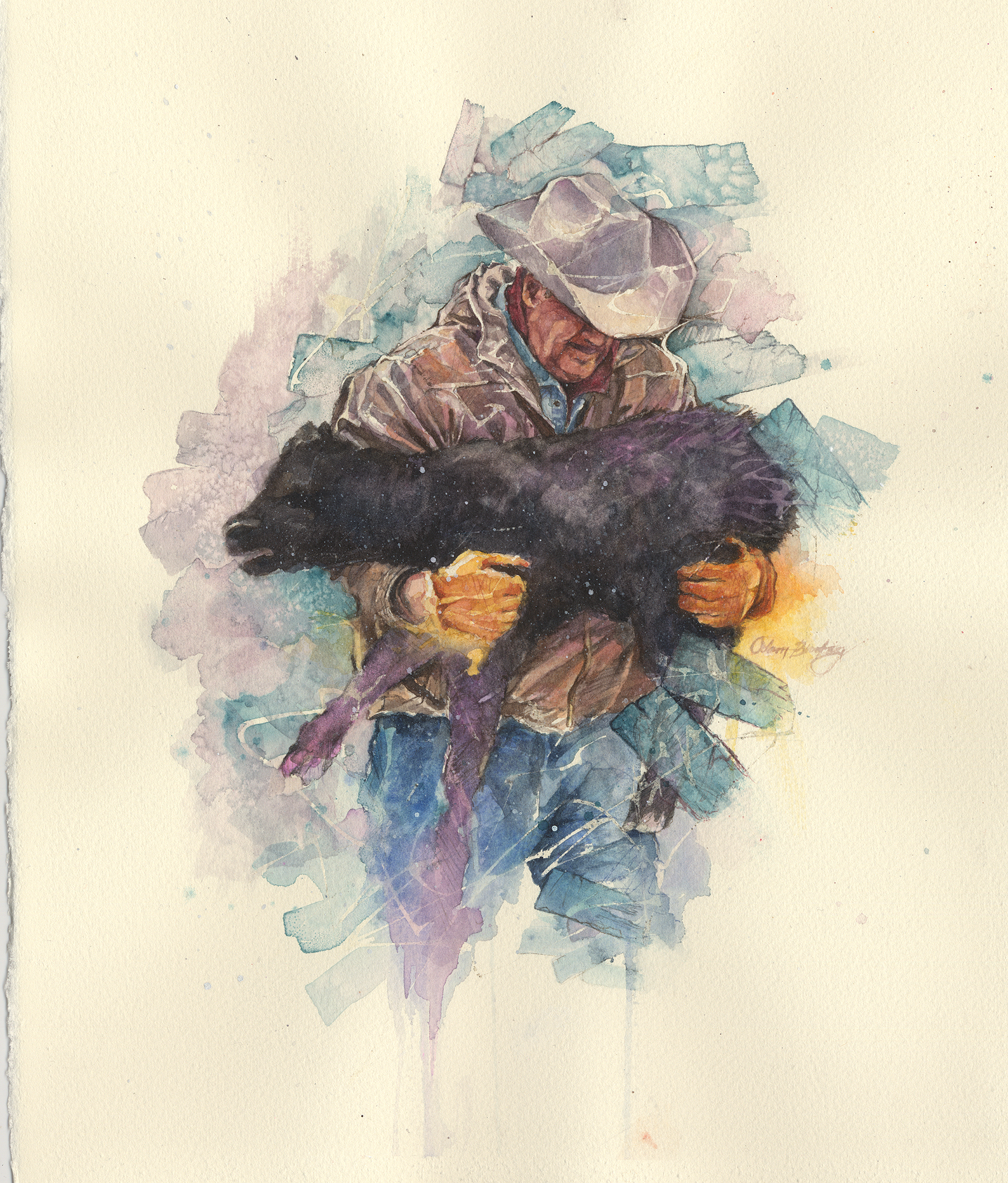
Adam also painted this picture, which was taken in the spring after the Atlas blizzard.  First, I am posting the photo, which Sherry gave to Adam, and next I share the painting which Adam did.

The photo:

Dean-with-calf post Atlas

The painting of the photo:

Dean calf-facebook

I’ve saved the best for last–Adam also painted my dear horse, Frankie.

Art scan Frankie 02-facebook

See Adam Bunting’s art:

Adam’s email: abunt26@gmail.com

See more of Adam’s art can be seen at Red Raven Gallery

Thank you so much, Sherry and Adam, for so generously sharing your talent and expertise with WinkWorld readers.


September 28, 2015Read More
Krashen videos: Update

Krashen videos: Update

Dear WinkWorld Readers,

In the previous WinkWorld, I shared a Word doc, created by Deb Harrison, which shared several of Krashen’s more recent videos on YouTube; this involved you downloading the doc and then doing a copy/paste of each URL.  In this WinkWorld, my intention is to make  some of these links more accessible: No copy/paste, just click. The following list of YouTube links will follow the same order, as the Word doc on the previous WinkWorld for those who want to read the annotated summary of each video.

See previous WinkWorld here.

See Textbook vs Story (2014)  Book by Krashen here, 54 minutes.

https://www.youtube.com/watch?v=40S7clwRXxs

Here Steve Krashen (2015) present to the1st International ELT Symposium, Part 1: 3 videos follow, each about 20minutes.

Comprehension Hypothesis compared with Skill Building.

British Council Interviews/International ELT Symposium, Part 2

How to make input comprehensible and compelling.

British Council Interviews/International ELT Symposium, Part 3.

In this final video, Steve talks about the positive effects of technology on kids’ reading, and he mentions Rosetta Stone and Accelerated Reading.

I refer you back to the previous WinkWorld to grab Deb Harrison’s Word doc with even more of Krashen’s recent videos.

OK, you can watch Joan’s videos, too.  You can probably guess what the content for my class is this week.  I very much appreciate the tech support from California State University, Stanislaus and Black Hills State University.


September 26, 2015Read More
Krashen, Harrison, and Wink videos

Krashen, Harrison, and Wink videos

September 22, 2015

Dear WinkWorld Readers,

This WinkWorld edition is primarily for those interested in literacy and language acquisition.  First, I am sharing an overview of some recent videos from Stephen D. Krashen.  This summary and these annotations were organized by a teacher, Deb Harrison from Wyoming, who also is in one of my English as a New Language (ENL) classes at Black Hills State University.

See Krashen videos here. Thank you, Deb Harrison

You may remember her from her high school project on Poe and Powtoons, which I shared last year.

See Poe and Powtoons here.

In addition to Steve’s and Deb’s sharing, you may remember that I (with the help of CSU Stanislaus and Black Hills State University) created several videos which focus specifically on language acquisition.

See Joan’s videos here.

September 22, 2015Read More
Intentional and Incidental Learning

Intentional and Incidental Learning

WinkWorld

September 2, 2015

Dear WinkWorld readership,

Now that the school year has begun, I want to return to my WinkWorld blog. In this post I will share a story about our first Face-to-Face class (most of our classes are online) this past week. I have always been intrigued with intentional and incidental learning. I have learned intentionally a lot of things, and forgotten many of them. However, when I incidentally learn something, it seems I never forget it. The same often happens with the teachers in my classes.

I had planned that our objective (intentional teaching/learning) for the day would be the chapter on reading, Foundations for Teaching English Language Learners: Research, Theory, Policy, and Practice (2015) by Wayne Wright. This is a text, which I love, and I know the teachers in my class know a lot about teaching reading. However, in their class reflections, I can see that, in addition,  they learned several other ideas, incidentally.

First, Mem Fox

Read about Mem right here.

Most of the teachers told me that they had never heard of Mem Fox. (Horrors!) I told them to go home and check their children’s books, their class libraries, and the school libraries. Sure enough: Turns out that they know Mem’s children’s stories, but were not aware.

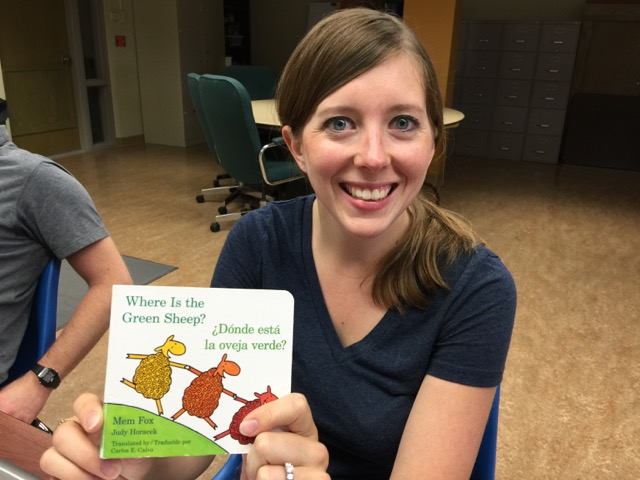
One young teacher from SD found “Where Is The Green Sheep?” and realized that it had been a gift from the pediatric doctor on her son’s last visit.

katie mem fox

“And, it is written bilingually,” she told me. Another man from WY found several of Mem Fox books in his kids’ bedroom.

Another teacher in our class shared Mem’s 10 Read Aloud Commandments

Read the 10 Read-Aloud Commandments right here.

Second, Home Run Reading, “The Secret Garden,” and Donalyn Miller

What Is Home Run Reading?

What is home run reading? Read here.

The Story of “The Secret Garden” Being my Home Run Reading Book.

My home run book, The Secret Garden.

Who Is Donalyn Miller?

Meet the Book Whisperer right here.

What is the 40 Book Challenge?

The 40 Book Challenge Revisited

Donalyn revisits her 40 Book Challenge right here.

The follow graduate student’s reflection wrapped all of this into her two paragraphs.

Last week, I learned a new term: home run reading book…the thought that people who do not like to read have simply not hit their home run reading book really struck me. This makes Donalyn Miller’s 40 Book Challenge even more meaningful, since bringing variety into people’s reading choices just might help them hit their home run.

I also learned that children do NOT need formal instruction to learn how to read. I suppose I knew that deep down all along, since I have no memory of learning to read and entered school already reading. Yet I’ve somehow held an unexplained bias against the whole language approach until the idea of  part-to-whole was explained to me. I learned a lot more about the whole language approach to reading this week, and I find it very interesting.

WW Readers, next week maybe I should mention intrinsic and extrinsic rewards…dare I mention Alfie Kohn?

Third, Alma Flor Ada

Read about Alma Flor Ada right here.

Next, I see on their reflections that that they think they are not aware of Alma Flor Ada, either. I’m just waiting for them to find some of her beautiful bilingual books in their class and school libraries.

Fourth, Johanna Basford, “Ink Evangelist, or adult coloring book author”

Meet Johanna Basford right here.

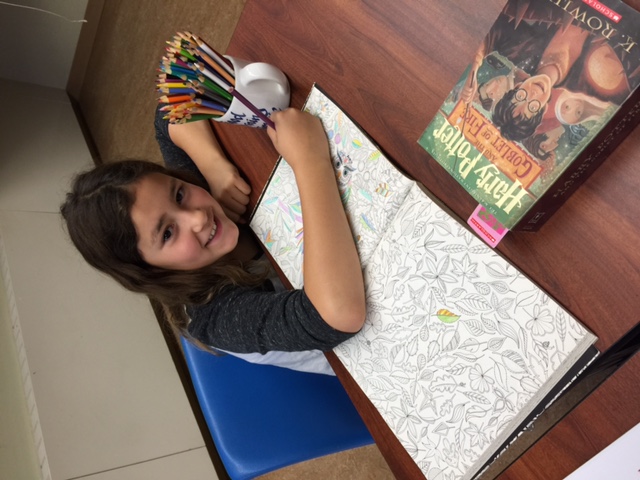
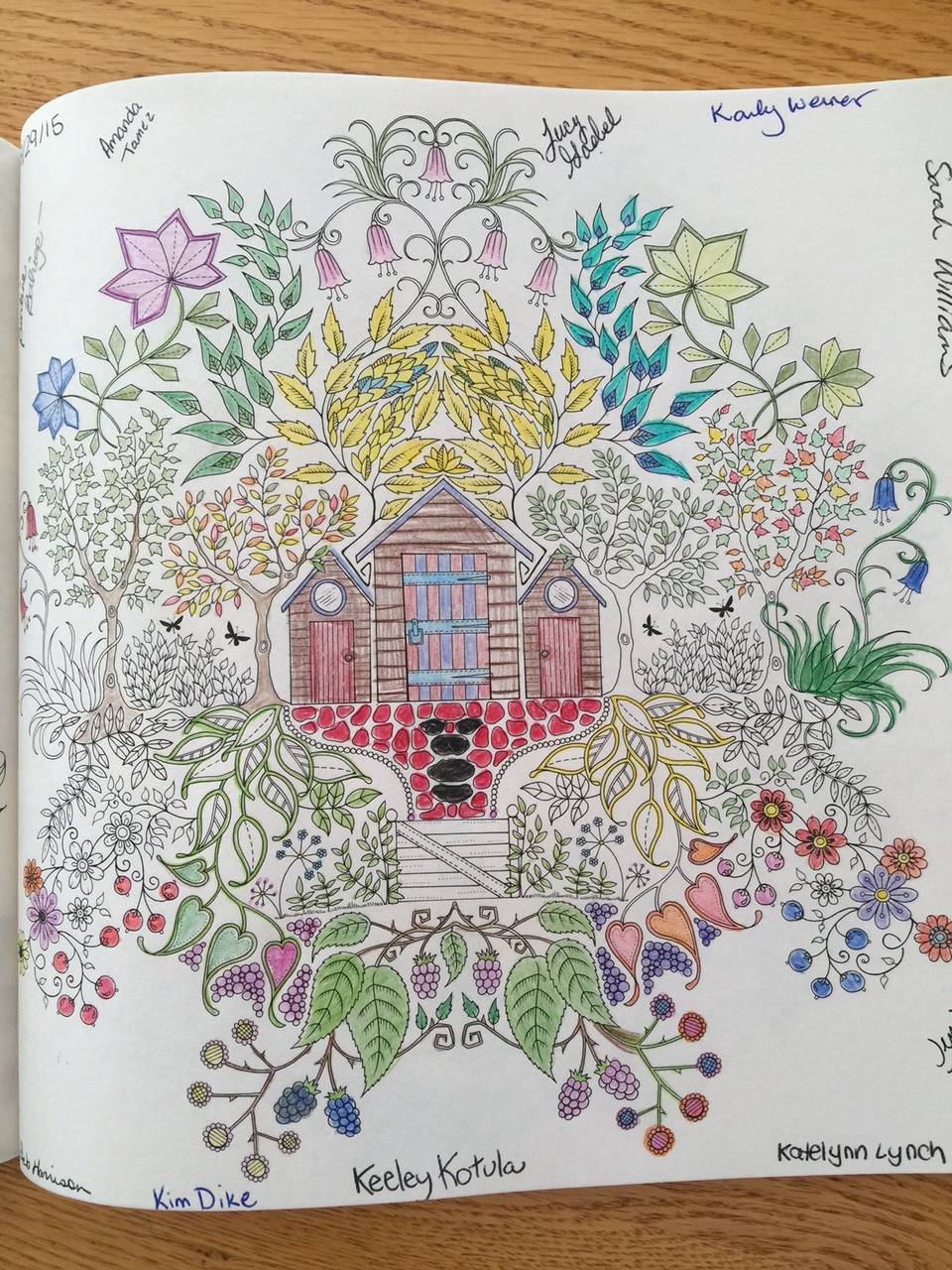
OK, I’ll admit it: I just happened to have my “Secret Garden” adult coloring book and colored pencils with me.

I remember when I taught middle school in the late 1970s that if I kept blank paper on the 8th graders’ desks, we didn’t have discipline problems. I remember, also, that the school had some fancy discipline plan that we, teachers, were to learn and follow, but I could barely get through a day, much less manage some complex discipline program. I remember telling the principal: “I just can’t do it. Blank paper is better for the kids and me anyway, as the 8th graders just kept writing, doodling, drawing, making connections, generating ideas, etc. I know they can listen and learn at the same time.”

The same is true for the teachers in my graduate class: They multi-task all of the time, and I know they can listen, learn, and color simultaneously. One teacher wrote on his reflection, “I can listen better, while I color. It seems meditative.”

Here is a photo of what they were doing, while we talked about Mem, Alma Flor, Donalyn, home run reading, and Wright.

Basford by class 2015

September 3, 2015Read More
Why Stories?

Why Stories?

I have been thinking a lot about stories lately. Why is it that we love to hear a good story? In the next few issues of WinkWorld, I’ll be telling stories about why stories matter.

One reason we love stories is because it is how we make sense of the world, as in the case a 5-year-old girl, V, who simply could not understand numbers from 1 to 100…until she connected them with a story.

V is in kindergarten and comes from a very enriched family with food, books, laughter, languages, and love. We can safely guess that she will do well in school. All of this was true until she met the number 100 and bunch of 10s. V could not count to 100 by 1s, nor by 10s. It was just incomprehensible for her stage of development in spite of base ten blocks and a super teacher. Her family started to count authentic items in V’s life: They collected and counted shells from the beach; they grouped and counted toys at home; they played jump rope and counted; they counted cars when they drove; they picked up stones and counted them. Still, from December until May of kindergarten, those numbers simply made no sense to V.

Frustrated, V’s mom, went to the school librarian, who gave her

a book “Let’s Count to 100” by Masayuki Sebe. See book here.

V and her mom sat down and looked at the pages of the new book.

“Which is your favorite page, V?” her mom asked.

“I hate this book and never want to see it again,” V responded, as she held back tears.   Wisely, V’s mom set the book on the coffee table and moved on to stories, which V wanted to hear.

However, V’s little sister, Z, found the book and started looking at the pictures and telling stories about the “cute animals” in the book. After a few days, V’s curiosity was peaked, and she started looking at the book, also.

V Finds A Story in the Book about Numbers

Suddenly, V found a page with a family of piranha fish, who were busily planning an attack on an elephant’s truck. On the next page, the elephant has a hurt trunk.

2 pages of piranhas and elephants

The story grabbed V’s imagination.

“Read to me, Mom, about this elephant with the hurt trunk,” she excitedly told her mom. V’s active engagement with the story (and, thus numbers) shot through the roof as she began to talk about the other elephants in the story.   Her mom continued to read and to listen.

“Look at all of the elephants–let’s count them, Mom,” she squealed. “Oh, and look at those piranha, let’s count them, too.”

V and her mom counted aloud by ones, and then her mom showed V how she could count super fast by tens, grouping the piranha into their different families.

“I can do that,” V said. And she did. That night, she showed her dad how she could count.

The story of the piranhas and elephants grabbed her interest, and instead of simply trying to memorize abstract groups of numbers, she was grouping the animals of her story.

Now, V’s mom is reading the story about piranhas and elephants over and over again, and V is counting to 100 by 1s and by 10s, V has moved on to other stories about other animals.

V now understands and can manipulate those numbers because of a story.

In the next WinkWorld, I will tell a story of V’s and Z’s mom, who could not make sense of statistics, specifically regression, until she found a story in the stat problems.

June 15, 2015Read More
Socrates Returns to the Classroom

Socrates Returns to the Classroom

I have written and presented on the reflective cycle or Socratic teaching and learning in various places. If you are interested in more of this topic, just go to my joanwink.com pages and use the Search button (bottom left).

In this WinkWorld, I will share a small piece of a new chapter in a book coming soon from Roman & Littlefield; our editors are Mayra Daniels and Kouider Moktari. I had the pleasure of writing this chapter with Kerry Britton, Dee Hawksworth, Tammy McMorrow, Debra Schneider, Chyllis Scott, Ruthie Wienk, and Dawn Wink. Our purpose was to share authentic stories of critically-grounded reflective teaching and learning from various elementary, secondary, and high education classrooms.

The specific pages of the citation will be added when the text is available. I will share on WinkWorld, when we receive it.

Wink, J., Britton K., Hawksworth, D., McMorrow, T., Schneider, D., Scott, C., Wienk, R., & Wink, D. (2015). Socrates returns to the classroom. In M. Daniels & K. Moktari (Eds.), Meeting the challenges of the changing demographics using assessment of instruction that makes a difference in EL’s success (pp. ____-____). New York, NY: Roman & Littlefield.

In what follows is a little peek into our chapter on Socrates in the classroom.

Dear Readers, I bet you are wondering, Why Socrates? Socrates was a thinker, and his thoughts still matters today, as he gave us inquiry-based teaching and learning. Okay, I’ll admit that he did not quite use the same words that we use today, but his legacy is the use of deeper and deeper questions to enhance learning.

Now, your second question will be, How do I do it? So, let’s simply begin with an answer from Dee, who has taught in secondary schools for 22 years. She demonstrates one way of using Socratic Seminars with the teenagers in her class.

“I have learned from the students that there are three essentials of a Socratic Seminar. They are, first, you must have a thought-provoking, open-ended question; second, adequate source material is a must; and third, you need a willingness to simply plunge in.”

There you have it: The mystery is gone. Three simple steps. One little problem: It is not so easy to generate a question that will capture the fancy of teenagers, is it? In addition, it can take so much time to gather adequate source materials in order to have examples and/or quotes ready when needed. However, plunging in can be the toughest part. Oh, the courage it takes to teach passionately, meaningfully, and authentically in this age of teaching to the test.

Socratic teaching and learning has many names: Socratic Circles, Socratic Dialogues, Socratic Seminars, etc. Do not be confused. It is all inquiry-based teaching and learning; it uses questions to guide and empower learning. Almost always, new questions will emerge during the process. In this chapter, we will demonstrate various ways to initiate deeper learning. The reflective cycle, which is very Socratic, will be our primary guide.

Socrates, it is safe to say, was a rather strange man. He wandered the streets of Athens and asked questions of anyone who would listen. When they responded, he would answer with another question. Socrates had no wealth, and apparently no shoes, as he walked the streets barefoot. He was repelled by wealth, and was surrounded by men scrambling for power and money. His message was not always well-received, as he told all who listened that they were on the wrong track. Instead of material things, he said, they should be seeking justice. He had many enemies in positions of power, who did not like him, nor his ideas. In the end he was arrested and charged with ruining young minds; he was condemned as a heretic. His punishment—to drink hemlock, the poisonous plant. He drank the poisoned tea and died comforting his few friends. If you search online for images of him, you will often find him barefoot, with a woman in the background (his wife), the hemlock, and a chicken nearby. From the image of the chicken, we learn about his honor and integrity, as before drinking the hemlock, he paid off an existing debt with his chicken (Weate, 1998).


June 11, 2015Read More
Summer Reading: Get Your Free Book Here

Summer Reading: Get Your Free Book Here

June 6, 2015

No slip, sliding into the summer slump–the reading slump, that is.

Families and teachers often worry about the “summer slump” which they believe will undo some of the academic gains of the previous school year. However, we know that kids with books at home, and kids who live near well-funded libraries and well-funded schools, and kids who stop by my Little Free Library and grab a handful of books are not in danger of slipping and sliding into that slump.

Children of poverty are more vulnerable to the summer slump, as they often do not have access to books. To end the summer slump, read to your kids, read with your kids, and make sure your kids see you reading, too.

And, now a word about the senior slump*, which is defined as any adult, who stopped reading books, after he or she left school. I have noticed that the folks with senior slump often worry about kids not reading enough anymore. To diagnose the senior slump, just ask, “Tell me what you are reading.” If an awkward space of silence follows, you will know that you are dealing with severe senior slump.

*Okay, it’s true, I just made up that term.

Additional Resources for you.

Summer Reading: Program and Evidence by Fay H. Shin and Stephen D. Krashen. Amazon still has some copies left, or you can simply download your FREE pdf version right here.

Summer Reading Program and Evidence Shin and Krashen

Thanks, Fay Shin and Steve Krashen, for sharing with us so generously.

StoriesOnline

Check it out here.

Here are a couple of examples for you to enjoy right now.

“Catching The Moon”

Watch it here.

“Library Lion”

Watch it here.

You will find many, many stories at storiesonline.

Books By The Foot

Learn about it here.


Alfie Kohn always has good thoughts to share, and he is active onTwitter.

@alfiekohn

For example, check out this one!

New study: Best Rx for summer learning loss isn’t summer school or homework, but giving kids free books they choose, which you can find on Alfie’s Twitter, ow.ly/MeF6Q 

Or, here is Science Daily telling about the same study.


June 7, 2015Read More